
Cyprus Insights/Life in Cyprus
How to Immigrate to Cyprus: A Complete Step-by-Step Guide (2026 Edition)

Short answer: Which route you take depends on your passport. Citizens of the EU, the EEA and Switzerland need no visa, no property and no work permit: a valid ID is enough for three months, and anyone staying longer registers within four months of arrival with the Migration Department (form MEU1, fee 20 €, certificate without expiry). Non-EU citizens need a permit. The two routes for people who do not work in Cyprus are the investor permit under Regulation 6(2), which requires a 300,000 € investment (plus VAT for a new home) and income from abroad of at least 50,000 € a year, and the Category F permit, which requires secured income from abroad of at least 9,568 € a year. Neither permit gives Schengen or EU free-movement rights. The registration for EU, EEA and Swiss citizens, with the documents by category, is covered in our yellow slip (MEU1) guide.
Entry is the easy part. Moving gets expensive at three points: health cover, taxes, and the question of where your tax home is. This guide follows that order, gives the costs in figures and works through a retired couple in Paphos at the end. The facts come from the Migration Department, the Health Insurance Organisation (HIO), the Tax Department and other official bodies, as of 29 October 2026; the sources are listed at the end. Where the answer depends on your case, we say so and point to a tax adviser.
Immigrating to Cyprus: which route applies to you

| Your situation | Route | Main requirement |
|---|---|---|
| Citizen of the EU, EEA or Switzerland | Registration certificate MEU1 | Work or self-employment, or sufficient means and comprehensive health insurance valid in Cyprus |
| Non-EU spouse, child or dependant of such a citizen | Residence card MEU2 | The EU citizen applies together with the family member and shows sufficient resources |
| Non-EU citizen who invests | Immigration permit under Regulation 6(2) | 300,000 € investment and secured income from abroad of 50,000 € a year, plus 15,000 € for a spouse and 10,000 € per minor child |
| Non-EU citizen who lives on income from abroad | Immigration permit, Category F | Secured annual income from abroad of at least 9,568 € for the applicant and 4,613 € for each dependant, without engaging in any business, trade or profession in Cyprus |
| Non-EU citizen with a job offer | Temporary residence and work permit (single permit) | An entry permit before arrival, then registration at the Migration Department; the employer is involved in the procedure |
| Non-EU citizen who works remotely for a foreign employer or clients | Digital nomad permit | Terms change; check the Migration Department and our guide on the permit |
Citizens of the EU, EEA and Switzerland are one group for registration. UK nationals are third-country nationals unless a Withdrawal Agreement right applies to them; the Migration Department keeps a separate page for UK nationals with free movement, and our guide on moving to Cyprus from the UK covers the permits. Everything below applies to the Republic of Cyprus, the south of the island; the difference to the north is explained in south and north Cyprus compared. American citizens are third-country nationals and keep their US tax filings; see our guide to moving to Cyprus from the USA. South African citizens also need an entry visa; see moving to Cyprus from South Africa. Canadian citizens are third-country nationals who must also close out their Canadian tax residence; see our guide to moving to Cyprus from Canada. Swedish citizens are EU citizens who register with the yellow slip and must close out Swedish tax residence; see our guide to moving to Cyprus from Sweden.
Four common claims in guides need correcting:
- "You have to buy a 300,000 € property." That applies to the investor permit for non-EU citizens only. EU, EEA and Swiss citizens register with the MEU1 and can rent first. Non-EU citizens can also apply under Category F, whose policy text sets an income test and no property purchase.
- "Cyprus is in the Schengen area." The European Commission states that Cyprus takes part in Schengen cooperation but that internal border controls have not yet been abolished by the Council. In practice there are passport checks on arrival and departure. A Cypriot permit gives no right to travel or live elsewhere in the EU.
- "Cyprus is 30 to 40 % cheaper." The Numbeo comparison with Germany (as of October 2026) shows prices about 15 % lower without rent and rents about 12 % higher. The figures are in the cost section.
- "Foreign pensions pay only 5 % tax." The 5 % rate applies to foreign pensions only on the part above 5,000 € a year, and only if you choose it in the tax return. Whether the pension may be taxed in Cyprus at all depends on the tax treaty with the paying country.
EU, EEA and Swiss citizens: registration with the MEU1 in Cyprus
Citizens of the Union may stay up to three months without conditions or formalities other than a valid ID card or passport. For a longer stay the Migration Department requires that you are a worker or self-employed, or have sufficient resources for yourself and your family not to burden the social assistance system, and have comprehensive sickness insurance cover in Cyprus. The department names no minimum sum on its page. You apply for the Registration Certificate (MEU1) within four months of entering the country; the fee is 20 € per person, the decision comes within one month for a complete application, and the certificate has no expiry date. Anyone who misses the deadline risks a fine of up to 2,500 €. After five years of continuous legal residence a permanent residence certificate can be requested. Documents must be officially translated and certified, so check the current list before your appointment.
Non-EU family members of a Union citizen apply for the residence card MEU2 within four months of entry. The fee is 20 €, the Migration Department decides within six months for a complete application, and the card is valid for five years. The Union citizen has to be present at the application and show sufficient resources. The rules for everyone else follow below.
Immigration permit for investors in Cyprus: Regulation 6(2) in detail
The expedited procedure for third-country nationals who invest in Cyprus is set out in a policy of the Migration Department (4th revision, in force since 2 May 2023). It is the permit that most guides call "Category 6.2". The requirements:
- Investment of at least 300,000 €. For a house or apartment the purchase must be a first sale by a development company, worth at least 300,000 € plus VAT. Other real estate such as offices, shops or hotels qualifies with a total value of 300,000 €, and resales are possible there. Investments in the share capital of a Cypriot company with at least five employees or in units of a Cypriot investment fund qualify as well.
- Housing units. Up to two housing units may be bought, and they may come from different developers. The funds must be transferred to Cyprus from abroad from the applicant's or the spouse's bank account, and receipts of at least 300,000 € excluding VAT are required, regardless of the delivery date.
- Income from abroad. A personal secured annual income of at least 50,000 €, increased by 15,000 € for a spouse and 10,000 € for each dependent minor child. For a house or apartment purchase the income has to come from abroad and is proven by the tax return of the country of tax residence or by certificates from an independent certified accountant.
- Quality criteria. A clean criminal record for applicant and spouse, a health insurance certificate covering inpatient and outpatient care for the applicant and dependants, and a confirmation that neither applicant nor spouse intends to take up employment in Cyprus, except as directors of the company in which they invested.
Worked example: couple with two children. Income test: 50,000 € + 15,000 € (spouse) + 2 × 10,000 € (children) = 85,000 € a year from abroad. Investment: a new apartment at 300,000 € excluding VAT. With the 5 % reduced VAT rate the total is 300,000 € + 15,000 € = 315,000 €; at 19 % it is 300,000 € + 57,000 € = 357,000 €. The VAT rules are in Cyprus property VAT explained. Fees for the permit are 500 € for all persons on the application, plus 70 € per person for the Alien Registration Certificate where none exists.
Family. The permit covers the spouse and children under 18. Unmarried children aged 18 to 25 who study abroad and depend on the applicant file their own application with their own fee, and the parents must show an additional 10,000 € of income for each such child. Parents and parents-in-law are not covered.
Processing time. The policy puts the examination at approximately two months from submission of a complete application. Applications are submitted in person or through an authorised representative; supporting documents must be officially translated and certified.
What the permit does not do. The right of residence has unlimited validity, and the card has to be replaced after ten years. The permit ceases to be valid if the holder acquires permanent residence abroad or is absent from Cyprus for two years, and if the holder does not take up residence within one year of approval while living abroad. Holders show every year that the investment is maintained, and they present a clean criminal record every three years. If they no longer benefit from GESY they also show a health insurance certificate. The permit gives no Schengen or EU free-movement rights. Naturalisation has its own conditions, described in Cyprus citizenship in 2026. More on the permit itself: Category 6.2 explained and how to get permanent residence in Cyprus.
Category F permit: living on income from abroad without buying property
Category F is a different permit from Regulation 6(2). It is meant for people who have secured income from abroad that allows a decent living in Cyprus without engaging in any business, trade or profession there. According to the Migration Department the income must be at least 9,568 € a year for the applicant and at least 4,613 € for every dependant, and it may include pensions, dividends, deposit interest and rents. A retired couple therefore needs at least 9,568 € + 4,613 € = 14,181 € a year. The page requires no property purchase. The fee is 500 € for all persons on the application, plus 70 € per person for the Alien Registration Certificate where needed. Dependants are the spouse and children under 18. The permit has unlimited validity, the card expires after ten years, and the same rules on absence and permanent residence abroad apply as above. Retirees who want a one-year permit first, with no purchase, look at the visitor permit known as the pink slip, covered in our pink slip guide. The document list, fees and worked examples are in our Category F guide.
Other routes for non-EU citizens are described in how to get Cyprus residency if you are not an EU citizen. For employment, the Migration Department states that a third-country national needs a temporary residence and work permit and an entry permit before travelling for work; after arrival the employee registers at the Civil Registry and Migration Department and applies for the permit there. Remote workers find the permit terms in our digital nomad visa guide.
Moving to Cyprus step by step: the right order

The steps build on each other. Anyone who cancels the home registration first and clarifies insurance afterwards is quickly left without cover. The dated version, with deadlines and fees for each step, is our moving to Cyprus checklist.
- Test first, then dissolve. Rent in Cyprus for at least one summer before you give up everything at home. July and August are the real test, and temperatures inland regularly reach 40 °C.
- Clarify health cover before you leave. Ask your insurer whether and how cover continues abroad, and as a pensioner from the EU, EEA or Switzerland request the S1 form. The routes are in the next section.
- Check your permit or registration route. EU, EEA and Swiss citizens plan the MEU1 within four months of arrival; non-EU citizens apply for the permit that fits. A permit granted to an applicant who lives abroad lapses if the holder does not take up residence in Cyprus within one year of approval.
- Register in Cyprus. Sign a tenancy, then register with the Migration Department. How a lease looks and what deposit and agent fee cost is in renting an apartment in Cyprus.
- Register for tax. Register with the Cypriot Tax Department and, if you work there, with social insurance. Each spouse files an individual return; for employees and pensioners the deadline is 31 July of the following year (PwC).
- Open a bank account. Without an account rent, electricity and internet are hard to pay. What the banks ask for is in how to open a bank account in Cyprus as a foreigner.
- Notify the rest at home. Tax office, pension insurer, child benefit office and banks need your new address abroad.
Leaving your home country and tax residency: why deregistering alone decides nothing
Cancelling your registration at home is an administrative act, while tax residency is a separate question under the law of each country and the tax treaty between them. Treaties usually decide where you count as resident if both states regard you as taxable: first where you have a permanent home, then the centre of your vital interests, then habitual abode, then nationality. Keeping a home at your disposal in your old country, or leaving family or business there, can make you resident in both states. Have that checked in writing before the move by an adviser who knows both systems. The rules for Cyprus are explained in tax residency in Cyprus.
Health insurance when you move to Cyprus: S1, GESY or a private policy
What decides the route is which country is responsible for your care, given your status:
- Pensioners with a pension from another EU or EEA state or from Switzerland: request the form S1 from your previous health insurer and have it registered in Cyprus. Treatment then follows "on the same terms as locals" and the pension country bears the cost (European Commission, Your Europe). In its guide to the tax return the Cypriot Tax Department names the S1 card as the document evidencing exemption from the GESY contribution.
- Employees and self-employed in Cyprus: you belong to the Cypriot scheme GESY. The contribution is 2.65 % of income for employees, 2.90 % for employers and 4.00 % for the self-employed, and the State adds 4.70 %; income up to 180,000 € a year counts, so the maximum contribution of an employee is 4,770 € (HIO).
- Still employed by a foreign employer: EU coordination law generally links cover to the state of employment. Whether you stay in your home scheme is decided case by case by employer and insurer.
- Neither pension nor job: for the MEU1 you need comprehensive cover in Cyprus anyway, usually a private policy at first. GESY requires ordinary residence plus a qualifying status, and owning property is not one of them. Non-EU permit holders under Category F or 6(2) enrol in GESY once ordinary residence is documented; the investor policy also requires a health insurance certificate with the application.
Eligibility, enrolment and what to compare in a private policy are in health insurance in Cyprus and GeSY in Cyprus explained.
Taxes when you move to Cyprus: 2026 rates and foreign pensions
A tax reform has applied in Cyprus since 1 January 2026. The tax-free amount for individuals rises from 19,500 € to 22,000 €, and the scale is:
| Annual income | Tax rate 2026 |
|---|---|
| up to 22,000 € | 0 % |
| 22,001 to 32,000 € | 20 % |
| 32,001 to 42,000 € | 25 % |
| 42,001 to 72,000 € | 30 % |
| from 72,001 € | 35 % |
For pensioners the type of pension matters, and so does the treaty between Cyprus and the paying country. Cyprus taxes foreign pensions at the scale or, if you elect it each year, at a flat 5 % on the part above 5,000 € a year (the threshold was 3,420 € until 2025, as in the Tax Department's guide to the tax return). The turning point is an annual pension of about 27,700 €: below it the scale is cheaper, above it the flat rate. Corporate tax has been 15 % since 2026 (previously 12.5 %). Residency rules, a table of examples and the overall burden are in tax residency in Cyprus. Property owners also find annual property tax in Cyprus useful.
What does moving to Cyprus cost? A worked example for a retired couple in Paphos
Cost of living in Cyprus 2026: how it compares
Numbeo compares price levels on the basis of user data (as of 2 October 2026). Compared with Germany, living costs without rent in Cyprus are 14.6 % lower, groceries 14.8 % and restaurants 10.7 % lower. Rents are on average 12.4 % higher, and including rent an advantage of 8.8 % remains. The biggest difference is income: local purchasing power in Cyprus is 37.2 % lower. Anyone who brings an income from abroad, such as a pension or a remote salary, benefits; anyone who has to earn locally must expect considerably lower salaries. The individual items are in cost of living in Cyprus and utilities in Cyprus.
Worked example: retired couple with a 42,000 € pension a year
Assumptions: a married couple, both tax resident in Cyprus and living in Paphos. Person A receives an occupational pension of 24,000 € a year and person B a private pension of 18,000 €, both from earlier work abroad and assumed to be taxable only in Cyprus under the tax treaty with the paying country. That is the position for occupational and private pensions under the Germany–Cyprus treaty; check the treaty with your own home country, and leave out any state pension, which the paying country may continue to tax. Each spouse files an individual return (PwC) and has a tax-free amount of 22,000 €. The calculation uses the 2026 scale and no deductions. Case 1 has an S1 card (no GESY contribution), case 2 has no S1 (GESY contribution of 2.65 % on the pension).
| Item | Calculation | Case 1: with S1 | Case 2: without S1 |
|---|---|---|---|
| Pension person A | occupational pension | 24,000 € | 24,000 € |
| Pension person B | private pension | 18,000 € | 18,000 € |
| Income tax A | (24,000 − 22,000) × 20 % | 400 € | 400 € |
| Income tax B | 18,000 is below 22,000 | 0 € | 0 € |
| GESY contribution A | 24,000 × 2.65 % | 0 € | 636 € |
| GESY contribution B | 18,000 × 2.65 % | 0 € | 477 € |
| Taxes and contributions | total | 400 € | 1,513 € |
| Net per year | 42,000 − taxes and contributions | 41,600 € | 40,487 € |
| Net per month | divided by 12 | 3,467 € | 3,374 € |
The 5 % option would cost A (24,000 − 5,000) × 5 % = 950 €, which is more than the scale. According to the Tax Department's guide the GESY contribution reduces the tax base; for A that would be about 127 € less tax in case 2, which we do not deduct.
| Monthly spending in Paphos | Assumption | Amount |
|---|---|---|
| Rent | 1-bedroom apartment in the centre, Numbeo average | 980 € |
| Electricity, water, refuse | 85 m² apartment, Numbeo average | 187 € |
| Internet | 60 Mbit/s and more | 29 € |
| Mobile phones | 2 × 19 € | 38 € |
| Groceries | couple, assumed at 700 € | 700 € |
| Eating out | assumed at 300 € | 300 € |
| Local transport | 2 monthly passes at 45 € | 90 € |
| Total | 2,324 € × 12 months = 27,888 € a year | 2,324 € |
Result. In case 1 the couple keeps 41,600 − 27,888 = 13,712 € a year, about 1,143 € a month. In case 2 it is 40,487 − 27,888 = 12,599 €, about 1,050 € a month. The difference between the cases is 1,113 € a year and equals the GESY contribution. Declare the S1 card in the Cypriot tax return for that reason.
One-off costs in the first year. For the MEU1 both spouses together pay 40 €. The rental deposit of one to two months' rent comes on top, 1,960 € for two months, which you get back. The electricity authority EAC asks tenants with EU nationality for a 200 € deposit and 15 € plus 19 % VAT for the transfer of the connection. Together that is about 2,220 €, of which 2,160 € are deposits. If the tenant bears the agent's commission (negotiable; usually one month's rent plus 19 % VAT), up to 1,166 € are added. Removals, flights and furniture are not included. The sources for deposit and commission are in renting an apartment in Cyprus.
Rent or buy: what the couple's apartment would cost
Anyone who wants to replace the 980 € rent (11,760 € a year) with ownership needs capital. According to our database (as of 28 October 2026) a square metre of a new apartment in Paphos costs a median of 4,609 € excluding VAT. For 80 m² that is 80 × 4,609 = 368,720 €. On top come 5 % VAT (18,436 €) if the legal conditions for a main residence are met, and about 4,000 € of legal and ancillary costs: together 391,156 €. On the resale market the median of transactions in the first half of 2026 was 1,748 € per m² according to Landbank Analytics; 80 m² come to 139,840 €, plus the ancillary costs of buying. Measured against the annual rent that is about 33 years of rent for the new apartment and just under 12 for the resale one. The two figures compare different things (asking and transaction prices, a one-bedroom rent and 80 m²) and show only the order of magnitude. More in rent or buy in Cyprus and what it costs to buy property in Cyprus.
Where to live in Cyprus: Nicosia, Larnaca, Paphos and Limassol compared

| City | Rent, 1-bedroom apartment in the centre | Character |
|---|---|---|
| Nicosia | about 720 € | Capital, authorities on site, less touristy, lowest rent level |
| Larnaca | about 820 € | International airport, balanced between calm and infrastructure |
| Paphos | about 980 € | Quiet, many retirees and families, in the west of the island |
| Limassol | about 1,480 € | Business centre, widest choice of international schools, most expensive |
The rents are Numbeo averages (as of September/October 2026) and no listings; a given street can differ considerably. More on each city in best places to live in Cyprus as an expat and in Cyprus: basic facts.
Moving to Cyprus with children: schools and school fees
Public schools teach in Greek and are free. Most families who move choose private or international schools: published tuition for 2026/27 lies between roughly 4,130 € and 18,550 € a year, plus registration and ancillary costs. At least one year of pre-school has been compulsory since 2004, and private pre-schools mostly cost 340 to 600 € a month. Age limits and the choice of school are covered in moving to Cyprus with school-age children.
Is Cyprus a good country to move to? What speaks for and against
Cyprus suits people whose income comes from abroad or from location-independent work: retirees, remote workers and entrepreneurs. The reason sits in the figures of the cost section: local purchasing power is 37.2 % below the German level, while prices without rent are only about 15 % lower. Anyone who brings an income keeps the difference; anyone who has to earn locally pays it. The full balance on safety, economy and healthcare is in pros and cons of living in Cyprus. For the move itself these points count:
- For: a right of residence without visa and investment for EU, EEA and Swiss citizens, a familiar EU legal system, a tax framework improved for individuals in 2026, and a climate that allows outdoor life all year.
- Against: administrative procedures regularly take longer than stated, outside Nicosia and Limassol little works without a car, July and August mean weeks of high 30s temperatures, the job market is thin beyond tourism, finance and real estate, and salaries are well below Northern and Western European levels.
- Open: whether and when Cyprus joins the Schengen area is not decided; until then there are passport checks.
Mistakes when moving to Cyprus that cost money
- Deregistering before health cover is clarified. Without S1, GESY enrolment or a private policy the proof for the MEU1 is missing, and the cover of your home insurer can end.
- Missing the four-month deadline for the MEU1 or the MEU2. The fine is up to 2,500 €.
- Treating deregistration as the end of tax liability. Anyone who keeps a home in the old country stays on record there.
- Expecting "only 5 %" on every pension. The rate applies to foreign pensions above 5,000 € a year and depends on the treaty with the paying country.
- Not declaring the S1 card in the Cypriot tax return. That is where you evidence the exemption from the GESY contribution.
- Buying before the first summer. A year of renting costs less than a wrong purchase.
- Assuming a permit can be left unused. The investor permit and Category F lapse after two years of absence from Cyprus.
Sources (as of 29 October 2026): Migration Department of the Republic of Cyprus (gov.cy/mip-md: MEU1, MEU2, immigration permits and Category F, immigration permits for investors, 4th revision, remunerated employment); European Commission (home-affairs.ec.europa.eu: Schengen area; Your Europe: form S1); Health Insurance Organisation (gesy.org.cy: contributions); Tax Department (gov.cy: guide to the tax return 2025, S1 and foreign pensions); PwC Worldwide Tax Summaries Cyprus (2026 rates, filing deadlines); Numbeo (prices, September/October 2026); Landbank Analytics and our own database (property prices, 28 October 2026). The text is not tax advice.
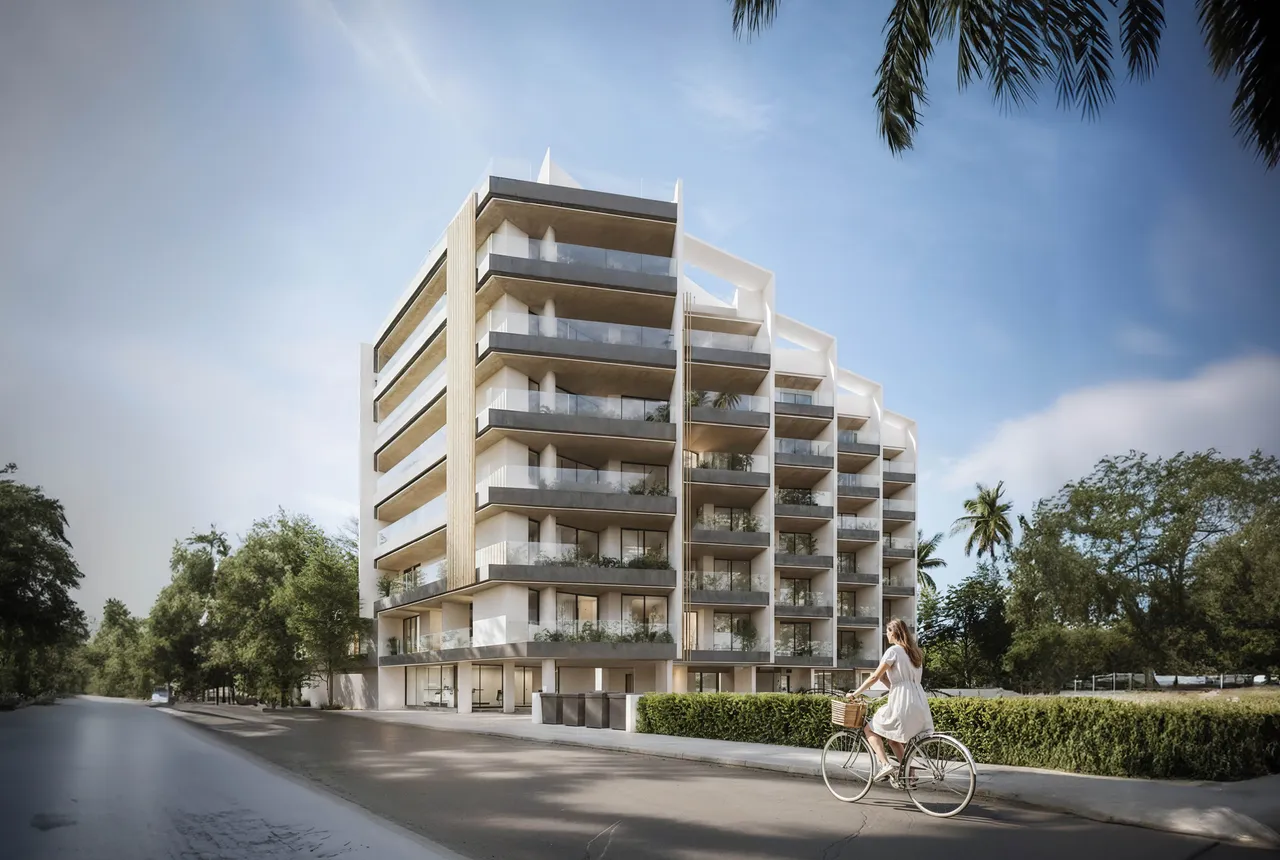
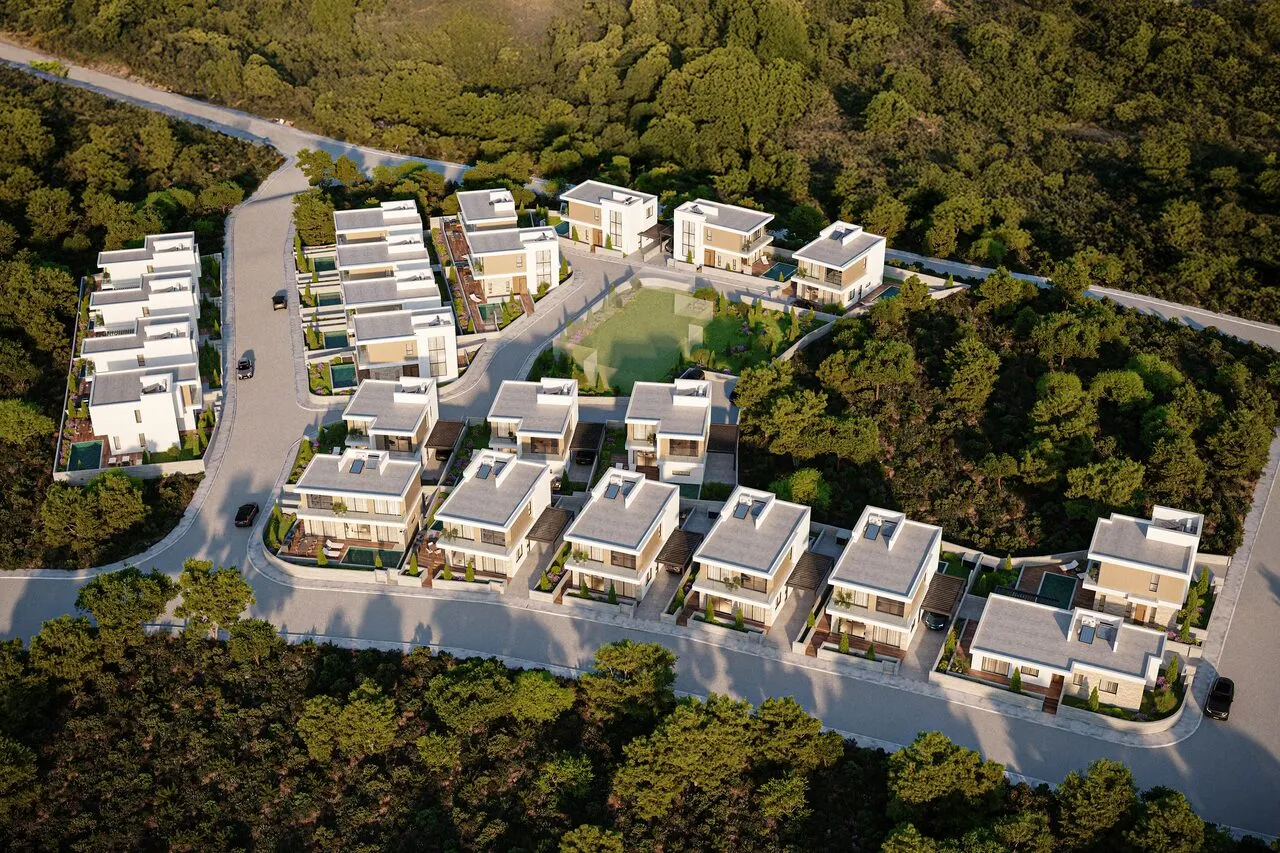
Selected new-build projects in Cyprus, prices excl. VAT
 Studio · Apartment
Plus 82
Larnaca · Downtown
 Studio · Apartment
Eden Golf
Paphos · Geroskipou
 Apartment
Zoia
Limassol · Polemidia
 Apartment · Studio
Golf Valley
Limassol · Asomatos
 Villa
Amore Hills
Paphos · Konia
 Villa
Zanatzia
Limassol · Souni-Zanatzia
 Villa
Platon Villas
Larnaca · Agios Theodoros
 Villa · Apartment · Studio
Avalon Valley
Paphos · Empa
 Villa
Aquamarine Coastal Villas
Paphos · Geroskipou
Everything you need to know about immigrating to Cyprus
Non-EU citizens can apply for the investor permit under Regulation 6(2): a first-sale home from a developer worth at least 300,000 € plus VAT, or another qualifying investment, and secured income from abroad of at least 50,000 € a year, plus 15,000 € for a spouse and 10,000 € per minor child. The alternative without an investment is Category F, with secured income from abroad of at least 9,568 € a year for the applicant and 4,613 € per dependant. EU, EEA and Swiss citizens register with the MEU1; a permanent residence certificate follows after five years.
The Migration Department's policy puts the examination of a complete investor application at approximately two months. The MEU1 is decided within one month of a complete application, the MEU2 within six months.
Under the investor permit the spouse and children under 18 are covered. Unmarried children aged 18 to 25 who study abroad and depend on you apply separately, and you show 10,000 € more income for each. Parents and parents-in-law are not covered. Non-EU family members of an EU citizen apply for the MEU2.
No, but the investor permit and Category F permit cease to be valid if the holder is absent from Cyprus for two years or acquires permanent residence abroad. A permit also lapses if the holder living abroad does not take up residence within one year of approval.
The investor policy asks the applicant and spouse to confirm that they do not intend to take up employment in Cyprus, with the exception of a directorship in the company they invested in. Category F is for people who live on income from abroad without engaging in any business, trade or profession.
Compared with Germany, Numbeo shows prices about 15 % lower without rent and rents about 12 % higher (October 2026). Local purchasing power is 37.2 % lower. The worked example above gives monthly spending of 2,324 € for a retired couple in Paphos.
The 2026 scale runs from 0 % up to 22,000 € to 35 % above 72,000 €. Foreign pensions can be taxed at a flat 5 % above 5,000 € a year if you elect it. Corporate tax is 15 % since 2026. Treaties and your tax residency decide which state may tax what. The contributions, deductions and take-home examples are in our guide to Cyprus tax for individuals.
GESY requires ordinary residence plus a status such as work, permanent residence or a qualifying permit. Pensioners from another EU or EEA state or Switzerland use the S1. Details in health insurance in Cyprus.
EU, EEA and Swiss citizens register with the MEU1 and need sufficient means and comprehensive health cover. Non-EU retirees can apply under Category F, with an income test of 9,568 € for the applicant and 4,613 € per dependant; no property purchase is required by the policy.
No. According to the European Commission, Cyprus takes part in Schengen cooperation, but internal border controls have not yet been abolished by the Council. Permits issued by Cyprus give no right to live in other EU countries.
EU, EEA and Swiss citizens need no property to live in Cyprus. If you want to look at homes in Paphos, Larnaca or Limassol before you move anyway, you can see current new-build projects or contact us.
Free PDF guide · PDF, English
Permanent Residence in Cyprus through Property (Category 6.2): Requirements, Process and Costs (2026)
What the rules require today, who qualifies, and what health cover and tax come with it.
What is inside
- Category 6.2 requirements at a glance (as of October 2026)
- Who qualifies: the investment, the applicant and the family
- Application process for Category 6.2, step by step
- Costs to budget for a Category 6.2 purchase