
Guides/Tax & legal guides
Cyprus Tax for Individuals in 2026: Income Tax Rates, Contributions, Allowances and Take-Home Examples

A person who is tax resident in Cyprus pays income tax on worldwide income, and since 1 January 2026 the first €22,000 of chargeable income is taxed at 0%, with 20% on the next €10,000, 25% on the next €10,000, 30% up to €72,000 and 35% above. Income tax is only part of the bill: an employee also pays 8.8% social insurance on salary up to €68,904 and 2.65% to the national health system, and both contributions are deductible. This guide sets the pieces next to each other, from the figures in the PwC Worldwide Tax Summaries for Cyprus (read on 5 November 2026), and works out take-home pay at four salaries so that the rates can be read as euros. Residence rules, the non-domicile regime and property taxes have their own guides, linked where they come up.
Cyprus tax for individuals: who pays tax on what
Cyprus personal income tax is charged on the worldwide income of individuals who are tax resident in Cyprus. Individuals who are not tax resident are taxed only on certain types of income that arise in Cyprus. Residence is decided by the 183-day rule or the 60-day rule, and a second status, domicile, decides whether a resident also pays the Special Defence Contribution on dividends and interest. Both are explained, with worked examples, in how Cyprus tax residency works. The tax year is the calendar year, and every individual files a separate return.
Cyprus income tax rates and brackets for 2026
| Chargeable income, 2026 | Rate | Tax at the top of the band |
|---|---|---|
| Up to €22,000 | 0% | €0 |
| €22,001 to €32,000 | 20% | €2,000 |
| €32,001 to €42,000 | 25% | €4,500 |
| €42,001 to €72,000 | 30% | €13,500 |
| Above €72,000 | 35% | €13,500 plus 35% of the excess |
Until the end of 2025 the zero band stopped at €19,500 and the bands were €28,000, €36,300 and €60,000. The reform raises every threshold and lowers the tax at each level of income. Measured on the same chargeable income before any deduction, the 2026 scale saves €600 at €30,000, €985 at €50,000, €1,485 at €70,000 and €1,585 at €100,000.
| Chargeable income | Tax on the 2025 scale | Tax on the 2026 scale | Saving |
|---|---|---|---|
| €30,000 | €2,200 | €1,600 | €600 |
| €50,000 | €7,885 | €6,900 | €985 |
| €70,000 | €14,385 | €12,900 | €1,485 |
| €100,000 | €24,885 | €23,300 | €1,585 |
Cyprus tax calculator: take-home pay at four salaries
The table below shows what an employee keeps. It assumes a single person with no other income and none of the new family deductions. Social insurance is 8.8% of salary up to the 2026 cap of €68,904, the health contribution (GHS) is 2.65% of salary, and both are deducted before income tax is calculated. Income tax then follows the 2026 bands.
| Gross salary | Social insurance | GHS | Taxable income | Income tax | Net a year | Net a month | Total burden |
|---|---|---|---|---|---|---|---|
| €30,000 | €2,640 | €795 | €26,565 | €913 | €25,652 | €2,138 | 14.5% |
| €50,000 | €4,400 | €1,325 | €44,275 | €5,183 | €39,093 | €3,258 | 21.8% |
| €70,000 | €6,064 | €1,855 | €62,081 | €10,524 | €51,557 | €4,296 | 26.3% |
| €100,000 | €6,064 | €2,650 | €91,286 | €20,250 | €71,036 | €5,920 | 29.0% |
The €50,000 row in steps: social insurance 8.8% × €50,000 = €4,400; GHS 2.65% × €50,000 = €1,325; taxable income €50,000 − €4,400 − €1,325 = €44,275. Tax is 0% on the first €22,000, €2,000 on the next €10,000, €2,500 on the next €10,000 and 30% × €2,275 = €683, which makes €5,183. The employer pays a further 8.8% social insurance and 2.90% GHS on top of the gross salary, so these figures do not include the employer's cost.
Social insurance and GHS contributions in Cyprus
| Contribution | Who pays | Rate |
|---|---|---|
| Social insurance | Employee | 8.8% of gross pay, capped at €68,904 a year in 2026 |
| Social insurance | Employer | 8.8% |
| Social insurance | Self-employed | 16.6% of income, within a lower and an upper limit set each year |
| GHS (health system) | Employee | 2.65% |
| GHS | Employer | 2.90% of employees' pay |
| GHS | Self-employed | 4.00% |
| GHS | Pensioners | 2.65% of the pension |
| GHS | Anyone with rent, interest or dividend income | 2.65% of that income |
GHS contributions are capped at €180,000 of annual income. The social insurance rate for employees and employers is set to stay at 8.8% for five years from 1 January 2024 and then rise in steps. For how GHS membership works for a newcomer, including pensioners who hold an S1, see health insurance in Cyprus and the UK State Pension and S1 guide.
Cyprus tax allowances and deductions for individuals in 2026
Social insurance, GHS contributions, life and incapacity insurance premiums (the deductible premium is limited to 7% of the insured amount), pension or provident fund contributions (up to 10% of pay), employee medical fund contributions (up to 2%) and approved charitable donations reduce chargeable income, with an overall limit of one fifth of chargeable income. From 1 January 2026 the following deductions are added.
| Deduction from 1 January 2026 | Amount |
|---|---|
| Insurance of the home against natural disasters | The whole premium, up to €500 per spouse, partner or single person |
| Donations to approved cultural institutions | The whole amount, up to €50,000 |
| Children | To each parent €1,000 for the first child, €1,250 for the second and €1,500 for the third and each further child; doubled for a single parent or a parent with full custody |
| Interest or rent on the main home | Up to €2,000 per spouse, partner or single person |
| Energy efficiency of the main home and electric vehicles | Up to €1,000 per spouse, partner or single person |
The new family deductions apply only below family income ceilings of €100,000 (no children or up to two children), €150,000 (three or four children) and €200,000 (five or more). A single person without a spouse or children must have income of no more than €40,000 for the interest, rent and capital-expenditure deductions.
Tax on rent, dividends, interest and capital gains in Cyprus
- Rent. Gross rent less a deemed 20% for buildings (in place of repair costs), capital allowances and loan interest is taxed on the normal bands. The Special Defence Contribution on rent was abolished from 2026. GHS of 2.65% applies on top. A landlord with €30,000 of rent and no other income pays €795 of GHS, taxes €30,000 × 0.8 − €795 = €23,205 and owes 20% × €1,205 = €241 of income tax, about €1,036 in all.
- Dividends. Dividends are exempt from income tax. A resident who is also domiciled in Cyprus pays the Special Defence Contribution of 5% on dividends from profits of 2026 onwards (17% for profits of 2025 and earlier); a resident who is not domiciled pays none. On €200,000 of 2026 dividends a domiciled resident pays €10,000 plus GHS capped at €4,770, which is €14,770; a non-domiciled resident pays €4,770.
- Interest. 17% Special Defence Contribution for a domiciled resident (3% on certain government and listed bonds), nothing for a non-domiciled one, plus GHS.
- Capital gains. Capital gains tax of 20% applies only to gains on Cyprus-situated immovable property and to shares in companies that own it. Lifetime exemptions from 2026 are €150,000 for a private main residence, €50,000 for farmland sold by a farmer and €30,000 for any other disposal, within an overall lifetime maximum of €150,000. Gains on shares and most other assets are not taxed in Cyprus, and gains from cryptocurrency trading are taxed at a flat 8%.
- Inheritance. Cyprus has no inheritance tax: estate duty was repealed for deaths from 1 January 2000 by Law 74(I)/2000.
Taxes on buying, holding and selling a home, including transfer fees, VAT and the capital gains calculation, are in taxes on real estate in Cyprus, the annual property tax question and the property tax calculator by price band.
Cyprus tax on a foreign pension: the 5% election or the normal scale
A pension received from abroad for services performed outside Cyprus is taxed at a flat 5% on the amount above €5,000 (the exempt amount was €3,420 until 2025). Each year the taxpayer may instead choose the normal bands. The two rules cross at about €27,700 of pension a year.
| Foreign pension a year | 5% on the part above €5,000 | Normal 2026 scale | Cheaper |
|---|---|---|---|
| €20,000 | €750 | €0 | Scale |
| €30,000 | €1,250 | €1,600 | 5% election |
| €45,000 | €2,000 | €5,400 | 5% election |
PwC lists GHS at 2.65% on pensions; how it applies to a foreign pension, and what an S1 changes, is in the State Pension and S1 guide. A UK government service pension keeps its own treaty rule, and a worked tax example for a retired couple is in moving to Cyprus from the UK.
Cyprus tax exemptions for people who start work in Cyprus
- 50% exemption. For a first employment in Cyprus that began after 1 January 2022 with pay above €55,000 a year, by someone who was not resident in Cyprus for at least 15 consecutive tax years before. It applies once in a lifetime for 17 years.
- 20% exemption, maximum €8,550 a year. For a first employment that began after 26 July 2022 by someone who was not resident for at least three consecutive tax years and worked for a non-resident employer outside Cyprus. It runs for seven years, and it is not available together with the 50% or the 25% exemption.
- 25% exemption, maximum €25,000 a year. Aimed at people who return to Cyprus: employment or business that begins between 1 January 2025 and 31 December 2030, by someone who was not tax resident in the seven preceding tax years but was resident in an earlier year. Pay or profit must exceed €30,000 in the first 12 months, and the person needs either a recognised university degree plus at least 36 months of full-time work for a non-Cyprus employer in the previous 84 months, or 84 months of such work. It runs for seven years from the year work starts and is not available together with the 50% exemption.
- 100% exemption. For pay earned from employment exercised outside Cyprus for more than 90 days in a tax year for a non-resident employer or the foreign permanent establishment of a Cyprus employer.
Take an employee who qualifies for the 50% exemption and earns €80,000. Before the social insurance and GHS deductions, tax on €80,000 is €13,500 + 35% × €8,000 = €16,300. With half of the pay exempt the taxable amount is €40,000 and tax is €2,000 + 25% × €8,000 = €4,000, a saving of €12,300 a year. The conditions are detailed, so confirm eligibility with a Cyprus tax adviser before you plan around one of these exemptions.
Cyprus income tax return: deadlines, PAYE and payment
- Employees and pensioners file the electronic return by 31 July of the following year. Self-employed people with turnover up to €120,000 file by 31 January of the second year after the tax year.
- Salaries are taxed through withholding (pay-as-you-earn). Income without withholding, such as rent or foreign income, calls for estimated tax paid in two equal instalments on 31 July and 31 December of the same tax year.
- Employees and pensioners without business, rent, dividend or interest income make a final balancing payment by 31 July of the following year.
- The Council of Ministers can extend the deadlines, so check the Tax Department announcements each year.
Nine new-build homes in Paphos and Limassol for tax-conscious buyers
 Apartment
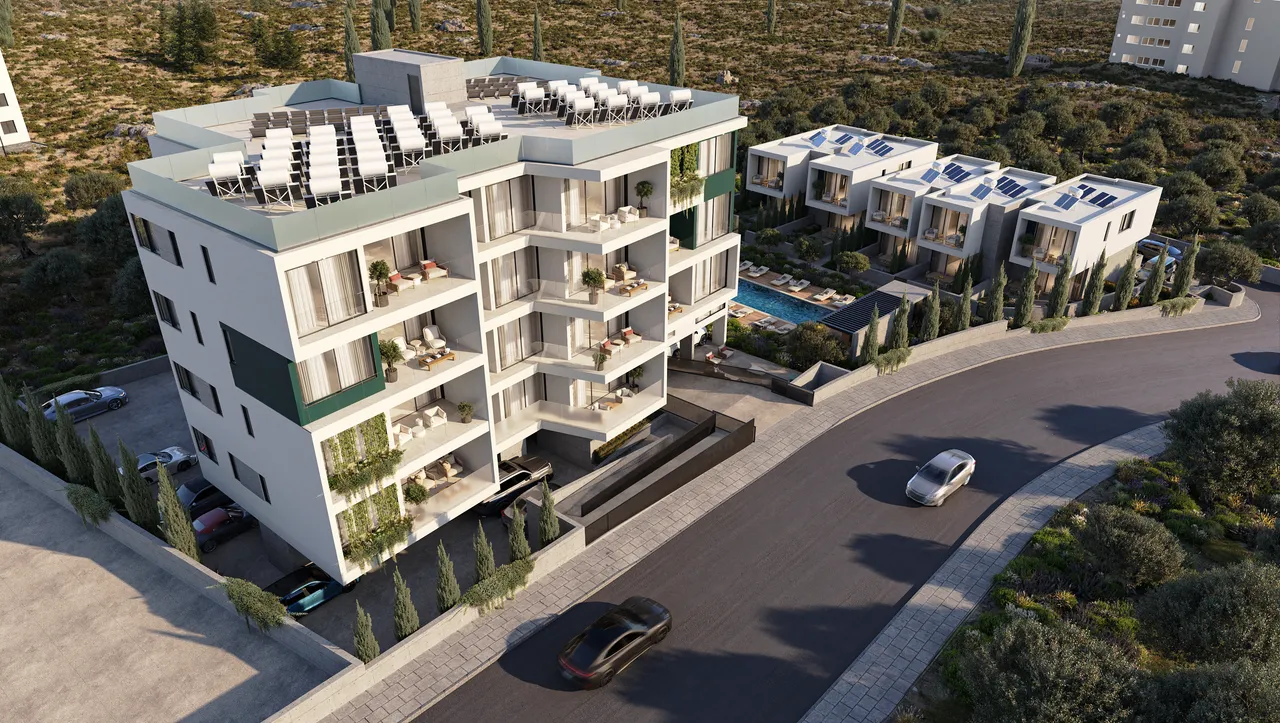
Thea
Paphos · Kissonerga
 Apartment · Villa
Kalamos Duo
Paphos · Tombs of the Kings
 Apartment
Arbeo Park
Paphos · Anavargos
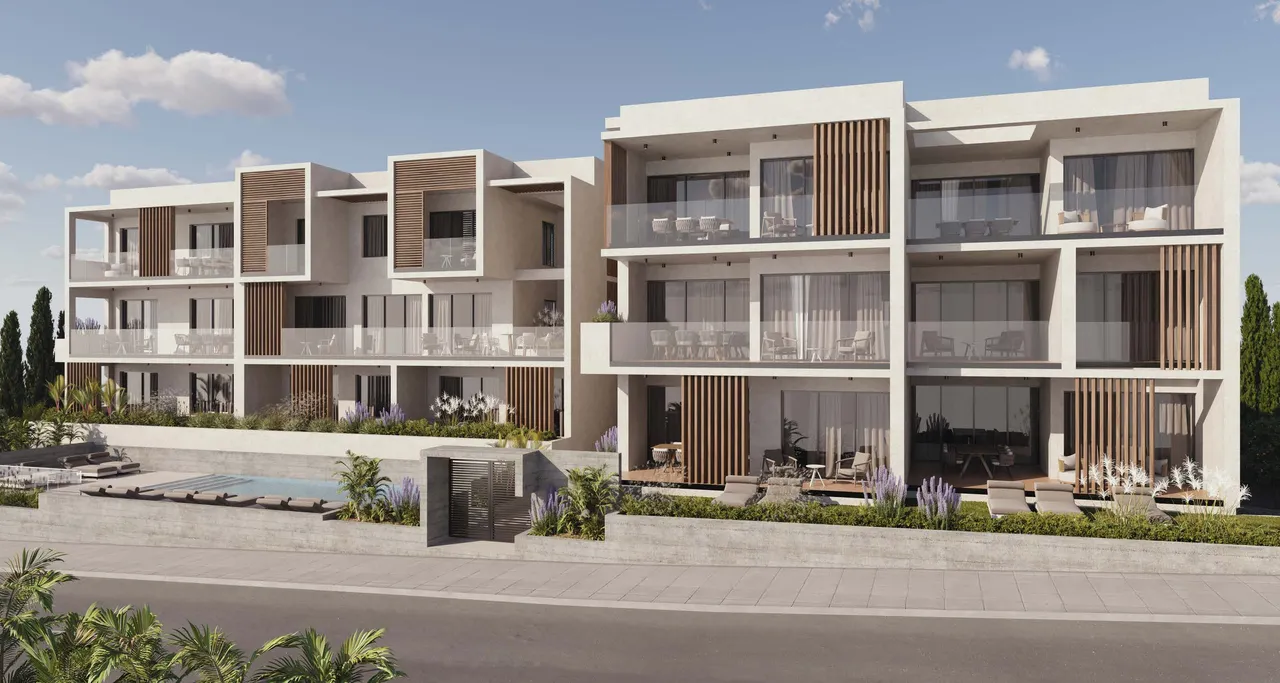
La Mer
Paphos · Tombs of the Kings
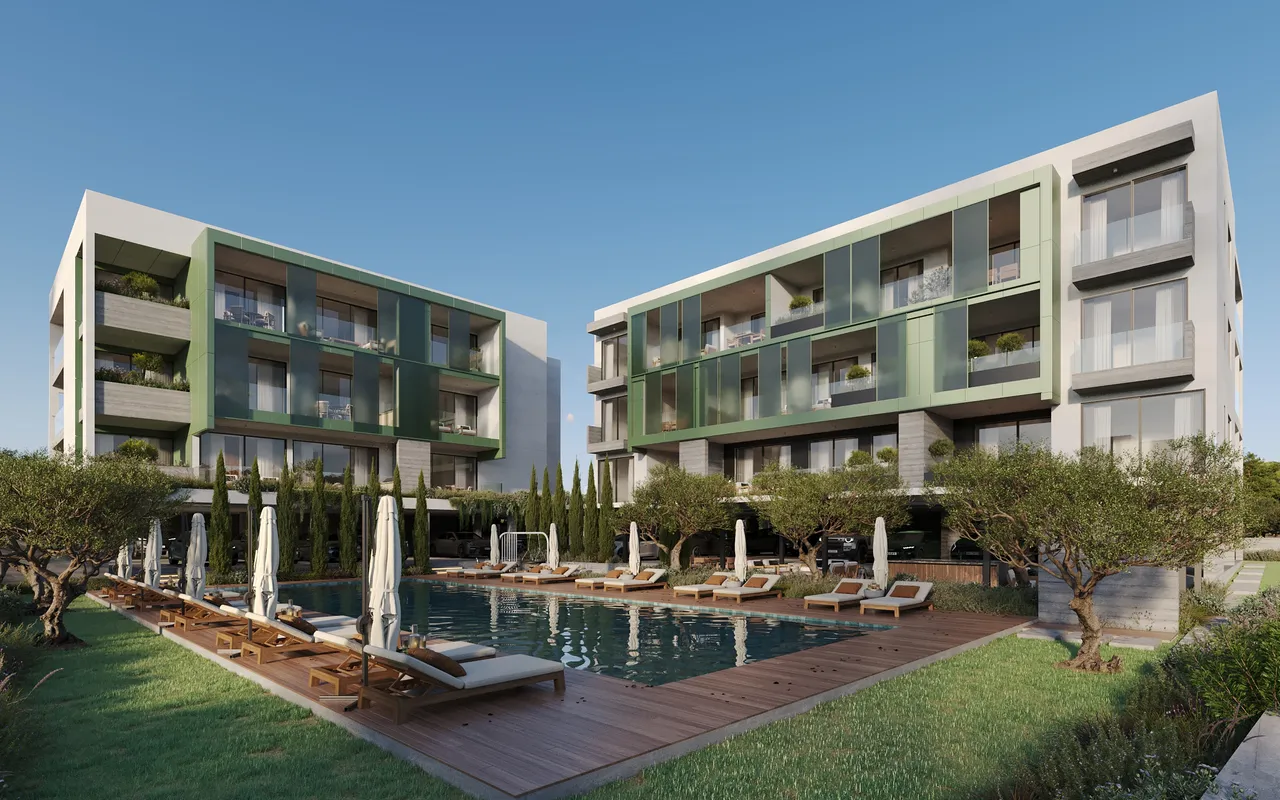 Apartment
Seasons
Paphos · Universal
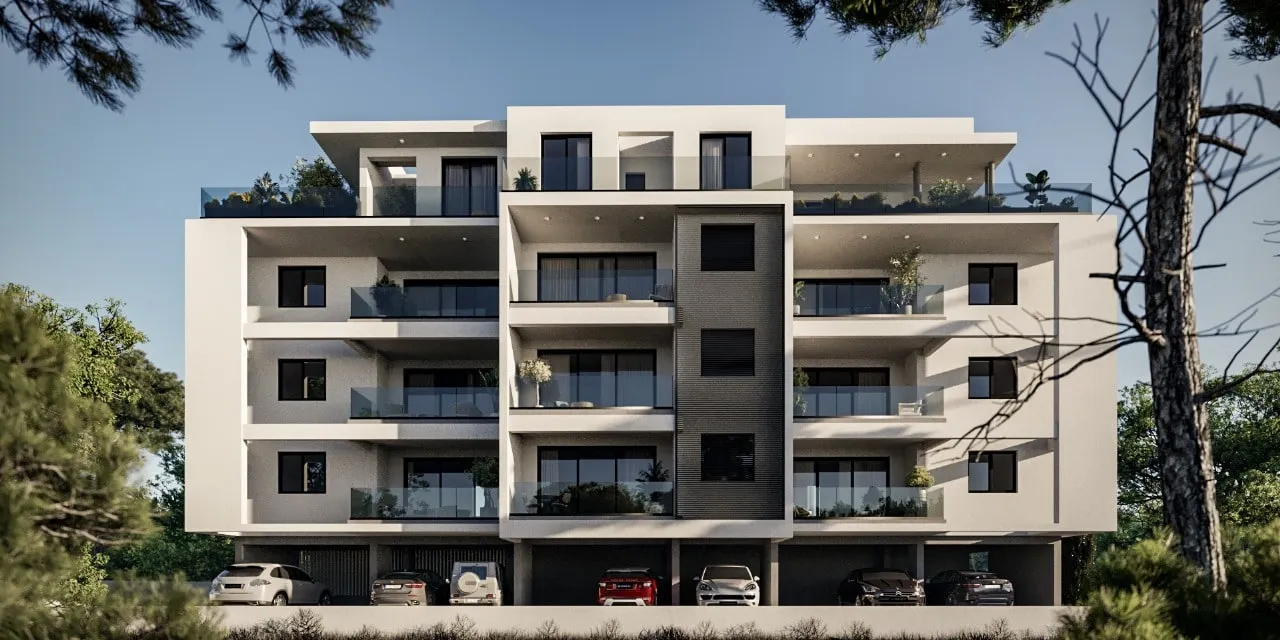
Azalea
Limassol · Germasogeia
 Apartment
Venara
Paphos · Chloraka
 Apartment
City Colors
Paphos · Park of Colours
 Apartment
Mandarin
Limassol · Germasogeia
Questions about Cyprus tax for individuals
The first €22,000 of chargeable income is taxed at 0%. Then 20% applies up to €32,000, 25% up to €42,000, 30% up to €72,000 and 35% above that. Employees also pay 8.8% social insurance and 2.65% GHS, both deductible.
A single employee with no other deductions pays €5,183 of income tax, €4,400 of social insurance and €1,325 of GHS, a total burden of 21.8%, and keeps about €39,093 a year or €3,258 a month.
Yes: the zero-rate band is the first €22,000 of chargeable income in 2026, up from €19,500. On top of that, contributions, insurance premiums and, from 2026, family and home-related deductions reduce chargeable income.
Yes, under the normal bands after a deemed 20% deduction for buildings, plus 2.65% GHS. The Special Defence Contribution on rent was abolished from 2026.
At 5% on the part above €5,000, or on the normal scale if you elect it for the year. PwC lists a 2.65% GHS rate for pensioners; check with the Health Insurance Organisation how it applies to your pension.
Capital gains tax of 20% applies only to Cyprus immovable property and shares in companies that own it, with lifetime exemptions of up to €150,000. There is no inheritance tax: estate duty was repealed for deaths from 1 January 2000.
31 July of the following year for employees and pensioners, with extensions announced by the Tax Department in some years.
Not the Special Defence Contribution, but the 2.65% GHS contribution still applies. A foreigner becomes domiciled after being tax resident for 17 of the previous 20 years; see the tax residency guide.
Sources (read on 5 November 2026): PwC Worldwide Tax Summaries, Cyprus, individual sections “Taxes on personal income”, “Deductions”, “Income determination”, “Other taxes”, “Residence” and “Tax administration”; Law 74(I)/2000 (repeal of estate duty). Not checked and therefore left out: Tax Department circulars on how the 2026 family deductions are claimed, the 2026 filing-deadline extensions, and the tax position of non-residents on the new bands.
Choosing where to buy with the tax bill in mind? Send us your budget and city and we will shortlist new-builds and introduce you to independent Cyprus tax advisers and lawyers; the legal and tax review of any purchase stays with your own advisers.