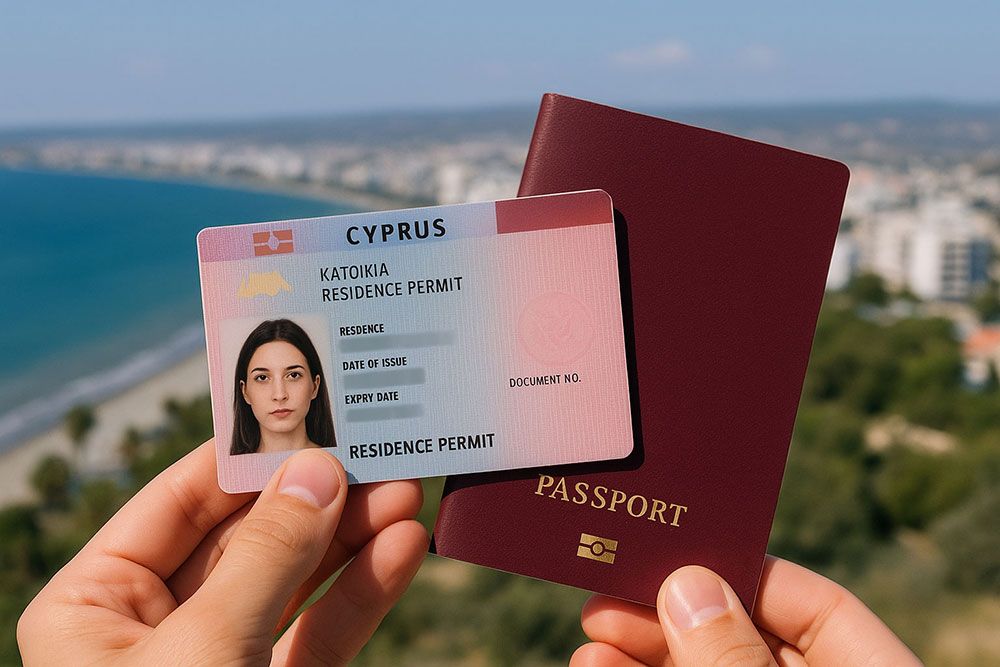

Cyprus Insights/Life in Cyprus
How to Get Permanent Residence in Cyprus (2026): Requirements, Routes and What You Actually Get

Cyprus does not have one permanent residency. It has three different statuses that guides routinely lump together: the fast-track investor permit under Regulation 6(2), often called Category 6.2; the slow-track Category F for people with passive income; and the permanent residence certificate that EU citizens earn after five years. They have different requirements, different timelines and, above all, different limits. That confusion is why so many online answers are wrong about Schengen, about working, and about citizenship. This guide sorts out which route applies to you, what the 2026 requirements are with a worked example for a family of four, and what the permit does and does not give you.
Cyprus Permanent Residence: Which of the Three Routes Applies to You?
The right route depends on your passport and on what you can prove, not on which one sounds most attractive.
| Route | Who it is for | Main requirements | Realistic timing | What it gives |
|---|---|---|---|---|
| Fast-track investor permit (Regulation 6(2), Category 6.2) | Non-EU nationals who invest | €300,000 + VAT investment; secure income from abroad of at least €50,000 | 2–3 months for a complete file | Indefinite residence, no right to a local job, no Schengen rights |
| Category F, standard track | Non-EU nationals with passive income and no investment | Secure income from abroad (indicative: about €9,568 plus about €4,613 per dependant); a property purchase or a rental in Cyprus | 12–24 months, reviewed in batches | Residence without the right to work |
| EU citizen permanent residence (MEU3) | EU nationals living in Cyprus | Five years of continuous legal residence, after first registering (MEU1) | Applied for after year five | No expiry date; same ARC number as your registration |
Most readers of this page are non-EU investors, so the sections below follow the fast-track route in detail. EU citizens have their own section further down.

Cyprus Permanent Residence Requirements for Non-EU Investors (2026)
The fast-track permit rests on two separate conditions: a qualifying investment and a proven income from abroad. The current rules were revised by the Ministry of Interior with effect from 2 May 2023. Some guides still quote the older figures, a €30,000 income and a €30,000 deposit pledged for three years, so check the date of whatever you are reading. Both of those figures were changed or dropped in 2023.
The investment. At least €300,000 from legal overseas sources, in one of four forms:
| Investment route | What qualifies |
|---|---|
| New residential property | A house or apartment bought new, in its first sale, directly from a development company, for at least €300,000 plus VAT. Resale homes do not qualify on this route. |
| Commercial property | Offices, shops, hotels and similar, worth at least €300,000. Resale is allowed here. |
| Cyprus company shares | At least €300,000 in the share capital of a Cyprus company with a real presence on the island and at least five employees. |
| Cyprus investment funds | At least €300,000 in units of a Cyprus-regulated fund (AIF, AIFLNP or RAIF). |
Whichever route you use, the money has to arrive from abroad, with the bank transfers and source of funds documented. A Cyprus mortgage cannot supply the €300,000; see our cost of buying guide for how financing interacts with the permit.
The income. You must also show a secure annual income from abroad, evidenced through tax returns, an accountant's certificate or documented dividend, rental or pension income. The requirement grows with the family:
| Who | Annual income required |
|---|---|
| Main applicant | €50,000 |
| Spouse | + €15,000 |
| Each minor child (under 18) | + €10,000 |
| Each dependent adult student (up to 25) | + €10,000 |
Worked example: a family of four. A couple with two children aged 8 and 12 buy a new apartment priced at €300,000 before VAT.
| Item | Calculation | Amount |
|---|---|---|
| Income required | €50,000 + €15,000 + 2 × €10,000 | €85,000 a year |
| Purchase price before VAT | Qualifying minimum | €300,000 |
| VAT at the reduced 5% rate | €300,000 × 5% | €15,000, total €315,000 |
| VAT at the standard 19% rate | €300,000 × 19% | €57,000, total €357,000 |
| Government application fee | Reported fee; confirm with your lawyer whether it is charged per applicant | €500 |
Two things follow from the numbers. The income test, not the property price, is what rules out many families: €85,000 a year of documented foreign income is a much higher bar than the €300,000 headline suggests. And the VAT rate matters by €42,000: the reduced 5% rate applies only when the conditions for a main residence are met, so ask your lawyer which rate your unit attracts. Our VAT guide explains the difference. Parents and in-laws are no longer covered by this route since the 2023 reform and must apply for a separate residence permit.
How Long Does Cyprus Permanent Residence Take?
For the fast-track route, expect about 2–3 months for a complete file, and up to five or six if the department asks follow-up questions or the file is incomplete. From signing the purchase contract to holding the permit, a clean case takes roughly three to four months in practice:
| Stage | Typical duration |
|---|---|
| Property selection and legal review | 1–2 weeks |
| Contract signing and Land Registry registration | About 1 week |
| Transfer of funds from abroad | A few days |
| Preparing the application file (apostilled certificates take the longest) | 1–2 weeks |
| Government review | 2–3 months |
| Biometrics visit and card collection | 2–3 weeks |
The standard Category F track is a different story. It needs no investment, but applications are examined in batches and reviews currently run 12–24 months, with some reports of much older files still being processed. If speed matters, the investor route is the only one that is fast.

How to Apply for Cyprus Permanent Residence by Investment: Step by Step
- Check eligibility with a lawyer. Use a lawyer registered with the Cyprus Bar Association, who will run due diligence on the developer and confirm that the unit is a qualifying first sale. See how to choose a property lawyer and vet a developer.
- Reserve and sign. Reserve the unit, then sign the sale contract. Your lawyer registers it with the district Land Registry, and the registration number becomes part of your application.
- Transfer the funds from abroad. Pay from your own account abroad and keep the SWIFT copies and the receiving bank's confirmation that foreign funds arrived.
- Assemble the file. For each applicant: Form MIP1, certified passport copies, criminal record certificates from your home country and country of residence (apostilled or embassy-certified), marriage and birth certificates where relevant, and private medical insurance covering inpatient and outpatient care. For the family: proof of the investment (contract, Land Registry documents, transfer confirmations) and proof of income. Documents not in English need certified translations.
- Submit. File with the Civil Registry and Migration Department (CRMD), in person or through your lawyer, and pay the €500 fee. You receive a proof-of-submission receipt that lets you track the application.
- Wait. You do not need to be in Cyprus during the review.
- Collect the permit. After approval, a short visit to Cyprus for biometrics and the card. Afterwards, apply for a Cyprus tax identification number and arrange health cover.
What Cyprus Permanent Residence Gives You, and What It Doesn't
The real benefits are substantial: indefinite residence with no yearly permit renewals, your spouse and minor children on the same application, no obligation to live on the island, and a base in an EU country with no inheritance tax. Corporate tax is now 15% since the 2026 reform (it was 12.5%), so older guides quoting 12.5% are out of date.
The limits are where most guides go wrong. Here is what the permit does not do:
| The claim | The reality |
|---|---|
| "PR lets me travel freely in the Schengen area." | Cyprus is not in Schengen, and the permit is a Cyprus status. Your passport decides where you can travel. |
| "PR gives me EU rights." | It gives residence in Cyprus only, not the right to live or work in other EU countries. |
| "PR lets me work." | Not as an employee in Cyprus. You can be a shareholder or director of a company and receive dividends, rent or a pension. |
| "PR gives me public healthcare (GeSY)." | Only if you are habitually resident in Cyprus. A holder who visits once every two years is not. Health insurance is a condition of the permit. |
| "PR makes me a Cyprus tax resident." | No. Tax residency comes from the 183-day or 60-day test, assessed separately from immigration status. |
| "PR is permanent whatever I do." | Holders must keep the qualifying investment and keep meeting the conditions, and enter Cyprus at least once every two years. |
Three of these points have their own guides: how GeSY eligibility and contributions work, when you become a Cyprus tax resident, and the history behind the "Golden Visa" label and why it is not citizenship, in our explainer on Category 6.2 and the old Golden Visa.
Permanent Residency in Cyprus for EU Citizens
EU citizens do not need an investment or an income test. You register with the Civil Registry and Migration Department when you stay longer than three months and receive the registration certificate (the yellow slip, MEU1). After five years of continuous legal residence, you can apply for permanent residence with the MEU3 application at your local Aliens and Immigration Unit. You must show that you did not depend on the Cyprus social assistance system during that time. Temporary absences of up to six months a year do not break the five years.
The permanent residence certificate has no expiry date and keeps the same Alien Registration Certificate (ARC) number you received at registration. It is the right track if you are moving to Cyprus to live rather than to invest.
From Permanent Residence to Citizenship: Why the Two-Year Visit Doesn't Count
Permanent residence does not lead automatically to a Cypriot passport. Naturalisation under the law that took effect in December 2023 requires at least 7 years of legal residence within the 10 years before you apply, plus an uninterrupted legal stay of 12 months immediately before the application, with absences of no more than 90 days in that final year. There is also a Greek language requirement (level B1 for general applicants).
That has a practical consequence for investors. The permit lets you visit once every two years, but the final 12 months before a citizenship application must be spent living on the island. A holder who only makes the minimum visits cannot naturalise without actually moving to Cyprus first. How years spent abroad on a PR permit count toward the seven is decided by the Migration Department, so confirm your position with a lawyer before planning around citizenship.
Mistakes That Delay or Cancel a Cyprus Permanent Residence Application
- Buying a resale home for the residential route. Only a first sale from a developer qualifies; resale works only for commercial property.
- Financing the €300,000 with Cyprus money. The funds must come from abroad and be documented.
- Planning around parents. Since 2 May 2023 they are not covered and need their own permit.
- Underestimating the income test. A family of four needs €85,000 a year of documented foreign income.
- Selling the property without replacing it. The permit depends on the investment being maintained.
- Skipping the entry rule. Every family member on the permit must enter Cyprus at least once every two years.
- Buying from an unverified developer. If the unit does not qualify, you have a property and no permit.
Frequently Asked Questions About Cyprus Permanent Residence
Not through the residential route, which requires a first sale from a developer. A resale purchase can qualify only if the property is commercial, such as a hotel, office or shop worth at least €300,000.
No. The three-year pledged deposit was dropped in the May 2023 revision. Older pages that still list it describe the previous rules, along with the €30,000 income figure, which is now €50,000.
Not since the 2 May 2023 reform. Parents and in-laws need to apply for a separate residence permit.
An unmarried child aged 18 to 25 who is a full-time student, financially dependent on you and still has at least six months of study left can be added through a separate, linked application, with €10,000 added to the family's required income.
Regulation 6(2) is open to non-EU nationals who meet the investment, income and clean-record conditions. The requirements described here apply to the applicant, not to a specific nationality.
Selling the qualifying investment without replacing it with another qualifying one puts the permit at risk, because holders must show each year that the investment is maintained.
Want to see which new-build projects qualify for the investor route? Browse our villas eligible for the Cyprus residency permit or talk to our team, and we will check a specific unit against the requirements before you commit.
Recommended properties
 Apartment · Villa · Townhouse
Limassol Greens
Limassol
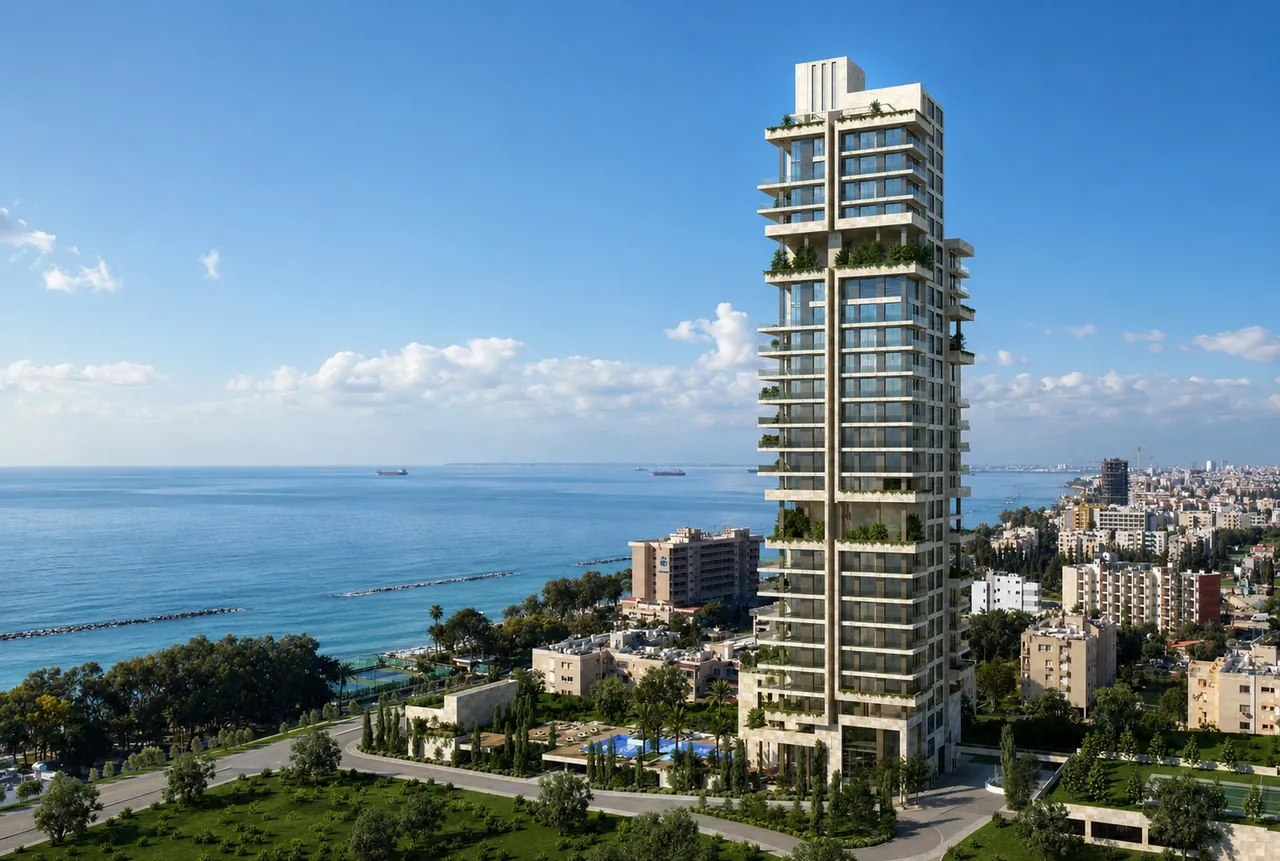 Apartment · Penthouse
Dream Tower
Limassol · Agios Tychonas
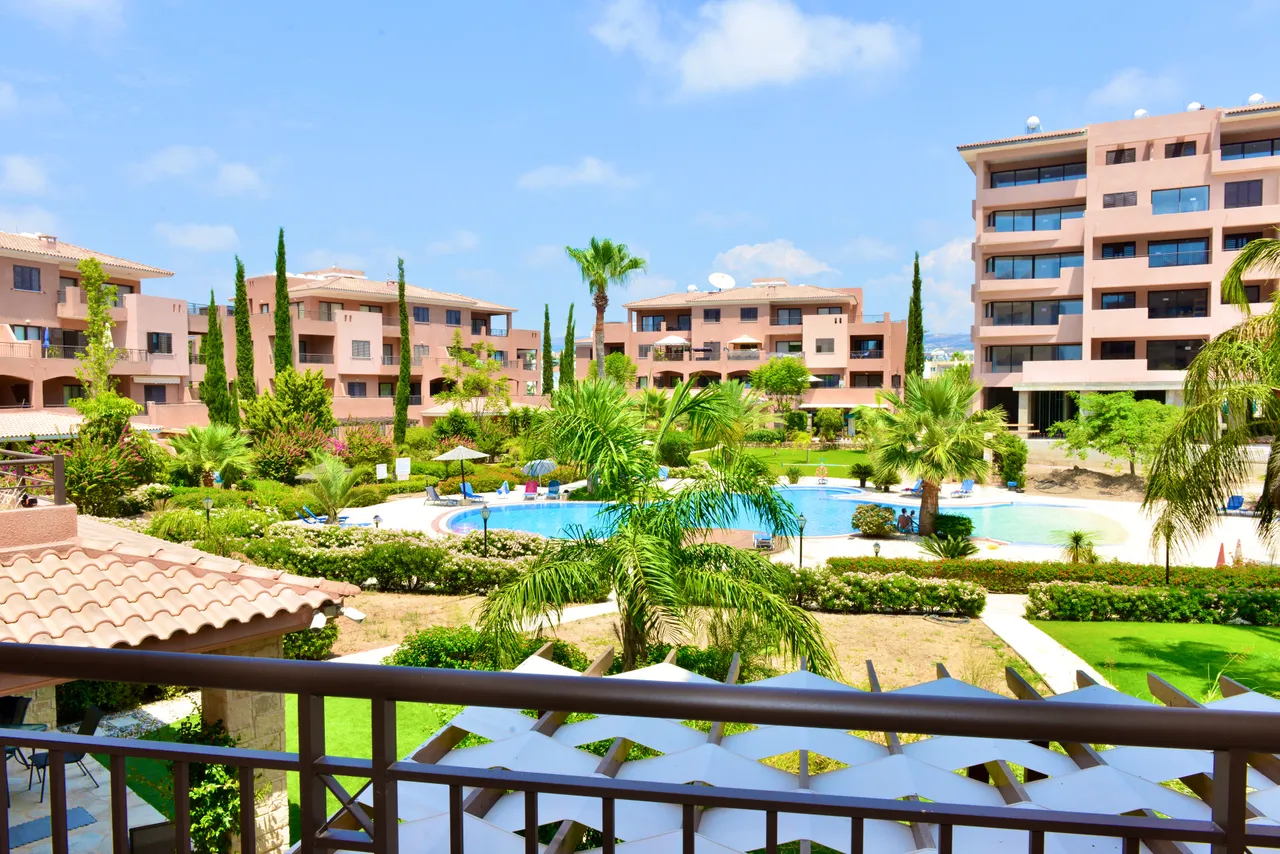
Aphrodite Gardens
Paphos · Kato Paphos

Line
Limassol · Potamos Germasogeias
 Villa · Terraced House · Apartment
Mamba
Paphos · Chlorakas · Chloraka
 Villas / Houses
Olympus Village
Paphos · Tsada