

Cyprus Insights/Buying Property in Cyprus
How Much Money Do You Need to Buy Property in Cyprus? Cash Required by Buyer Type (2026)

Ask how much money you need to buy property in Cyprus and most guides answer with a percentage: budget 5-10% above the price. That rule is wrong in both directions. On a €300,000 apartment the cash you need on top of the price runs from about €12,500 for a resale to about €61,000 for a new-build at 19% VAT, a spread of 4% to 20%. And the number on your bank statement matters twice: how much you need in total, and how much you need on which date.
This guide answers the budget question: how much cash, for which kind of buyer, and when it leaves your account. It deliberately does not re-list every rate and fee; that itemised breakdown lives in our cost of buying property in Cyprus guide, and the order of the legal steps is in how to buy property in Cyprus as a foreigner. Every worked example below uses a €300,000 purchase price and states its assumptions, so you can swap in your own numbers.
How much money do you need to buy a €300,000 property in Cyprus?
Four routes, same price. The extras are transfer fees or VAT, a legal fee and Land Registry charges; the mortgage row adds the bank's costs and shows how little cash a loan leaves you needing on the day.
| Route (price €300,000) | Extras on top of the price | Cash needed at completion |
|---|---|---|
| Resale, paid in cash | ≈ €12,500 (4.2%) | ≈ €312,500 |
| New-build, 5% VAT (main residence), paid in cash | ≈ €18,900 (6.3%) | ≈ €318,900 |
| New-build, 19% VAT (investment or second home), paid in cash | ≈ €60,900 (20.3%) | ≈ €360,900 |
| Resale with a 35% deposit mortgage (non-EU non-resident, assumption) | ≈ €16,800 incl. ≈ €4,300 loan costs | ≈ €121,800 (40.6%) |
Assumptions: transfer fee on a resale €8,600 (3% / 5% / 8% scale, halved); legal fee 1% plus 19% VAT, which at this price is €3,570; about €300 of Land Registry and search charges (the contract deposit alone is €50); mortgage registration 1% and bank arrangement fee about 1% of the loan, valuation about €400. Furnishing, moving and reserve are excluded here and added below. The 5% VAT row only works inside the eligibility limits (see below).
Why "budget 5-10% on top" is the wrong way to work out how much money you need
The rule of thumb fails because the cost is set by a legal category, not by the price. A property that has never been used is a new-build: VAT applies (19%, or 5% if you qualify) and the Land Registry transfer fee is zero. A property that has had an owner is a resale: no VAT, but a transfer fee that works out at about 2.9% of a €300,000 price. You never pay both. Our new-build versus resale guide compares the trade-offs; for budgeting, the point is that the same price needs between 4% and 20% on top.
Three details that older guides get wrong. Stamp duty is gone: Law 239(I)/2025 repealed it for documents signed from 1 January 2026, so a stamp duty line in a 2026 budget is a stale one. The 5% VAT rate has caps: it applies to the first 130 m² and the first €350,000 of a main residence, and not at all above 190 m² or €475,000; a €600,000 villa pays 19% on the whole price. The listing price may exclude VAT: developers often quote a price "plus VAT", so confirm in writing whether the figure you are comparing includes it. Since 1 September 2026 whether a building counts as new for VAT turns on whether it has been put to systematic first use, no longer on a five-year clock from completion, so ask your lawyer to confirm which regime applies to the exact unit.

Is €300,000 enough to buy property in Cyprus? Working backwards from your cash
Most buyers do not start from a price, they start from a sum of money. Here is the same cost model run in reverse: you have €300,000 in total and need every euro of tax, fee and legal cost to fit inside it. For the smallest budgets, cheap property in Cyprus shows what €100,000 to €200,000 of cash buys in our database.
| Route | Largest price you can pay | Floor area at our median price (Paphos / Limassol) |
|---|---|---|
| Resale, cash | ≈ €288,000 | ≈ 84 m² / 71 m² |
| New-build, 5% VAT, cash | ≈ €282,000 | ≈ 83 m² / 70 m² |
| New-build, 19% VAT, cash | ≈ €249,000 | ≈ 73 m² / 62 m² |
The last column uses the median prices in our own new-build inventory, €3,418 per m² in Paphos and €4,037 in Limassol (see what €300,000 buys in Paphos versus Limassol). Treat it as an indication of scale, not a quote for a specific unit. The honest answer to "is €300,000 enough" is yes for a one- or two-bedroom apartment, but the tax category decides how much floor area you give up: choosing 19% over 5% VAT costs about 10 m² in Paphos.
How much cash you need by buyer type: EU resident, EU non-resident, non-EU and the residence route
Who you are changes the deposit more than anything else, because a Cyprus lender's loan-to-value limit depends on your residency, and a non-EU buyer has one extra gate to pass. The ranges below come from our mortgage guide for foreign buyers and are bank-dependent, so treat them as planning bands rather than offers. The cash column is for a €300,000 resale with the extras from the first table, plus loan costs of 2% of the loan and €400 valuation.
| Buyer | Typical deposit and financing | Cash needed on €300,000 resale | Extra gate |
|---|---|---|---|
| Cyprus resident, any nationality | Highest loan-to-value; published guides cite up to about 80% | ≈ €78,000 at 20% deposit | None for EU buyers; permit for non-EU |
| EU/EEA citizen living abroad | About 70-75% loan, 25-30% deposit | ≈ €92,400 to €107,100 | None: EU citizens buy without a permit |
| Non-EU, non-resident (incl. UK, US, Israel, UAE) | About 60-70% loan, 30-40% deposit, sometimes more | ≈ €107,100 to €136,500 | Council of Ministers permission after signing |
| Non-EU buyer on the €300,000 residence route | The investment cannot be mortgaged and must come from abroad | €315,000 at 5% VAT or €357,000 at 19%, plus ≈ €3,900 fees | First sale from a developer only; €50,000+ documented income |
The residence route is a different question from "how much can I borrow". The qualifying €300,000 plus VAT has to be your own foreign funds, and the income test, not the property price, is what rules out many families; our permanent residence guide has the full requirements and a worked family example.
Worked example: a non-EU buyer with a 35% deposit on a €300,000 resale
Take a non-EU buyer who has agreed a 35% deposit with the lender (an assumption inside the 30-40% band). The loan is €195,000. The cash needed before the keys change hands:
| Item | Calculation | Amount |
|---|---|---|
| Deposit | 35% × €300,000 | €105,000 |
| Transfer fee | 3% / 5% / 8% scale, halved | €8,600 |
| Legal fee | 1% + 19% VAT | €3,570 |
| Land Registry and search charges | assumption | €300 |
| Mortgage registration | 1% × €195,000 | €1,950 |
| Bank arrangement fee | about 1% × €195,000 | €1,950 |
| Valuation | typical | €400 |
| Cash needed | €121,770 (40.6% of the price) |
A cash buyer of the same flat needs about €312,500. The mortgage cuts the cash needed on the day by about €190,700 and adds about €4,300 of one-off costs plus interest for the life of the loan. If the mortgage is the plan, price it before you choose the property: the lender's age limit (full repayment by 65 to 70) and the 40% deposit step in the interest margin can change which purchase makes sense, as the mortgage guide shows with numbers.
Paying for property in Cyprus: when the money leaves your account
A resale and a new-build ask for money on different timetables. Published buying guides put a reservation fee at roughly €3,000 to €10,000, followed by a deposit of 20% to 40% when the contract is signed; on a resale the balance is due when title transfers. A new-build, especially off-plan, splits the price into instalments. Our off-plan deposit protection guide describes the market-standard structure as roughly 20-30% on signing, 40-50% in stage payments and 20-30% at handover, and explains why instalments should be tied to construction milestones rather than calendar dates.
Here is what that looks like in cash for a €300,000 new-build bought at the reduced 5% VAT rate, using an assumed 25% / 15% / 15% / 15% / 30% schedule. The developer invoices VAT with each instalment, so VAT arrives in pieces too.
| Payment (assumed schedule) | Price part | VAT 5% | Cash due | Cumulative cash |
|---|---|---|---|---|
| On signing the contract (25%) | €75,000 | €3,750 | €78,750 | €78,750 |
| Foundations complete (15%) | €45,000 | €2,250 | €47,250 | €126,000 |
| Frame complete (15%) | €45,000 | €2,250 | €47,250 | €173,250 |
| Envelope complete (15%) | €45,000 | €2,250 | €47,250 | €220,500 |
| On handover (30%) | €90,000 | €4,500 | €94,500 | €315,000 |
Add the legal fee (€3,570) and about €300 of registry charges near the start, and the buyer's all-in cost is about €318,900, the same figure as in the first table, only spread over the build. The practical lesson: the biggest single cheque is the last one, and a lender may not release a loan until the building is finished. If you plan to finance, ask your bank before signing whether it will fund the stage payments or only the final balance.
Mortgage or cash: how the size of your deposit changes the money you need
A bigger deposit is not only a bigger cheque today. In our mortgage guide's worked example, a €400,000 apartment over 20 years costs €145,140 in interest with a 30% deposit at 4.5%, and €106,017 with a 40% deposit at 3.9%. An extra €40,000 of deposit saved €39,123 of interest, because crossing the 40% line moves you into a cheaper margin band. If you are close to that threshold, closing the gap is usually the most profitable decision in the whole purchase. If your budget is tight, it is also a reason to consider a resale, which needs less cash on the day.
Sending the money from abroad: exchange-rate and transfer costs in your budget
Bank charges on an international transfer are small. The exchange rate is not. Every 1% that a bank or broker takes as margin is €3,000 on a €300,000 purchase and about €3,100 on the €312,500 a resale buyer actually wires; 0.25% would be about €780. Get a quote for the full amount before you commit to a currency route, and consider fixing the rate once the contract is signed. Our guide to transferring large sums to Cyprus covers the mechanics.
Allow time as well as money. Law firms advise assembling source-of-funds paperwork before you wire anything: passport, proof of address, tax residency certificate and typically six to twelve months of bank statements showing where the money came from. If you do not yet have a Cyprus account, see how to open a bank account in Cyprus as a foreigner.

Total budget beyond closing costs: furnishing, running costs and a reserve
The purchase is only part of the money you need in the first year. The table completes the €300,000 resale example. Furnishing and the reserve are assumptions that you should replace with your own; the running costs are the range from our own rent-or-buy calculation for a typical apartment. Cyprus has had no annual immovable property tax since 2017, so what remains is municipal and community charges, waste, sewerage and insurance.
| Budget line | Basis | Amount |
|---|---|---|
| Purchase price | agreed price | €300,000 |
| Closing costs, resale | transfer fee, legal fee, registry | €12,470 |
| Furnishing and appliances | assumption for a two-bedroom flat | €15,000 |
| First-year running costs | midpoint of €935-€1,650 | ≈ €1,300 |
| Reserve | 2% of the price, assumption | €6,000 |
| Total budget | ≈ €334,800 (11.6% above the price) |
A move rather than a holiday home adds relocation, schooling and initial living costs that depend entirely on the household; our cost of living in Cyprus guide is the place to size them.
Where buyers cut the money they need, and where they should not
Three levers move real money. VAT eligibility: on €300,000, 5% instead of 19% is a €42,000 difference, but only if the main-residence conditions are met. New-build or resale: resale avoids VAT and, on the figures above, needs about €48,000 less cash than a 19% new-build. Joint names on a resale: the transfer fee is charged on each buyer's share, so two buyers holding 50% each on a €300,000 flat pay about €5,800 instead of €8,600, a saving of €2,800 (an arithmetic result of the scale; confirm with your lawyer, and decide ownership on inheritance and family grounds first).
One place not to save: the lawyer. A fee of 1% plus VAT is small next to a title problem, and our guide to choosing a property lawyer explains why the lawyer must be independent of the seller.
Add the VAT yourself before comparing. A listing at €300,000 plus VAT is €315,000 at 5% or €357,000 at 19% before any legal or registry cost, which is why two flats with the same headline price can differ by more than €40,000 in cash.
The reduced rate is tied to using the home as your main residence, and the Tax Department can claw the saving back, with an additional 14% differential, if the property is not used that way. On €300,000 the gap between 5% and 19% is €42,000. How the ten-year period is applied is a question for your lawyer before you buy, not after you let the flat.
That depends entirely on what the reservation agreement says, which is why you should ask before paying anything. Establish in writing whether the fee is refundable if due diligence turns up something that stops the purchase.
Yes. Banks and lawyers apply anti-money-laundering checks, and a non-EU buyer's permit application also asks for proof of means. Pay from your own account and keep every SWIFT receipt; you will need them again to evidence the cost base when you eventually sell.
Normally no. Staged payments are a feature of new-build and off-plan purchases; on a resale the balance is due when title is transferred, so a resale needs the full amount, or the full deposit plus the mortgage, in place at the end.
No. The rates, steps and protections here are for the Republic of Cyprus, where EU law applies. The north has a different legal and title system; our guide to the difference between South and Northern Cyprus explains why it needs separate advice.
Tell us your total cash and what the property is for, living, letting or residence, and we will show what it reaches, with or without a mortgage. You can also browse new homes for sale in Cyprus to see current prices against your budget. Estimates in this guide are for planning, not tax or legal advice; confirm each figure with your lawyer before you commit.
Free PDF guide · PDF, English
The True Cost of Buying Property in Cyprus (2026)
Every tax, fee and running cost from reservation to keys, with a worked example
What is inside
- One-off costs at a glance: what you pay on top of the price, and when
- VAT on a new-build: the 5% and 19% rates, the limits and a worked example
- Transfer fee and stamp duty: what applies to a new-build and to a resale
- Legal fees, Land Registry charges, mortgage costs and currency exchange
Recommended properties
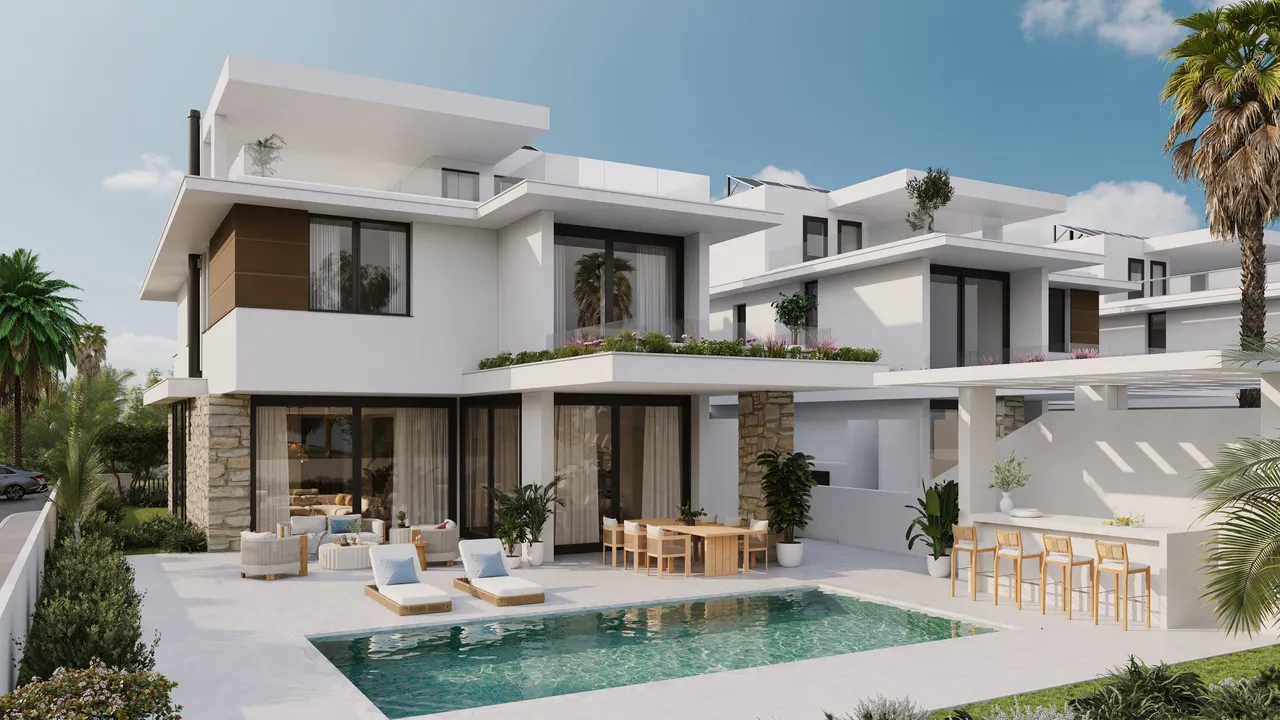 Villas
Eden Valley
Larnaca · Oroklini
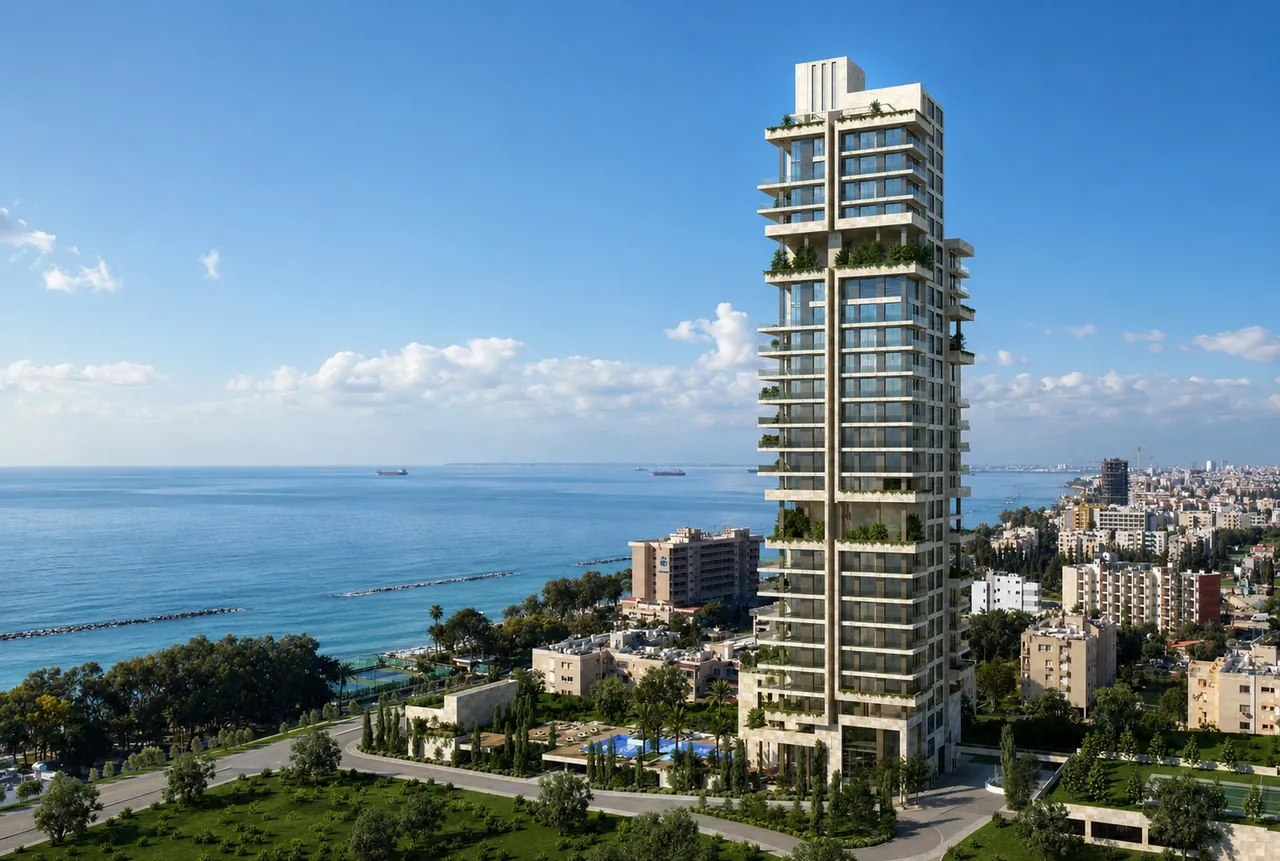 Apartment · Penthouse
Dream Tower
Limassol · Agios Tychonas
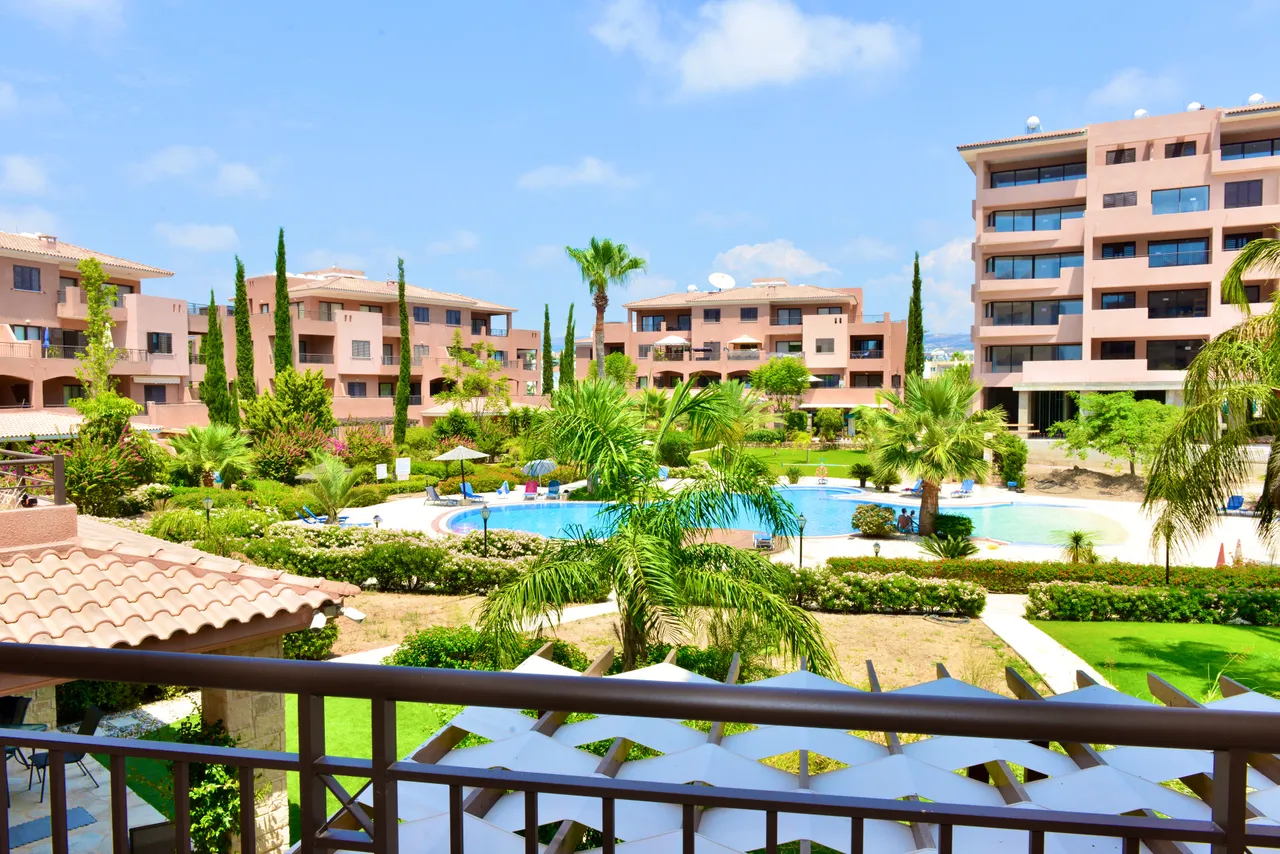
Aphrodite Gardens
Paphos · Kato Paphos
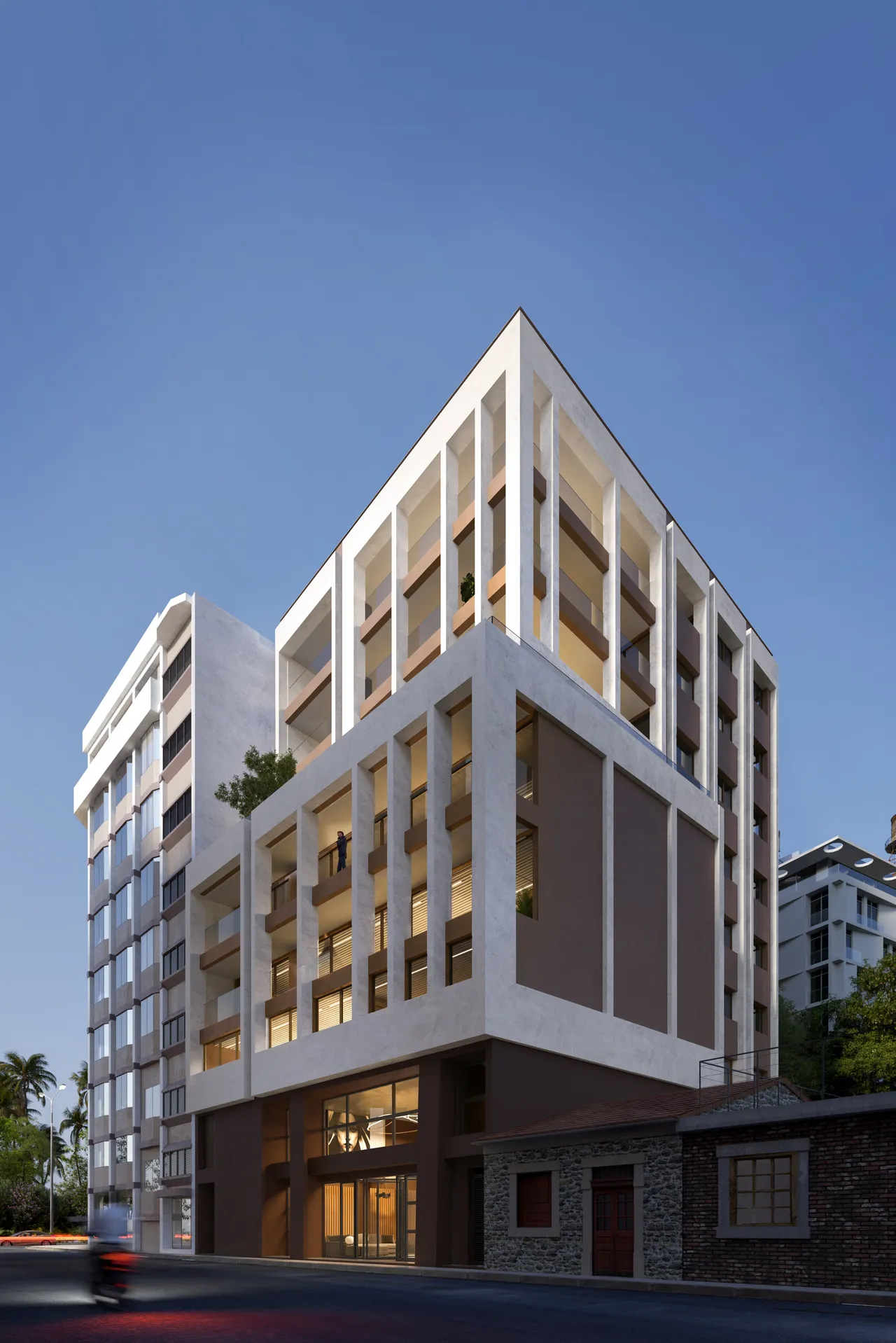
Line
Limassol · Potamos Germasogeias
 Villa · Townhouse · Apartment
Limassol Greens
Limassol
 Villa · Apartment
Sabai by the Sea
Famagusta · Protaras