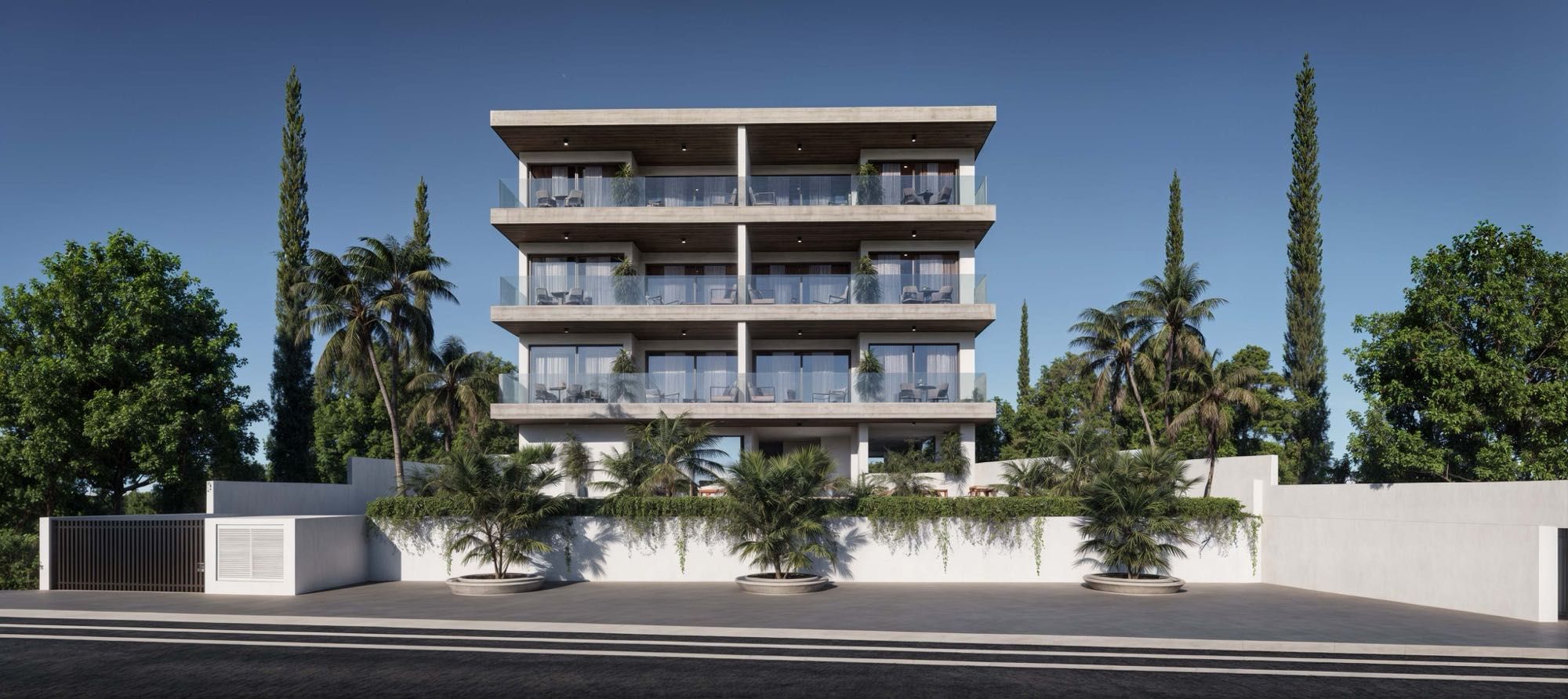


Choose new-build for residency eligibility, modern specification, developer warranties, staged payment plans and zero transfer fees; choose resale for the lowest all-in transaction cost, immediate possession, established locations and a title deed that already exists. If you are a non-EU buyer who wants Cyprus permanent residency through the €300,000 fast-track route, one fact decides it: only new property bought directly from a developer qualifies — resale residential does not.
This guide covers the whole picture honestly, including the drawbacks of new-build: the real 2026 cost mechanics, the residency difference, the title-deed issue Cyprus is known for, and how each option performs as an investment.
New-build vs resale at a glance
| New-build | Resale | |
|---|---|---|
| Purchase tax | VAT 19% (or 5% if qualifying primary residence) | No VAT — progressive transfer fees instead |
| Transfer fees | €0 (VAT paid instead) | Statutory 3/5/8%, currently halved → ~1.5/2.5/4% |
| Typical all-in friction (€300k) | ~€16,500–19,000 at reduced VAT; far higher at 19% | ~€5,500–6,500 |
| €300k residency fast-track | Qualifies | Does not qualify (residential route) |
| Title deed | May take time to issue — the key risk | Usually already issued |
| Condition & spec | Modern, energy-efficient, warranted | As-is; may need renovation |
| Location | Newer developments, often edge/hillside | Established, often central or mature areas |
| Payment | Staged payments possible (off-plan) | Full payment on completion |
| Move-in | On completion (can be months–years off-plan) | Immediate |
| Best for | Residency buyers, remote buyers, low-maintenance owners | Cost-focused buyers, immediate rental income |
(Figures approximate, 2026 — verify current rates before relying on them.)
The cost equation: VAT vs transfer fees
The single most misunderstood point in Cyprus property: you pay either VAT or transfer fees — never both. Which one applies depends entirely on whether the property is new or resale.
New-build from a VAT-registered developer carries VAT at 19%, or a reduced 5% where the property qualifies as your primary residence (conditions apply to size and value, and approval is required). Because VAT is charged, transfer fees at the Land Registry are zero on the VAT-inclusive price.
Resale property falls outside the VAT regime, so no VAT is due. Instead you pay progressive transfer fees on the property's assessed market value — a statutory scale of 3%, 5% and 8% across value bands, to which a long-standing 50% reduction has applied and been extended annually, giving effective rates near 1.5%, 2.5% and 4%. On a €300,000 resale, the statutory calculation comes to roughly €8,600, with the reduction bringing it to approximately €4,300. (Published sources differ on whether the widely-quoted €8,600 is before or after the reduction — confirm with your lawyer for your specific purchase.)
There is a useful exception worth knowing: a resale property on which the first buyer already paid VAT can be exempt from transfer fees entirely. If you buy a 2018 apartment from its original owner who paid VAT at the time, you may pay no transfer fees at all.
A worked €300,000 example
| New-build 19% VAT | New-build 5% VAT | Resale | |
|---|---|---|---|
| Purchase price | €300,000 | €300,000 | €300,000 |
| VAT | €57,000 | €15,000 | €0 |
| Transfer fees | €0 | €0 | ~€4,300 (after 50% reduction) |
| Legal & admin (~1–2%) | €3,000–6,000 | €3,000–6,000 | €3,000–6,000 |
| Indicative all-in extra | ~€60,000–63,000 | ~€18,000–21,000 | ~€7,300–10,300 |
Overall buyer closing costs in Cyprus typically land somewhere between 6% and 24% of the price, driven almost entirely by which side of this line you fall on. The gap between 19% and 5% VAT is the biggest single variable in the whole transaction — establish your eligibility for the reduced rate early, because it can move the number by tens of thousands of euros.
What changed in 2026 (most guides are out of date here)
- Stamp duty was abolished on 1 January 2026 under Law 221(I)/2025. Purchase contracts signed from that date carry no stamp duty — previously 0.15%/0.20%. If a page still tells you to budget for it, it's stale.
- The transitional 5% VAT provision expired on 15 June 2026. That rule let properties with planning permits issued on or before 31 October 2023 claim the reduced rate on the first 200 m² regardless of total size or value, if completed as a first residence by the deadline. It is no longer available; the standard reduced-rate conditions now apply.
- There is no annual property tax in Cyprus — immovable property tax was abolished in 2017, leaving only small municipal charges. That's unusual in Europe and it applies to new-build and resale alike.
- The 0.4% transfer levy is payable by the seller, not you.
The residency difference — the fact that decides it for many buyers
If Cyprus permanent residency is part of your plan, this section is the whole comparison.
The €300,000 fast-track residential route under Regulation 6(2) requires new residential property purchased directly from a developer on the primary market. Resale residential property does not qualify for that route — resale is permitted only under the separate commercial-property route.
So for a non-EU buyer whose goal is lifelong Cyprus residency for the family, the decision is effectively made: it has to be new-build at or above €300,000 (plus VAT). Everything else in this guide is secondary to that. You can read the full requirements, income thresholds and process in our guide to Cyprus permanent residency.
The case for new-build
Modern specification and energy efficiency. Contemporary insulation, glazing, solar provision and layouts — lower running costs and better comfort in Cypriot summers.
Developer warranties. Structural and systems guarantees mean the first years carry far less financial surprise than an older property.
Staged payment plans. Buying off-plan usually means paying in instalments tied to construction milestones rather than the full sum up front — a real cash-flow advantage.
Choice. Buy early in a development and you can often pick the unit, floor, aspect and finishes.
Zero transfer fees. Because VAT applies, you pay nothing at the Land Registry transfer stage.
Low maintenance and strong tenant appeal. New properties attract premium tenants and cost less to keep for the first decade.
Residency eligibility — as above.
The case for resale
Materially lower transaction cost. No VAT is the headline: roughly €5,500–6,500 of friction on a €300,000 resale versus €18,000–21,000 on an equivalent new-build even at the reduced 5% rate.
You see exactly what you're buying. No plans, no renders, no completion risk — the building, the view, the neighbours and the noise are all inspectable today.
Immediate possession and income. You can move in or start letting straight away rather than waiting on construction.
Established locations. Older stock often sits in mature, central or seafront positions where no new land is available, sometimes on larger plots.
Title deed usually already issued — which removes the biggest single risk attached to new-build in Cyprus.
Negotiating room. Private sellers are often more flexible on price than developers, who protect headline pricing across a development.
The honest risks of new-build
We sell new-build, so it matters that we're straight about its downsides.
Title deeds are the real one. Cyprus has a well-documented history here: where a developer holds a mortgage over the land, the Department of Lands and Surveys cannot issue individual title deeds to buyers, leaving them as beneficial owners who cannot mortgage or sell in the standard way. Over 130,000 properties were affected before Remedial Law 139(I)/2015 created a route to apply directly to the DLS — but that process requires the full price paid and the contract deposited at the Land Registry (generally within 60 days of signing), and it can take months to well over a year.
How to protect yourself: instruct an independent licensed lawyer (never the developer's), have them run a full title and encumbrance search before you sign, ensure the contract is deposited at the Land Registry within the deadline, and buy from developers with a clean track record of delivering deeds. Handled properly, this risk is manageable — but it must be handled, not assumed away.
Completion and delay risk. Off-plan means relying on a developer to finish on time and to spec. Check their delivery history, and make sure the contract has clear completion dates and remedies.
The VAT cost itself. Even at 5%, VAT is real money that a resale buyer simply doesn't pay.
The honest risks of resale
Age and efficiency. Older properties can mean poor insulation, dated systems and higher running costs.
Hidden condition. Budget realistically for renovation — a survey is essential, and works can erase the initial saving.
No warranty. Repairs are yours from day one.
Legacy title issues. Some older stock carries unresolved deed problems of its own; the same legal due diligence applies.
No fast-track residency. For non-EU buyers pursuing the €300,000 route, this alone rules it out.
The investment view
Neither option universally wins on returns — they win differently.
New-build commands a premium price but attracts premium tenants, needs little capex for years, and typically shows better energy performance, which increasingly matters to renters. It suits investors who want a low-hassle, high-quality asset and, often, remote ownership.
Resale offers a cheaper entry, which can translate into a higher yield on cost — provided you budget honestly for renovation and ongoing maintenance. It suits hands-on investors comfortable managing works, and those who want rental income immediately rather than after a build period.
The deciding variables are your entry price, expected capital expenditure and target tenant — not the label. Cyprus's lack of an annual property tax helps holding costs in both cases.
Which should you choose?
Choose new-build if you want:
- Eligibility for the €300,000 permanent-residency route (non-EU buyers)
- Modern specification, energy efficiency and a developer warranty
- Staged payment plans rather than paying everything at once
- Zero transfer fees at the Land Registry
- A low-maintenance property you can buy and own remotely
Choose resale if you want:
- The lowest all-in transaction cost
- To see exactly what you're buying, with no completion risk
- Immediate possession and rental income from day one
- An established, mature or central location
- A title deed that already exists
- And you don't need the €300,000 residency route
The bottom line
If residency is your goal, the choice is made for you: new-build from €300,000, bought directly from a developer. If it isn't, the honest trade is cost against confidence — resale saves you a substantial sum in VAT, while new-build buys you modern specification, a warranty, staged payments and zero transfer fees, at the price of managing the title-deed question properly.
Whichever route fits, we can help you weigh it and, if new-build is right for you, find a property that qualifies. Request your personalised shortlist or read our guide to Cyprus permanent residency to see whether the €300,000 route applies to you.