Cyprus Insights/Life in Cyprus
Living in Cyprus 2026: Daily Life, Costs, Health Cover and Bank Account

Living in Cyprus in 2026: the short answer
Living in Cyprus works well when four things are settled early: the city, your insurance status, the bank account and the building. The city sets the rent: a two-bedroom flat costs on average €700–800 a month in Paphos and €1,400–1,500 in Limassol in 2026. Your status sets the health cover: the state scheme GESY is open, under the criteria of the Health Insurance Organisation (HIO), to people who work in Cyprus, hold a permanent residence certificate or, for pensioners, an S1 form, and buying a flat does not give access on its own.
The worked example below comes to about €2,006 a month for a couple renting a two-bedroom flat in Paphos and about €2,706 in Limassol, before income tax and social insurance. The climate is mild, but a coastal winter brings nights around 8 °C, damp and rain, so insulation and heating are part of daily life. EU, EEA and Swiss citizens who stay longer than three months register with the Migration Department within four months of arrival (form MEU1, fee €20). Citizens of other countries, including the UK, need a residence permit first; the routes are described in the residency guide for non-EU citizens.
The rest of this guide takes the four decisions in turn. The balance sheet of advantages and drawbacks is in the pros and cons of living in Cyprus, and the way there is described in our moving guide (UK citizens: moving to Cyprus from the UK).

Experiences of living in Cyprus: what can be checked
Anyone searching for experiences of living in Cyprus finds forums, videos and private blogs. They give personal impressions, their numbers age quickly, and they are rarely verifiable. This guide relies on official pages and on calculations with open assumptions. As one documented case we offer the story of Alexander and Tatiana in Paphos.
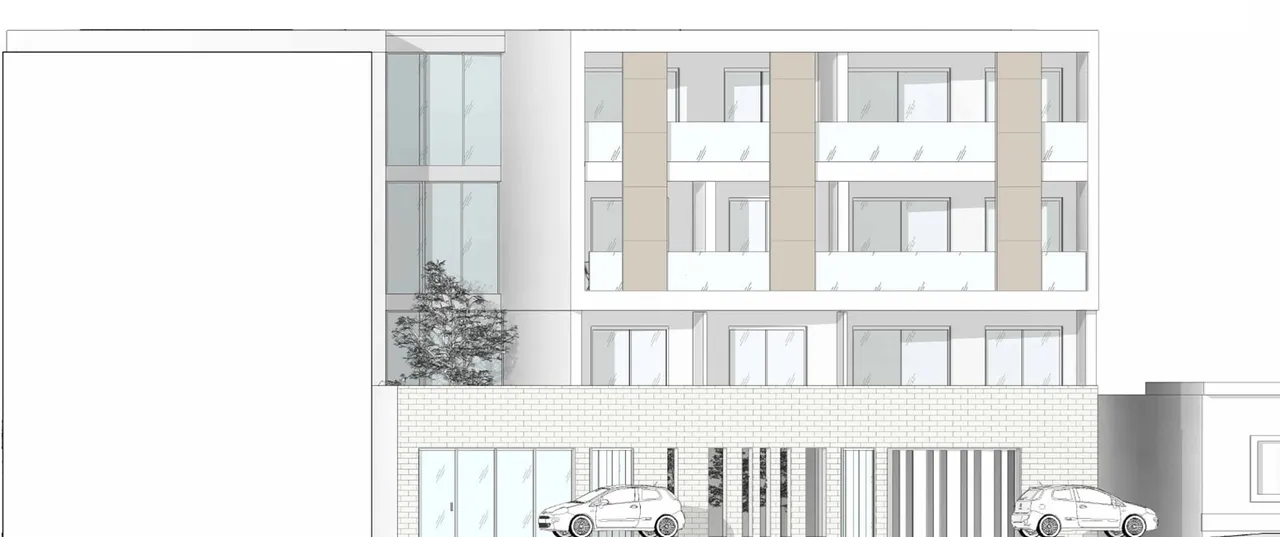
The retired couple from Germany bought a new-build flat in Kato Paphos (90 m², €260,000). As reasons they give that they wanted no cold winters and no hectic daily routine. By their account they rarely need a car, because shops, pharmacies and restaurants are within walking distance. They bought the flat through our company, so read the story with that in mind.
Which places suit which daily life is covered in the best places to live in Cyprus as an expat, and the two big coastal cities are compared in Paphos vs Limassol.
Renting in Cyprus: rent by city and the cost of moving in
Most newcomers rent first. Rent decides how far a budget stretches more than any other item: Limassol is close to double Paphos. The table shows, for a two-bedroom flat, the model value of our calculations, the average range quoted by the president of the Council for the Registration of Real Estate Agents at the end of July 2026, and the range from property portal listings in June 2026.
| City | Model value per month | Average range (July 2026) | Listing range (June 2026) |
|---|---|---|---|
| Limassol | €1,450 | €1,400–1,500 | €1,300–2,000 |
| Nicosia | €850 | €800–900 | €850–1,300 |
| Larnaca | €750 | €700–800 | €950–1,400 |
| Paphos | €750 | €700–800 | €850–1,300 |
Moving in costs more than one month's rent. The example uses these assumptions: an unfurnished two-bedroom flat, a 12-month lease, a deposit of two months' rent (the upper end of the usual one to two months), an agent commission of one month's rent plus 19% VAT paid by the tenant (the unfavourable case, since who pays is negotiable), the deposit to the Electricity Authority of Cyprus (EAC) of €200 for a tenant who is a Cypriot or EU citizen (the table dates from 2015, so confirm the amount when you apply) and the change of name on the electricity contract at €15 plus 19% VAT.
- Paphos, rent €750: 750 + 2 × 750 + 750 × 1.19 + 200 + 15 × 1.19 = 750 + 1,500 + 892.50 + 200 + 17.85 = €3,360.35, which is 4.48 times the monthly rent.
- Limassol, rent €1,450: 1,450 + 2,900 + 1,725.50 + 200 + 17.85 = €6,293.35, which is 4.34 times the monthly rent.
If the landlord pays the agent and one month's rent is enough as a deposit, the Paphos figure falls to 750 + 750 + 200 + 17.85 = €1,717.85. A tenant from outside the EU pays a higher EAC deposit (€350 in the 2026 guide we checked), which adds €150 to each total. The full list of items, the checks before signing and the warning signs of rental fraud are in renting an apartment in Cyprus: lease, deposit, agent fee. Whether buying beats renting in each city is worked out in rent or buy in Cyprus, and the costs of a purchase in the cost of buying property in Cyprus.
Cost of living in Cyprus: a monthly budget for a couple in Paphos and Limassol
A common line says Cyprus is much cheaper than home. Numbeo's country comparison (September 2026, crowd-sourced data) shows a mixed picture. Against Germany, consumer prices are 17.5% higher there than in Cyprus, restaurants 12.2% higher and rents 11.2% lower. Against the UK, consumer prices are 18.4% higher, rents 20.9% higher and restaurants 24.5% higher. Food and restaurants are cheaper in Cyprus than in those countries, rent is cheaper than in the UK but not than in Germany, and electricity costs about 33 cents per kWh all-in in a 2026 bill, fixed items included.
The worked example: a couple rents a two-bedroom flat. One partner works in Cyprus as an employee at €3,000 gross a month; the other is covered in GESY as a spouse under the HIO criteria. The assumptions:
- Rent: the model values from the table above, €750 in Paphos and €1,450 in Limassol.
- Running costs: €193 a month from our calculation (electricity €100, water €30, internet €33, two mobile contracts €30). The value is for a two-bedroom flat with three occupants; for a couple it is probably generous, and we use it for both cities. How it is built is shown in utilities in Cyprus.
- Groceries: €550, the middle of the €400–700 range for a couple in the cost of living guide.
- Eating out: €300, the low end of the €300–500 given there for a couple who eat out several times a week.
- Car, fuel: an assumption of 10,000 km a year at 7 litres per 100 km, so 700 litres; petrol at the top of the €1.49–1.65 range (Numbeo, September 2026): 700 × €1.65 = €1,155 a year, €96.25 a month.
- Car, insurance and road tax: €450 a year, the middle of the €300–600 range for a used mid-size petrol car in the cost of living guide, so €37.50 a month.
- GESY contribution: €3,000 × 12 = €36,000 gross a year, of which 2.65% = €954 a year, €79.50 a month (HIO contribution rate).
| Item | Paphos | Limassol |
|---|---|---|
| Rent (model value) | €750.00 | €1,450.00 |
| Running costs (electricity, water, internet, 2 mobiles) | €193.00 | €193.00 |
| Groceries | €550.00 | €550.00 |
| Eating out | €300.00 | €300.00 |
| Car: fuel (€1,155 ÷ 12) | €96.25 | €96.25 |
| Car: insurance and road tax (€450 ÷ 12) | €37.50 | €37.50 |
| GESY contribution (€954 ÷ 12) | €79.50 | €79.50 |
| Total per month | €2,006.25 | €2,706.25 |
| Total per year (× 12) | €24,075.00 | €32,475.00 |
The sums: Paphos 750 + 193 + 550 + 300 + 96.25 + 37.50 + 79.50 = €2,006.25; Limassol 1,450 + 193 + 550 + 300 + 96.25 + 37.50 + 79.50 = €2,706.25. Both lie inside the €1,700–3,200 range for couples including rent given in the cost of living guide, and the €700 monthly difference is the difference in rent.
Not included are income tax and social insurance, clothing, travel, furniture and supplementary insurance. Taxes are explained in tax residency in Cyprus. An owner replaces the rent with a loan payment and community charges (€110 a month in our running-cost calculation). Without a car, €133.75 a month drops out; a monthly public transport pass costs about €45 (Numbeo). With children, preschool and school fees come on top; the organisation is described in moving to Cyprus with school-age children.
Climate in Cyprus in daily life: summer heat, winter rain and the building shell
The long-term averages (1991–2020 normals, collected in our climate guide) put the August daily maximum at 31.0 °C in Paphos, 33.7 °C in Limassol and 37.4 °C in Nicosia. In January Paphos averages 17.3 °C by day and 8.6 °C at night. From December to February Paphos receives 63% and Limassol 62% of the annual rainfall.
The common assumption that nobody needs heating in Cyprus does not survive these figures. In Paphos and Larnaca the relative humidity in December and January is 69 to 72%, and in a building without insulation mould forms on the coldest surfaces. According to the Ministry of Energy, 94% of dwellings were built before mandatory energy requirements (cited in the climate guide), and a new-build must reach energy class A from 2020. The climate guide's model for an 85 m² apartment in Limassol (held at 20–24 °C throughout, reversible air conditioning, 28.7 cents per kWh) gives €520.92 a year for heating and cooling in a standard building and €288.64 in an insulated new-build, fixed items included. Ask for the energy performance certificate when you buy.
Health insurance in Cyprus: who gets into GESY and what it costs
The HIO requires ordinary residence in the areas controlled by the Republic of Cyprus and, on top of that, a status: for EU citizens work in Cyprus or a permanent residence certificate, for non-EU citizens a permanent residence permit or the right to equal treatment in social insurance. Pensioners from another EU or EEA state or Switzerland are covered through form S1. A title deed appears nowhere in these criteria, and the MEU1 certificate only registers you as an EU citizen in Cyprus. Enrolment with the HIO is a separate step. Details are in health insurance in Cyprus, and benefits and co-payments in GESY explained.
The HIO has published the contributions, and the full rates have applied since 1 March 2020: employees pay 2.65% of salary, the self-employed 4% of their remuneration, pensioners 2.65% of the pension and recipients of rent, interest or dividends 2.65% of that income. The employer adds 2.90% and the state 4.70%. Contributions are due on at most €180,000 a year, so the maximum is €4,770 for employees (€180,000 × 2.65%) and €7,200 for the self-employed (€180,000 × 4%). Anyone who is not tax resident in Cyprus pays, according to the HIO, only on income and pensions from Cyprus, with dividends and interest excluded. In the example above: €36,000 × 2.65% = €954 a year.
Whether S1 holders pay a contribution should be settled with the HIO in writing before the move; the Tax Department's guide to the tax return lists the S1 card as evidence of exemption from the contribution (see the health insurance guide). Anyone who only owns a holiday home and lives in another country stays in the home system. The European Health Insurance Card (EHIC) covers medically necessary treatment during temporary stays, according to Your Europe; private treatment, planned treatment and repatriation are excluded by the same source.
Opening a bank account in Cyprus: entitlement, documents and registered banks
The EU Payment Accounts Directive 2014/92 forbids banks to refuse consumers who are legally resident in the EU because of residence or nationality (Article 15) and gives them a right to an account with basic features (Article 16). The bank must accept or refuse a complete application within ten business days. Residents of the UK, Switzerland, Israel or any other country outside the EU are not covered by this right; the bank then decides under its own business policy.
The binding list of banks is kept by the Central Bank of Cyprus. Hellenic Bank, which older guides still name as the second big bank, appears there as Eurobank Limited (former name Hellenic Bank Public Company Limited). Older guides are out of date on documents too: the bank pages we checked ask for a passport or ID, proof of address and in some cases a bank reference, each not older than six months, evidence of the source of funds and the tax identification number of every country where you are tax resident. A Cypriot tax number is not listed as a condition. The banks publish fixed processing times only for the basic account; for the appointment or questionnaire route they name none, so plan the opening before the first payment is due. All banks, fees and a worked example for transferring €300,000 are in how to open a bank account in Cyprus as a foreigner.
Authorities, language and car in Cyprus: what to do in the first year
- Registration: for up to three months an ID or passport is enough for EU, EEA and Swiss citizens. Anyone staying longer is an employee or self-employed, or shows sufficient means and comprehensive health insurance in Cyprus, and registers with the Migration Department within four months of arrival: form MEU1, fee €20, decision within one month, certificate without an expiry date. Third-country nationals need a residence permit, see the residency guide for non-EU citizens. The steps for EU citizens are in moving to Cyprus.
- Tax residence: according to the Cypriot Tax Department you are resident if you spend more than 183 days in Cyprus in a tax year. There is also a 60-day rule with conditions: at least 60 days in Cyprus, employment or a business in Cyprus, a permanent home owned or rented in Cyprus and no more than 183 days in any other state where you are not resident. Where your residence ends under the law of your home country is a separate question; both sides are covered in tax residency in Cyprus.
- Language: Article 3 of the constitution of the Republic of Cyprus names Greek and Turkish as the official languages. English is not an official language, and we do not quote a figure for how many people speak it. The pages of the Migration Department, the HIO and the Tax Department that we used for this guide exist in English.
- Driving licence and car: according to Your Europe, someone who moves to another EU country generally does not have to exchange an EU driving licence. For licences from outside the EU, ask the Road Transport Department. Motor third-party liability insurance is compulsory for any vehicle registered in an EU country (Your Europe).
Tradespeople, property management and insurance in Cyprus
Only registered persons and firms may carry out electrical work in Cyprus. The Department of Electrical and Mechanical Services (EMS) licenses them under the Electricity Law (Cap. 170) with a certificate of competence and an annual registration certificate. The government's information page for businesses names no searchable public directory, so ask for the registration number and the current certificate before you give the job. We have not checked an official licensing rule for other trades and do not name one.
In practice owners find reliable tradespeople in three ways: recommendations from expat groups in the city, the property management company, which usually keeps its own network for electrics, plumbing, air conditioning and pool, and, in a new-build, the developer, who is responsible for work during the warranty period. For owners who are not always on site, managing a Cyprus property from abroad is worth reading; the checks at handover of a new-build are listed in the snagging checklist. Servicing the air conditioning before summer and pool service in the summer months are the most common recurring jobs; see the cooling load in the climate figures above.
Three points on insurance. Motor third-party liability is compulsory (see above). Health insurance follows your status: GESY, S1 or a private policy (see above). For a flat or house in a complex, ask before signing what the owners' association levy covers and whether the building is insured; we found no official obligation to hold contents insurance. Set up internet, electricity and water in your name following the guide to utilities in Cyprus.
Selected new-build projects in Cyprus, prices excl. VAT
 Studio · Apartment
Plus 82
Larnaca · Downtown
 Apartment · Studio
Eden Golf
Paphos · Geroskipou
 Apartment
Zoia
Limassol · Polemidia
 Apartment · Studio
Golf Valley
Limassol · Asomatos
 Villa
Amore Hills
Paphos · Konia
 Villa
Zanatzia
Limassol · Souni-Zanatzia
 Villa
Platon Villas
Larnaca · Agios Theodoros
 Villa · Studio · Apartment
Avalon Valley
Paphos · Empa
 Villa
Aquamarine Coastal Villas
Paphos · Geroskipou
Frequently asked questions about living in Cyprus
Yes, if budget and status fit together. A couple comes to €2,006.25 a month in Paphos and €2,706.25 in Limassol in the worked example. Health cover depends on your status, and the winter needs heating and insulation. The other side is described in the pros and cons of living in Cyprus.
The cost of living guide gives €1,500–2,400 a month for a single person, €1,700–3,200 for a couple and €2,800–6,000 for a family with two children, each including rent. City and type of home decide where a household falls in the range. The items are in the cost of living in Cyprus.
That depends on daily life: the average rent for two bedrooms is €700–800 in Paphos and €1,400–1,500 in Limassol. How the cities differ is shown in Paphos vs Limassol, and the places for expats in the best areas to live in Cyprus.
It depends on where you live. In the worked example a car costs €133.75 a month and a monthly public transport pass about €45. Alexander and Tatiana in Kato Paphos rarely need a car by their own account. Check for every flat what is within walking distance.
EU, EEA and Swiss citizens can stay up to three months. After that you register with the Migration Department within four months of arrival (form MEU1, €20). The department names fines of up to €2,500 for breaches.
No. The HIO requires ordinary residence and a status such as work in Cyprus, a permanent residence certificate or an S1. Someone who only visits uses the EHIC for necessary treatment or a travel insurance.
Consumers who are legally resident in the EU have a right to an account with basic features, and the bank must decide within ten business days. The bank may refuse if opening would breach the anti-money-laundering rules. Residents of countries outside the EU have no such right, and the bank decides by its own policy.
On the coast the average January night minimum is 7.8 °C in Larnaca and 8.6 °C in Paphos, and Nicosia averages 5.7 °C. In the Troodos mountains it is much colder. See the figures in the climate guide.
The official languages under the constitution are Greek and Turkish. Whether you get by with English depends on where you live and what you need; we quote no statistic. The official pages we used are available in English.
For electrical work, ask for the registration number and the annual registration certificate of the Department of Electrical and Mechanical Services. For the rest, recommendations, the property management company and, in a new-build, the developer help.
Sources and status (29 October 2026). Health Insurance Organisation (gesy.org.cy): financing and contribution rates, beneficiaries. Central Bank of Cyprus (centralbank.cy): register of credit institutions. Civil Registry and Migration Department (gov.cy/mip-md): MEU1 registration. Tax Department (gov.cy/mof-tax): tax residence. Climate figures from the Cyprus Meteorological Service and WMO normals as collected in our climate guide. Department of Electrical and Mechanical Services (via businessincyprus.gov.cy): licensing of electrical contractors. Constitution of the Republic of Cyprus (law.gov.cy), Article 3. Your Europe (europa.eu): EHIC, driving licence, motor insurance. EU Directive 2014/92 (eur-lex.europa.eu): payment accounts. Rents, running costs, the climate model and prices come from our linked guides, which draw on Numbeo (numbeo.com, September 2026), EAC tariffs (eac.com.cy) and the figures of the Council for the Registration of Real Estate Agents. Not sourced and therefore not named: insurers and tradespeople, language skills of the population, contents insurance.
Planning the move together with a purchase? Settle health cover before you buy: health insurance in Cyprus: GESY, S1 and private policies. For new-build projects in Paphos, Limassol and Larnaca, talk to our team. We support you through the purchase and the first steps after it.