
Guides/Buying guides
Cyprus vs Italy for a Second Home: Ownership Rules, Purchase Taxes, Annual Tax and Residence

Cyprus and Italy are both EU countries that use the euro, and they differ most in who may buy, what the purchase costs in tax and what ownership gives a non-EU owner. An EU citizen needs no permission in either country. A non-EU citizen needs Council of Ministers permission in Cyprus (published practice: one plot of up to 4,000 m² or up to two units) and passes a reciprocity check in Italy that the notary makes. On a €750,000 second home the state taxes come to €26,600 for a Cyprus resale, €142,500 for a Cyprus new-build at 19% VAT, €28,450 for an Italian private resale if the registration tax is charged on an assumed cadastral value of €315,000, and €75,600 for an Italian new-build at 10% VAT. Italy adds an annual IMU of about €3,600 to €4,450 on that assumed home, while Cyprus has no state property tax and a municipal bill of a few hundred euros. Italy's tax on a gain falls away after five years of ownership, whereas Cyprus charges 20% on the indexed gain after allowances. Only Cyprus links a property purchase to a residence permit (Category 6.2, a new-build from €300,000 plus VAT), and only Italy is in Schengen (sources read on 18 November 2026).
Cyprus vs Italy for a second home: the comparison in one table
The table sets the rows that move a decision for a second home side by side. Each row is explained, with its source, in the sections that follow, and the figures marked as assumptions are examples chosen to show the arithmetic. This guide compares the purchase, the annual tax, the sale and the residence position. It does not compare lifestyle, and it makes no forecast of prices.
| Topic | Cyprus | Italy |
|---|---|---|
| EU and euro | EU member, euro | EU member, euro |
| Schengen | Not a member; the European Commission says internal border controls have not yet been abolished | Member |
| EU citizen buying | No permit and no limit on the number of properties | No reciprocity check; treated like an Italian citizen |
| Non-EU citizen buying | Council of Ministers permission; published practice: one plot up to 4,000 m² or up to two units | Reciprocity under Article 16 of the Preleggi, checked by the notary; no property-count rule found |
| Purchase tax, private resale | Transfer fee 3%, 5%, 8% by band, halved: €26,600 on €750,000 | Registration tax 9% on the price or on a cadastral value, plus €50 and €50 |
| Purchase tax, new-build from a developer | VAT 19% for a second home (5% only for a qualifying main home), no transfer fee | VAT 10% (22% for A/1, A/8 and A/9 categories) plus €200 registration, €200 mortgage and €200 cadastral tax |
| Stamp duty on the contract | None for contracts signed from 1 January 2026 | Acts taxed with proportional registration tax are exempt from stamp duty (Agenzia delle Entrate guide) |
| Annual tax on a second home | No state tax since 2017; municipal tax on a 2021-level valuation, a few hundred euros | IMU: 0.86% base rate on a cadastral value, up to 1.06% by municipal decision |
| Tax on a gain at sale | 20% of the indexed gain after allowances, plus a 0.4% levy on the proceeds | Taxable if sold within five years of purchase (26% substitute tax on request); no tax on a gain after five years |
| Residence through the property | Category 6.2: new-build of at least €300,000 plus VAT, income test, no salaried work | None: property is not among the four investor-visa routes |
| Flat tax for new residents | No flat fee; non-dom status removes the Special Defence Contribution on dividends and interest | €300,000 a year for foreign income (transfers from 1 January 2026) |
Buying a second home as a non-EU citizen: Council of Ministers permission in Cyprus, reciprocity in Italy
The two countries test the buyer's passport with different tools. Cyprus asks for a permit from the state. Italy asks whether the buyer's own country lets Italians buy there, and the notary carries out that check.
| Question | Cyprus | Italy |
|---|---|---|
| Who is exempt | EU and EEA citizens: Cap. 109 (the Acquisition of Immovable Property (Aliens) Law) does not treat them as aliens, so no permit and no numeric limit | EU and EEA citizens and EU or EEA companies are placed on an equal footing with Italians by Legislative Decree 286/1998; the Ministry of Foreign Affairs says no reciprocity check is needed |
| Non-EU citizen, not resident | Council of Ministers permission before the purchase; the Land Registry asks for the permit at transfer | Purchase allowed on a treaty or on reciprocity (Article 16 of the Preleggi, Royal Decree 262/1942, and Article 20 of Law 218/1995) |
| Non-EU citizen with a residence permit | Not among the exclusions listed in section 2 of Cap. 109 in our property-law guide | Exempt from the reciprocity check when holding a residence card or permit for employment, self-employment, family, humanitarian or study reasons |
| How many properties or how much land | Reported Ministry of Interior practice: one plot up to about 4,000 m² for an own home, or up to two units; the statute itself states no count (we could not confirm the figure on an official page) | The Agenzia delle Entrate entry in the European Land Registry Network answers "No limitations" and then sets out the reciprocity rule; no count or area cap was found |
| Who checks | The Council of Ministers, with powers delegated to district officers | The notary, with the Ministry of Foreign Affairs where needed; the land registrar checks the documents formally |
| Paperwork before signing | Passport or ARC copy with the contract deposit at the Land Registry | A tax code (codice fiscale) from the Agenzia delle Entrate, because the deed is registered |
| Change in progress | A bill that would tighten the rules was in committee on 27 October 2026 | The entry read states no legal change is expected (the entry is undated) |
The Italian test has no passport list that settles every case. The Agenzia delle Entrate's entry sends buyers to the Ministry of Foreign Affairs website to verify reciprocity, and the Ministry treats nationals of countries with a bilateral investment treaty as satisfying it for the matters the treaty covers. The notary council describes the check as the notary's task, made case by case and with the Ministry's help where needed, because the result depends on the act and on the law of the buyer's country. A non-EU buyer should therefore ask the notary to confirm reciprocity for the passport before paying a deposit. The Cyprus rules, their sources and the open bill are in our guides to how many properties you can own in Cyprus and Cyprus property law for foreign buyers.
Residence for a second-home owner: Category 6.2 in Cyprus, the investor and elective visas in Italy
Owning a second home does not by itself give a non-EU citizen the right to stay in either country. What differs is whether the purchase can be part of a residence application.
| Route | Cyprus | Italy |
|---|---|---|
| Property purchase as the qualifying investment | Category 6.2 (since 2 May 2023): a new first-sale residential property of at least €300,000 plus VAT; permanent residence | Not available: the investor visa lists government bonds, company shares, an innovative start-up and a donation, with no property route |
| Investment levels | €300,000 plus VAT for the property | €2 million in government bonds with at least two years to maturity; €500,000 in a joint-stock company; €250,000 in an innovative start-up on the official register; a donation of at least €1 million to a public-interest project |
| Income test | €50,000 a year from abroad for the main applicant, plus €15,000 for a spouse and €10,000 per child | None stated on the embassy page for the investor visa |
| Work | No salaried work in Cyprus under the permit | Not stated on the embassy page for the investor visa |
| Permit length | Permanent; ceases after two years of absence from Cyprus | Two years, renewable for periods of three years while the investment is kept |
| Route for a self-supporting owner | Category 6.2 above; other permits in our residence guides | Elective residence visa: documented accommodation and substantial independent resources (income, pensions, annuities, ownership of property), no gainful employment |
The Italian embassy fact sheet for the elective residence visa names ownership of property among the resources an applicant can show, and asks for proof that accommodation is available. It states no income amount, and secondary sources quote different ones, so the amount has to come from the consulate that handles the application. The Cyprus conditions, including the permit's two-year absence rule, are in our Category 6.2 guide. A visa-exempt visitor who does not hold a permit is limited to 90 days in any 180-day period, and the count for Cyprus is kept separately from the Schengen count (see the access section below and our guide to the 90 days in 180 rule).
Italy purchase taxes on a second home: registration tax, cadastral value and VAT
Italy taxes the purchase of a home that is not a buyer's "prima casa" (the reduced-rate main home) at the rates below. The Agenzia delle Entrate guide to the purchase of a home sets them out, and the notary pays the registration, mortgage and cadastral taxes when the deed is registered.
| Seller and sale | Tax on the buyer | Rate or amount |
|---|---|---|
| Private seller, or a business selling exempt from VAT | Registration tax (imposta di registro) | 9% of the taxable base, with a minimum of €1,000 |
| Private seller, or a business selling exempt from VAT | Mortgage tax and cadastral tax | €50 each, fixed |
| Business selling with VAT (builders within 5 years of completion, or later if the seller opts for VAT) | VAT | 10% (22% for dwellings in categories A/1, A/8 and A/9) |
| Business selling with VAT | Registration, mortgage and cadastral tax | €200 each, fixed |
Two features change the arithmetic. First, the proportional registration tax already paid on the deposit when a preliminary contract is registered is deducted at the deed. Second, the price-value rule (prezzo-valore) lets a private individual buying a dwelling in a sale that bears registration tax (a private seller, or a business whose sale is exempt from VAT) ask the notary, in the deed, to apply the 9% to the cadastral value of the dwelling. That value is the cadastral income (rendita catastale) multiplied by 1.05 and by 120 for a home that is not a prima casa. The Agenzia's own example is a home with a cadastral income of €900 bought for €200,000: the base is 900 × 1.05 × 120 = €113,400 and the registration tax €10,206, against €18,000 on the price. The rule needs the buyer's explicit request in the deed, a deed that states the true price, and a dwelling. If part of the price is concealed, the taxes are charged on the real price with a penalty of 50% to 100% of the difference.
The cadastral income is a registry figure, and it can sit far below the market value of a modern or renovated house. It is the single number a buyer must obtain before comparing an Italian resale with a Cyprus one, which is why the worked example below shows three values. The Agenzia guides read do not discuss non-resident buyers separately, and they set no residence condition on the price-value rule.
Cyprus purchase taxes on a second home: VAT on a new-build, the transfer fee on a resale
Cyprus charges VAT on a first-sale new-build and a transfer fee on a resale, never both on the same transaction. A second home pays the standard 19% VAT: the 5% rate is for an individual's qualifying main and permanent residence within size and value caps. Stamp duty was abolished for contracts signed from 1 January 2026 (Law 239(I)/2025), and the Department of Lands and Surveys asks for stamp duty only on a sale contract signed by any party before that date. The resale transfer fee runs on the property's value at 3% up to €85,000, 5% from €85,001 to €170,000 and 8% above, reduced by 50%. No transfer fee is charged where VAT is charged on the sale. Our guides give the full cost stack: the cost of buying property in Cyprus, property VAT in Cyprus and the other taxes on real estate.
In Cyprus a lawyer carries out the legal work, and the Land Registry holds the sale contract: the Department of Lands and Surveys advises depositing the contract within six months of signing, which brings the protection of the Specific Performance Law 81(I)/2011; a contract deposited later adds 10% to the transfer fees. Our planning figure for the lawyer is 1% plus 19% VAT on the fee. In Italy the purchase needs a notary, and the notary's tariff and the agent's commission could not be confirmed on an official page, so the next section compares state taxes only.
Worked example: purchase taxes on a €750,000 second home in Italy and Cyprus
The example takes one purchase price, €750,000, and compares the state taxes on four routes in each country. Assumptions: the buyer is an individual buying a second home for personal use; the price excludes VAT in both countries; the Italian dwelling is in an ordinary category (A/2 to A/7) and has an assumed cadastral income of €2,500 (an assumption, and the figure that decides the Italian resale result); the Italian price-value rule is requested; the Cyprus resale carries no VAT. Professional fees are outside the table.
| Route | Arithmetic | State taxes | Share of €750,000 |
|---|---|---|---|
| Cyprus resale | 1.5% × €85,000 = €1,275; 2.5% × €85,000 = €2,125; 4% × €580,000 = €23,200 | €26,600 | 3.55% |
| Cyprus new-build, second home | 19% × €750,000 = €142,500; no transfer fee | €142,500 | 19.00% |
| Italy private resale, price-value rule | Base 2,500 × 1.05 × 120 = €315,000; 9% = €28,350; plus €50 and €50 | €28,450 | 3.79% |
| Italy private resale, tax on the price | 9% × €750,000 = €67,500; plus €50 and €50 | €67,600 | 9.01% |
| Italy new-build, ordinary category | 10% × €750,000 = €75,000; plus €200 × 3 = €600 | €75,600 | 10.08% |
| Italy new-build, category A/1, A/8 or A/9 | 22% × €750,000 = €165,000; plus €600 | €165,600 | 22.08% |
On a resale the Italian result depends on the cadastral income, and the break-even against Cyprus is easy to compute. Italy's tax is 9% × (income × 1.05 × 120) + €100, and Cyprus's is €26,600, so the two are equal when the income is (26,600 − 100) ÷ (0.09 × 126) = about €2,337. The table shows how the Italian figure moves around it.
| Assumed cadastral income | Taxable base (× 1.05 × 120) | Registration tax at 9% | Total with €100 fixed taxes | Share of €750,000 |
|---|---|---|---|---|
| €1,500 | €189,000 | €17,010 | €17,110 | 2.28% |
| €2,500 | €315,000 | €28,350 | €28,450 | 3.79% |
| €4,000 | €504,000 | €45,360 | €45,460 | 6.06% |
Outside the tables: the Cyprus lawyer at 1% plus VAT is €7,500 + €1,425 = €8,925 on €750,000, and the Land Registry charges are a few hundred euros (an assumption of €300 in our cost guide), which brings a Cyprus resale to €26,600 + €8,925 + €300 = €35,825 in taxes and professional fees. For Italy the notary's fee, the agent's commission and a possible translator are not in the figures, because no official tariff was read. A buyer who compares the two countries should ask each side for the full list in writing, and the Cyprus tax calculator applies the Cyprus rates to a specific price.
Annual tax on a second home: Italy's IMU and Cyprus municipal charges
Italy taxes a home that is not the owner's main residence every year through the municipal property tax, IMU (Imposta municipale propria). The base is the cadastral income, revalued by 5% and multiplied by 160 for a dwelling in group A (other than A/10). For buildings other than a main residence, the law sets 0.86%, and the municipality may set it between 0 and 1.06%, or up to 1.14% where it replaces a former surcharge. A main residence in A/2 to A/7 is exempt, and a main residence in A/1, A/8 or A/9 pays 0.5% with a €200 deduction, so a second home gets none of those reliefs.
| Assumed cadastral income | IMU base (× 1.05 × 160) | IMU at 0.86% | IMU at 1.06% |
|---|---|---|---|
| €1,500 | €252,000 | €2,167.20 | €2,671.20 |
| €2,500 | €420,000 | €3,612.00 | €4,452.00 |
| €4,000 | €672,000 | €5,779.20 | €7,123.20 |
Over five years at the €2,500 assumption the tax runs from 5 × €3,612 = €18,060 to 5 × €4,452 = €22,260, before any other municipal charge that the pages read do not describe.
Cyprus has had no annual state property tax since 1 January 2017. The municipality charges a small property tax on the Department of Lands and Surveys valuation (fixed at 2021 price levels and not a market value), the district sewerage board charges on the same valuation, and a building adds refuse and communal fees. On the rates in our annual property tax guide (Limassol municipal charge about 0.264 per mille, sewerage about 0.436 per mille; not re-checked against the municipality for this guide), a valuation of €750,000, which would be higher than most valuations of such a home, gives €198 + €327 = €525 before refuse and communal fees. Our guide to the annual property tax in Cyprus builds a full yearly bill, which for a €300,000 Limassol apartment comes to about €1,560 including a communal fee and insurance.
Selling a second home: the five-year rule in Italy and capital gains tax in Cyprus
Italian tax law treats a gain on a property sold within five years of purchase or construction as taxable income. A dwelling that was the owner's or a family member's main residence for most of the holding period is excluded, and so are inherited properties. The seller can ask the notary at the sale to tax the gain at a 26% substitute tax in place of the ordinary income-tax rules (article 1, paragraph 496 of Law 266/2005; Agenzia delle Entrate page on the taxation of property gains, read on 18 November 2026). Ruling 83/2018 quotes the same paragraph with the former 20% rate. The sources read show no tax on a gain realised after the five years have passed.
Cyprus charges 20% on the gain after inflation indexation of the cost, with lifetime exemptions of €150,000 for a main home that meets the conditions and €30,000 for any other property (section 5 of the Capital Gains Tax Law gives a person only the greater of the two, not both), plus a 0.4% levy on the sale proceeds that the seller pays. Our guide to taxes on real estate in Cyprus has the exemptions, and the selling guide the costs.
| Sale of a €750,000 purchase at €900,000 | Cyprus | Italy, sold after more than five years | Italy, sold within five years |
|---|---|---|---|
| Gain before costs and indexation | €150,000 | €150,000 | €150,000 |
| Exemption | €30,000 (second home, once) | Not applicable | Not applicable |
| Tax on the gain | 20% × €120,000 = €24,000 | None found | 26% substitute tax × €150,000 = €39,000 |
| Levy on proceeds | 0.4% × €900,000 = €3,600 | None found in the sources read | None found in the sources read |
| Total | €27,600 | €0 | €39,000 |
The Cyprus figure is an upper estimate, because indexation and the costs of buying and selling lower the gain. The Italian figures show the substitute-tax route only, and the ordinary-tax route, whose rate depends on the seller's total income, was not read. A seller who is not resident in either country should confirm how the sale is taxed with an adviser in the country of the property. How a gain on a foreign property is reported in the seller's own tax country is outside this guide.
Flat tax for new residents: Italy's €300,000 regime and Cyprus non-dom status
A second-home owner who also moves meets two different tax designs. Italy offers a fixed annual payment on foreign income. Cyprus offers no fixed payment, and a tax resident who is not domiciled in Cyprus is exempt from the Special Defence Contribution on dividends and interest.
| Feature | Italy: optional substitute tax (Article 24-bis TUIR) | Cyprus: tax residence with non-dom status |
|---|---|---|
| Amount | €300,000 a year for foreign-source income, for transfers of residence from 1 January 2026 (€200,000 for earlier transfers; €100,000 until 10 August 2024) | No fixed amount; Special Defence Contribution of 0% on dividends and interest for a non-dom; the General Healthcare System (GHS) contribution of 2.65% applies up to €180,000 of income |
| Family members | €50,000 a year per extended family member per the Agenzia's notice of January 2026; the page's body text still shows €25,000 | No payment per family member in the guides read |
| Entry condition | Non-resident in Italy for at least 9 of the 10 previous tax years; the election goes in the return for the year of transfer or the next | Tax residence by the 183-day rule or the 60-day rule |
| Duration | Up to 15 years | Non-dom status ends after 17 of the previous 20 years of tax residence (our non-dom guide; not re-checked against the Tax Department for this guide) |
| Payment | One lump sum with the balance of tax, by form F24, code NRPP | Through the normal return and the SDC and GHS rules |
The Agenzia delle Entrate page last updated on 16 January 2026 carries a notice that the 2026 budget law raised the amount to €300,000, and €50,000 per family member, for people who transfer their tax residence to Italy from 1 January 2026, while the body text of the same page still states €200,000 and €25,000. Another Agenzia page (updated 27 March 2026) gives €300,000 with €200,000 for transfers up to 31 December 2025. The notice and the later page agree, so the figures here follow them.
A comparison needs a case. Assumption: a single person with €1,000,000 a year of foreign dividends and interest, who is a tax resident of the chosen country, is not domiciled there and has no other income. In Italy, under the regime, the payment is €300,000. In Cyprus, as non-dom, the Special Defence Contribution is €0 and the GHS contribution is 2.65% × €180,000 = €4,770, following the treatment in our non-dom guide. The figures leave out the withholding tax of the source country and every other tax. They also describe tax residents only: each regime needs actual residence in that country, and a second home that is visited for a few weeks creates neither. How residence is established is in our guide to tax residency in Cyprus and Cyprus tax for individuals, and an adviser should check any plan to move.
Property price per m² in Italy and Cyprus: what the official series show
Neither country publishes one number that describes second homes. Italy's Osservatorio del Mercato Immobiliare (OMI) at the Agenzia delle Entrate publishes average quotations for residential property by area, computed from the central values of its ranges for all residential types, and its 2026 regional reports cover 2025. For Cyprus, the Statistical Service (CYSTAT) median per m² of all dwellings sold in 2024 and our own database of new-build asking prices are the comparable sources. The series measure different things, so the table is a map of levels and supports no ratio.
| Area | Series | € per m² |
|---|---|---|
| Milan | OMI average quotation, 2025 | €5,458 |
| Lombardy provincial capitals; other municipalities | OMI average quotation, 2025 | €4,088; €1,458 |
| Tuscany provincial capitals; other municipalities | OMI average quotation, 2025 | €2,096; €1,643 |
| Liguria provincial capitals; rest of the provinces | OMI average quotation, 2025 | €1,945; €2,422 |
| Sardinia provincial capitals; Sassari province outside the capital | OMI average quotation, 2025 | €1,570; €1,832 |
| Puglia provincial capitals; rest of the provinces | OMI average quotation, 2025 | €1,332; €962 |
| Limassol, Paphos, Larnaca | CYSTAT median, all dwellings sold, 2024 (as set out in our price guide) | €2,975; €2,010; €1,933 |
| Limassol, Paphos, Larnaca | Median asking price of new apartments before VAT, our database, 6 November 2026 | €5,564; €5,100; €4,218 |
Three points keep the table honest. The OMI averages cover all dwellings in an area, including old stock, and the Cyprus asking prices are developers' prices for new apartments, which is why the last row cannot be set against the OMI rows. The OMI Sardinia report says average quotations in Golfo Aranci and Arzachena run at two to five times the national average, so provincial figures understate the best-known coastal zones. I could not read OMI zone-level values, which sit in a database that did not open here, so the prime areas of Lake Como, Versilia or the Costa Smeralda are not in the table. Our guide to Cyprus property prices per m² lists the city medians with VAT and the official indexes, and the off-plan properties in Cyprus page lists new developments.
Schengen, euro and access: Italy and Cyprus for a second home
Both countries use the euro. Italy is a Schengen member. According to the European Commission, Cyprus participates in the Schengen cooperation, internal border controls have not yet been abolished by the Council and the integration process is underway. Our guide to the 90 days in 180 rule reports, from Cyprus Mail of 12 November 2026, that the Council had taken no decision and that Greece and Cyprus are reported to be aiming for 1 July 2027, a target with no fixed date (we could not open the article for this guide). For a visa-exempt non-EU visitor the practical result today is two separate 90-day counts, one for Cyprus and one for the Schengen area, and owning a home adds no days to either. An EU citizen has the right to stay in both countries under EU free movement and registers in Cyprus as described in our yellow slip guide.
Other comparisons in the same format cover Cyprus and Malta, Cyprus and Spain or Portugal and Cyprus or Greece.
Which suits which buyer: Cyprus vs Italy by situation
The table matches a buyer's situation to the rule that points one way, using only the rules above. It states no preference for a country and a buyer's own adviser should check each row.
| Situation | Rule that points to Cyprus | Rule that points to Italy |
|---|---|---|
| Non-EU buyer who wants residence connected to the purchase | Category 6.2 accepts a new-build of €300,000 plus VAT | No property route; investor visa needs bonds, shares, a start-up or a donation |
| Buyer who needs Schengen-wide travel from the home | None: Cyprus is outside Schengen | Italy is a member |
| Private resale with a low cadastral income | Transfer fee of €26,600 on €750,000 whatever the cadastral income | Registration tax charged on the cadastral value if requested; below about €2,337 of cadastral income on €750,000 it costs less than Cyprus |
| New-build second home | VAT 19% on the price | VAT 10%, or 22% for A/1, A/8 and A/9 homes |
| Owner who wants to avoid a yearly property tax | No state tax; small municipal charges | IMU yearly on a second home |
| Owner who may sell within five years | 20% of the indexed gain after allowances | Gain taxable inside five years, with a 26% substitute tax available on request |
| Owner who may sell after five years | 20% of the indexed gain after allowances | No tax on the gain found in the sources read |
| Non-EU buyer whose passport may fail reciprocity | Permit decided by the Council of Ministers | Reciprocity check by the notary and the Ministry of Foreign Affairs |
Cyprus vs Italy second home: questions buyers ask
New-build projects in Limassol and Paphos for a second home
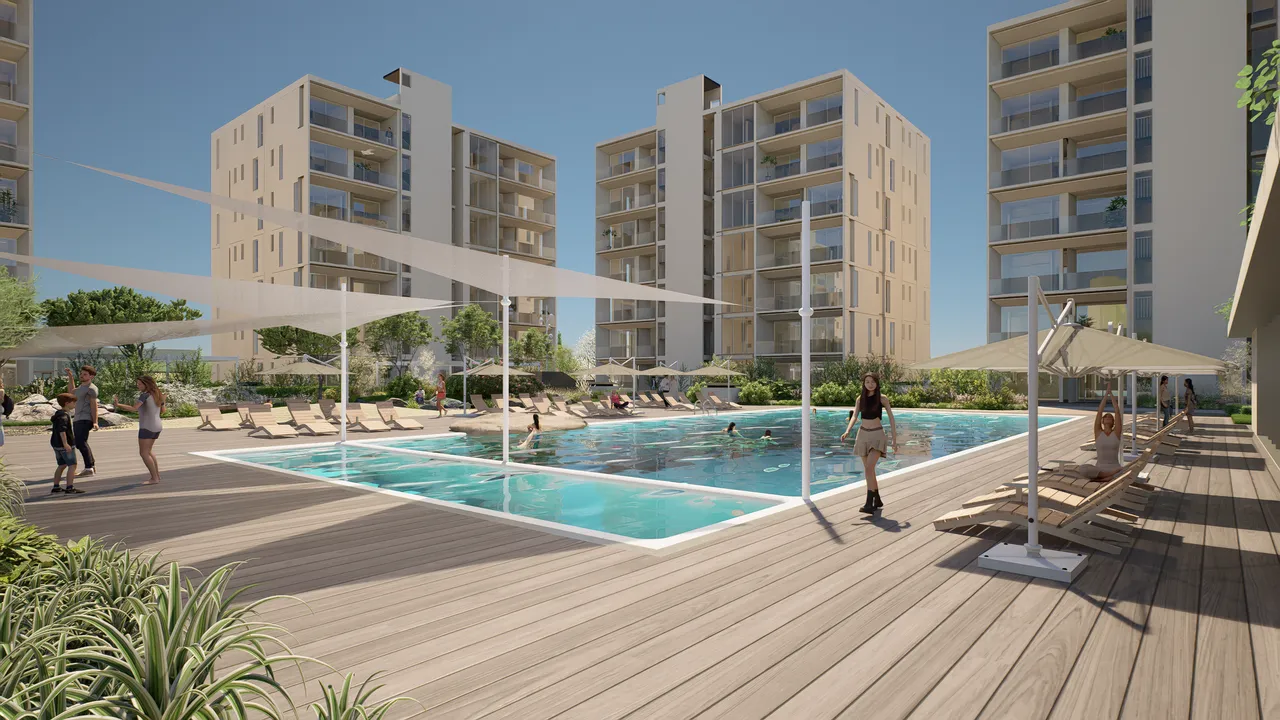 Apartment · Penthouse
GAIA Residences
Limassol · Potamos Germasogeias
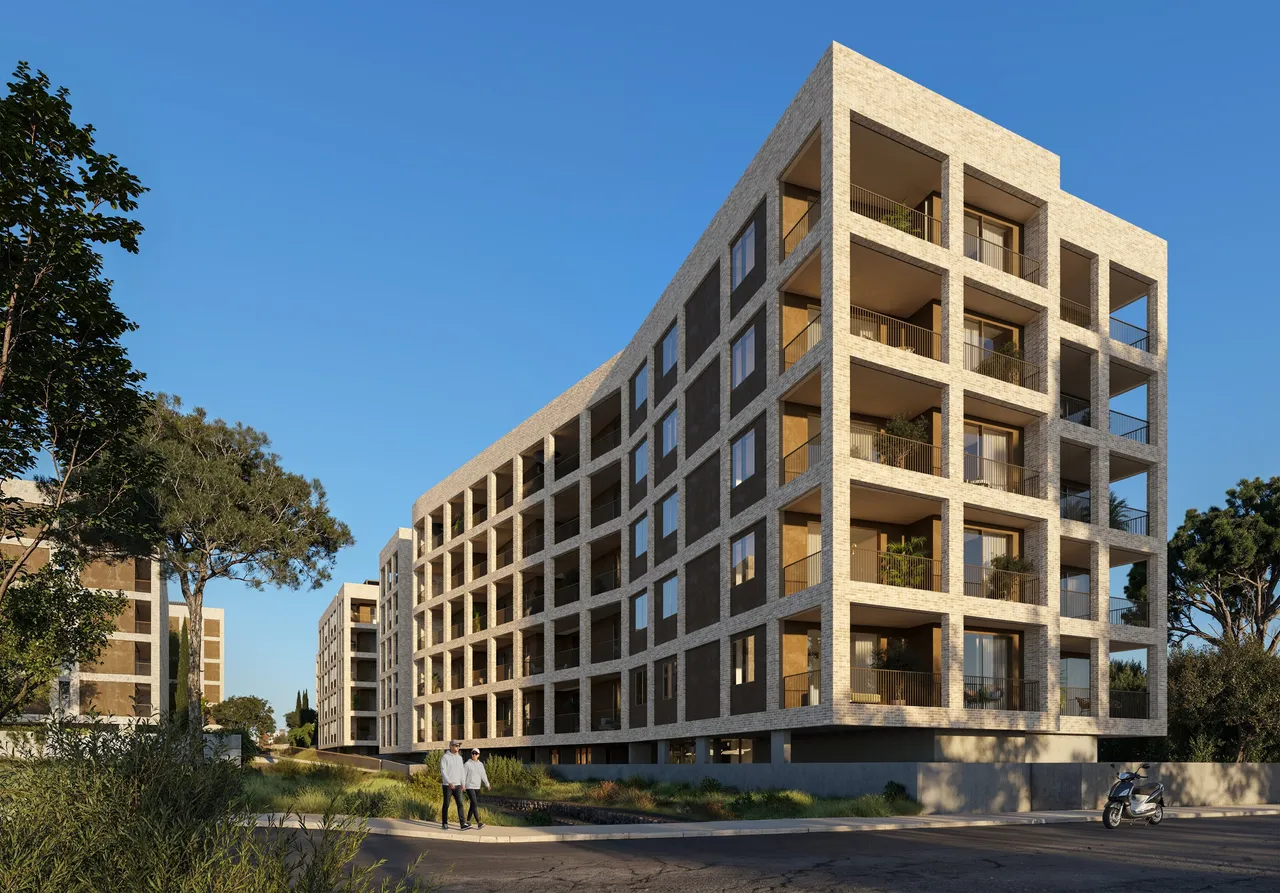 Apartment · Penthouse
Glow 2
Limassol · Agios Athanasios
 Apartment · Penthouse · Studio
Glow
Limassol · Agios Athanasios
 Penthouse · Studio · Apartment
Nest
Limassol · Germasogeia Village
 Apartment · Studio
Upside
Limassol · Agios Athanasios
 Apartment · Penthouse
Keys
Limassol · Panthea
 Apartment · Penthouse
Coast View Residence
Paphos · Geroskipou
 Apartment · Penthouse
Bronte
Paphos · Kato Paphos
Yes in both, under different tests. Cyprus requires Council of Ministers permission, which the Ministry of Interior grants in practice for one plot of up to 4,000 m² for an own home or up to two units. Italy requires reciprocity under Article 16 of the Preleggi, except for non-EU citizens holding a residence permit for employment, self-employment, family, humanitarian or study reasons, and the notary checks it.
Cyprus: a transfer fee of €26,600 (1.5% × €85,000 + 2.5% × €85,000 + 4% × €580,000). Italy: 9% registration tax plus €100 in fixed taxes, which is €28,450 if the price-value rule applies to an assumed cadastral value of €315,000 (income €2,500), and €67,600 if the tax runs on the price.
The price-value rule lets a private individual buying a dwelling in a sale that bears registration tax (a private seller, or a business whose sale is exempt from VAT) ask the notary, in the deed, to tax the cadastral value, which is the cadastral income × 1.05 × 120 for a home that is not a prima casa. The deed must state the true price, and a concealed price brings a penalty of 50% to 100% of the difference.
The base is 2,500 × 1.05 × 160 = €420,000. At the 0.86% base rate the tax is €3,612 a year, and at the 1.06% ceiling it is €4,452. The municipality fixes the rate, so the bill depends on where the home stands.
Under article 67 of the Italian income tax code, as quoted in Agenzia delle Entrate rulings 51/2026 and 157/2026, the gain on a property is taxable income only when sold within five years of purchase or construction (building land is taxed whatever the holding period). On a sale at €900,000 after buying at €750,000, the gain of €150,000 would bear a 26% substitute tax of €39,000 inside five years if the seller asks for it, and none after five years. Cyprus would charge €27,600 on the same figures, before indexation and costs.
No. The Italian embassy page lists four investor-visa routes (government bonds of €2 million, €500,000 in a joint-stock company, €250,000 in an innovative start-up, a donation of €1 million) and property is not among them. The elective residence visa lists ownership of property as one possible resource and asks for accommodation and independent means. Cyprus Category 6.2 does accept a new-build of at least €300,000 plus VAT.
No. It is an option for a person who transfers tax residence to Italy and was non-resident for at least 9 of the previous 10 tax years. The amount is €300,000 a year for transfers from 1 January 2026, with €50,000 per extended family member according to the Agenzia notice of January 2026, and it runs up to 15 years.
No. The European Commission says Cyprus participates in the Schengen cooperation but internal border controls have not yet been abolished by the Council. Italy is a member, so a visa-exempt visitor keeps separate 90-day counts for Cyprus and for the Schengen area.
Sources, all read on 18 November 2026. Italy: Agenzia delle Entrate guide L'acquisto della casa: le imposte e le agevolazioni fiscali (chapter L'acquisto di una casa: le imposte: rates, VAT, the price-value rule and the Agenzia's worked example); Agenzia delle Entrate pages Neo residenti - Regime opzionale - Che cos'è (updated 16 January 2026) and Agevolazioni per chi trasferisce la residenza in Italia (updated 27 March 2026); Agenzia delle Entrate page on the taxation of property gains (26% substitute tax) and rulings 51/2026 and 157/2026 on the five-year rule; Agenzia delle Entrate Rapporto Immobiliare 2026 (residential) and the Statistiche regionali 2026 reports for Lombardia, Toscana, Liguria, Sardegna and Puglia (published 5 June 2026, reference year 2025); Dipartimento delle Finanze, IMU pages Base imponibile and Aliquote; Ministry of Foreign Affairs (esteri.it), Rights and reciprocity; Consiglio Nazionale del Notariato, notarial services for foreigners; European Land Registry Association, Italy Agenzia delle Entrate entry on limitations to foreigners; Italian Embassy in Pretoria, Investor Visa for Italy page (2024) and the Italian Embassy in Tunis fact sheet on the elective residence visa (file uploaded May 2026 according to its address). European Commission, Schengen area page. Cyprus: our own guides read in the database, which cite the Department of Lands and Surveys, the Tax Department, CyLaw and PwC summaries: the cost of buying property, property VAT, taxes on real estate, the annual property tax, how many properties you can own, Category 6.2, non-dom status, property prices per m² and the 90 days in 180 rule; the Department of Lands and Surveys page on the sale contract (six-month deposit, stamp duty only for contracts signed before 1 January 2026), read from a copy fetched earlier on the same day. Cyprus prices are from our database of published new-build projects on 6 November 2026.
What conflicts or could not be confirmed. The Agenzia delle Entrate regime page states €300,000 and €50,000 in its notice and €200,000 and €25,000 in its body text; the notice and the 27 March 2026 page agree on €300,000, and I used them. I did not read the 2026 budget law itself or the Italian transitional rules. The Cyprus fee schedule and VAT rules were taken from our guides, and I did not re-read the Department's fee page or the Tax Department circulars for this guide. I found no official page giving Italian notary or agent fees, the ordinary-tax route on a gain inside five years (rate depends on the seller's total income), the rules for non-resident sellers or the tax code procedure, and I did not read the IMU rate set by any individual municipality. OMI zone-level values could not be opened, so the price table uses regional averages. Ruling 83/2018 still shows the former 20% rate; the 26% rate comes from the Agenzia's current page. The cadastral income of €2,500 and every price, sale price and income in the examples are assumptions, and nobody can predict prices. This guide is general information and not legal or tax advice; a licensed lawyer, an Italian notary or a tax adviser should confirm your own position. Cyprus VIP Estates assists investors in choosing new developments; legal and immigration advice comes from licensed professionals.