Guides/Buying guides
How Many Properties Can You Own in Cyprus? Limits for EU Citizens, Non-EU Buyers, Couples and Companies

EU and EEA citizens can own any number of properties in Cyprus: the Acquisition of Immovable Property (Aliens) Law, Cap. 109, needs no permit from them and sets no count. A buyer from outside the EU and the EEA needs a permit and, according to the Ministry of Interior, receives it for either one plot of up to 4,000 m² on which to build an own home, or up to two units: two dwellings, or a dwelling and a shop up to 100 m², or a dwelling and an office up to 250 m². A couple shares one allowance. The Department of Lands and Surveys states the same area as 4,014 m² (three donums, the old local land unit), and the statute itself contains no number of properties, so the two-unit rule is the Ministry's published practice. A bill that would tighten the rules was still in committee on 27 October 2026. Owning several properties also has a tax side: an owner who sells three flats with a €60,000 gain each pays €30,000 of capital gains tax in total when the €30,000 allowance is used on the first sale only (sources read on 18 November 2026).
How many properties can an EU or EEA citizen own in Cyprus
Cap. 109 defines the "alien" who needs permission. Section 2 excludes citizens of EU member states and of EEA states, an alien Cypriot (a person born in Cyprus to parents ordinarily resident there, or whose father was), the foreign spouse of a Cypriot citizen who is not separated by a court decision, and legal persons formed under the law of a member state with their registered office, central administration or main establishment in an EEA state. Section 3 then forbids only an alien to acquire immovable property without prior permission of the Council of Ministers. Neither section counts properties, so an EU or EEA citizen needs no permit and meets no numeric limit. The Ministry of Interior's page on purchasing property is addressed to citizens of non-EU states, foreign companies and companies controlled by foreigners, and says nothing about EU buyers.
At the Land Registry the unit of counting is the independent unit. The Department's sale and exchange page asks for one Form N314A1 for each independent unit (house, shop and so on) when a building is transferred, which means a block bought in one deal is dealt with unit by unit. For the cost of each purchase, see how much it costs to buy property in Cyprus.
One conflict between official pages needs stating. The Land Department's page on acquisition by foreigners, in Greek and undated, still says that EU citizens and EU companies without a permanent base in Cyprus cannot acquire a secondary residence without the Council's prior approval. The United Nations Food and Agriculture Organization's summary of accession terms says Cyprus was allowed to keep restrictions on non-residents' secondary residences for five years after accession, which the Land Department page itself dates to 1 May 2004. The consolidated text of Cap. 109 on CyLaw shows the definition of "secondary residence" as deleted and lists amendments up to 161(I)/2011. We read the older sentence on the Land Department page as a survivor of the transitional period, but we found no official page that states the date of repeal, so an EU buyer who lives abroad and wants a second or third home can ask the lawyer to confirm in writing.
How many properties can a non-EU buyer own in Cyprus: one plot or two units
A non-EU citizen needs the permission of the Council of Ministers before the property is registered in their name. The Ministry of Interior says the District Administration of the district where the property lies handles it on application form COMM 145, no fee is payable and applications take between 2 and 3 weeks. The Ministry lists two options.
| Option the Ministry lists | What the permit covers | Notes |
|---|---|---|
| One plot, or land not divided into plots | Up to 4,000 m², to build a dwelling for owner occupation | A couple is granted joint permission |
| Up to two units | Two dwellings, or one dwelling and a shop of up to 100 m², or one dwelling and an office of up to 250 m² | The units may be at different stages of development; the restriction applies in total to couples |
The law does not contain the number two. Section 3(1) of Cap. 109 requires permission and leaves the conditions to the Council. Section 3(1A) adds that when an acquisition exceeds the area absolutely necessary for a home or business premises and in any case exceeds two donums, the permission carries further conditions set by regulations approved by the House of Representatives. The only regulations under section 4 that we found, the Regulations of 1972 (Official Gazette Supplement III, 13 October 1972, no. 183), set the minimum size of the parts into which an alien may divide property for sale at one donum and two prostathia, and say nothing about how many properties a person may hold. The Land Department adds that the Council of Ministers delegated the power to the district officers. The number of units therefore comes from the Ministry's published practice, which is why it appears on a service page and not in the statute.
Section 3 also fixes what happens without the permit. A valid contract gives the alien no right to acquire the property until the Council's permission exists (section 3(3)), and any registration made in breach of the section is void (3(5)). The Land Department's sale page asks for the permit at the transfer whenever the buyer is a foreign person. Our guide to Cyprus property law for foreign buyers sets out the contract deposit and the other steps around the permit.
Which combinations of properties fit the Ministry's two-unit list
The Ministry's wording is specific, so most combinations can be checked against it. The table applies the published list to nine common plans of a non-EU buyer. "Outside the list" means the page does not name the combination; it does not say that an application would be refused, and no official page read states the criteria or the refusal rate.
| Plan of the buyer or couple | On the Ministry's list? | Reason |
|---|---|---|
| Two apartments | Yes | Two dwellings |
| One house and one apartment | Yes | Two dwellings |
| One apartment and a 90 m² shop | Yes | One dwelling and a shop of up to 100 m² |
| One apartment and a 120 m² shop | Outside the list | The shop exceeds 100 m² |
| One apartment and a 240 m² office | Yes | One dwelling and an office of up to 250 m² |
| One apartment and a 300 m² office | Outside the list | The office exceeds 250 m² |
| Three apartments | Outside the list | The third unit exceeds two units |
| One plot of 3,900 m² for the own home | Yes | Option one, a plot of up to 4,000 m² for owner occupation |
| A plot and an apartment together | Not described | The Ministry lists the plot or the two units; a combination is not mentioned |
Parking spaces and storage rooms are a separate question. The Ministry's page does not say whether a garage or a storage room sold with an apartment counts as a unit, and the Land Registry's examples of an independent unit are a house and a shop. Because a basement store and a parking place sometimes have their own registration, a buyer who plans two apartments with their own spaces can ask the District Administration to state in writing how the spaces are counted before signing the contracts.
Area limit on property ownership: why the figures 2,676 m², 4,000 m² and 4,014 m² all appear
Three area figures circulate and each comes from an official page. The Ministry of Interior gives 4,000 m² for a plot on which an own home is built. The Land Department's page on acquisition by foreigners says that the area granted is the area absolutely necessary to build a dwelling or business premises, or at most 2,676 m². Beyond that, it says permission is granted only for a dwelling for owner occupation on land that does not exceed 4,014 m², for professional or commercial premises, and for industry in sectors that the Council of Ministers considers beneficial to the Cyprus economy and that involve new technology or know-how.
The figures fit together arithmetically. If 2,676 m² is two donums, one donum is 1,338 m², and three donums are 3 × 1,338 = 4,014 m². The Ministry's 4,000 m² is that same limit rounded, and the "two donums" in section 3(1A) of Cap. 109 equals 2,676 m². Our property-law guide notes that it found no official page reconciling the Ministry's 4,000 m² with the two donums of the statute; the Land Department page supplies the conversion. For a buyer with a plot in mind the practical reading is a ceiling of 4,014 m² for an owner-occupied dwelling, with anything above the necessary area or 2,676 m² needing the stated purpose. Farmland has its own rules, covered in our guide to buying agricultural land or a farm in Cyprus.
How couples, families and heirs count towards the property ownership limit
The Ministry says couples are granted joint permission and that the restriction applies in total to couples. A non-EU husband and wife who buy two apartments together have therefore used the whole published allowance, and a third unit in either name sits outside the list. The Ministry's page speaks of "foreign couples" and asks for a marriage certificate in some cases; it says nothing about unmarried partners, adult children or parents, so each of them is an applicant in their own right on the page's wording, and whether two unmarried partners may each hold two units is not stated on any official page we read.
Marriage to a Cypriot citizen changes the position: the foreign spouse of a citizen of the Republic who is not separated by a court decision is excluded from the definition of an alien in section 2. Section 3(1) also covers acquisition on death, so a non-EU heir needs permission for an inherited property as well. The Land Registry costs of a succession are in our guide to Cyprus inheritance and gift tax.
Owning several properties through a company
A company does not remove the permit rule. Section 2 treats as an alien a company controlled by aliens, a foreign company and a trust for the benefit of an alien. A company is controlled by aliens when half or more of its directors, votes or shares belong to aliens. Section 3(6) widens "acquisition": it includes a lease that exceeds 33 years, buying shares in a Cyprus company that holds property when the purchase would put the company under alien control, and setting up a trust for an alien that holds property. The Ministry adds a list of company documents to the application: certificates of registration, shareholders, directors and registered office, the memorandum and articles, and information on activities and staff.
No official page read says whether the units owned by a company count towards the personal allowance of its non-EU shareholder. The Cyprus Mail reported on 27 October 2026 that the stated aims of the proposals in the House include preventing purchases in which Cyprus companies act as facilitators, and on 19 March 2026 that the bill would abolish provisions allowing indirect acquisitions without cabinet approval. A buyer who plans a portfolio of three or more properties through a company is therefore planning around a route that lawmakers are examining. Costs and taxes of the structure are in buying property in Cyprus through a company or in your own name.
Can a non-EU buyer own more than two properties? What the official pages do not say
No official page that we read describes a way to hold more than two units, and none publishes the criteria or a refusal statistic. Three details matter for a buyer who already holds one or two properties. First, section 3(2)(b) of Cap. 109 lets the permission itself state that no further permission is needed when another alien later acquires the same property, so a resale to a foreign buyer can be cleared in the first permit. Second, the Ministry's page does not say whether selling a unit frees the allowance for a new purchase. Third, the Cyprus Mail reported on 6 February 2026 that the Interior Ministry was drafting a framework to define acquisition and maximum area more clearly and was considering a time limit between applications, which suggests that repeat applications are a topic for the new rules.
Because section 3(3) gives the contract no force towards acquisition until the permission exists, the order of steps matters. A buyer who has used the allowance and signs a third contract risks a purchase that cannot be registered, and the transfer is where the Land Registry checks the permit. A written reply from the District Administration, before the third contract is signed, settles how the office counts the units already held.
Category 6.2 permanent residency and the number of properties you hold
The investment route to permanent residence, Category 6.2 in the Regulations, is built around the same number. Deloitte Cyprus's summary, dated 3 June 2022, says the applicant can invest in up to two units, with at least €300,000 plus VAT, and that resale properties are excluded; our guide to Category 6.2 permanent residency gives the Migration Department's conditions, including the sum of one or two new units bought from a developer. The holder remains a citizen of a non-EU country, so on the wording of section 2 the Cap. 109 permit still applies to the purchase, and a couple who buy two units for Category 6.2 have reached the Ministry's published total. We did not read an official Migration Department page on the number of units in this research, so the 6.2 conditions should be confirmed on that page before a purchase.
Proposed 2026 limits on foreign property ownership: where the bill stands
Nothing above has changed in the statute yet, but a reform is under discussion in the House Interior Committee. The reports we read give this sequence.
| Date of Cyprus Mail report | What it says |
|---|---|
| 6 February 2026 | The employers' federation proposes that foreigners may acquire up to two plots or residential units with a maximum land area of 4,000 m², with coastal areas exempt from possible bans. The Interior Ministry has no numbers yet and is considering a time limit between applications |
| 27 February 2026 | The ministry proposes that buyers keep the property for at least five years and remain in the Republic for at least five years. The law would not apply retroactively to transactions completed or filed with the Land Registry |
| 19 March 2026 | The bill sets maximum limits on the area third-country nationals may acquire, prohibits purchases of agricultural and rural land and would abolish indirect acquisitions without cabinet approval; homes and shops remain allowed. It was due before the plenum on 2 April |
| 22 and 27 October 2026 | After the May parliamentary elections the committee resumed work and awaits the government's comprehensive bill; the chair hopes to finish by the end of the year. The articles give no new limits; one MP mentioned plot sizes of 1,000, 2,000 and 4,000 m² only as examples |
No bill had passed in the reports read, and we found no report dated November 2026. The figures in the February and March articles are proposals by different bodies and are not the law. If you sign before any change, the date that counts is fixed by the transitional text of the eventual law, so ask the lawyer which date the Land Registry will use for your file.
Tax on owning several properties: what is charged per property and what per person
Some charges multiply with the number of properties and others belong to the owner as a person. Cyprus has had no annual state property tax since 1 January 2017. Each property still carries the municipal property tax, the sewerage charge, refuse collection and, in a complex, a communal fee: our guide to the annual property tax in Cyprus puts the yearly total for a €300,000 apartment in Limassol at about €1,560, so three such apartments cost about 3 × €1,560 = €4,680 a year, as an assumption of equal bills. At purchase every unit carries its own VAT or transfer fee.
The reduced 5% VAT rate belongs to the person and the home. Our guide to Cyprus property VAT says it applies to a new home that becomes the buyer's main and permanent residence, within caps of 130 m² and €350,000 for the reduced part, and that a second flat bought for other uses pays 19%. We did not read the Tax Department's circular for this guide, so confirm the rule on a second purchase at the Tax Department before relying on it.
The capital gains tax allowances are personal. Section 4 of the Capital Gains Tax Law (52/1980), as consolidated on CyLaw, charges 20% on the gain from the disposal of property. Section 5(1) says no tax is paid when the total gain from the disposal or disposals by a natural person does not exceed €30,000. Section 5(2) exempts the gain on a main residence used exclusively as the owner's home for at least five years, on land of up to one and a half donums, up to €150,000; for a second or later disposal of a home the period rises to at least ten years; the exemption is lost if the home is sold more than a year after the owner stopped living in it; and no person is entitled to both exemptions but only to the greater of the two. Our Cyprus tax calculator applies these allowances, and taxes on real estate in Cyprus lists the other charges.
Three buyer profiles: a yes or no on the number of properties and the steps for each
The table applies the rules read above to three invented buyers. The outcome is the answer on the published rules as of 18 November 2026, and the steps are the order in which the documents named in the Ministry's and the Land Department's pages are used. A licensed lawyer confirms the position for a real file.
| Buyer and plan | Outcome on the published rules | Steps |
|---|---|---|
| A German couple, both EU citizens, want three apartments in Larnaca and Paphos | Yes. Section 2 of Cap. 109 excludes EU citizens, so there is no permit and no count | Choose the units; for each new build agree the VAT treatment (19% on a second home), for each resale work out the transfer fee; the Land Registry handles each independent unit separately; plan the capital gains tax of a later sale per person |
| A Canadian couple want one apartment and a 90 m² shop | Yes. One dwelling and a shop of up to 100 m² is on the Ministry's list; the allowance of two units is then used in total | Sign the sale contract; file form COMM 145 with the District Administration of the district, with survey, title deed or planning consent, contract, floor plans, proof of financial standing and passports; no fee, 2 to 3 weeks; the permit is shown at the transfer |
| A US citizen who already holds two apartments wants a third, and a friend suggests a Cyprus company with 60% of the shares owned by the buyer | Outside the list for the third unit. A company with half or more of its shares held by an alien is itself an alien under section 2, so the company needs its own permit and the structure does not remove the permit step; whether its units add to the buyer's two is not stated | Write to the District Administration to ask how it counts a third unit; do not sign a contract without a permit condition, because the contract gives no right to acquire (section 3(3)) and a registration made in breach of section 3 is void (3(5)); check the bill's progress and the date the Land Registry will use |
Worked example 1: purchase taxes when a non-EU couple buys two properties
Assumptions: a non-EU couple holds a Cap. 109 permit for two units. Unit A is a new-build apartment at a price of €300,000 before VAT, no larger than 130 m². Unit B is a resale apartment at €200,000, on which no VAT is charged. The Land Department's sale page sets the transfer fee at 3% on the first €85,000, 5% from €85,001 to €170,000 and 8% above that, with no fee where VAT is charged on the same transaction and a 50% discount where the fee applies. Lawyer fees and other costs are excluded.
Transfer fee on unit B: 3% × €85,000 = €2,550; 5% × €85,000 = €4,250; 8% × €30,000 = €2,400; the sum is €9,200 and the 50% discount gives €4,600. VAT on unit A is 19% × €300,000 = €57,000 when the unit is a second home, or 5% × €300,000 = €15,000 when the couple lives in it as their main residence and meets the conditions. The permit costs €0.
| Item | Unit A is a second home | Unit A is the couple's main residence |
|---|---|---|
| Price of A and B before VAT | €500,000 | €500,000 |
| VAT on unit A | €57,000 | €15,000 |
| Transfer fee on unit B | €4,600 | €4,600 |
| Cap. 109 permit fee | €0 | €0 |
| Government charges in total | €61,600 | €19,600 |
| Price plus these charges | €561,600 | €519,600 |
Result: the second-home case adds €61,600 to €500,000, which is 12.3% (61,600 ÷ 500,000), and the main-residence case adds €19,600, or 3.9%. The VAT choice on unit A moves the total by €42,000. A third unit would sit outside the Ministry's published list in either case, and its own VAT or fee would come on top.
Worked example 2: capital gains tax when an owner sells three properties
Assumptions: an EU citizen owns three apartments, each with a cost base of €210,000 (purchase price, improvements and costs) and each sold in 2027 for €270,000, so the gain is €60,000 each. The calculation ignores inflation indexation, other deductions and any other levy on the sale. The €30,000 allowance is applied once, as in our tax guides, and the wording of section 5(1), which speaks of the total gain from the disposal or disposals by one person, points the same way; the Tax Department's practice across several sales should be confirmed with a tax adviser.
| Sale | Gain | Allowance used | Taxable gain | Tax at 20% |
|---|---|---|---|---|
| First apartment | €60,000 | €30,000 | €30,000 | €6,000 |
| Second apartment | €60,000 | €0 | €60,000 | €12,000 |
| Third apartment | €60,000 | €0 | €60,000 | €12,000 |
| Total | €180,000 | €30,000 | €150,000 | €30,000 |
Result: 20% × €150,000 = €30,000. Applying the €30,000 to each flat would give 3 × €6,000 = €18,000, which is €12,000 too little. A variant: if the first apartment has been the owner's main home for five years, section 5(2) exempts its €60,000 gain, but proviso (v) then leaves the owner only the greater exemption, so the other two sales pay 2 × €12,000 = €24,000. On the reading in our tax guide, the €150,000 exemption therefore does not add to the €30,000 one.
Checklist before buying a second or third property in Cyprus
- Establish the category: EU or EEA citizen, non-EU citizen, a couple, a company, or an heir. Only the non-EU, company and trust cases fall under the permit in Cap. 109.
- List every unit you already own in Cyprus and every one you plan to buy, with the area of each plot, shop or office, and compare them with the Ministry's two options.
- For a non-EU buyer with two units already, write to the District Administration of the district and ask in writing how the office counts a further unit, a parking space or a store.
- Ask the lawyer to make the contract conditional on the permit, since a contract gives a non-EU buyer no right to acquire until the permission exists (section 3(3)).
- Work out VAT or the transfer fee for each unit separately, and check on the Tax Department's page whether the 5% rate can apply to the unit.
- Estimate the capital gains tax of a later sale, remembering that the allowances belong to you as a person and not to each property.
- Check the bill's progress in the House Interior Committee before you sign, and ask which date the Land Registry will use for your file if the law changes.
New-build apartments with VAT shown separately are listed under apartments in Cyprus and off-plan properties in Cyprus. Before choosing a lawyer for a permit application, read choosing a property lawyer in Cyprus.
How many properties can you own in Cyprus: questions buyers ask
New-build projects in Limassol, Paphos and Larnaca for buyers planning one or two units
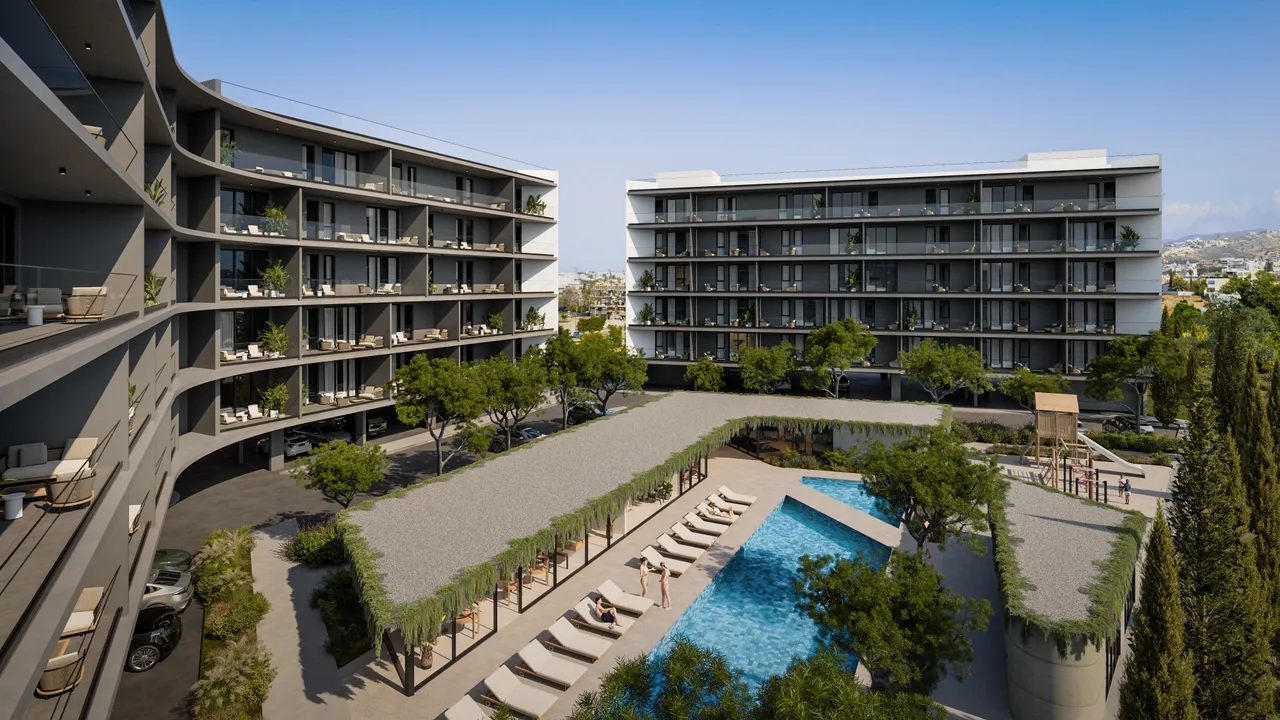 Apartment
Zoia
Limassol · Polemidia
 Apartment · Studio
Golfside
Limassol · Asomatos
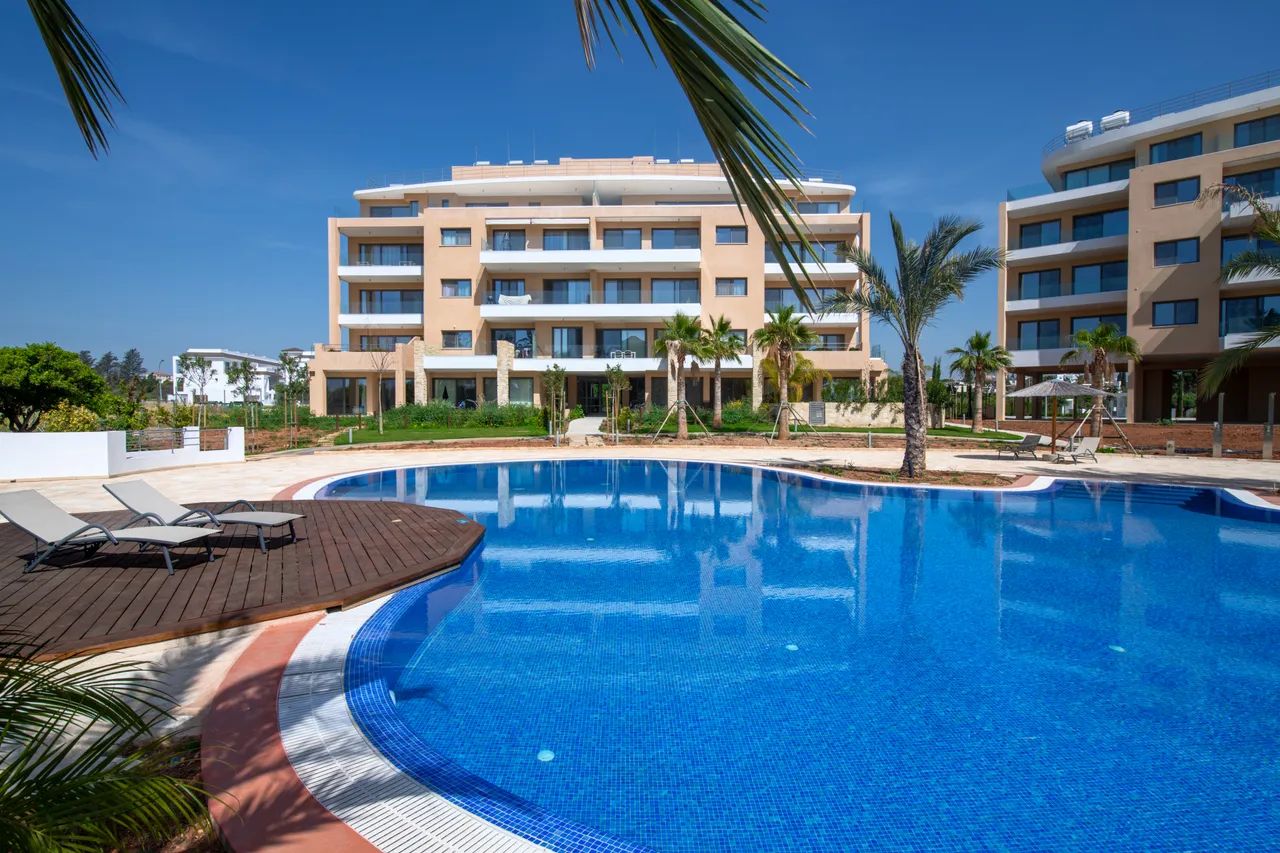 Apartment
Limassol Park
Limassol · Trachoni
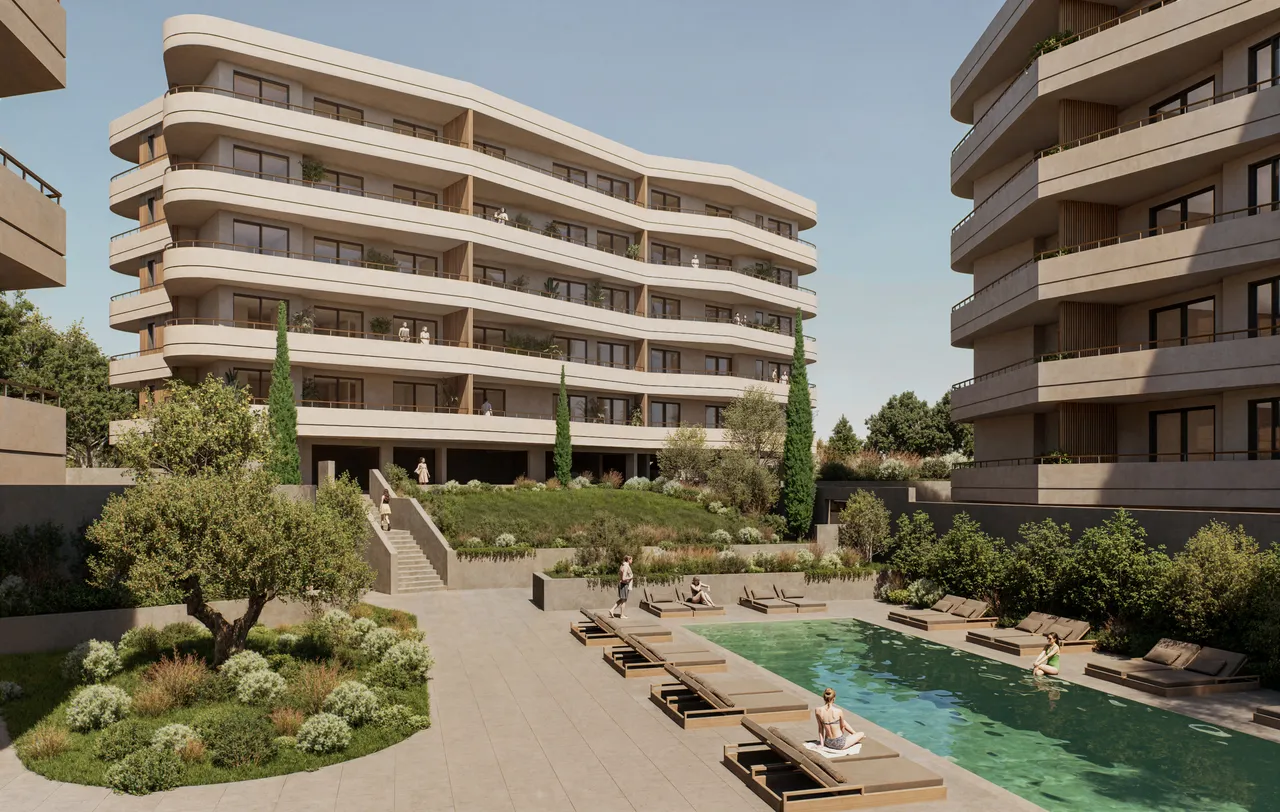 Apartment · Penthouse · Studio
Nest
Limassol · Germasogeia Village
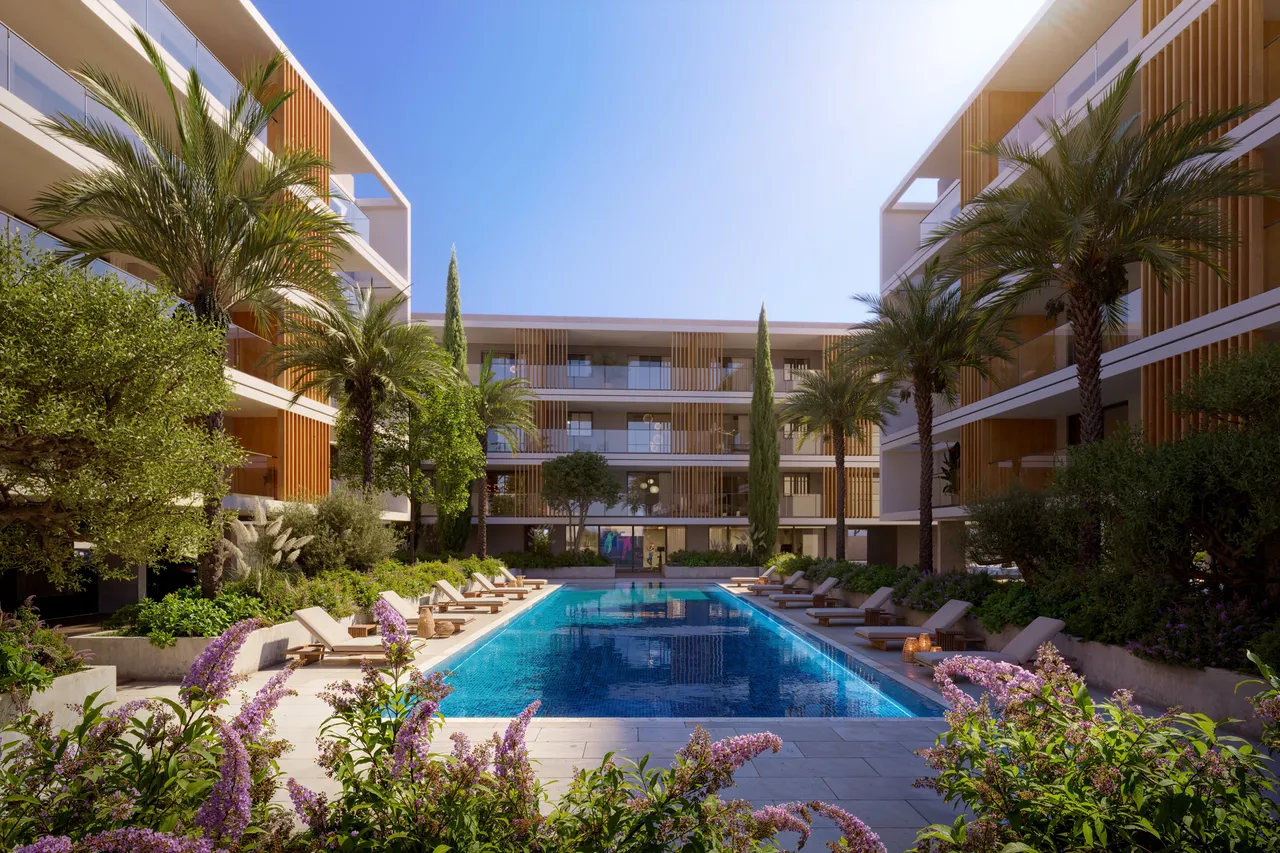 Studio · Apartment
Eden Golf
Paphos · Geroskipou
 Apartment · Studio
Avalon Park
Paphos · Empa
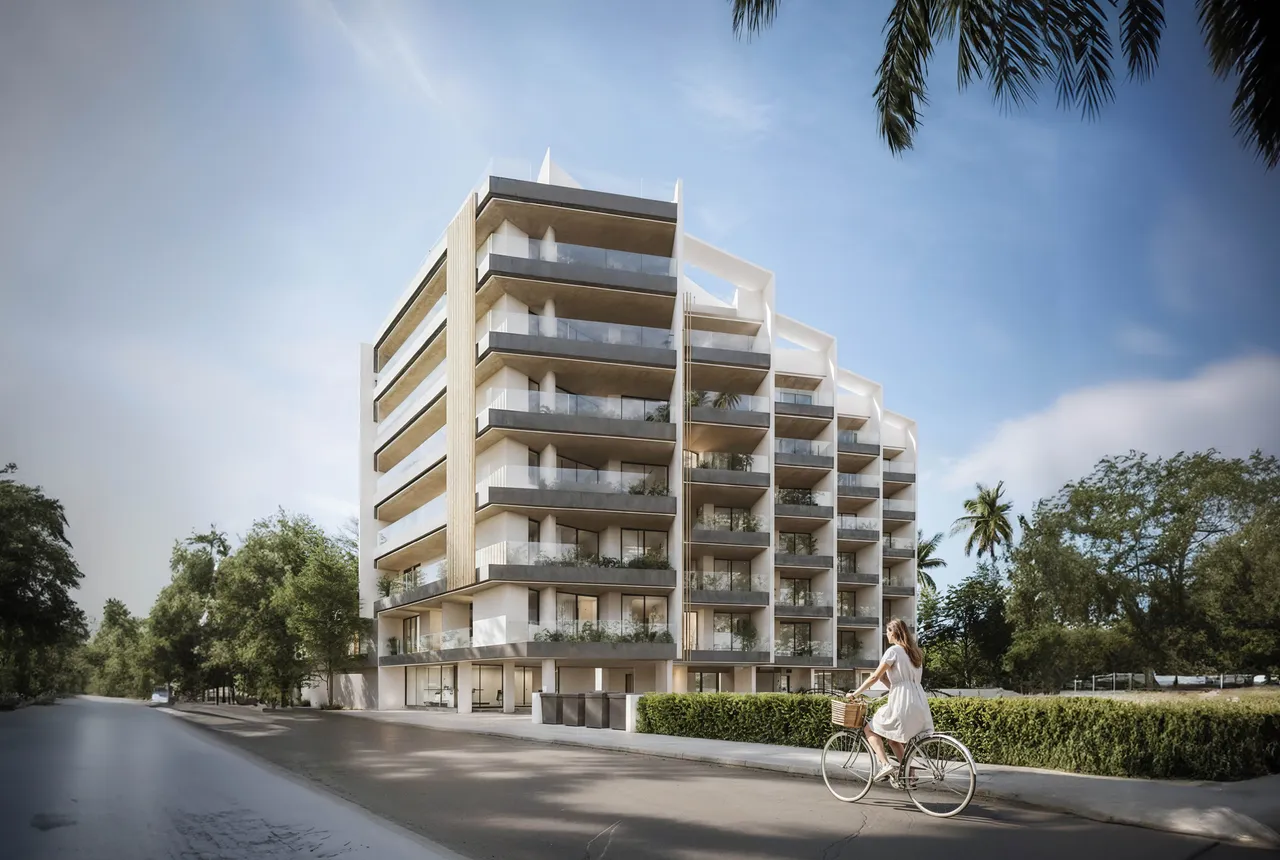 Studio · Apartment
Plus 82
Larnaca · Downtown
 Apartment
Plus 75
Larnaca · Kiti
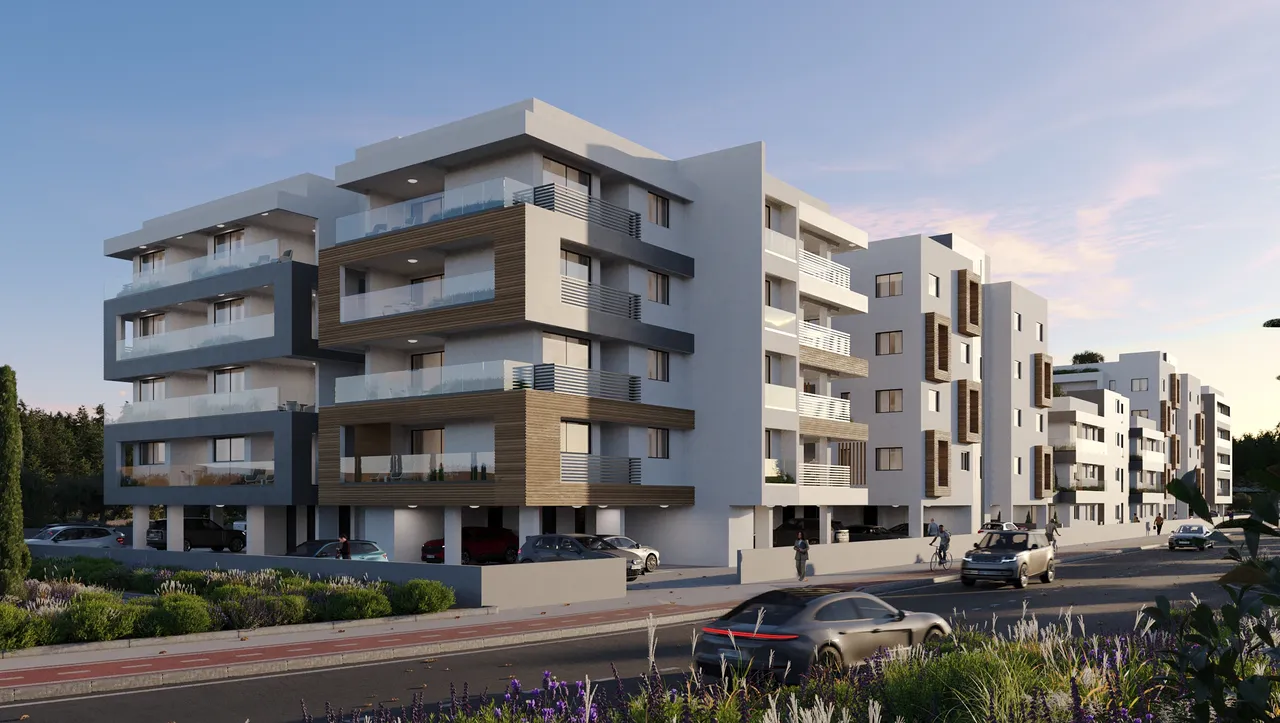 Apartment
Carisa Melora Park
Larnaca · Livadia
UK citizens are outside the EU and the EEA, so they need a Cap. 109 permit. The Ministry of Interior lists up to two units for a couple in total, so three apartments exceed the published allowance, and no official page read describes a route to a third.
They are the same limit. The Land Department gives 4,014 m² for a dwelling for owner occupation, which is three donums at 1,338 m² each, and the Ministry of Interior rounds it to 4,000 m². The general area that the Land Department says is granted is the amount absolutely necessary for a home or business premises, or at most 2,676 m².
No. The Ministry names a shop of up to 100 m² next to one dwelling, so a 120 m² shop is outside the list, while an office of up to 250 m² is named, so a 240 m² office fits. The page does not say that an outside combination is refused, and the District Administration can answer for a specific case.
Section 2 of Cap. 109 excludes EU and EEA citizens from the permit rule and sets no count. An older sentence on the Land Department's page still mentions a permit for secondary residences of non-resident EU citizens; the FAO places that restriction in the five years after accession and CyLaw's text shows the term deleted. Ask the lawyer to confirm in writing.
It was not law on 27 October 2026. The Cyprus Mail reported in February and March 2026 that the bill would not apply retroactively to transactions completed or already filed with the Land Registry. A contract signed but not yet filed is not covered by those words, so the final transitional text decides.
Category 6.2 allows up to two units, according to Deloitte Cyprus's 2022 summary and our guide, which equals the Ministry's two-unit total for a couple. On the reading of section 2, a Category 6.2 holder is still an alien, so the Cap. 109 permit applies to those two units.
€30,000 in total under the assumptions in worked example 2: €6,000 on the first sale after the €30,000 allowance, and €12,000 on each of the other two. Applying the allowance to every sale would understate the tax by €12,000.
There is no annual state property tax since 2017. Municipal tax, sewerage, refuse and communal fees apply to each property; our guide puts a €300,000 Limassol apartment at about €1,560 a year, so three similar apartments cost about €4,680.
Sources, all read on 18 November 2026. Ministry of Interior (gov.cy/moi): Purchasing Property page (form COMM 145, no fee, 2 to 3 weeks, the plot and two-unit options). Department of Lands and Surveys, Ministry of Interior: portal page Acquisition of Property by Foreigners (Greek, undated: 2,676 m², 4,014 m², permitted purposes, EU secondary-residence sentence) and the Sale/Exchange page (transfer fee scale, VAT exemption and 50% discount, permit at transfer, one Form N314A1 for each independent unit). CyLaw consolidated texts, Cyprus Bar Association: Acquisition of Immovable Property (Aliens) Law, Cap. 109 (sections 2, 3 and 4, amendments listed to 161(I)/2011) and the Regulations of 1972 (Official Gazette Supplement III, no. 183, 13 October 1972); Capital Gains Tax Law 52/1980 (sections 4 and 5, amendments listed to 242(I)/2025). Food and Agriculture Organization of the United Nations: accession terms and land markets summary. Cyprus Mail: 6 February 2026, 27 February 2026, 19 March 2026, 22 October 2026 and 27 October 2026. Deloitte Cyprus: permanent residence in Cyprus (3 June 2022). Our own guides supply the annual cost figure, the VAT conditions and the Category 6.2 conditions.
What conflicts or could not be confirmed. The Land Department's page on acquisition by foreigners still mentions a secondary-residence permit for non-resident EU citizens, while the consolidated Cap. 109 deletes the term; no official page read gives the repeal date. No official page read gives the criteria or refusal rate for the Cap. 109 permit, says whether a garage or store counts as a unit, whether a company's units add to a shareholder's two, whether a sale frees the allowance, or how unmarried partners are counted. The Migration Department page on Category 6.2 was not read for this guide, and the Tax Department's circular on the reduced VAT rate was not read either, so those two points rest on Deloitte Cyprus and on our own guides. The February to March 2026 bill reports are press accounts of proposals, not the text of a bill. The way the €30,000 allowance is applied across several sales is our reading, and the prices, areas and gains in both worked examples are assumptions. This guide is general information and not legal or tax advice; a licensed lawyer should confirm your own position. Cyprus VIP Estates assists investors in choosing new developments; legal and immigration advice comes from licensed professionals.