
Guides/Buying guides
Cyprus Property Law for Foreign Buyers: Permits, the Contract Deposit, Title Deeds, Planning Certificates and Purchase Taxes

A buyer from outside the EU and the EEA needs the permission of the Council of Ministers under the Acquisition of Immovable Property (Aliens) Law, Cap. 109. The Ministry of Interior says it is issued by the District Administration on form COMM 145, without a fee, in 2 to 3 weeks, for one plot of up to 4,000 m² to build a home or for up to two units. Every buyer protects the purchase by depositing the signed sale contract at the Land Registry within six months for €50 under the Sale of Immovable Property (Specific Performance) Law 81(I)/2011, which lets a court order the transfer if the seller defaults. A new unit has no title deed until the building has a certificate of approval and the Land Registry has divided it, and nobody may occupy the building before that certificate exists. On a €300,000 purchase the tax is a transfer fee of €8,600 for a resale, or VAT of €57,000 at 19% (€15,000 at the reduced 5% rate) for a new build, never both, and stamp duty is €0 for contracts signed from 1 January 2026. The sections below name each statute, give the deadlines and work both purchases through (sources read on 12 November 2026). Validity periods, issuers and the checks before signing are in our guide to planning permits and the certificate of final approval.
Cyprus property law for foreign buyers: which statute covers which step
Cyprus has no single property code. A purchase passes through seven texts, each applied by the Land Registry (the Department of Lands and Surveys, which keeps the register of titles), a planning authority or the Tax Department at a different step. The table maps them in the order a buyer meets them.
| Step | Statute | What it decides |
|---|---|---|
| Who may buy | Acquisition of Immovable Property (Aliens) Law, Cap. 109 | Non-EU buyers need the permission of the Council of Ministers; a registration made without it is void |
| Sale contract and its deposit | Sale of Immovable Property (Specific Performance) Law 81(I)/2011, amended by Law 132(I)/2023 | Six-month deposit, the search certificate, priority over later charges, court enforcement |
| Transfer of the title | Immovable Property (Transfer and Mortgage) Law 9/1965 | The declaration of transfer before the Land Registry, signature by an attorney, no registration over an encumbrance |
| Land Registry fees | Cap. 219, Chapter 17 of the Schedule and section 10 | The 3%, 5% and 8% scale, the 50% reduction and the zero fee when VAT is charged |
| Planning permit | Town and Country Planning Law 90/1972, section 21 | No development of property without a planning permit |
| Building permit and certificate of approval | Streets and Buildings Regulation Law, Cap. 96, sections 3, 10, 10B and 10C | A permit before building, a certificate before anyone occupies the building |
| VAT | Value Added Tax Law 95(I)/2000, section 17 and Table C of the Fifth Annex | 19% on a new home, 5% on a main residence within limits |
The register itself rests on the Immovable Property (Tenure, Registration and Valuation) Law, Cap. 224. One naming point avoids confusion: Cap. 109 still refers to the "Sale of Land (Specific Performance) Law", which is the older Cap. 232. Law 81(I)/2011 repealed Cap. 232 by its section 18 and came into force three months after publication, and the Land Registry applies the 2011 law.
Which foreign buyers need a permit to buy property in Cyprus
Cap. 109 defines the "alien" who needs permission. The definition covers anyone who is not a citizen of the Republic, including a company controlled by aliens, a foreign company and a trust for the benefit of an alien. It excludes an alien Cypriot (a person born in Cyprus to parents ordinarily resident there, or whose father was), the foreign spouse of a Cypriot citizen who is not separated by a court decision, citizens of EU member states and citizens of EEA states, and legal persons formed under the law of a member state with their registered office, central administration or main establishment in an EEA state. A company is controlled by aliens when half or more of its directors, votes or shares are held by them.
| Buyer | Permit under Cap. 109? | Reason in the text |
|---|---|---|
| Citizen of an EU or EEA state | No | Excluded from the definition of an alien in section 2 |
| Citizen of the UK, the USA, Switzerland or any other state outside the EU and the EEA | Yes | Only EU and EEA citizens are named as excluded; Switzerland is not named |
| Foreign spouse of a Cypriot citizen, not separated by a court decision | No | Excluded in section 2 |
| Cyprus company with half or more of its directors, votes or shares held by non-EU persons | Yes | A company controlled by aliens is an alien |
| Company formed in an EU state with its seat in the EEA | No | Excluded in section 2 |
| Company formed outside the EU | Yes | A foreign company is an alien, whoever controls it |
Section 3(6) widens what counts as acquiring property. It includes a lease longer than 33 years, buying shares in a Cyprus company that owns property when the purchase would make the company alien-controlled, and creating a trust for an alien that holds property. A non-EU buyer who plans to hold a home through a company needs the permit for the company as well, as the Ministry's page says.
Council of Ministers permission for non-EU buyers: form, time and limits
Section 3(1) of Cap. 109 forbids an alien to acquire immovable property, by purchase or on death, without the prior permission of the Council of Ministers. The Ministry of Interior applies the rule through the local District Administration: a non-EU buyer, or a foreign couple, submits form COMM 145 to the District Administration of the district where the property lies, with the supporting documents. The Ministry states that no fee is payable and that applications take 2 to 3 weeks. The Land Registry's sale page asks for the permit issued by the competent authority to which the Council of Ministers has delegated its power, so the two descriptions fit together: the law names the Council, and the District Administration issues the permit. How many homes and how much land one buyer may hold, for EU citizens, non-EU buyers, couples and companies, is in our guide to how many properties you can own in Cyprus.
| Option the Ministry lists | What the permit covers | Notes |
|---|---|---|
| One plot, or land not divided into plots | Up to 4,000 m², to build a dwelling for owner occupation | A couple receives one joint permission |
| Up to two units | Two dwellings, or one dwelling and a shop up to 100 m², or one dwelling and an office up to 250 m² | The units may be at different stages of development; the limit applies to a couple in total |
The Ministry lists these documents with the form: a survey; a copy of the title deed; a copy of the planning consent when separate title deeds have not been issued for the apartment or dwelling, or the partition permit for a plot being divided; a copy of the sale contract; floor plans; proof of the applicants' financial standing; passports; a marriage certificate with a certified translation in some cases; and copies of the applicants' Cypriot residence and work permits, which the page lists without saying whether a buyer who has none is excused. A company adds its registration certificates, memorandum and articles, and details of its activities and staff. Because the application needs a copy of the sale contract, a non-EU buyer signs first and applies second.
The legal effect is set out in section 3. A valid contract gives the alien no right to acquire the property until the permission exists (3(3)), and any registration made in breach of the section is void (3(5)). Section 3(1A) adds that when the acquisition exceeds the area absolutely necessary to build a home or business premises and in any case exceeds two donums, the permission carries further conditions set by regulations. Two donums are about 2,670 m² on our conversion, which sits below the Ministry's figure of 4,000 m²; the two sources are not reconciled on an official page, so ask the District Administration to confirm the area in writing for your file. Section 3(4) preserves an alien's right to take the steps that the specific performance law allows, which we read as keeping the contract deposit open to a non-EU buyer while the permit is pending; this is our reading, not a statement on a Ministry page.
Two points the official pages leave open. The Ministry's list still asks for a sale contract "with the requisite stamp duty affixed", while the Land Registry says stamp duty on a contract applies only when at least one party signed before 1 January 2026, so a 2026 contract carries none. And no official page read for this guide publishes the criteria the authority applies or any refusal statistic. The Land Registry's transfer page asks for the permit at the transfer whenever the buyer is a foreign person, which is the point where a missing permit stops the purchase.
Proposed limits on foreign buyers in Cyprus: where the bill stands
Nothing in the permit rules above has changed in the law yet, but a reform is under discussion. Cyprus Mail reported on 3 September 2026 that a government working draft would restrict the size of the plot and of the residence a third-country national may buy, and would prohibit purchases inside designated development boundaries (agricultural land is the example given), next to the ceasefire line and near critical infrastructure; the figures were not published. On 22 October 2026 the same newspaper reported that the House Interior Committee was still examining amendments and awaiting a comprehensive government proposal, with the chairman hoping to finish by the end of the year. No bill had passed in the reports read. If you sign before any change, the date that counts is set by the transitional text of the eventual law, so ask your lawyer which date the Land Registry will use for your file. The special rules for farmland are in our guide to buying agricultural land or a farm.
The sale contract in Cyprus and its deposit at the Land Registry
A Cyprus purchase usually has two stages when the title cannot move on the day of signing: a written sale contract now, and the transfer of the title deed later. The Land Registry recommends a sale contract when the property has no title deed, for instance when it is still under construction, or when financial or other issues delay the transfer. Depositing that contract is what brings the purchase under Law 81(I)/2011. Section 3 sets the conditions. The reservation fee and what each signature changes are covered in reserving a property in Cyprus.
| Item | Rule | Where it comes from |
|---|---|---|
| Form of the contract | Written, with enough detail to identify the parties and the property, the price stated, signed by all parties | Law 81(I)/2011, section 3(1)(b) |
| Who must be registered | At least one seller must be the registered owner of the property, or of the larger property of which the unit is part | Section 3(1)(a) |
| Deadline | Within six months of signing; where nothing is registered yet in the seller's name, six months from the date it is registered | Section 3(1)(c) and proviso (ii) |
| Late deposit | Only with a court order allowing it | Land Registry contract page |
| Fee | €50 for the deposit | Land Registry contract page |
| Who may file | Either party, the buyer's lawyer, or the registered estate agent with a declaration | Land Registry contract page |
| Language | A contract not in Greek or English needs a sworn translation made in Cyprus | Land Registry contract page, Law 45(I)/2019 |
| Search certificate | The seller includes a certificate of the property dated within five working days of signing, for contracts made after 12 December 2023 | Section 4(1A) as added by Law 132(I)/2023 |
| Penalty on the seller | An administrative fine of up to €10,000, and a criminal penalty of up to two years in prison or €5,000 | Section 4(1B) and 4(2) |
The Law makes three more points that matter to a buyer. The deposit creates an encumbrance on the property, which ranks by the date of deposit (section 5(1)). A clause that forbids depositing the contract is void from the start (section 3(2)). And a seller who wants to mortgage property that is the subject of an undeposited contract must first deposit that contract, provided the buyer has performed his obligations to that date (section 4(1)). The older Cap. 232 allowed two months for the deposit, according to its consolidated text on CyLaw; the six-month period is the current law.
Where the only encumbrance on the property is a mortgage, section 3A of the 2011 law adds a form to the deposit. Either the lender and the seller sign a written declaration in Form A, which names an amount the buyer pays into the seller's account and which commits the lender to issue Form B and release the unit, or the buyer signs Form C, accepting the deposit without Form A. How Form A works on a plot with a developer's mortgage is in our guide to buying property without title deeds. The Land Registry also advises a buyer not to pay the full price before the title is transferred into his name.
The deposit has a fee consequence as well. Section 10(3) of Cap. 219 applies the VAT exemption and the 50% reduction in the transfer fee to a contract made and deposited under the specific performance law after 2 December 2011, whenever the title is transferred. A lawyer should therefore deposit at once and confirm it in writing, as set out in our guide to choosing a property lawyer in Cyprus. There is no notary in this process, as the guide on whether there is a notary in a Cyprus purchase explains.
Specific performance: what a court can order when the seller defaults
Specific performance is a court order that makes the seller carry out the sale; the alternative remedy is damages. Under section 6 of Law 81(I)/2011 every contract that was deposited under section 3 can be enforced this way, provided the claim is filed within the limitation period that applies to contract claims. Section 7 lets the court order it on any terms it considers necessary, including the steps needed to obtain the certificates, permits and approvals for a separate registration of the unit, and the appointment of another person to take those steps, with the costs charged on the units.
| Situation | What the law provides | Provision |
|---|---|---|
| Contract deposited within six months | The contract can be enforced by a court order for specific performance | Section 6(1) |
| Written contract not deposited, or an oral contract | The court may still order performance if it is just and reasonable, if no third party's rights from earlier encumbrances or prohibitions are affected, if the parties and the property are identified, and if a seller is registered | Section 6(2) |
| The seller mortgages or sells after your deposit | Your encumbrance ranks by the date of your deposit; the registration under the order proceeds regardless of encumbrances and prohibitions that rank after the contract | Sections 5(1) and 8(1) |
| The court awards damages in place of performance | The deposit operates as a mortgage in your favour for the amount of the damages, from the date of deposit | Section 5(6) |
| The seller goes into liquidation or bankruptcy | The Companies Law and the Bankruptcy Law apply; the text does not rank your claim above others | Section 5(11) |
After an order the buyer has one year to apply to the Land Registry for registration, and the order can be renewed for further periods of up to a year each (sections 8 and 9). The Land Registry's page for this step lists the court order, tax and utility receipts, the Tax Department clearance Form N313 and an application fee of €10, with valuation fees that depend on the date the contract was deposited. The practical lesson is the deadline in the previous section: depositing within six months puts a buyer in section 6(1), while a late buyer relies on the court's discretion in section 6(2).
Title deed protection laws in Cyprus: what changed from 2011 to 2025
A title deed (the Land Registry calls it a certificate of registration) is the document that proves ownership of one registered unit, as our guide to what a title deed is explains. Cyprus protects buyers who pay before the deed exists through a series of statutes. The protective package dates from 2011, one year later than the 2010 date that is sometimes quoted, and it was extended in 2015, 2023 and 2025.
| Law | Date | What it did |
|---|---|---|
| Sale of Land (Specific Performance) Law, Cap. 232 | Older law, repealed by Law 81(I)/2011 | Two months to deposit the contract in the consolidated text read |
| Law 81(I)/2011 | In force three months after publication | Replaced Cap. 232; six months to deposit; the deposit became an encumbrance with a priority date; court enforcement |
| Law 47(I)/2011 | 2011 | Added sections 10B and 10C to Cap. 96: certificate of approval with notes, certificate of unauthorised works |
| Law 139(I)/2015 | 2015 | Added Part VIB to Law 9/1965 for buyers who paid in full and could not obtain a deed because of the developer's mortgage |
| Law 132(I)/2023 | Gazette of 12 December 2023 | Search certificate in the contract, Forms A, B and C, fines for sellers and lenders |
| Law 110(I)/2025 | Gazette no. 5045 of 4 July 2025 | Rebuilt the 2015 procedure after Civil Appeal 285/2018 of 20 June 2024 held part of it unconstitutional |
The details of each mechanism belong to the title deed guides and are not repeated here. Our guide on buying a property without title deeds covers the delays, the Land Registry's division fees, the trapped-buyers procedure and two worked examples, and the article on how deposits and instalments are protected off plan covers the contract terms to negotiate. What the statutes do not provide is a state guarantee fund or compulsory escrow for off-plan payments; those protections come from the contract.
Planning permit, building permit and certificate of approval: what each one means
Three approvals sit behind every building, and a buyer checks all three because the Land Registry will not create a title for a unit in a building without the last one. The Land Registry's leaflet says that a new unit under construction cannot be registered and that registration needs a completion-of-works certificate from the supervising engineer and a certificate from the competent building authority. The English phrase "certificate of final approval" is common in the trade; the statute says "certificate of approval" (πιστοποιητικό έγκρισης).
| Document | Statute | Rule | What a buyer checks |
|---|---|---|---|
| Planning permit | Town and Country Planning Law 90/1972, section 21 | No development of property may start without a planning permit from the planning authority, with exceptions listed in the section | The permit and its conditions, and the planning zone |
| Building permit and division permit | Cap. 96, section 3(1) | No one may erect, alter or demolish a building, divide land into plots or divide a building into units without a permit from the competent authority | That the permit, and any amending permit, matches what was built |
| Certificate of approval | Cap. 96, section 10 | No one may occupy or use a building until it is issued. The permit holder reports completion and applies within 21 days; the supervising engineer submits a certificate within 30 days; the authority issues it when the work follows the permit and sends a copy to the District Lands Officer | That it exists for the whole building and for the unit |
| Certificate of approval with notes | Cap. 96, section 10B | For works of minor importance that differ from the permit. The notes list the irregular parts, and the Land Registry records a note of irregularity on the title | What the notes say and whether they affect your use |
| Certificate of unauthorised works | Cap. 96, section 10C | For works of material importance that differ from the permit. The Land Registry records a prohibition on voluntary transfer and charging, with exceptions such as inheritance, gifts to a spouse, children or relatives up to the third degree, and transfers to a licensed credit institution | That the property is not under this prohibition, because a buyer could not resell it normally |
A certificate of approval makes the works it covers lawful (section 10(5)), and a building that people occupy without one breaks section 10(1), so receiving keys before the certificate exists puts a buyer in a building that the law says nobody may use yet. The guide to buying land and building a villa explains how to ask the planning authority about a plot, and how to vet a Cyprus developer shows how to check a developer's past permits and certificates.
Transfer at the Land Registry: documents and the transfer fee scale
The transfer of title happens at the District Lands Office where the property lies, on an appointment given after the documents are checked. Section 12 of Law 9/1965 allows no declaration of transfer to be accepted while the property is under an encumbrance or its owner under a prohibition, apart from the exceptions in sections 29 and 31, which is why the mortgage and prohibition checks come first. The Land Registry's sale page lists the documents: the declaration of transfer on Form N270; the tax clearance on Form N313 for immovable property tax, capital gains tax and the burdens levy; receipts for municipal tax, sewerage and water; the identity documents of the parties; the lender's consent or a document cancelling the mortgage and other encumbrances where they exist; Form N314A1 for each unit; and, where the buyer is a foreign person, the Cap. 109 permit. A buyer who acts through an attorney files a general power of attorney for a €50 fee or a special one free of charge, and the signature must be certified; the guide on a power of attorney for a property purchase sets out the forms.
The fee is charged on the sale price or the market value of the property, whichever applies, in three bands, and Cap. 219 section 10(2) halves it. Where the Director does not accept the declared price as the market value, the fee is charged on his assessment; the buyer pays it and may object in writing, a valuation follows within three months, and the buyer can go to court. A valuation by a private valuer who is a member of the Cyprus Scientific and Technical Chamber, dated within a year of the transfer or the contract, can be produced for the Director to consider, as our guide to valuation and survey describes.
| Band of the price | Statutory rate | Fee on €300,000 before the reduction |
|---|---|---|
| €0.01 to €85,000 | 3% | €2,550 |
| €85,001 to €170,000 | 5% | €4,250 |
| Above €170,000 (€130,000 of the price) | 8% | €10,400 |
| Total | €17,200, halved to €8,600 |
Purchase taxes on a Cyprus property: VAT, transfer fee and stamp duty
A purchase bears either VAT or the transfer fee, because section 10(1) of Cap. 219 charges no Chapter 17 fee when VAT is charged on the same transaction, and the buyer shows the Land Registry a certificate from the VAT Department. Stamp duty on property contracts is zero for documents signed from 1 January 2026: the Land Registry asks for stamping only where at least one party signed before that date, and Law 239(I)/2025 repealed the Stamp Duty Laws, as the KPMG tax news flash of January 2026 reports.
| Tax | Rate | When it applies | Source |
|---|---|---|---|
| VAT, standard rate | 19% | A new building, which in practice means a first sale by a developer; the VAT Law defines first use as systematic use for at least 18 months, so ask for the Tax Department's treatment of the exact unit in writing | VAT Law 95(I)/2000, section 17 |
| VAT, reduced rate | 5% | A dwelling used as the buyer's main and permanent residence in Cyprus, before first installation, for the first 130 m² of buildable area and up to €350,000 of value, when the whole transaction does not exceed €475,000 or the area 190 m²; the buyer files a declaration that he has no other such dwelling | VAT Law, Fifth Annex, Table C |
| Transfer fee | 3%, 5% and 8% bands, halved | A resale, and any sale without VAT | Cap. 219, Chapter 17 and section 10 |
| Stamp duty | €0 | Contracts signed from 1 January 2026 | Land Registry pages; Law 239(I)/2025 |
The reduced rate depends on how the home is used: the text asks for a main and permanent residence in the Republic and mentions no nationality, so a non-EU buyer who will not live in the home pays the standard 19%. The itemised costs, including legal fees, are in the cost of buying property in Cyprus, and the full VAT mechanics in Cyprus property VAT explained.
Worked example: a non-EU buyer of a €300,000 resale and a €300,000 new build
Scenario, with the assumptions marked. The buyer is a citizen of a non-EU country who has no Cypriot residence permit and will not use the home as a main residence, so the standard VAT rate applies in the new-build case. Each purchase is an apartment of €300,000 bought from a private seller (the resale, with a title deed) or from a developer (the new build, with no title deed yet). The legal fee of 1% plus 19% VAT, which is €3,570, is a planning figure of our own, and so are the first payments: 10% at signing on the resale and 25% on the new build. The law sets no deposit percentage, and the contract fixes it. The buyer's own search certificate costs €10 for one district on the Land Registry's fee list.
| Cost line | Resale | New build at 19% VAT | New build if the 5% rate applies |
|---|---|---|---|
| Price | €300,000 | €300,000 | €300,000 |
| VAT | €0 | €57,000 | €15,000 |
| Transfer fee | €8,600 | €0 | €0 |
| Contract deposit at the Land Registry | €50 | €50 | €50 |
| Search certificate | €10 | €10 | €10 |
| Council of Ministers permit, form COMM 145 | €0 | €0 | €0 |
| Stamp duty (contract signed in 2026) | €0 | €0 | €0 |
| Legal fee (assumption) | €3,570 | €3,570 | €3,570 |
| Total | €312,230 | €360,630 | €318,630 |
| Extra over the price | €12,230 (4.1%) | €60,630 (20.2%) | €18,630 (6.2%) |
The arithmetic. Resale: transfer fee 3% × €85,000 = €2,550, plus 5% × €85,000 = €4,250, plus 8% × €130,000 = €10,400, which is €17,200 and €8,600 after the 50% reduction; the total is €300,000 + €8,600 + €50 + €10 + €3,570 = €312,230. New build: VAT 19% × €300,000 = €57,000, so the total is €300,000 + €57,000 + €50 + €10 + €3,570 = €360,630, and no transfer fee applies because VAT is charged. At the 5% rate VAT is €15,000, which saves €42,000, but only a buyer who meets the main-residence conditions gets it.
| Step | Resale | New build |
|---|---|---|
| Signing | Contract with the seller's search certificate dated within five working days; assumed first payment 10% = €30,000 | Contract with the developer and the same certificate; assumed first payment 25% = €75,000 plus VAT of €14,250, so €89,250 |
| Permit | Your lawyer files form COMM 145 with the contract; the Ministry gives no fee and 2 to 3 weeks | The same; a copy of the planning consent goes in because no separate deed exists |
| Deposit | At the District Lands Office within six months, €50 | The same, with Form A or C if the developer's mortgage is the only encumbrance |
| Between signing and transfer | Check title, permits and the certificate of approval of the building | Stage payments during construction; the permit holder applies for the certificate of approval within 21 days of completion |
| Transfer | Documents on the Land Registry list; balance of €270,000 and the transfer fee of €8,600 | Only after the Land Registry divides the building and issues the deed; no transfer fee on a VAT-charged sale |
Two cautions follow from the figures. On the new build, the unit has no deed at signing, so the contract deposit is the buyer's protection and the retention and Type A points in the guide on buying without title deeds apply. On the resale, the deed exists, so the checks are the search certificate, the permits and the certificate of approval of the building. A €300,000 purchase is also the investment size that our residency guides describe; the first-sale conditions and the income tests are in the Category 6.2 permanent residency guide.
Property in the north of Cyprus: what the Ministry of Foreign Affairs says
Everything above applies to the area under the Republic's control. The Ministry of Foreign Affairs warns foreign citizens against buying Greek Cypriot-owned property in the area occupied by Turkey since 1974. Its page, posted on 6 August 2024, says the secessionist entity has no jurisdiction to perform valid transfers of ownership, that Article 303A of the Criminal Code (Law 130(I)/2006) makes fraudulent dealings in another person's immovable property a felony punishable by up to seven years in prison, and that the owners can sue in the Republic's courts with judgments enforceable in other EU states. The Land Registry's sale page sends transfers in the occupied areas of Famagusta and in the district of Keryneia to a separate page.
Cyprus property law for foreign buyers: questions people ask
New-build projects in Limassol, Paphos and Larnaca for buyers from outside the EU
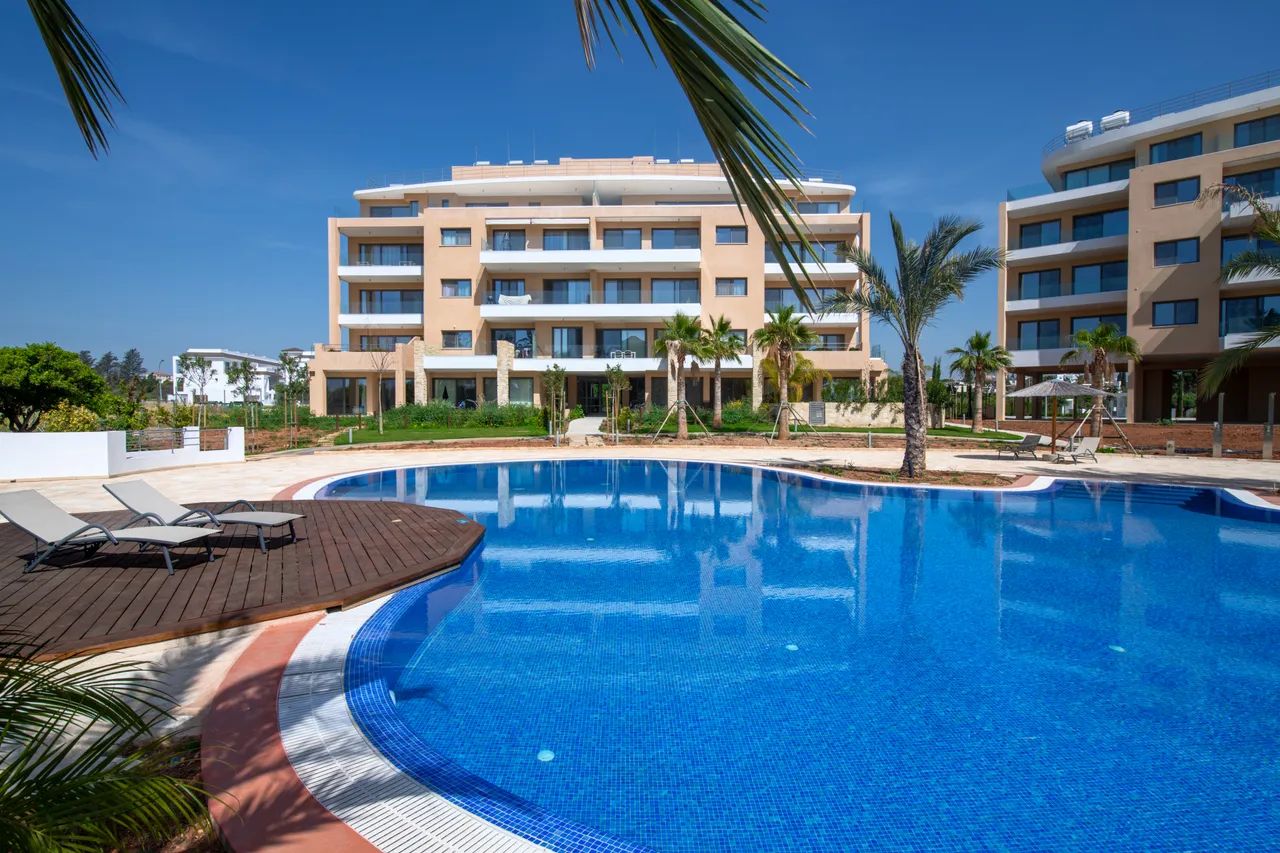 Apartment
Limassol Park
Limassol · Trachoni
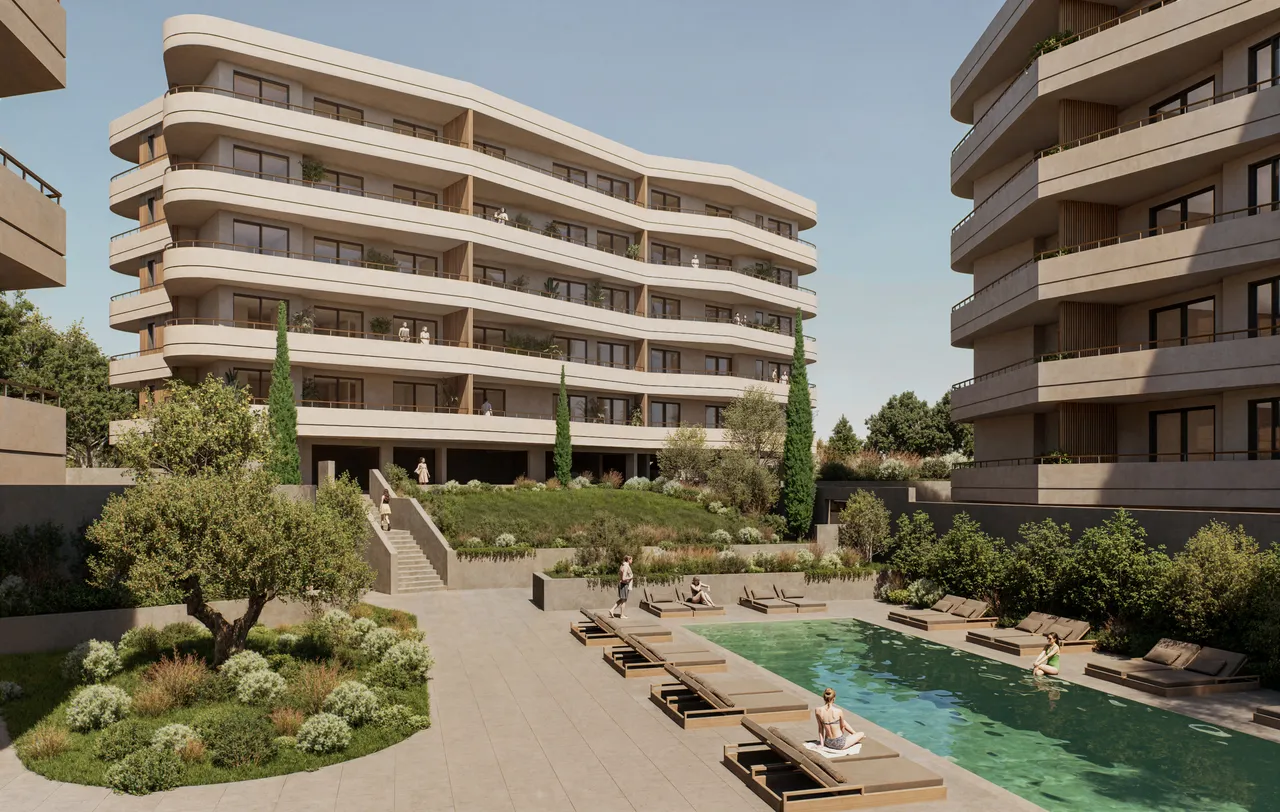 Apartment · Penthouse · Studio
Nest
Limassol · Germasogeia Village
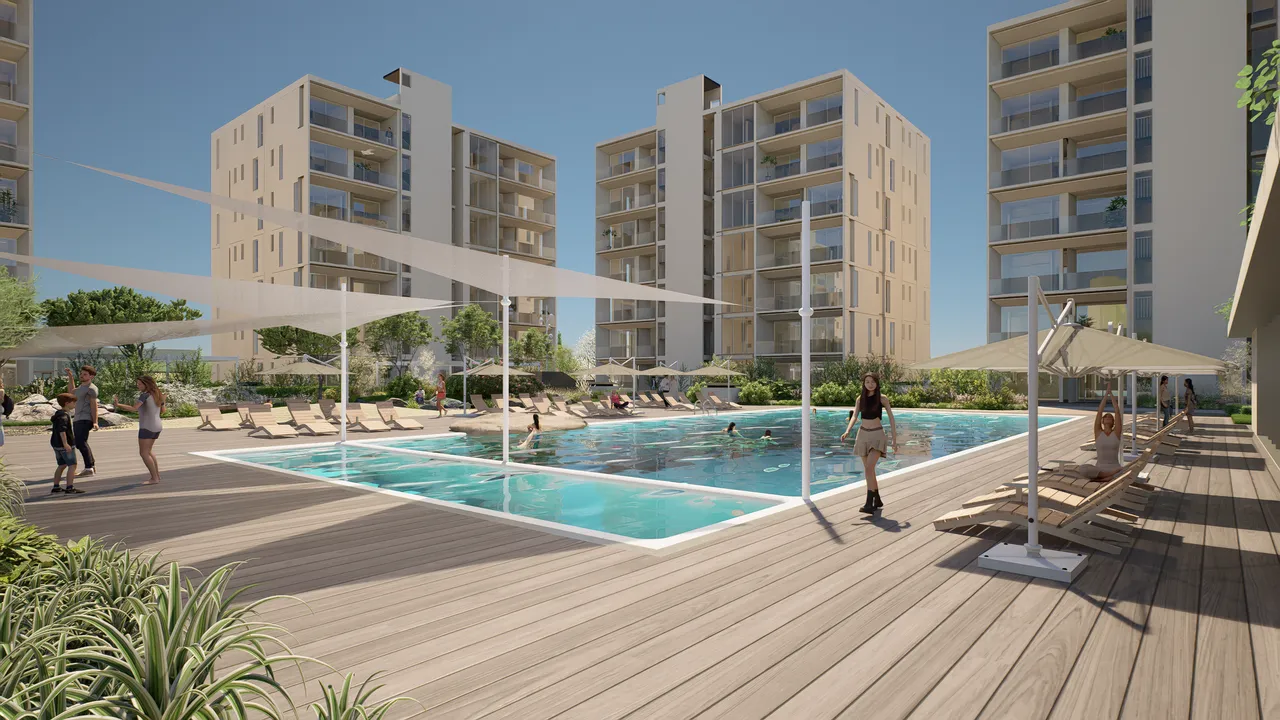 Apartment · Penthouse
GAIA Residences
Limassol · Potamos Germasogeias
 Apartment · Studio
Golf Valley
Limassol · Asomatos
 Apartment · Commercial
Bel Air Gardens
Paphos · Geroskipou
 Apartment · Studio
Avalon Park
Paphos · Empa
 Apartment · Penthouse
Coast View Residence
Paphos · Geroskipou
 Studio · Apartment
Plus 82
Larnaca · Downtown
Yes. Cap. 109 excludes only citizens of EU and EEA states from the definition of an alien, and the UK is in neither group. The Ministry of Interior says the permit comes from the District Administration on form COMM 145, with no fee, in 2 to 3 weeks.
The Ministry lists one plot of up to 4,000 m² for a dwelling for owner occupation, or up to two units: two dwellings, or a dwelling and a shop up to 100 m² or an office up to 250 m². A couple's limit applies to them in total.
Within six months of signing, for €50, at the District Lands Office of the district where the property lies. A deposit after that needs a court order. The deposit makes the contract enforceable under Law 81(I)/2011.
Section 6(2) lets a court order specific performance of a written or oral contract that was not deposited if it is just and reasonable, no third party's earlier encumbrance or prohibition is affected and the parties and the property are identified. It is a matter for the court's discretion.
€8,600: the 3%, 5% and 8% bands give €17,200 and Cap. 219 section 10(2) halves it. VAT and the transfer fee never apply together (section 10(1)), so a €300,000 new build pays VAT of €57,000 at 19% or €15,000 at 5% when the main-residence conditions are met, and no transfer fee.
No. The Land Registry asks for stamping only when at least one party signed before 1 January 2026, and Law 239(I)/2025 repealed the Stamp Duty Laws from that date.
No. Section 10(1) of Cap. 96 forbids anyone to occupy or use a building until the certificate of approval is issued, and the Land Registry will not register a new unit without it.
Not in the reports read to 22 October 2026. The House Interior Committee was still examining the bills and awaiting a comprehensive government proposal, so the Cap. 109 rules in this guide remain the law in force.
Sources, all read on 12 November 2026. CyLaw consolidated texts, Cyprus Bar Association: Acquisition of Immovable Property (Aliens) Law, Cap. 109 (sections 2 and 3, last amended by 161(I)/2011); Sale of Immovable Property (Specific Performance) Law 81(I)/2011 as amended to 132(I)/2023 (sections 3 to 9, 17 and 18); Sale of Land (Specific Performance) Law, Cap. 232; Immovable Property (Transfer and Mortgage) Law 9/1965 (sections 8 to 12); Cap. 219 (section 10, with Chapter 17); Streets and Buildings Regulation Law, Cap. 96 (sections 3, 10, 10B, 10C); Town and Country Planning Law 90/1972 (sections 20 and 21); Value Added Tax Law 95(I)/2000 (section 17, Fifth Annex Table C, definitions of first use). Official Gazette texts of Law 132(I)/2023 (12 December 2023) and Law 110(I)/2025 (no. 5045, 4 July 2025). Ministry of Interior: Purchasing Property page (gov.cy/moi). Department of Lands and Surveys, Republic of Cyprus: portal pages for sale and exchange, contract of sale, specific performance of a sale contract and the search certificate; leaflet Basic Information before the Purchase of Immovable Property (PIO 179/2022); fee leaflet. Tax Department: reduced-rate VAT pages. Ministry of Foreign Affairs: legal consequences of buying property in the occupied area (6 August 2024). KPMG tax news flash on the repeal of the Stamp Duty Laws (January 2026). Cyprus Mail: 3 September 2026 and 22 October 2026. Our own guides supply the legal-fee planning figure and the €8,600 example.
What conflicts or could not be confirmed. The Ministry of Interior gives 4,000 m² while section 3(1A) of Cap. 109 speaks of two donums, and the Ministry's document list still mentions stamp duty on the contract; the search for an official statement reconciling them found none. No official page read states the criteria or the refusal rate for the Cap. 109 permit, a processing time for the transfer, or a time for issuing a title deed. Some sources quote a surcharge on transfer fees for a contract deposited late; we did not find that surcharge on the Land Registry or CyLaw pages read. The Stamp Duty repeal was confirmed through the Land Registry's pages and KPMG, and we did not find the text of Law 239(I)/2025 on CyLaw. The first-payment percentages and the legal fee in the worked example are assumptions. This guide is general information and not legal or tax advice; a licensed lawyer should confirm your own position. Cyprus VIP Estates assists investors in choosing new developments; legal and immigration advice comes from licensed professionals.