
Guides/Tax & legal guides
Cyprus Non-Dom Status in 2026: The 17-of-20-Years Rule, What It Saves and the €250,000 Extension

Cyprus non-dom status arises automatically: it is the position of a tax resident who is not domiciled in Cyprus for the purposes of the Special Defence Contribution (SDC), and it exempts that person from SDC on dividends and interest until the law deems them domiciled, which happens once they have been tax resident for at least 17 of the previous 20 years. Since 1 January 2026 the exemption is worth less on dividends (a domiciled resident now pays 5%, no longer 17%) and the same on interest (17%), SDC on rent has gone for everyone, and a new Article 3D lets long-term residents buy a five-year extension for €250,000. This guide reads the SDC Law itself (Law 117(I)/2002 as consolidated on CyLaw, including the 2025 amendments), the Tax Department's Circular 2/2026 as reported by KPMG and Andersen, and PwC's Cyprus summary (all read on 5 November 2026), and works out the timeline, the saving and the break-even of the extension in euros.
Cyprus non-dom status: what it is and what it exempts in 2026
Cyprus has two separate tests. Tax residence, under the 183-day rule or the 60-day rule, decides whether you are taxed in Cyprus on your worldwide income; it is explained in how Cyprus tax residency works. Domicile decides whether a tax resident also pays the Special Defence Contribution. The SDC Law defines a “resident of the Republic” for its purposes as an individual who is tax resident and, in addition, domiciled in Cyprus. A tax resident who is not domiciled is therefore outside the SDC, and that is what people call non-dom.
| Income | Domiciled tax resident | Non-dom tax resident |
|---|---|---|
| Dividends from profits of 2026 onwards | 5% SDC | 0% SDC |
| Dividends from Cyprus-company profits of 2025 and earlier, paid within six years of the 2025 amendment | 17% SDC | 0% SDC |
| Interest | 17% SDC, 3% on certain government and listed bonds | 0% SDC |
| Rent | No SDC from 2026; normal income tax | No SDC from 2026; normal income tax |
| GHS health contribution on dividends, interest and rent | 2.65%, capped at €180,000 of income | 2.65%, capped at €180,000 of income |
Non-dom status changes only the SDC. Income tax on salary and rent, the GHS contribution, withholding taxes in the paying country and corporate tax are unaffected; the 2026 income tax bands are in our guide to Cyprus tax for individuals. A person who is not tax resident in Cyprus at all is also exempt from SDC on all income, so the point of the status is for people who are resident.
Who is non-dom in Cyprus: domicile of origin and the exceptions
Article 2(3) of the SDC Law says a person is domiciled in Cyprus if they have a domicile of origin in Cyprus under the Wills and Succession Law, with two exceptions, and it adds the 17-of-20-years rule for everyone else. A domicile of origin is acquired at birth and, as a rule, is the domicile of the father at the time of birth (exceptionally the mother's).
- A foreigner with no Cyprus domicile of origin is non-dom from the day they become tax resident until the 17-of-20-years rule catches them.
- A person with a Cyprus domicile of origin is domiciled, unless they have acquired and keep a domicile of choice outside Cyprus and were non-resident for at least 20 consecutive years before the tax year. This is the narrow door for a Cypriot born or raised abroad.
- Anyone, whatever the domicile of origin, who has been tax resident for at least 17 of the 20 years before the tax year is deemed to acquire a Cyprus domicile.
Cyprus non-dom 17-of-20-years rule: when you become deemed domiciled
The test looks backwards. For each tax year Cyprus counts how many of the 20 preceding tax years you were tax resident, by either the 183-day or the 60-day rule. If the count is 17 or more you are domiciled for that year. The years need not be consecutive, and the status, once acquired, is kept until you complete 20 years in which you are not Cyprus tax resident.
| Case | Residence history | First tax year as deemed domiciled |
|---|---|---|
| Arrives in 2026 | Tax resident every year from 2026 | 2043 (non-dom for 2026 to 2042, 17 years) |
| Arrives in 2018 | Tax resident every year from 2018 | 2035 |
| Arrives in 2010 | Tax resident every year from 2010 | 2027 |
| Returns in 2026 | Tax resident 2018 to 2022, away 2023 to 2025, back from 2026 | 2038, after 12 new years, because 5 + 12 = 17 inside the window |
The last row shows why 17 years is shorthand. For tax year 2038 the window is 2018 to 2037, which holds the five earlier years and twelve new ones. For 2037 it holds five and eleven, so 16, which is not enough. Earlier years count only while they remain inside the 20-year window, so a gap of many years wipes out the credit. Anyone who arrived in 2007, 2008 or 2009 reached 17 years in 2024, 2025 or 2026.
What Cyprus non-dom saves on dividends and interest: a worked example
A tax resident receives €50,000 of dividends from profits of 2026 and €20,000 of bank interest in a year. GHS of 2.65% applies to all of it whatever the domicile.
| Item | Calculation | Domiciled | Non-dom |
|---|---|---|---|
| SDC on dividends | €50,000 × 5% | €2,500 | €0 |
| SDC on interest | €20,000 × 17% | €3,400 | €0 |
| GHS | €70,000 × 2.65% | €1,855 | €1,855 |
| Total | €7,755 | €1,855 |
Non-dom status saves €5,900 a year here, 8.4% of the €70,000. For a shareholder who takes €200,000 of dividends from 2026 profits the saving is €10,000 a year (5% of €200,000), and on dividends from older profits that still bear 17% it is €34,000. Our tax residency guide works the same case through with a Cyprus company.
Cyprus non-dom extension: the €250,000 alternative SDC method
Article 3D, in force since 1 January 2026, lets a person without a domicile of origin in Cyprus who is deemed domiciled under the 17-of-20-years rule choose an alternative: a fixed SDC of €50,000 a year for five consecutive tax years, paid as one lump sum of €250,000, in return for the same SDC exemption on dividends and interest that a non-dom enjoys. KPMG and Andersen, summarising the Tax Department's Circular 2/2026 of 29 May 2026, add that it can be used for at most two five-year periods, so up to ten years in total.
- The election is irrevocable and binding for the five years, and the €250,000 is not refunded for any reason and cannot be offset against other tax.
- The application is made on the prescribed form by 30 June of the first year of the five-year period and takes effect only after the Commissioner accepts it. The lump sum is due by the end of the month after acceptance, and if it is not paid on time the election lapses for all years.
- No credit for foreign tax is given against the contribution.
- For people who became deemed domiciled in 2024, 2025 or 2026 the circular set a transitional deadline of 30 June 2026, which has passed.
- The extension covers SDC only: GHS, income tax, foreign withholding taxes and filing duties continue.
The extension is a fixed price against a variable bill, so it pays only for large passive incomes. Ignoring the time value of paying €250,000 up front, it equals €50,000 a year, and the break-even is the yearly income at which the ordinary SDC would equal €50,000.
| Type of income | Ordinary SDC rate | Yearly income at which €50,000 is reached |
|---|---|---|
| Dividends from profits of 2026 onwards | 5% | €1,000,000 |
| Dividends from older profits at the transitional rate | 17% | €294,118 |
| Interest | 17% | €294,118 |
| Interest on bonds at the reduced rate | 3% | €1,666,667 |
A resident with €400,000 of dividends from 2026 profits and €100,000 of interest would owe 5% × €400,000 + 17% × €100,000 = €20,000 + €17,000 = €37,000 of SDC as a domiciled resident, so the €50,000 a year of the extension costs €13,000 a year more than it saves. A resident whose passive income is mostly interest above about €294,000 a year, or dividends above €1 million, is the profile for which it can pay. The Law makes the election irrevocable, so model the next five years of income and your plans to stay before electing.
What Cyprus non-dom status does not change
- Immigration status. Non-dom is a tax concept. A residence right comes from a permit or a registration: the investor permit and Category F for non-EU citizens, and the yellow slip for EU citizens.
- GHS. The 2.65% health contribution on dividends, interest and rent applies to domiciled and non-dom residents alike.
- Income tax. Salary and rent are taxed on the normal bands; see Cyprus tax for individuals and, for rent from a home you own, taxes on real estate.
- Tax elsewhere. The country that pays the dividend may withhold tax first, and your home country may still tax you if you remain resident there. A British reader should start with the UK guide.
How to claim Cyprus non-dom status: form T.D.38 and the bank declaration
The law applies automatically, but the Tax Department publishes a declaration of an individual as non-domiciled (form T.D.38, also written T.F.38) with a questionnaire on domicile of origin and, for people with a Cyprus domicile of origin, one on domicile of choice, and law-firm notes from earlier years say it is filed in the first year in which you receive dividends, interest or rent. Banks deduct the contribution at source from interest unless they hold a declaration claiming exemption, so ask your bank which form it needs before the first payment. The sources we found for the forms date from 2016 and 2017, so check the current version with the Tax Department or your adviser.
Nine new-build homes in Limassol and Paphos for long-term residents
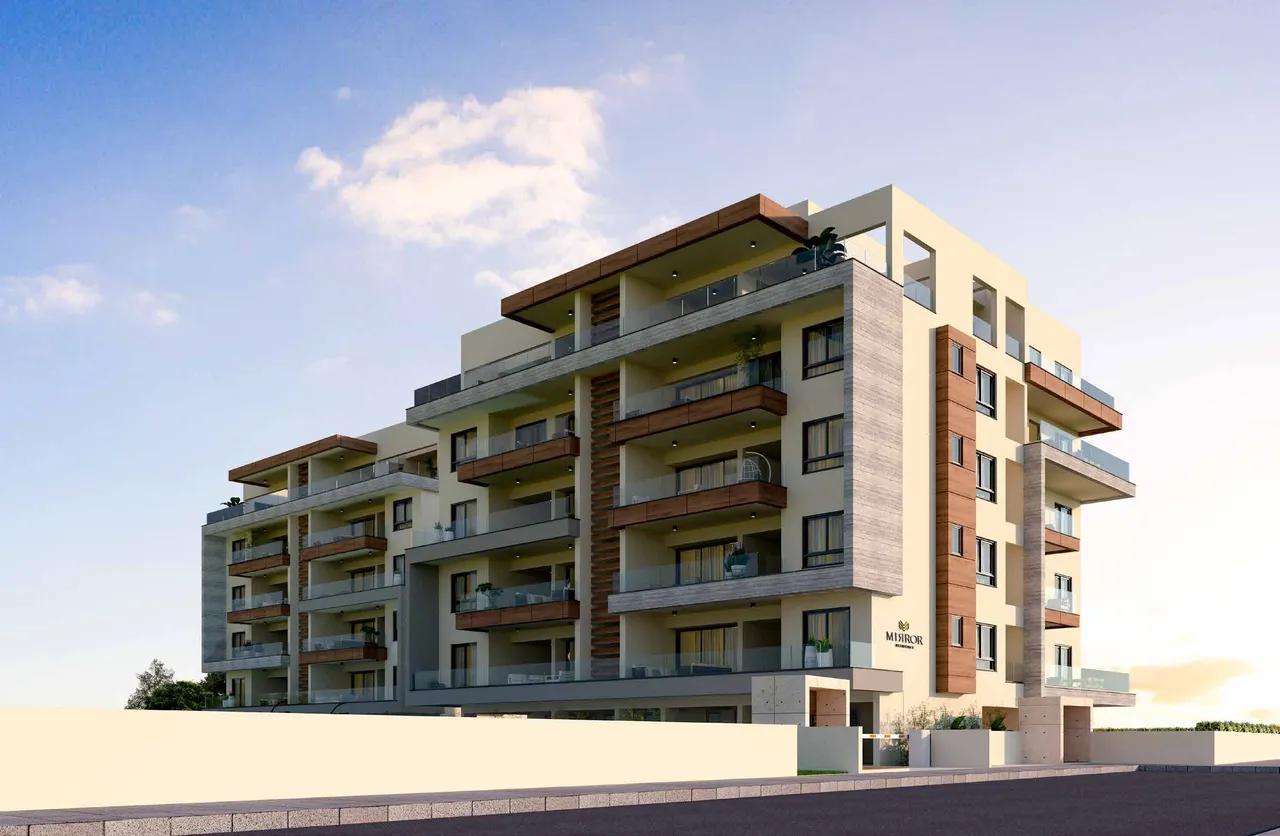 Apartment · Penthouse
Mirror Residence
Limassol · Germasogeia
 Apartment
Upside
Limassol · Agios Athanasios
 Apartment · Penthouse · Studio
Glow
Limassol · Agios Athanasios
 Apartment · Penthouse
Cypress Grove
Limassol · Agios Tychonas
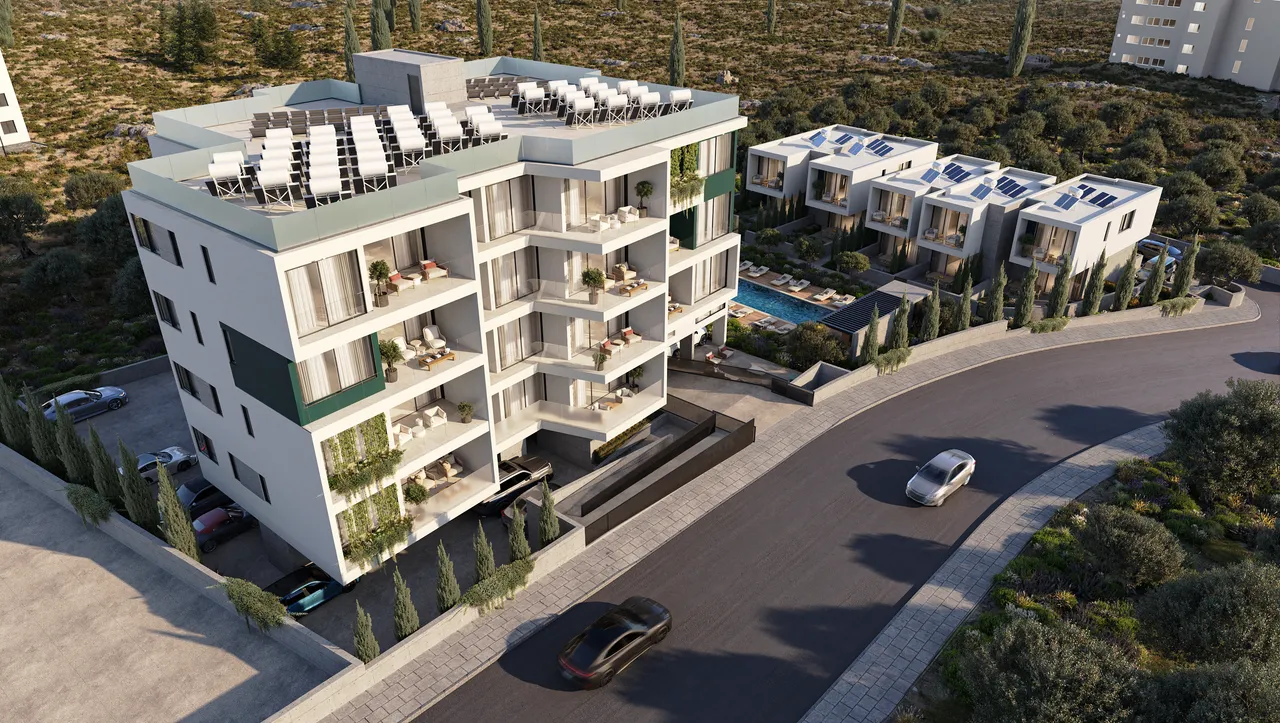 Apartment · Villa
Kalamos Duo
Paphos · Tombs of the Kings
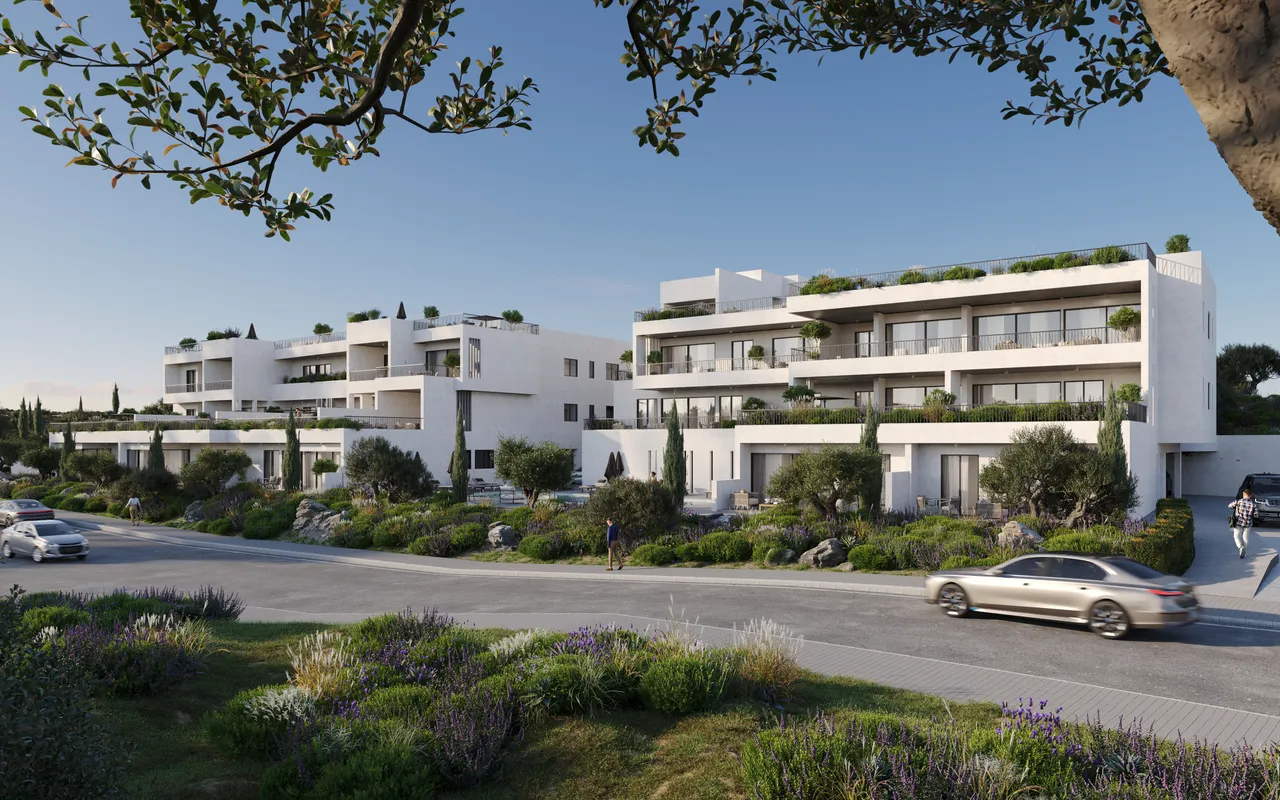 Apartment
Thea
Paphos · Kissonerga
 Apartment
Arbeo Park
Paphos · Anavargos
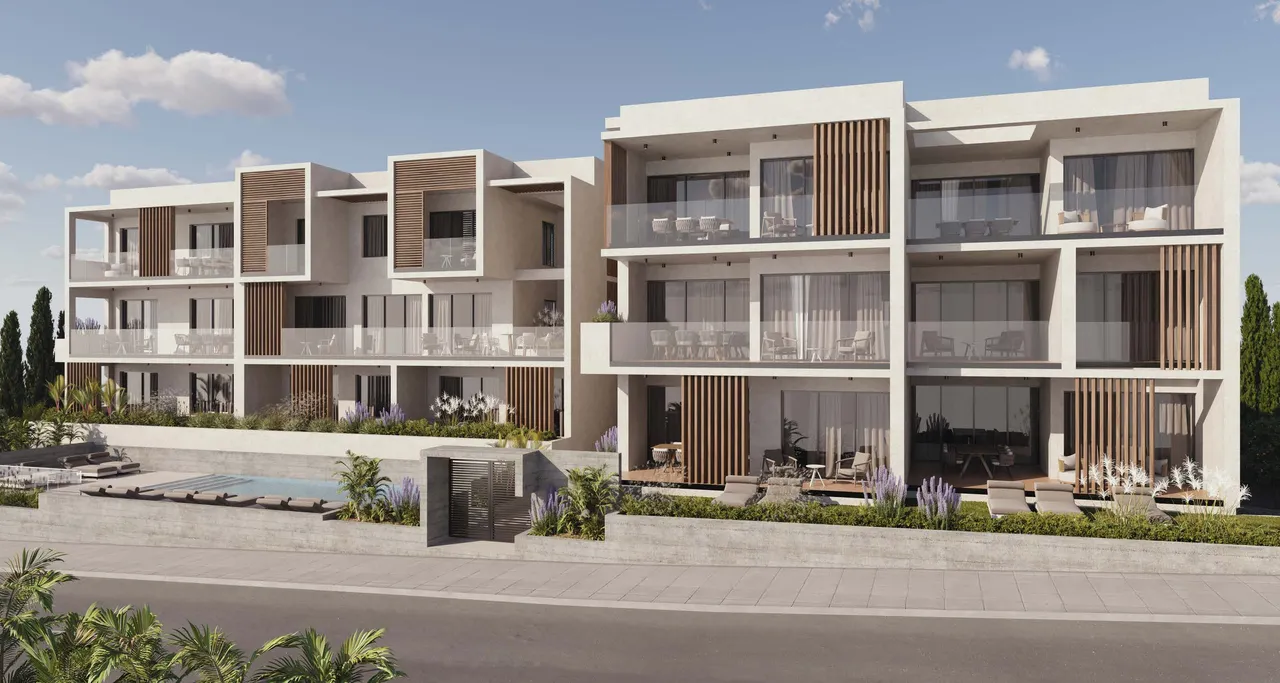
La Mer
Paphos · Tombs of the Kings
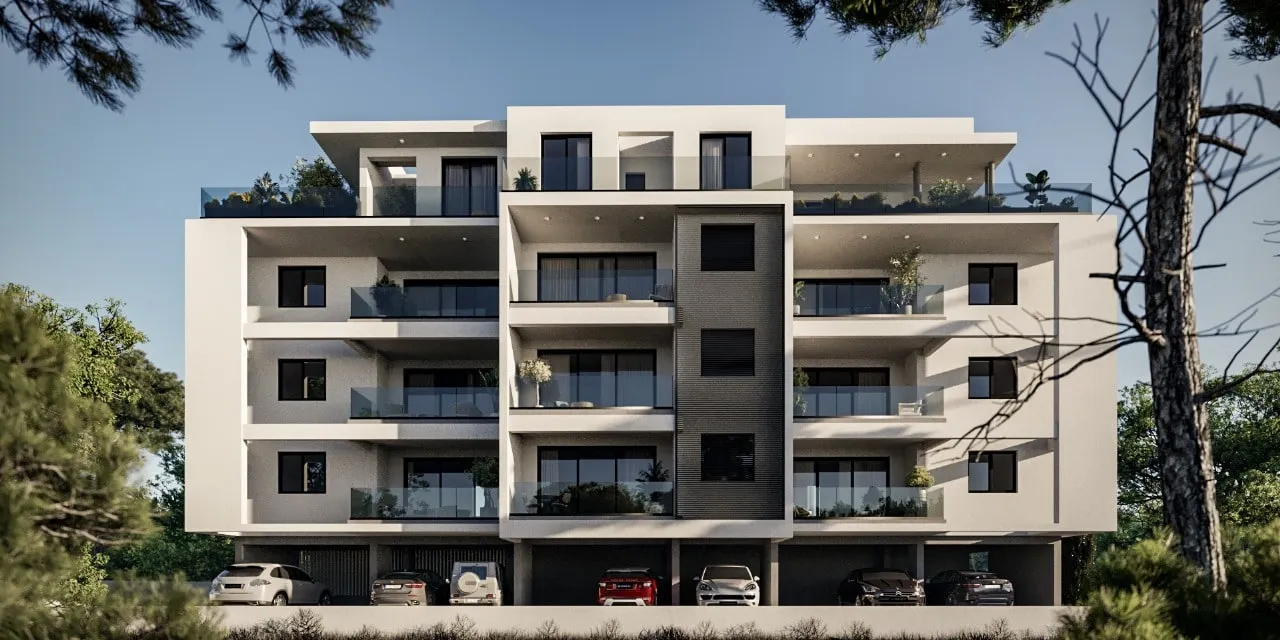
Azalea
Limassol · Germasogeia
Questions about Cyprus non-dom status
No. Domicile follows from the SDC Law: a foreigner is non-dom automatically until the 17-of-20-years rule applies. A declaration on form T.D.38 evidences it to the Tax Department and to payers.
Until you have been tax resident in 17 of the previous 20 years. A first-time resident who arrives in 2026 and stays is non-dom for 17 tax years and deemed domiciled from 2043.
SDC of 5% on dividends from 2026 profits (17% on older profits within the transitional period) and 17% on interest. On €50,000 of dividends and €20,000 of interest that is €5,900 a year.
Neither depends on domicile. SDC on rent was abolished for everyone from 2026, and rent is taxed on the normal income tax bands. Capital gains tax of 20% applies only to Cyprus property, whatever the domicile.
Yes. The test counts years in which you were tax resident under the Income Tax Law, which includes the 60-day rule.
You are deemed domiciled and pay SDC on dividends and interest, 5% on dividends from 2026 profits and 17% on interest. You keep that status until you complete 20 years in which you are not tax resident.
If you have no Cyprus domicile of origin and become deemed domiciled, you may elect the alternative method for five years at €250,000, up to twice. It is irrevocable and not refundable, and it pays only for large dividend or interest income.
Only if they acquired and keep a domicile of choice abroad and were non-resident for at least 20 consecutive years before the tax year.
Sources (read on 5 November 2026): Special Contribution for the Defence of the Republic Law 117(I)/2002, consolidated text on CyLaw including Law 245(I)/2025 in force from 1 January 2026 (Articles 2(3), 3, 3B, 3D); PwC Worldwide Tax Summaries, Cyprus, “Taxes on personal income”; KPMG Cyprus tax alert of 17 June 2026 and Andersen Cyprus news on the Tax Department's Circular 2/2026 of 29 May 2026 (the circular itself is on a site that blocks automated access, so its worked examples were not read); IBC Cyprus Non-Dom After 17 Years; law-firm summaries of form T.D.38. Not checked and therefore left out: the current T.D.38 form text, the circular's treatment of cases not summarised above, and how a second five-year period interacts with the 30 June deadline.
Considering Cyprus for the long term and want the tax position reviewed before you buy? Send us your budget and city and we will shortlist new-builds and introduce you to independent Cyprus tax advisers and lawyers; the tax and legal review of any purchase stays with your own advisers.