Guides/Buying guides
Cyprus vs Croatia for a Property Purchase: Prices, Taxes, Foreign Ownership Rules and Residence

Cyprus and Croatia are both EU members that use the euro, and Croatia has been in the Schengen area since 1 January 2023, while Cyprus takes part in Schengen cooperation without having lifted internal border controls. On a €500,000 price before VAT, the extra cost of a resale is €22,850 in Cyprus (4.6%) and €21,283 in Croatia (4.3%), and a new-build adds €101,250 in Cyprus (VAT 19%) against €131,283 in Croatia (VAT 25%), under a 1% lawyer fee assumed in both countries. The 2025 median price of a sold apartment is €4,068 per m² in Split and €3,921 in Dubrovnik, and Cyprus new-build apartments ask €5,564 in Limassol, €5,100 in Paphos and €4,218 in Larnaca before VAT; the two series measure different things. For a non-EU buyer the biggest difference is residence: The Cyprus Regulation 6(2) route gives permanent residence from a €300,000 new-build plus VAT, while the Croatian pages read list no property ground for residence and exclude years on an 'other purposes' stay from long-term residence. Croatia does not tax a sale of property made more than two years after purchase, and Cyprus charges 20% on the indexed gain after exemptions of €30,000 or €150,000 (sources read on 18 November 2026).
Cyprus vs Croatia for a property buyer: the main differences side by side
The table gives the values for a buyer who pays cash and takes title in a personal name. Cyprus values come from our own guides (rates in force for 2026) and Croatian values from the Croatian ministries, the Tax Administration and the Bureau of Statistics. Each row is worked out in the section named after it.
| Topic | Cyprus | Croatia |
|---|---|---|
| EU, euro, Schengen | EU member using the euro; takes part in Schengen cooperation, internal border controls not yet abolished by the Council; the government expects full membership in 2027 | EU member; adopted the euro and joined the Schengen area on 1 January 2023 |
| Buyer from the EU or EEA | No permit: Cap. 109 excludes EU and EEA citizens from the definition of an alien | EU, Icelandic, Liechtenstein and Norwegian citizens buy on the same conditions as Croatians, except in 'exempted areas' that the page does not define |
| Buyer from outside the EU | Council of Ministers permission, no fee, 2 to 3 weeks according to the Ministry of Interior; published practice is one plot up to 4,000 m² or up to two units | Consent of the Ministry of Justice that depends on reciprocity between the buyer's country and Croatia; the ministry keeps a country list |
| Tax on a resale | Transfer fee of 3%, 5% and 8% by price band, halved at present: €16,600 on €500,000 | Real estate transfer tax of 3% of market value: €15,000 on €500,000 |
| Tax on a new-build from a developer | VAT 19%, or 5% on a qualifying main home within 130 m² and €350,000; no transfer fee | VAT 25%; no transfer tax where VAT is charged |
| Stamp duty on the contract | Abolished for contracts signed from 1 January 2026 | No stamp duty appears on the Tax Administration pages read |
| Annual tax on the owner | No state property tax since 2017; municipal charges of about €76 to €105 on a €300,000 valuation, plus sewerage, refuse and communal charges | Local property tax of €0.60 to €8.00 per m² of usable area, set by each city or municipality; no tax on a home used for permanent residence |
| Tax on a sale | 20% of the indexed gain after lifetime exemptions of €30,000 (€150,000 for a main home) plus a 0.4% levy on the price | Income from a sale is not taxed after 2 years of ownership; 24% on the income if sold earlier |
| Residence for a non-EU owner | Category 6.2: permanent residence from a new-build of €300,000 plus VAT and €50,000 income from abroad | Temporary stay of up to one year; no property ground on the pages read; years on 'other purposes' do not count toward long-term residence |
Cyprus has the lower VAT and the higher transfer fee above €340,000, Croatia has the shorter tax-free holding period on a sale and the Schengen membership; the rest of this guide gives the arithmetic. For the Cyprus side in full, see our guides to the cost of buying property in Cyprus and Cyprus property VAT.
Foreign buyers in Croatia and in Cyprus: who may own property and how many units
Croatia. The government portal gov.hr states that citizens and legal persons of EU member states, Iceland, Liechtenstein and Norway acquire real estate under the same conditions as Croatian nationals and companies seated in Croatia. Swiss citizens have the same treatment and add a certificate of temporary residence in Croatia to the file. Citizens of every other country need consent in an administrative procedure that the foreign person starts, and the consent depends on reciprocity between the buyer's country and Croatia. The written application goes to the Ministry of Justice, Public Administration and Digital Transformation with the purchase agreement, a land register copy proving the seller's ownership, a certificate from the urban planning authority on the legal status of the property (whether it lies inside the construction area), proof of citizenship and any power of attorney. A foreign applicant who is abroad without an attorney must name a representative for service with a domicile in Croatia. The page gives no fee and no processing time.
The Ministry keeps a country list. The page read on 18 November 2026 shows the entries below and no update date. Of the countries listed, about 43 carry the status reciprocity exists (some with conditions), about 30 carry verification underway and about 12 carry no reciprocity.
| Buyer's country | Status on the Ministry of Justice list | Condition stated on the list |
|---|---|---|
| United Kingdom | Reciprocity requirements met | None stated |
| Turkey, South Africa, Brazil | Reciprocity requirements met | None stated |
| Israel | Reciprocity requirements met | Private property without limitation; state-owned property needs prior permission from the Israeli authority |
| Canada | No reciprocity from 1 January 2023 to 31 December 2026 for residential property in cities of 100,000 or more (50,000 or more in the core) and municipalities of 10,000 or more | Exceptions include long-term residence in Croatia, a spouse who is a Croatian citizen or resident, students and workers who meet stated conditions, and investment purchases |
| United Arab Emirates | Verification underway | Notification from the competent authority pending |
| India | No reciprocity | None stated |
| Australia | No reciprocity from 1 April 2025 to 31 March 2027 | Persons domiciled in Croatia, and spouses of Croatian nationals or of residents buying with a Croatian national, are exempt, limited to one new or nearly new apartment in a residential development |
Two points change the picture over time. The Act amending the Act on Ownership and Other Real Rights (Official Gazette 52/2025, 21 March 2025) places nationals and companies of EU states, EEA states, OECD members and countries acceding to the OECD codes on the same footing as Croatians with no ministerial consent. The Act enters into force on the day Croatia joins the OECD. The Ministry of Finance page on Croatia and the OECD lists no accession date and no invitation, so the reciprocity consent still applies today. The gov.hr page also says agricultural land is governed by a special law and that EU citizens could not acquire it until 30 June 2023, without saying what applies after that date, so buyers of land should ask a Croatian lawyer for the present rule.
Cyprus. EU and EEA citizens need no permit and meet no numeric limit. A buyer from outside the EU and the EEA needs the permission of the Council of Ministers under the Acquisition of Immovable Property (Aliens) Law, Cap. 109, whatever the buyer's country, so there is no reciprocity list. The Ministry of Interior's published practice is one plot of up to 4,000 m² on which to build an own home, or up to two units. A bill to tighten the rules was still in committee in late October 2026. The conditions, the combinations the Ministry names and the open points are in how many properties you can own in Cyprus, and the statutes behind the purchase are in Cyprus property law for foreign buyers. Croatia publishes no unit limit on the pages read, but its reciprocity test decides who may buy at all, which makes the buyer's passport the first check in both countries.
Croatia property prices against Cyprus: price per m² on the coast and on the island
The two countries publish different kinds of price, and the table keeps them apart. The Croatian medians come from the 2025 Real Estate Market Overview of the Ministry of Physical Planning, Construction and State Assets, prepared with the Economic Institute Zagreb (April 2026), which reports the median price per m² of recorded apartment sales by local unit. The Cyprus asking prices come from our database of published new-build projects on 6 November 2026, before VAT, and the Cyprus official medians are those of the Statistical Service (CYSTAT) for all dwellings sold in 2024, as set out in our guide to Cyprus property prices per m². The last column divides €500,000 by the price per m².
| Market | Price per m² | What the figure is | Area for €500,000 |
|---|---|---|---|
| Cyprus, Limassol | €5,564 | Median asking price of new apartments before VAT, 6 November 2026 | 89.9 m² |
| Cyprus, Paphos district | €5,100 | Same series | 98.0 m² |
| Cyprus, Larnaca | €4,218 | Same series | 118.5 m² |
| Cyprus, Limassol | €2,975 | CYSTAT median of all dwellings sold in 2024, as quoted in our guide | 168.1 m² |
| Cyprus, Paphos | €2,010 | Same, 2024 | 248.8 m² |
| Croatia, Split | €4,068 | Median recorded sale price of apartments, 2025; the highest of any local unit | 122.9 m² |
| Croatia, Dubrovnik | €3,921 | Same, 2025 | 127.5 m² |
| Croatia, Opatija | €3,830 | Same, 2025 | 130.5 m² |
| Croatia, Zadar | €2,875 | Same, 2025 | 173.9 m² |
| Croatia, whole country | €2,587 | Same, 2025; 11.3% above 2024 | 193.3 m² |
| Croatia, new dwellings sold, whole country | €2,754 | Bureau of Statistics average, first half of 2025, VAT included, reported by builders and developers | 181.6 m² |
The ranking of the cities is clear. Split and Dubrovnik are the dearest Croatian markets by the median of sold apartments, followed in the Ministry's list by Opatija at €3,830, and the publication places Rovinj, Krk, Bol, Podstrana and other island and coastal units between €3,000 and €3,500 and Zadar at €2,875. Against the Cyprus medians of all sales, Split is about 1.4 times Limassol (4,068 ÷ 2,975) and about 2.0 times Paphos (4,068 ÷ 2,010), although the Croatian year is 2025 and the Cyprus year 2024, and the Cyprus Central Bank index has risen since the 2024 average (our price guide computes 13.4% to the second quarter of 2026). Against our new-build asking prices, a Croatian sold-apartment median is lower, but an asking price and a sold price differ, and our guide shows asking prices of 1.9 to 2.9 times the Cyprus official medians. The sources read give no like-for-like series for both countries, so the figures show where each market sits and make no ranking of value.
VAT adds to the Cyprus new-build figures: 19% takes Limassol to €6,621, Paphos to €6,069 and Larnaca to €5,019 per m². The Croatian Bureau of Statistics counts VAT inside the price of new dwellings, and I did not confirm whether the Ministry's median includes VAT on new-builds. The Bureau's release of 7 September 2026 gives an average of €2,994 per m² for new dwellings sold in the first half of 2026 (8.7% above a year earlier), €3,518 in Zagreb and €2,754 in other settlements. The Bureau's new-dwelling survey gives Zagreb and 'other settlements' and no Adriatic figure.
Transfer tax and VAT when buying property in Croatia and in Cyprus
Both countries tax a purchase through one of two taxes. A first sale of a new building carries VAT and no transfer tax, and a resale carries a transfer tax and no VAT. The Croatian Tax Administration states that real estate transfer tax covers every acquisition of land and buildings apart from acquisitions whose supply is liable to VAT, that the acquirer is the taxpayer, that the rate is 3% and that the base is the market value at the moment the liability arises. The government portal gov.hr adds that VAT-exempt supplies include buildings where more than two years passed between first use or settlement and the next supply, and Invest Croatia, the government investment portal, gives the VAT rate as 25% and says it applies to a building delivered by a VAT payer before first occupation or within two years of it. The rate was 4% in 2017 and 2018 and has been 3% since 1 January 2019 (Official Gazette 106/18); the Tax Administration page and the consolidated Act both give 3%, and it is worth confirming at signing that no later amendment applies.
Cyprus charges a transfer fee on a resale at 3% up to €85,000, 5% from €85,001 to €170,000 and 8% above, and the fee is halved at present when no VAT is charged. A new-build pays VAT of 19%, or 5% when the home becomes the buyer's main residence within 130 m² and €350,000; above €475,000 the whole price pays 19% (the area limit and the band between €350,000 and €475,000 follow the VAT Law, so check them with a Cyprus lawyer). Since 1 September 2026 the VAT test turns on first use, defined as systematic use for at least 18 months. The table sets the Cyprus resale fee against the Croatian 3% at six prices.
| Price of a resale | Cyprus fee after the 50% reduction | Share of price | Croatia, 3% of market value | Difference |
|---|---|---|---|---|
| €250,000 | €6,600 | 2.6% | €7,500 | Croatia €900 higher |
| €340,000 | €10,200 | 3.0% | €10,200 | Equal |
| €500,000 | €16,600 | 3.3% | €15,000 | Cyprus €1,600 higher |
| €750,000 | €26,600 | 3.5% | €22,500 | Cyprus €4,100 higher |
| €1,000,000 | €36,600 | 3.7% | €30,000 | Cyprus €6,600 higher |
| €2,000,000 | €76,600 | 3.8% | €60,000 | Cyprus €16,600 higher |
The arithmetic for €500,000 in Cyprus: 3% × €85,000 = €2,550, 5% × €85,000 = €4,250 and 8% × €330,000 = €26,400, which is €33,200 at the statutory rates and €16,600 after the 50% reduction. The break-even follows from the same formula: the halved fee equals 0.04 × price − €3,400, which equals 3% of the price at €340,000. Above that price the Cyprus resale fee is the larger. The Croatian base is the market value, and the Tax Administration page does not say who determines it, so the tax can differ from 3% of the contract price; in Cyprus the Land Registry can also charge on its own assessment of market value.
VAT decides the new-build comparison. At 25% Croatia charges €125,000 on a €500,000 price before VAT, and Cyprus charges €95,000 at 19%, because the 5% rate is closed above €475,000. Croatian prices are often quoted with VAT inside: a VAT-inclusive €500,000 contains €500,000 × 25 ÷ 125 = €100,000 of VAT and a net price of €400,000. The Invest Croatia page lists reduced rates of 13% and 5% for goods and services such as accommodation, bread and books and none for new homes, but the page says its list 'includes' these items, so confirm with a Croatian tax adviser whether any reduced rate reaches a particular project. The Cyprus rules for the 5% rate and its ten-year condition are in the VAT guide linked above.
Worked example: what a €500,000 purchase costs in Croatia and in Cyprus
- Assumption: a cash buyer from outside the country, buying in a personal name at a contract price of €500,000, which on a new-build is the price before VAT.
- Assumption: a lawyer at 1% of the price, which is €5,000 in both countries, with VAT added to the fee at 19% in Cyprus and at 25% in Croatia (the Croatian standard rate, assumed to apply to legal fees). No published scale was found for either country.
- Assumption: Cyprus Land Registry charges of €300, the figure used in our Cyprus guides. Croatia: court fees of €6.50 and €26.54 for registering ownership (gov.hr), €33.04 in all, before any electronic-filing reduction.
- Left out: the notary in Croatia, because the sources read disagree on the amount and no official tariff was found; any agent's commission; a mortgage; the exchange rate; furnishing.
| Line | Cyprus resale | Croatia resale | Cyprus new-build | Croatia new-build |
|---|---|---|---|---|
| Price | €500,000 | €500,000 | €500,000 | €500,000 |
| VAT on the price | €0 | €0 | €95,000 (19%) | €125,000 (25%) |
| Transfer fee or tax | €16,600 | €15,000 | €0 | €0 |
| Lawyer at 1% plus VAT | €5,950 | €6,250 | €5,950 | €6,250 |
| Registry charges | €300 | €33.04 | €300 | €33.04 |
| Extra on top of the price | €22,850 | €21,283 | €101,250 | €131,283 |
| Share of the price | 4.6% | 4.3% | 20.3% | 26.3% |
The sums. Cyprus resale: €16,600 + €5,950 + €300 = €22,850, with the lawyer at €5,000 × 1.19 = €5,950. Croatia resale: €15,000 + €6,250 + €33.04 = €21,283.04, with the lawyer at €5,000 × 1.25 = €6,250. Cyprus new-build: €95,000 + €5,950 + €300 = €101,250. Croatia new-build: €125,000 + €6,250 + €33.04 = €131,283.04.
The result. On a resale Croatia costs €1,567 less than Cyprus at this price (€22,850 − €21,283), and the margin reverses below €340,000. On a new-build Cyprus costs €30,033 less (€131,283 − €101,250), of which €30,000 is the VAT gap, 6 points of VAT on €500,000. A new-build at €300,000 that qualifies for the 5% Cyprus rate would pay €15,000 of VAT against €75,000 at the Croatian 25%, but that case needs a main residence kept for ten years. A Croatian notary fee and an agent's commission are the lines still missing; the Cyprus legal fee is explained in the cost guide linked above.
Annual property tax and tax residence for an owner in Croatia and in Cyprus
Croatia has a local property tax. The Tax Administration states that it is payable at €0.60 to €8.00 per m² of usable area, that the representative body of the city or municipality sets the amount, that the taxpayer is any Croatian or foreign owner on 31 March of the tax year, and that payment is due within 15 days of the decision. A property used for permanent residence, rented under a long-term residential lease, or unusable because of a declared natural disaster is exempt (gov.hr). For a second home of 100 m² the range is €60 to €800 a year. Croatia Week reported on 14 March 2025 that Split set €1.99 per m² (€199 on 100 m²), Zagreb €5.00, and Umag, Vis and three other places the €8.00 maximum (€800); rates are re-decided locally, so the current council decision decides. I did not find the usable-area coefficients on the pages read.
Cyprus has had no state property tax since 2017. Municipalities charge a small tax of their own, about €76 to €105 a year on a €300,000 valuation in the four municipalities we checked in October 2026, plus sewerage, refuse and, in a complex, communal charges; the yearly bill is itemised in taxes on real estate in Cyprus.
| Topic | Cyprus | Croatia |
|---|---|---|
| Who is tax resident | 183 days in the year, or the 60-day rule, applied since 1 January 2026 without the old condition of being resident nowhere else | A person with permanent or habitual residence in Croatia; the Tax Administration page mentions no 183-day test |
| Personal income tax bands | 0% to €22,000, then 20%, 25% and 30% to €72,000, 35% above | Lower rate on income up to €60,000 a year of 15% to 23% and higher rate of 25% to 33%, depending on the city or municipality; defaults of 20% and 30% |
| Special regime for new residents | Non-domiciled residents pay no Special Defence Contribution on dividends and interest for up to 17 of 20 years | None found on the pages read |
The tax residence of an owner who spends part of the year in either country depends on the person's days and ties and on the treaty between the two countries, and the Tax Departments decide. Our guides to Cyprus tax for individuals and non-dom status set out the Cyprus tests, and a Croatian tax adviser covers the Croatian side.
Capital gains tax when selling property in Croatia and in Cyprus: a worked example
The Croatian Tax Administration states that income from the disposal of real estate is not taxed when the property is disposed of after 2 years, counted from the date of the purchase contract. Income is taxed at 24% on the difference between the proceeds at market value and the acquisition cost indexed by the growth of producer prices of industrial products, less documented investment costs and costs of sale. Property that served as the home of the taxpayer or close dependants is exempt, and the taxpayer must prove permanent residence because a registered address alone is insufficient. The same page taxes income when more than three properties of the same type are disposed of within five years, and taxes a donee's sale made within two years of the donor's acquisition. Cyprus charges 20% on the gain after inflation indexation and lifetime exemptions of €30,000 for any property or €150,000 for a main home lived in for five years (a person gets only the greater of the two), plus a 0.4% levy on the sale price paid by the seller.
- Assumption: a buyer bought a non-residence apartment for €500,000 and sells it for €600,000, so the gain is €100,000. Indexation and costs are ignored.
- Cyprus: €100,000 − €30,000 exemption = €70,000, and 20% × €70,000 = €14,000. The levy is 0.4% × €600,000 = €2,400. The total is €16,400.
- Croatia, sold after 5 years: the income is not taxed, so the tax is €0.
- Croatia, sold after 18 months: 24% × €100,000 = €24,000 before indexation and deductible costs. The municipal income-tax surtax was abolished from 1 January 2024, and the Tax Administration rates page lists none.
The sale rules follow different logic: Croatia taxes by the length of ownership and Cyprus by the size of the gain. An owner who expects to sell inside two years meets the Croatian tax, and an owner who holds longer meets none. This is a description of the published rules, and a tax adviser in each country applies them to a real sale. Our Cyprus tax calculator applies the Cyprus allowances.
Residence for a non-EU buyer: Cyprus Category 6.2 and temporary stay in Croatia
EU citizens move freely to both countries and need no permit. For a buyer from outside the EU the two countries differ. The Cyprus expedited residence route under Regulation 6(2) of the Aliens and Immigration Regulations, called Category 6.2 in this guide, gives permanent residence to a non-EU buyer of a new first-sale property worth at least €300,000 plus VAT, with income from abroad of at least €50,000 a year plus €15,000 for a spouse and €10,000 per child, decided by the Civil Registry and Migration Department. It is permanent residence and gives no citizenship, it ends after two years of absence from Cyprus and it does not allow salaried employment. The full conditions are in Cyprus permanent residency under Category 6.2.
Croatia grants temporary stay. The Ministry of Foreign and European Affairs page lists the grounds as family reunification, secondary and university studies, scientific research, humanitarian grounds, life partnership, work, posted work, stay of persons with long-term residence in another EEA state, other purposes and digital nomads, and real estate ownership is not among them. The Ministry of the Interior page states that temporary stay lasts up to one year (other official pages mention up to two years for some grounds), that the applicant needs a purpose, funds to support themselves and health insurance, and that an application for 'other purposes' can follow an earlier 'other purposes' stay only after six months from its expiry. Commercial guides describe a stay for property owners, and I did not confirm that from the text of the Foreigners Act (Official Gazette 133/20); the buyer's lawyer should check it.
| Topic | Cyprus, Category 6.2 | Croatia, temporary stay |
|---|---|---|
| Who qualifies | Non-EU buyer of a new first-sale property of €300,000 or more plus VAT, with income from abroad | Non-EU national with a listed purpose; property ownership is not listed on the pages read |
| Status granted | Permanent residence with no expiry date | Temporary stay of up to one year |
| Path to permanent status | None needed | Long-term residence after five years of uninterrupted legal stay, with Croatian language and Latin script; absences of no more than 10 months in total and 6 months at one time |
| Years that count | Not applicable | Years on 'other purposes', secondary school and similar stays do not count; university years count for half |
| Employment | Salaried employment is not allowed on the permit | Depends on the ground; not stated for 'other purposes' |
The practical reading: a non-EU buyer who wants residence through a purchase finds a documented property route in Cyprus and none on the Croatian pages read. The Croatian pages state that years on 'other purposes' stay do not build long-term residence.
Schengen, the euro, flights and healthcare for an owner in Croatia or Cyprus
Croatia adopted the euro on 1 January 2023 (European Commission) and joined the Schengen area on the same day (EU Learning Corner). Cyprus uses the euro. The Commission's Schengen page says Cyprus participates in Schengen cooperation and that internal border controls have not yet been abolished by the Council. Cyprus Mail reported on 10 October 2026 that the Deputy Migration Minister expects accession in 2027, that the Council decides by unanimity, and that the Green Line crossings are the main obstacle; no Council date exists. A Category 6.2 permit carries no Schengen travel rights.
| Topic | Cyprus | Croatia |
|---|---|---|
| Schengen travel | Not yet; expected in 2027 by the government | Yes, since 1 January 2023 |
| Passengers at airports, 2025 | 13.75 million at Larnaca and Paphos, reported from Hermes Airports data | 13.985 million across Croatian airports (Bureau of Statistics, 9 February 2026) |
| Health cover for a visitor or non-resident | GESY needs habitual residence and a beneficiary category | Care for a person insured abroad is at the expense of the foreign insurer, and the HZZO fund does not reimburse it; proof of health insurance is a condition of temporary stay |
The airport figures count every passenger and carry no information on routes from the buyer's home city, so a viewing trip should check direct flights from the airport the buyer uses. Our viewing trip checklist sets out the Cyprus side. For the Cyprus health system see how GESY works.
How ownership passes in Croatia and in Cyprus: contract, notary, Land Registry and agent fees
In Croatia ownership is acquired by registration. The gov.hr page states that the right of ownership is not automatically acquired and that registration in the land registry completes the acquisition. The proposal goes to the municipal court that keeps the register, within 60 days of becoming eligible to register, with the transaction document, proof of citizenship and proof of the court fee; late filing costs five times the fee. A notary or lawyer can file electronically at half the fee. The Tax Administration says notaries draft or certify the documents and report the transfer, and that the buyer pays the transfer tax within 15 days of the delivery of the Tax Administration's decision (an appeal within 30 days does not suspend payment). The agent's fee is a separate cost: the new Law on Real Estate Brokerage (Official Gazette 69/2026, in force by my calculation from 7 July 2026) sets the fee by the brokerage contract, lets a broker charge both sides only under a separate contract with each, caps a combined fee at the price-list maximum and caps a single payer at half of it.
In Cyprus the sale contract is deposited at the District Lands Office within six months of signing for €50, which makes it an encumbrance that a court can enforce, and the title deed follows the transfer; a Cyprus purchase has no notary fee line, and the commission is commonly paid by the seller or developer. The steps, the reservation fee and the protections are in reserving a property in Cyprus and the notary question in a Cyprus purchase. I found no official Croatian page on reservation fees or on deposits in an off-plan purchase, so those protections are left for a Croatian lawyer to describe.
Property price direction in Croatia and in Cyprus: what the official indicators show
| Indicator | Croatia | Cyprus |
|---|---|---|
| Price index, second quarter of 2026, year on year | +12.7% (Bureau of Statistics, provisional, 1 October 2026); Adriatic coast +9.0%; new dwellings +9.2%; existing +14.1% | +7.9% on the Statistical Service House Price Index (preliminary, 30 September 2026); Central Bank index +8.5% |
| Sales | Index of sales −33.3% year on year in the second quarter; 88,395 sales in 2025, 21.7% fewer than in 2024 | 14,969 contracts of sale from January to September 2026, 14% more than a year earlier |
| Median apartment price, 2025 | €2,587 per m² for the country, 11.3% above 2024 | No official median for 2025 found; 2024 medians of €1,757 to €2,975 per m² by district |
The Bureau of Statistics states that the second-quarter indices are provisional because the delivery of data from the administrative source changed significantly. Both markets show rising prices in the latest official data, and Croatia shows a fall in the number of sales at the same time. No official source read gives a forecast for either country, and this guide gives none.
Who suits Croatia and who suits Cyprus: a buyer-by-buyer comparison
| Buyer | Better fit | Reason from the figures above |
|---|---|---|
| Non-EU buyer who wants permanent residence through a property | Cyprus | Category 6.2 from €300,000 plus VAT; the Croatian pages read give no property route |
| Buyer who needs Schengen travel now | Croatia | Member since 1 January 2023; Cyprus expects 2027 |
| Buyer of a new-build at €500,000 before VAT | Cyprus | VAT of €95,000 against €125,000 |
| Buyer of a resale above €340,000 | Croatia | 3% transfer tax against a halved Cyprus fee that reaches 3.7% at €1,000,000 |
| Buyer who expects to sell within two years | Cyprus | Croatia taxes the income at 24% in that period; Cyprus taxes the gain after exemptions |
| Buyer who plans to hold more than two years | Croatia | The Tax Administration states that a sale after 2 years is not taxed |
| Buyer from a country with no Croatian reciprocity | Cyprus | Cyprus asks for a permit from every non-EU buyer without a reciprocity list |
| EU buyer of one coastal home | Either | No permit in either country; compare the price per m², the tax rows and the location |
If a Cyprus purchase fits, our properties in Cyprus and off-plan properties in Cyprus pages list the projects with their prices. Another Cyprus comparison with a euro-using country outside the EU is Cyprus vs Montenegro.
Cyprus vs Croatia: questions about a €500,000 property purchase
Cyprus new-build projects to set against a coastal Croatia shortlist
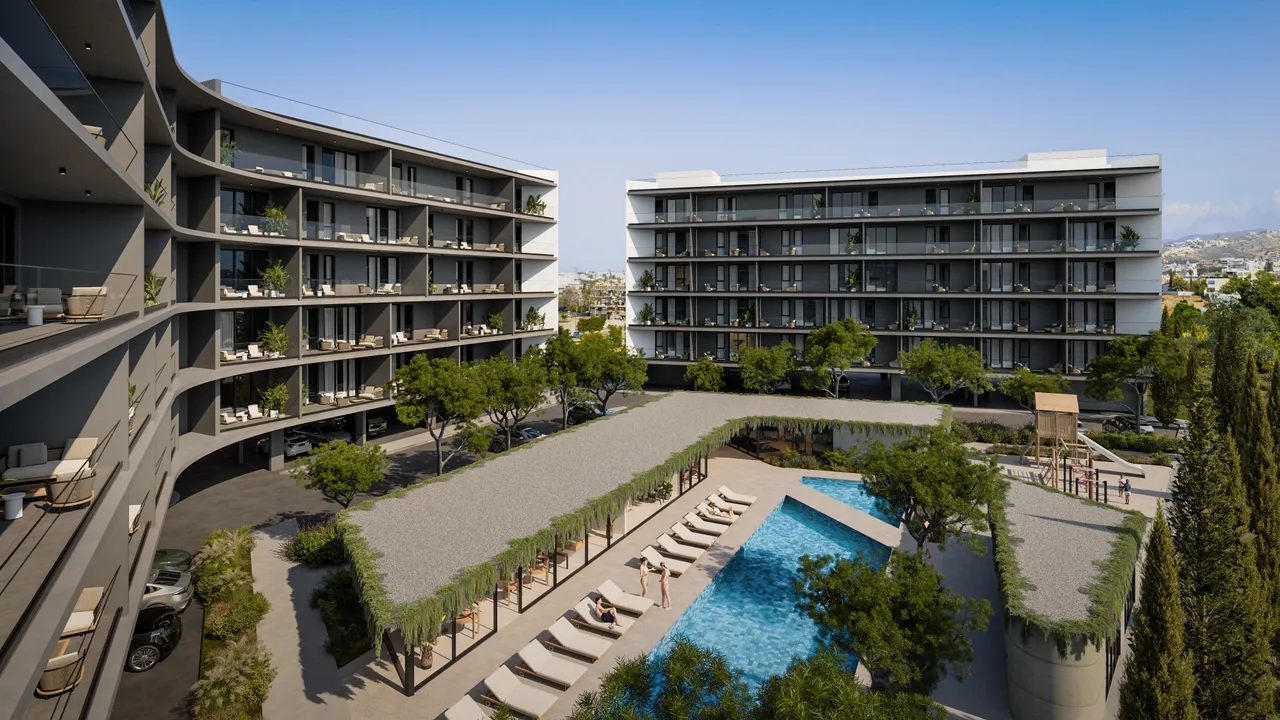 Apartment
Zoia
Limassol · Polemidia
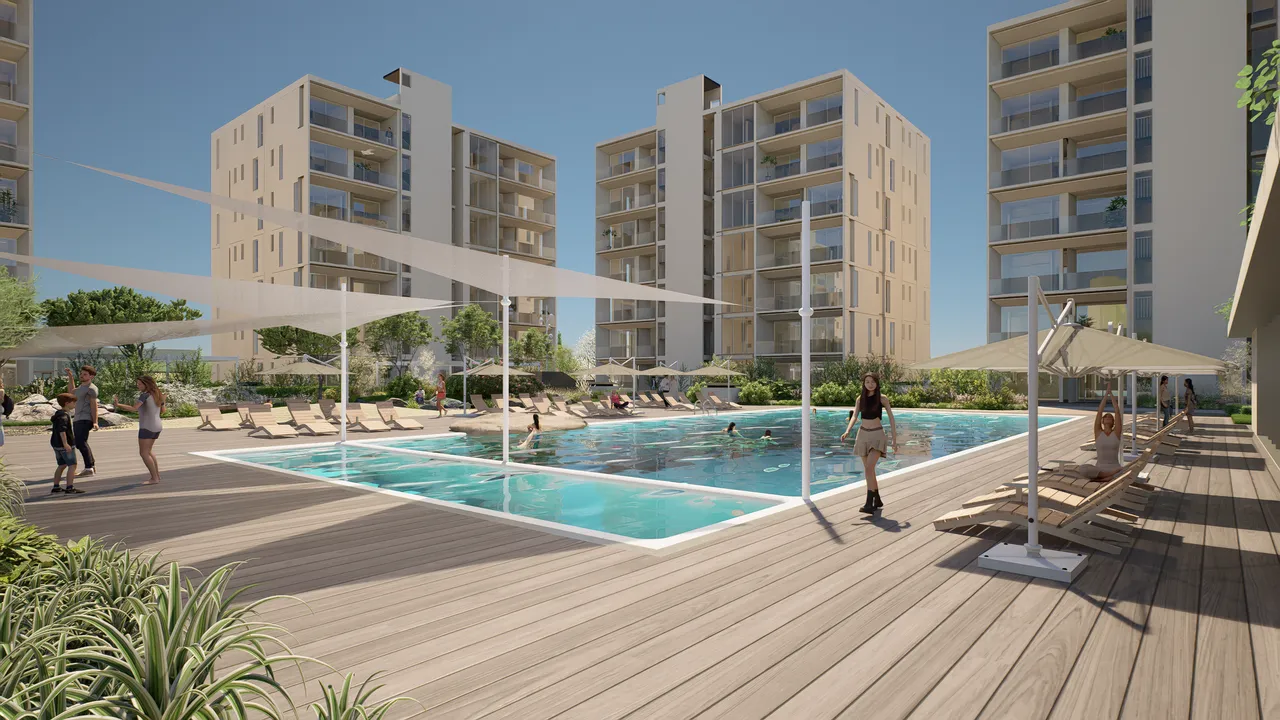 Apartment · Penthouse
GAIA Residences
Limassol · Potamos Germasogeias
 Apartment · Shop
Thalassa Residences 2
Limassol · City centre
 Apartment · Penthouse
Keys
Limassol · Panthea
 Apartment · Studio
Golf Valley
Limassol · Asomatos
 Apartment · Studio
Eden Golf
Paphos · Geroskipou
 Apartment · Penthouse
Bronte
Paphos · Kato Paphos
 Apartment
Carisa Melora Park
Larnaca · Livadia
With a lawyer at 1% in both countries, €21,283 in Croatia (4.3%) and €22,850 in Cyprus (4.6%). Croatia's 3% transfer tax is €15,000, and the Cyprus fee after the 50% reduction is €16,600. The Croatian notary and any agent's commission are not in the figure.
€125,000 at 25% in Croatia and €95,000 at 19% in Cyprus, because the Cyprus 5% rate is not available above €475,000. If a Croatian price already includes VAT, a €500,000 total contains €100,000 of it.
Above €340,000. The halved Cyprus fee equals 0.04 × price − €3,400, which is 3% of the price at €340,000. At €1,000,000 it is €36,600 in Cyprus against €30,000 in Croatia.
The Ministry of Justice list shows the United Kingdom with reciprocity requirements met, while Canada is shown with no reciprocity for residential property in larger towns until 31 December 2026, with exceptions for residents, spouses of Croatian citizens, some students and workers, and investment purchases. Consent from the Ministry is still required for non-EU buyers, and the page gives no fee or time. A Croatian lawyer confirms the position for a named country.
The Croatian pages read do not list property ownership as a ground for temporary stay, which lasts up to one year, and years on an 'other purposes' stay do not count toward long-term residence. The Cyprus Regulation 6(2) route gives permanent residence from a €300,000 new-build plus VAT.
€60 to €800, from the national range of €0.60 to €8.00 per m² of usable area. Local decisions differ: Croatian press reported €1.99 per m² in Split (€199) and €8.00 in Umag (€800) for 2025, and each council can change its rate. A home used for permanent residence is exempt.
In Croatia none if the sale is more than two years after the purchase, and about €24,000 at 24% before indexation if it is earlier. In Cyprus €16,400 for a non-residence apartment sold at €600,000: €14,000 of tax after the €30,000 exemption plus the €2,400 levy.
No. Croatia joined on 1 January 2023. The Commission says Cyprus participates in the cooperation and that the Council has not abolished internal border controls, and the Cyprus government expects full membership in 2027.
Sources, all read on 18 November 2026. Croatia: Ministry of Justice, Public Administration and Digital Transformation (mpudt.gov.hr): reciprocity list for foreign nationals and the news item of 27 February 2025 on the amendments to the Act on Ownership and Other Real Rights; gov.hr: Real estate purchase for foreign nationals, Real estate transfer tax, Registration of ownership rights, Real estate tax; Tax Administration (porezna-uprava.gov.hr): Real Estate Transfer Tax, Immovable Property Tax, Income Tax, and the page on income from the disposal of real estate and property rights; Invest Croatia: Tax system; Croatian Bureau of Statistics (podaci.dzs.hr): Prices of Sold New Dwellings, first half-year of 2025 (5 September 2025), House Price Indices for the first quarter of 2026 (2 July 2026) and the second quarter of 2026 (1 October 2026, provisional), Traffic in Airports, December 2025 (9 February 2026); Ministry of Physical Planning, Construction and State Assets and Economic Institute Zagreb, Real Estate Market Overview 2024 and 2025 (April 2026); Ministry of the Interior: temporary stay of third-country nationals and long-term residence and permanent stay; Ministry of Foreign and European Affairs: Temporary stay of foreigners; HZZO: health insurance pages; Narodne novine 69/2026, Law on Real Estate Brokerage; Ministry of Finance: Croatia and the OECD; European Commission: Croatia and the euro, and the Schengen area page; EU Learning Corner, A big step for Croatia (5 January 2023). Press for context: Croatia Week of 14 March 2025 (local property tax rates), 7 September 2026 (first-half 2026 new dwelling prices) and 1 October 2026; Lider and tportal on the 2025 market overview. Cyprus: Cyprus Mail, 10 October 2026, on Schengen; our guides to the cost of buying, VAT, taxes on real estate, price per m², Category 6.2, ownership limits, tax for individuals and reservation, with the database medians of 6 November 2026; Hermes Airports passenger figure as reported in the Cyprus press. This guide is general information and not tax or legal advice; a licensed adviser in each country should confirm your own position. Cyprus VIP Estates assists investors in choosing new developments; legal and immigration advice comes from licensed professionals.
What conflicts or could not be confirmed. The transfer tax is 3% on the Tax Administration page, on gov.hr and in the consolidated Act; a July 2021 law-firm guide quoted 4%, the rate that applied before 1 January 2019. Croatian notary fees: the secondary sources found disagree and no official tariff was found, so the notary is left out of the worked example. The Croatian agent's commission: the Law on Real Estate Brokerage of 2026 sets rules and a price-list cap, and I found no percentage. Lawyer fees in both countries are an assumption of 1%. I did not confirm whether the Ministry's median price per m² includes VAT on new-builds, whether the Foreigners Act has a property-owner stay, whether the OECD-related amendment has taken effect, the present rule on agricultural land for EU buyers, or how the 50% electronic-filing reduction applies to the Croatian court fees. The Cyprus passenger figure is a press report of Hermes Airports data. Zagreb's 2025 median is €2,917 in the Ministry's publication and €2,229 in one press report, so Zagreb is left out. All dates, the €500,000 price, the 1% lawyer fee and the €600,000 sale in the worked examples are assumptions.