Guides/Life in Cyprus guides
How Many British People Live in Cyprus and Where: Census 2021 Counts by District and Village, Official Estimates and Why the Numbers Differ

The 2021 census counted 18,918 British citizens living in the Republic of Cyprus, 2.0% of its 923,381 residents, and 27,986 people born in the United Kingdom. Almost half of the British citizens, 9,284, live in Paphos district, where they are 9.2% of all residents; Limassol district has 3,626, Larnaca 2,644, Famagusta district 2,425 and Nicosia 939. Other counts are higher because they measure something else: the Cypriot authorities estimate about 41,500 resident UK nationals, 38,080 UK nationals held residence documents in January 2021, and the British High Commission gave about 65,000 in 2016 from passport records that include dual nationals. The census counted 24,046 British citizens in 2011, so the figure fell by 21.3% in ten years. For villages the census publishes only non-EU citizens, and Pegeia (Peyia) tops that list at 51.3% of its residents (sources read on 12 November 2026). The wider picture of arrivals and departures by citizenship group is in our guide to why expats leave Cyprus.
How many British people live in Cyprus: what the 2021 census counts
The Statistical Service of Cyprus (CYSTAT) ran the Census of Population and Housing on 1 October 2021 in the Government-controlled areas of the Republic. It counted people who had their usual residence in Cyprus, meaning they had lived there for a year or longer or had arrived in the previous twelve months intending to stay at least a year. A British owner who spends the summer in a holiday home is therefore outside the count, and so is anyone who arrived after the reference date.
| Census 2021 measure | Figure | Comment |
|---|---|---|
| British (United Kingdom) citizens | 18,918 | 2.0% of 923,381 residents, or 20.5 per 1,000 |
| Rank among foreign citizenships | Third | After Greece (43,438) and Romania (20,375); Bulgaria is fourth with 16,186. CYSTAT names the UK as the largest non-EU group, ahead of Syria (13,096) |
| Share of foreign citizens | 9.4% | 18,918 of 200,708 residents who are not Cypriot citizens |
| Share of non-EU citizens | 17.7% | 18,918 of 107,168 |
| Men and women among British citizens | 9,497 and 9,421 | 50.2% men, 49.8% women |
| People born in the United Kingdom | 27,986 | 3.0% of residents; the second-largest birthplace group after Greece (3.8%) |
Two definitions explain the gap between 18,918 and 27,986. CYSTAT asked each person for a first and a second citizenship. Anyone who gave Cypriot citizenship as either is counted as a Cypriot, so a British-Cypriot dual national does not appear in the British figure, and a person with an EU citizenship and a non-EU citizenship is counted as an EU citizen. Country of birth is the country where the respondent's mother had her usual residence at the birth. The UK-born group therefore includes Cypriots born in Britain and people of any citizenship. The census tables we could query do not split the UK-born by citizenship, so the size of those groups is not published.
Where British residents live in Cyprus: Paphos, Limassol, Larnaca, Famagusta and Nicosia districts
British citizens are very unevenly spread. The census gives their number by country of citizenship for each of the five districts, and Paphos district holds almost half of them.
| District | Residents | British citizens | British share of residents | Share of all British citizens | British share of non-EU citizens | Born in the UK |
|---|---|---|---|---|---|---|
| Paphos | 101,106 | 9,284 | 9.2% | 49.1% | 39.9% | 9,862 |
| Limassol | 262,157 | 3,626 | 1.4% | 19.2% | 10.6% | 5,768 |
| Larnaca | 155,765 | 2,644 | 1.7% | 14.0% | 17.3% | 5,819 |
| Famagusta (Ammochostos), government-controlled part | 54,318 | 2,425 | 4.5% | 12.8% | 44.5% | 2,963 |
| Nicosia (Lefkosia) | 350,035 | 939 | 0.3% | 5.0% | 3.3% | 3,574 |
| Republic of Cyprus | 923,381 | 18,918 | 2.0% | 100% | 17.7% | 27,986 |
The district sums match the national figures: 9,284 + 3,626 + 2,644 + 2,425 + 939 = 18,918. Limassol has the second-largest number of British citizens yet a small share of its population, because the district is large. Famagusta district, which here means the part under the Republic's control around Paralimni and Ayia Napa, has the second-highest share, 4.5%. In Nicosia the British are rare, 2.7 per 1,000 residents against 91.8 per 1,000 in Paphos. For a comparison of the main towns as places to live, see Paphos or Larnaca and the wider best areas to live in Cyprus as an expat.
Worked example: the British share of Paphos district. Residents of Paphos district on 1 October 2021: 101,106. Cypriot citizens: 60,461, so residents with another citizenship number 101,106 − 60,461 = 40,645 (CYSTAT's own foreign-citizen share of 40.0% rests on the 40,453 foreign citizens it classes separately, with 192 not stated). British citizens: 9,284. The British share of all residents is 9,284 ÷ 101,106 = 9.18%, or 91.8 per 1,000. The British share of the residents who are not Cypriot is 9,284 ÷ 40,645 = 22.8%, so about one resident in four who is not Cypriot is British. The district's share of all British citizens is 9,284 ÷ 18,918 = 49.1%, while it holds 101,106 ÷ 923,381 = 10.9% of the Republic's population. Result: the British are about 4.5 times over-represented in Paphos (49.1% ÷ 10.9%).
British residents by village and town in Cyprus: Peyia, Tala, Kouklia, Chlorakas and others
Below district level the census gives citizenship only in three groups: Cypriots, other EU citizens and non-EU citizens. British citizens belong to the third group, together with every other non-EU nationality, so the village figure is an upper limit for the British. The table takes the communities that the census lists with the highest non-EU share in each district, plus the main towns, and adds their population in the 2011 census.
| Community (census name) | District | Residents 2021 | Non-EU citizens | Non-EU share of residents | Residents 2011 | Change since 2011 |
|---|---|---|---|---|---|---|
| Pegeia (Peyia) | Paphos | 6,945 | 3,562 | 51.3% | 3,953 | +75.7% |
| Tala | Paphos | 3,100 | 1,364 | 44.0% | 2,695 | +15.0% |
| Kouklia | Paphos | 1,211 | 429 | 35.4% | 892 | +35.8% |
| Chlorakas | Paphos | 6,422 | 1,953 | 30.4% | 5,356 | +19.9% |
| Mandria (Paphos) | Paphos | 1,127 | 338 | 30.0% | 893 | +26.2% |
| Kissonerga | Paphos | 2,292 | 601 | 26.2% | 2,004 | +14.4% |
| Pafos municipality | Paphos | 37,991 | 7,293 | 19.2% | 32,892 | +15.5% |
| Paralimni | Famagusta | 19,037 | 2,331 | 12.2% | 14,963 | +27.2% |
| Ayia Napa | Famagusta | 4,716 | 570 | 12.1% | 3,212 | +46.8% |
| Voroklini (Oroklini) | Larnaca | 7,575 | 1,446 | 19.1% | 6,134 | +23.5% |
| Pyla | Larnaca | 3,869 | 745 | 19.3% | 2,771 | +39.6% |
| Larnaka municipality | Larnaca | 52,046 | 6,736 | 12.9% | 51,468 | +1.1% |
| Lemesos municipality | Limassol | 107,970 | 13,560 | 12.6% | 101,000 | +6.9% |
| Germasogeia | Limassol | 17,329 | 5,735 | 33.1% | 13,421 | +29.1% |
Read the table with the district column from the previous one in mind. In Paphos district the British are 39.9% of all non-EU citizens and in Famagusta district 44.5%, so a high non-EU share there points to British residents. In Limassol district they are 10.6% of the non-EU group and in Larnaca district 17.3%, so the 33.1% of Germasogeia and the 19.1% of Oroklini describe many nationalities, and only a minority are British. Pegeia is the census name of the community that contains Peyia. The 75.7% growth of Pegeia in ten years, from 3,953 to 6,945 residents, is the fastest of any community in the table. For buyers, the same places appear in our page on property for sale in Peyia and in the Paphos property listings.
Worked example: how many British residents live in Peyia
The census does not publish British citizens for Pegeia, so the answer is a range with an assumption. Known from the census: 6,945 residents, of whom 2,393 are Cypriot citizens, 975 are other EU citizens and 3,562 are non-EU citizens (2,393 + 975 + 3,562 = 6,930; the remaining 15 persons are citizenship not stated).
- Upper limit: if every non-EU citizen in Pegeia were British, the count would be 3,562, which is 3,562 ÷ 6,945 = 51.3% of residents. The true figure is lower, because other nationalities live there too.
- Assumption for an illustration: the British make up the same part of the non-EU group in Pegeia as in Paphos district, which is 9,284 ÷ 23,270 = 39.9%.
- Estimate: 3,562 × 39.9% = 1,421 British citizens, which is 1,421 ÷ 6,945 = 20.5% of the residents of Pegeia, one in five.
The estimate is a planning figure and carries the weakness of its assumption. If Peyia attracts British residents more than other nationalities do, compared with the rest of the district, the real number is higher; if other nationalities are strong there, it is lower. Only a table of citizenship by community would settle it, and the tables CYSTAT-DB offers for the 2021 census stop at the three groups. The safe statements are that the British in Pegeia number fewer than 3,562 and that a district-mix estimate gives about 1,400.
British residents of Cyprus and the Sovereign Base Areas: what each count includes
The Republic of Cyprus and the two British Sovereign Base Areas (Akrotiri and Dhekelia) are separate territories, and the counts above cover them differently. The census covers the Government-controlled areas of the Republic. In the questionnaire CYSTAT filled in for the United Nations, foreign military, naval and diplomatic personnel and their families located in the country are marked as excluded from the usual-resident population. The press release and the questionnaire do not mention the Base Areas by name, so we cannot confirm from the census documents how it treated people who live inside them.
The Sovereign Base Areas Administration describes the Bases on its background page. It gives their area as about 3% of the island, 98 square miles, with about 10,000 Cypriots living there and roughly 3,800 military personnel and UK-based civilians together with their dependants. The page is undated; it gives the population of Cyprus as about 790,000, so the figures are from before the 2021 census and may have changed. The CIA World Factbook, which used to publish a population for the Bases, announced on 4 February 2026 that it had been retired, so we did not use it.
Other counts handle the Bases in their own way. The residence certificates for UK nationals in 2019 exclude Base personnel, who need no permit; the Cyprus News Agency estimate of about 70,000 British nationals in 2019 includes them; and the British High Commission's 2016 estimate of about 65,000 was built on passport records for the Republic. A 2016 estimate quoted by the Cyprus Mail put 5,000 to 15,000 British residents in the north of the island, which no figure for the Republic includes.
Why the counts of British people in Cyprus disagree: census, residence documents, estimates and visitors
| Count | Date | Source | What it measures |
|---|---|---|---|
| 18,918 British citizens | 1 Oct 2021 | CYSTAT census | Usual residents of the Government-controlled area; British-Cypriot dual nationals counted as Cypriot |
| About 41,500 resident UK nationals | Undated on the page; read 12 Nov 2026 | Cypriot authorities, as stated on a European Commission page | An estimate; the method is not stated |
| 38,080 UK nationals with residence documents | January 2021 | Interior Minister's reply to an MP, reported 19 Apr 2021 | 26,978 registration certificates plus 11,102 permanent residence certificates |
| 32,281 certificates in force | 24 Sep 2019 | Civil Registry and Migration Department, via the Cyprus News Agency | 25,945 registration plus 6,336 permanent certificates; excludes Base personnel |
| About 65,000 | 2016 | British High Commission spokesperson | An estimate from passport records for the Republic; includes dual nationals |
| About 70,000 | 2019 | Cyprus News Agency | Believed resident British nationals, including Base personnel |
| More than 40,000 | 2022 | Former foreign minister, to the House of Commons, as reported 29 Apr 2023 | UK nationals living permanently on the island |
Four reasons explain most of the spread. First, the census rule on dual citizenship removes every British-Cypriot from the British figure, while passport records count them. The Cyprus Mail article of 19 June 2016 made the same point about the 2011 census, which counted British citizens with no other nationality. Second, documents are a stock and the census a snapshot: the 2019 report noted that some permit holders may have left and others may not have applied, and the 38,080 documents are 2.0 times the 18,918 census count, a difference of 19,162 that no source breaks down. Third, the census counts only people with a year or more of residence. Fourth, estimates differ on whether the Bases and the north are included.
Two visitor figures often appear in the same discussion and measure trips. CYSTAT recorded 1,440,003 tourist arrivals from the United Kingdom in 2025, which is 31.8% of the 4,534,073 total, and 22.1% of those UK arrivals stayed with friends or relatives or in an owned residence, about 318,000 arrivals. Separately, the Auditor-General's report covered by the Cyprus Mail on 8 April 2025 found 181,648 British citizens recorded as entering Cyprus between 2014 and 2023 with no recorded departure; in a police sample of 250 cases, 198 (79%) were believed to be living in Cyprus without residence permits. The article adds that many may have left unrecorded, so the number is an entry-and-exit gap.
We use the census as the base figure because it is the only count with a published method, a date and a district table. The other numbers are shown as a range, from 32,281 certificates to about 65,000 passport-based estimates, and the true population of British people who live in Cyprus for most of the year probably sits between the census and the estimates. How the 90-day rule applies to visitors who do not live there is in British visitors and the 90 in 180 rule.
How the number of British residents in Cyprus changed from 2011 to 2021 and what is known since
| Measure | Census 2011 | Census 2021 | Change |
|---|---|---|---|
| British citizens | 24,046 | 18,918 | −5,128 (−21.3%) |
| Born in the United Kingdom | 31,495 | 27,986 | −3,509 (−11.1%) |
| British citizens as a share of residents | 2.9% | 2.0% | −0.9 points |
| All residents | 840,407 | 923,381 | +82,974 (+9.9%) |
| Residents of Paphos district | 88,276 | 101,106 | +12,830 (+14.5%) |
The 2011 figures come from the Office for National Statistics, which compiled them from the Eurostat Census Hub for an article of 27 January 2017. It states that Cyprus then had the highest concentration of British citizens among EU and EFTA states, and that a dual national is assigned to the host country first, then another EU state, then a non-EU state. CYSTAT's 2021 rule is consistent with that ordering, so the two censuses are broadly comparable. The census gives no reasons for the fall. The Cyprus Mail article of 19 June 2016 noted that the economic crisis had led some British residents to leave, and the 2021 census does not measure the causes.
Since October 2021 no source we could read publishes a UK-specific population count. CYSTAT's annual population estimate shows non-EU citizens at 108,900 at the end of 2021 and 144,259 at the end of 2024, a rise of 35,359 or 32.5%, but the UK is one of many nationalities in that group. The European Commission page reports that by 29 March 2024, 8,200 applications had been made in Cyprus for a new residence document under the Withdrawal Agreement, with 2,800 granted as pre-permanent and 4,400 as permanent residence. The remaining 1,000 are not accounted for on the page. In November 2024 the Cyprus Mail reported that there is no definitive data on departures and quoted a relocation firm that most British people leaving were over 65, citing age, family, health or cost.
Age profile of British residents in Cyprus: mostly over 50, concentrated in a few villages
The 2021 census tables we could query split age only between Cypriot and foreign citizens, so the British age profile comes from 2011 and from indirect evidence. In 2011 the British citizens counted in Cyprus were distributed as follows (ONS, from Eurostat).
| Age group | British citizens 2011 | Share |
|---|---|---|
| Under 15 | 1,802 | 7.5% |
| 15 to 29 | 1,954 | 8.1% |
| 30 to 49 | 4,875 | 20.3% |
| 50 to 64 | 8,011 | 33.3% |
| 65 and over | 7,404 | 30.8% |
| All ages | 24,046 | 100% |
So 15,415 of 24,046, or 64.1%, were 50 or older in 2011. The 2019 registration data point the same way: of 7,801 British applicants for registration certificates since July 2016, 4,009 (51.4%) were over 55, and of 6,946 applicants for permanent residence, 6,195 (89.2%) were over 55. In 2021 foreign citizens living in Paphos district were 17.1% aged 65 or older, against 7.9% for foreign citizens in the whole Republic and 19.8% for Cypriots in Paphos.
The age mix of the villages with the most non-EU residents shows where retirees cluster. The share of residents aged 65 or older is 17.2% in the Republic, 26.3% in Pegeia, 27.4% in Tala and 29.8% in Kouklia, against 14.2% in Pafos municipality and 15.4% in Chlorakas. Children under 15 are 13.7% of residents in Pegeia and 13.5% in Kouklia but 18.9% in Chlorakas and 17.5% in Pafos municipality, so families with school-age children are concentrated closer to the city.
Why British people settled in Cyprus and what changed for British residents after Brexit
Before 1 January 2021 a British citizen moved to Cyprus under EU free-movement law, which is why Cyprus had the highest concentration of British citizens of any EU or EFTA country in 2011. No survey of reasons for the whole group exists in our sources. Five residents interviewed by the Cyprus Mail on 29 April 2023 gave these: a retirement plan, family ties through Cypriot parents or a Cypriot spouse, English being widely spoken, savings stretching further than at home, safety, and in one case Brexit. Those are five anecdotes and give no proportions; the same article notes that rising costs are changing the picture.
After 1 January 2021 the rules depend on the arrival date. The table sets out the position as GOV.UK and the European Commission describe it.
| Situation | Status | Documents and limits |
|---|---|---|
| Moved to Cyprus before 1 January 2021 and lived there lawfully since | Withdrawal Agreement rights | Existing MEU1, MEU2 or MEU3 documents remain valid proof in Cyprus, which chose a declaratory system; GOV.UK advises exchanging them for the biometric MUKW card; no deadline for applying |
| Arrived after 1 January 2021 | Third-country national | Visa-free visits of up to 90 days in any 180; a longer stay needs a residence permit |
| Owns a holiday home and lives in the UK | Visitor | A property purchase gives no residence status |
| Wants to vote in Cyprus | No vote | British citizens cannot vote in Cypriot local or national elections unless they hold Cypriot citizenship |
GOV.UK and the European Commission page differ on one practical point: GOV.UK tells holders of the old documents to exchange them, while the Commission page states that Cyprus does not require UK nationals to replace documents that still prove their right to stay. The exception is a third-country family member whose permit has an expiry date. Our guides explain the Cyprus residence card, the yellow slip for EU citizens that British residents held before Brexit, the pink slip for non-EU visitors and the whole route in moving to Cyprus from the UK.
Tax is a separate question from immigration status. The UK-Cyprus double tax treaty allocates taxing rights between the two countries, and the Cyprus pension and income-tax position is in Cyprus tax for individuals.
Health care and schools for British families in Cyprus
Health care for a British resident depends on status. A person who receives a UK State Pension and is lawfully resident can hold an S1 form, under which the UK pays for state health care in Cyprus, and our guide to the UK State Pension, S1 and healthcare in Cyprus sets out the conditions. The public scheme itself, GeSY, charges an employee 2.65% of pay, and who qualifies and what it costs is in GeSY explained. GOV.UK points British residents to its list of English-speaking doctors, on-call pharmacies and hospitals in Cyprus.
For children, all children aged 4 to 15 must attend school in Cyprus (GOV.UK). State schools teach in Greek and are free, and any child who lives in Cyprus can enrol in a primary school whatever the parents' nationality or residence status. English-language education is private: the Ministry of Education registers list four English-medium private schools in Paphos district, with 2026/27 tuition from €4,815 to €13,850 a year, as set out in schools in Paphos, and the Limassol equivalent is private schools in Limassol. The budget for a household is in cost of living in Cyprus compared with the UK.
A UK driving licence lets a visitor drive for up to 6 months; a resident must exchange it before the 6 months end, with a check code from the DVLA or DVA, and a licence issued in Gibraltar, Jersey, Guernsey or the Isle of Man cannot be exchanged (GOV.UK, Living in Cyprus, updated 5 February 2026). Our guide on the driving licence for expats has the steps.
British residents in Cyprus: questions people ask
New-build homes in Peyia, Tala and Paphos: nine projects
 Apartment · Villa
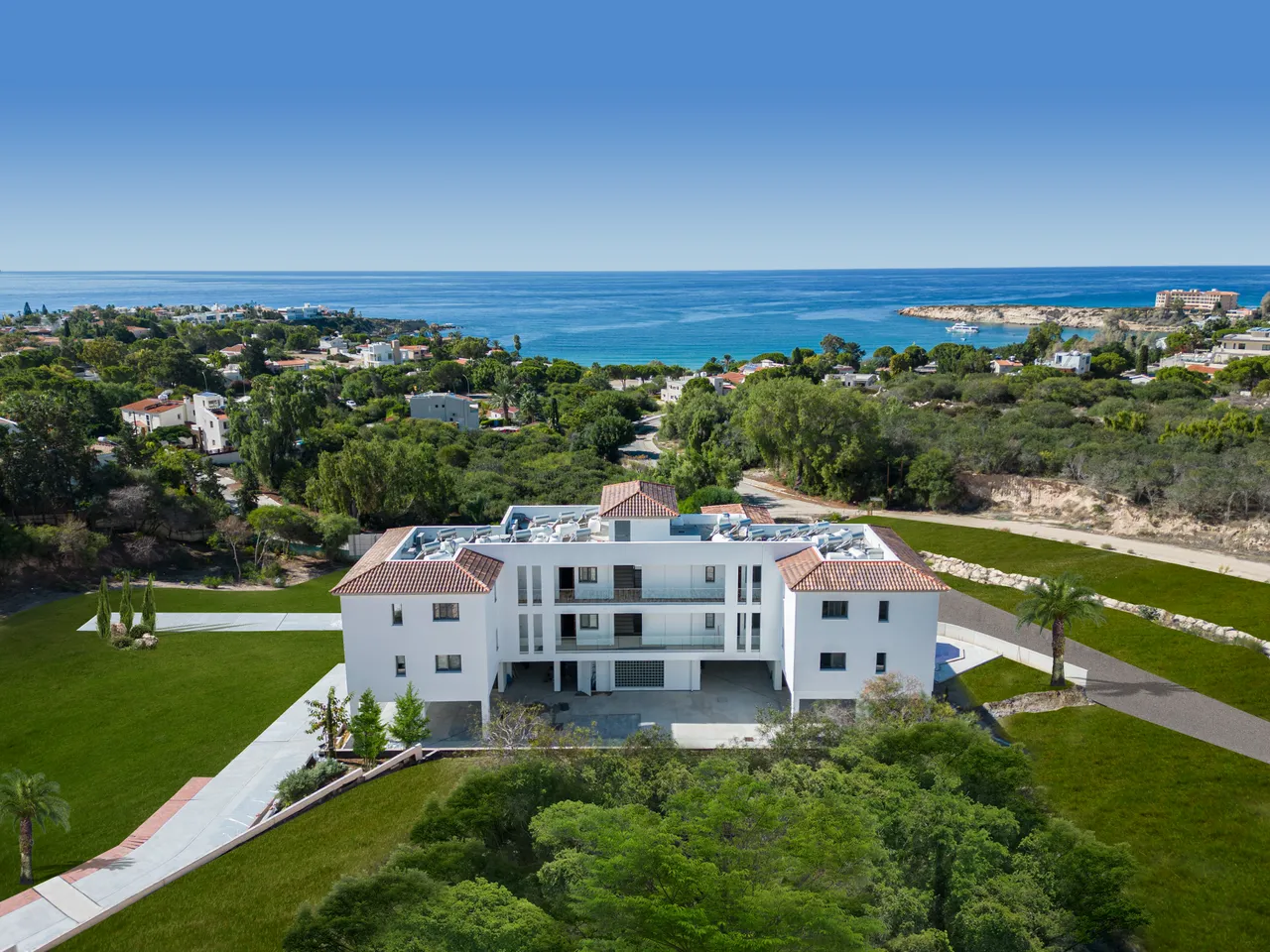
Coral Gardens
Paphos · Peyia · Coral Bay

Leto's Family Park
Paphos · Peyia
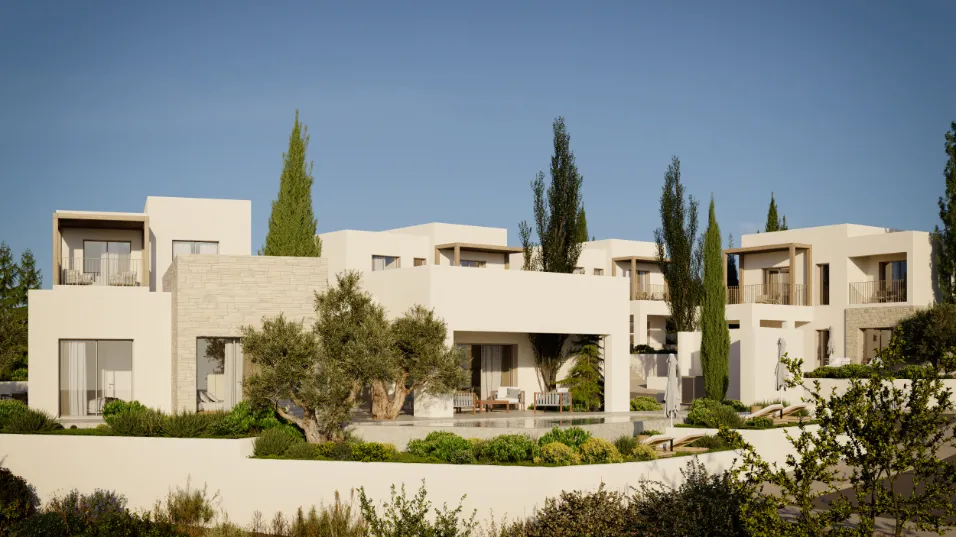
Peyia Panorama
Paphos · Peyia

Skyline Villas
Paphos · Tala
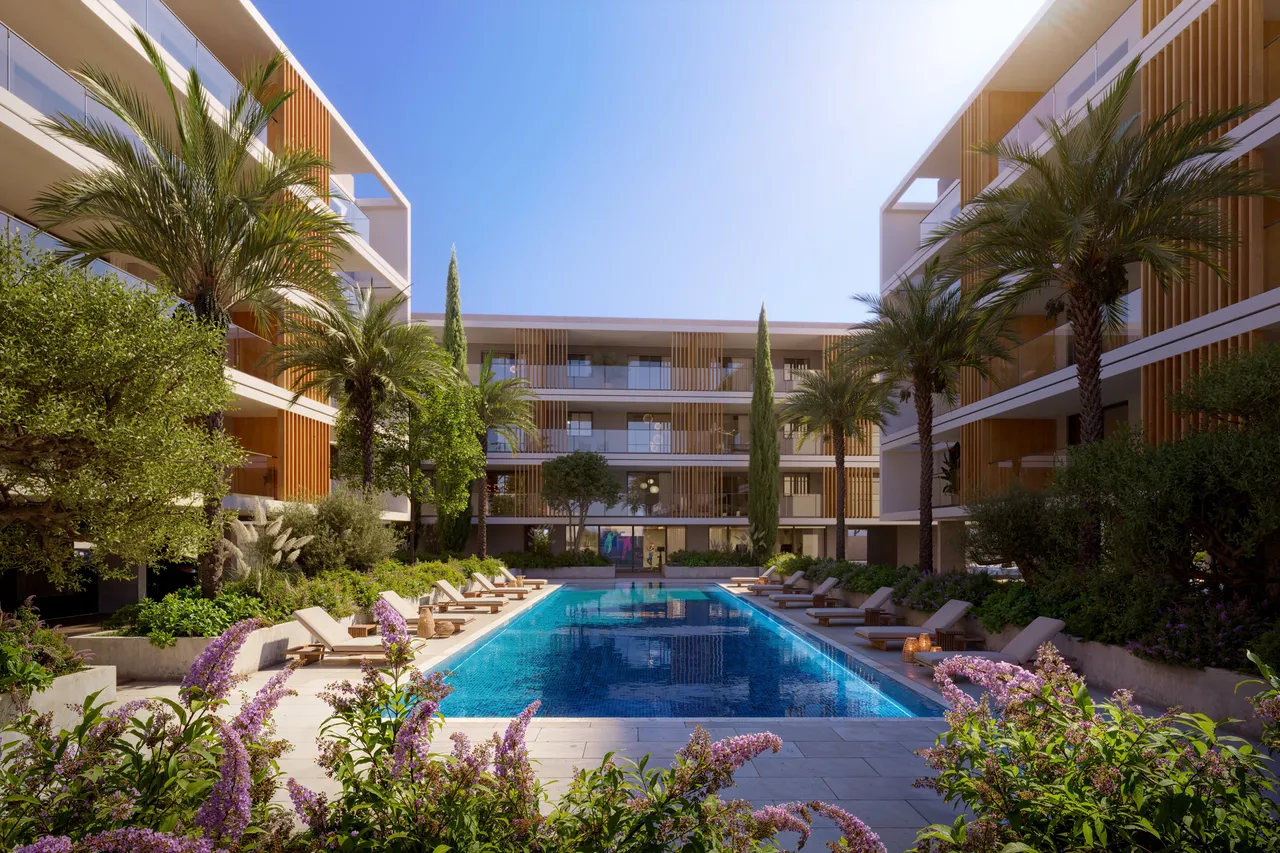 Studio · Apartment
Eden Golf
Paphos · Geroskipou
 Apartment · Studio
Avalon Park
Paphos · Empa
 Apartment · Commercial
Bel Air Gardens
Paphos · Geroskipou
 Apartment · Penthouse
Coast View Residence
Paphos · Geroskipou
The 2021 census counted 18,918 British citizens, 2.0% of 923,381 residents of the Government-controlled area, and 27,986 UK-born residents. The Cypriot authorities estimate about 41,500 resident UK nationals; the census excludes British-Cypriot dual nationals and short-stay owners.
9.2%: 9,284 British citizens among 101,106 residents. They are also 22.8% of the 40,645 residents who are not Cypriot citizens, and the district holds 49.1% of all British citizens counted in Cyprus.
The census does not publish it. Pegeia has 3,562 non-EU citizens, 51.3% of its 6,945 residents, as an upper limit. If the British are 39.9% of that group, as across Paphos district, the estimate is 1,421, or 20.5% of residents; that rests on an assumption.
The documents are a stock of certificates held in January 2021, including people who may since have left, while the census counts usual residents on 1 October 2021 and assigns British-Cypriot dual nationals to the Cypriot group. The 19,162 difference is not broken down by any source.
Between the censuses of 2011 and 2021 British citizens fell from 24,046 to 18,918, a drop of 21.3%. No UK-specific count has been published since 2021; non-EU citizens in total rose from 108,900 at the end of 2021 to 144,259 at the end of 2024.
The census covers the Government-controlled areas, and CYSTAT marks foreign military personnel and their families as excluded. The Sovereign Base Areas Administration says roughly 3,800 military personnel and UK-based civilians with their dependants and about 10,000 Cypriots live on the Bases, on an undated page.
In 2011, 64.1% of British citizens were 50 or older and 30.8% were 65 or older. In 2021 the share of residents aged 65 or over was 26.3% in Peyia and 29.8% in Kouklia against 17.2% nationally.
1,440,003 arrivals from the United Kingdom in 2025, 31.8% of 4,534,073 tourist arrivals. About 22.1% stayed with friends or relatives or in an owned residence, around 318,000 arrivals. Arrivals are trips, so they cannot be added to the resident count.
Sources, all read on 12 November 2026. Statistical Service of the Republic of Cyprus (CYSTAT-DB, Census 2021): tables 1891221E (population by country of citizenship, sex and district), 1891210E (by country of birth, district and urban or rural area), 1891213E (by citizenship group, district and municipality or community), 1891217E (by citizenship group, age and district) and 1891108E (by municipality or community, sex and age), all as at 1 October 2021; Census 2011 table 1862010E (population by community) and the end-of-year de jure population by citizenship group (table 1820035E, 2021 to 2024); tourist arrivals by country of usual residence (table 2022020E) and by type of accommodation (table 2022056E), 2025. Gov.cy: Census of Population and Housing 2021, final results, press release of 9 August 2024, with its definitions of population, citizenship and country of birth. CYSTAT's metadata questionnaire for the United Nations Demographic Yearbook, 2021 round (coverage and excluded groups). Office for National Statistics: What information is there on British migrants living in Europe, 27 January 2017 (2011 census data from the Eurostat Census Hub). European Commission: information about national residence schemes for each EU country, Cyprus entry (declaratory scheme, 41,500 estimate and the 29 March 2024 application figures; the page shows no date for the estimate). GOV.UK: Living in Cyprus (updated 5 February 2026). Sovereign Base Areas Administration: background page (undated). Cyprus Mail: 'So how many Brits are there in Cyprus?' (19 June 2016), '15,000 Britons applied for Cyprus residence after Brexit' (24 September 2019), 'Why are there so many Brits in Cyprus' (29 April 2023), 'Silent expat exodus' (11 November 2024) and '180,000 Brits in Cyprus may have overstayed their visas' (8 April 2025). Cyprus Profile, 19 April 2021, on the Interior Minister's reply to an MP (38,080 documents). Our own guides on the 90-in-180 rule, the residence card, schools in Paphos, GeSY, the UK State Pension and S1 and tax. Not confirmed on any page we could read: British citizens by village or town; the 2021 age profile of British citizens; any UK-specific population count after 2021; the current number of Withdrawal Agreement documents; the date and method of the 41,500 estimate; the treatment of the Sovereign Base Areas in the census; and a country-by-country count of UK State Pension recipients in Cyprus. This guide is general information and not legal, tax or immigration advice. Cyprus VIP Estates assists investors in choosing new developments; legal and immigration advice comes from licensed professionals.