

Guides/Visa & residence guides
Cyprus Citizenship by Investment: What Happened to the Golden Passport Scheme, Dates, Numbers and What Remains

Cyprus citizenship by investment is closed. The Cyprus Investment Programme, known as the golden passport scheme, took its last applications at the end of October 2020 (the statute names 30 October, the press 31 October) and closed on 1 November 2020, and its legal basis (Article 111A(2) of the Civil Registry Law) was deleted in December 2025, with the repeal reported as effective from 12 December 2025; the European Commission closed its infringement case on 11 March 2026. The scheme asked for at least €2,000,000 of qualifying investment, a home of at least €500,000 plus VAT and, from 15 May 2019, two donations of €75,000 each, so a package filed in mid-2019 cost at least €2,150,000 when one purchased unit doubled as the home and €2,650,000 with a separate home, before VAT and fees. The official inquiry chaired by Myron Nicolatos covered 6,779 citizenships granted from 2007 to August 2020 and found 51.81% of the cases it examined at the interim stage unlawful, and by 4 September 2025 Cyprus Mail counted 332 revoked passports. A property purchase today gives no citizenship: a new-build from €300,000 leads to a Category 6.2 permanent residence permit, and the routes to a Cyprus passport that remain are naturalisation by residence, marriage and descent (sources read on 16 November 2026).
Cyprus citizenship by investment: closed in 2020 and repealed in December 2025
The Cypriot government decided at an emergency Cabinet session on 13 October 2020 to end the programme in its existing form from 1 November 2020, and applications filed before the cut-off stayed in the system (the statute names 30 October 2020 as the last filing date; press reports give 31 October, which was a Saturday). That is the closure most readers remember. The second step took five years: until December 2025 the legal power behind the scheme, which let the Council of Ministers grant citizenship to investors and their families, was still in the statute book.
CyLaw's consolidated text of the Civil Registry Law (141(I)/2002) shows what changed. Subsection (2) of Article 111A, the investor provision, is marked as deleted by the Civil Registry (Amendment) (No. 2) Law of 2025, and the article's amendment list ends with Law 224(I)/2025. Two transitional clauses remain: subsection (2A) lets the old subsection still apply if a court orders a review of a decision on an application filed up to 30 October 2020, and subsection (4) keeps the earlier regulations alive only for honorary naturalisations and for investor applications filed up to 30 October 2020. The House of Representatives voted on 4 December 2025 (Cyprus Mail), and Politis reported on 11 March 2026 that the repeal took effect on 12 December 2025. I did not open the Official Gazette notice, so the effective date rests on that press report.
One point does not reconcile. Cyprus Mail described the December 2025 vote as removing the cabinet's power to grant honorary citizenship as well. The CyLaw text I read still contains Article 111A(1), which lets the Council of Ministers allow honorary naturalisation, for reasons of public interest, in very exceptional cases of services of the highest level to the Republic, with advance notice to Parliament. That article is a recognition for services to the state, has no price, and cannot be bought with a property. A reader who needs certainty on it should ask the Civil Registry and Migration Department.
The practical conclusion for a buyer is short. No Cypriot authority accepts an application for citizenship in exchange for an investment, the Commission treats such schemes as contrary to EU law (see the infringement section below), and any sales material that links a property purchase to a Cyprus passport has no legal basis. The routes that remain are in the final section, and our guide to what is left after the investor programme closed sets out the day counts and exam rules in detail.
Timeline of the Cyprus golden passport scheme from 2007 to 2026
The table lists dated events with the source read for each. Where a date comes from a press report and not from a government page, the source column says so.
| Date | Event | Source read |
|---|---|---|
| 2007 | The scheme starts; the inquiry later examined citizenships granted from 2007 onwards | Cyprus Mail, 22 August 2022; AP via Euronews, 8 June 2021 |
| 2013 | The scheme is ramped up; the Finance Ministry counts programme revenue from 2013 | AP via Euronews, 8 June 2021; IMI Daily, 14 February 2019 (citing the Finance Ministry) |
| 13.9.2016 (document date) | Ministry text: at least €2.0m in real estate, companies or funds; a home of at least €500,000 plus VAT; investments held 3 years | Ministry of Interior, Cyprus Investment Programme (archived copy) |
| 21 May 2018 | Council decision: for off-plan property the 3-year hold starts when the town-planning permit is issued (applications 15 June 2018 to 14 May 2019) | Ministry of Interior text of 28 February 2019 |
| 13 February 2019 | Council of Ministers revises the programme | Ministry of Interior announcement, 6 May 2019 |
| 28 February 2019 | Ministry publishes the revised text; the €2.0m criteria and the €500,000 home stay | Ministry of Interior text of 28 February 2019 |
| 6 May 2019 | Council exempts investors with purchase contracts stamped by 15 May 2019 from the donation, for applications filed until 15 July 2019 | Ministry of Interior announcement, 6 May 2019 |
| 15 May 2019 | The donation criterion applies to new applications | Ministry of Interior announcement, 6 May 2019 |
| 31 January 2020 | Law 9(I)/2019 takes effect; earlier Council terms continue until regulations are issued | CyLaw, notes to the Civil Registry Law |
| 18 August 2020 | Regulations published in the Gazette; donation raised from €150,000 to €200,000 (as summarised by law firms) | IMI Daily summary (Gazette not opened) |
| 12 October 2020 | Al Jazeera publishes The Cyprus Papers Undercover | Al Jazeera, 12 October 2020 |
| 13 October 2020 | Emergency Cabinet session ends the programme from 1 November 2020 | Daily Maverick, 13 October 2020 |
| 20 October 2020 | Commission sends letters of formal notice to Cyprus and Malta | European Commission press release IP/20/1925 |
| 30-31 October / 1 November 2020 | Last filing day (the statute says 30 October, press reports 31 October); closure; 1,413 applications pending (691 investors, 722 family members) | Cyprus Mail, 8 November 2021 |
| 16 April 2021 | Inquiry interim report: 51.81% of examined cases unlawful | Cyprus Mail, 16 April 2021 |
| June 2021 | Inquiry final report of about 780 pages; 6,779 citizenships in 2007-2020 | AP via Euronews, 8 June 2021 |
| 9 June 2021 | Commission reasoned opinion to Cyprus, because pending files were still processed | Cyprus Mail, 9 June 2021 |
| 31 July 2021 | 390 of the pending applications approved by the Cabinet | Cyprus Mail, 8 November 2021 |
| 22 August 2022 | Audit Office report published | Cyprus Mail, 22 August 2022 |
| 29 April 2025 | Court of Justice rules against Malta's 2020 investor scheme (case C-181/23) | Court of Justice press release 52/25 |
| 4 September 2025 | Cyprus Mail counts 332 revoked passports | Cyprus Mail, 4 September 2025 |
| 2 October 2025 | Cabinet approves the bill to delete the investor provision | Cyprus Mail, 2 October 2025 |
| 4 December 2025 | House of Representatives passes the repeal | Cyprus Mail, 4 December 2025 |
| 12 December 2025 | Repeal reported as in force | Politis, 11 March 2026 |
| 11 March 2026 | Commission closes the infringement case against Cyprus | Politis and Cyprus Mail, 11 March 2026 |
How the Cyprus Investment Programme worked: criteria, donations and family members
The Ministry of Interior's own documents (a text dated 13 September 2016 and a text of 28 February 2019, both read in archived copies of the ministry site) describe a naturalisation by exception under Article 111A(2). The Council of Ministers kept absolute discretion over every decision. The table below follows the February 2019 text.
Investment programme criteria in the Ministry's February 2019 text
| Criterion | What the Ministry required | Detail |
|---|---|---|
| A.1 Real estate, land development, infrastructure | At least €2.0 million | Buildings, residential or commercial developments, tourism projects; land under development counts if an investment plan is filed; land in a zero-development building zone is excluded |
| A.2 Companies or businesses in Cyprus | At least €2.0 million | Company with proven physical presence in Cyprus, significant activity and turnover, and at least 5 Cypriot or EU citizens as employees; shipping investments on measurable criteria |
| A.3 Alternative investment funds or Cypriot financial assets | At least €2.0 million | Units of Cyprus-established AIFs or registered AIFs supervised by CySEC and investing only in Cyprus, or bonds and securities of qualifying Cypriot companies |
| A.4 Combination | Total of at least €2.0 million | Any mix of A.1 to A.3 |
| Home in Cyprus | At least €500,000 plus VAT | Owned privately; the amount above €500,000 can top up the investment; one housing unit of at least €500,000 plus VAT bought under A.1 replaces a separate home if kept for life |
| Residence permit | At least 6 months before naturalisation | May be applied for together with the citizenship application |
| Holding period | 3 years from naturalisation (Ministry text of 28 February 2019) | Investments made in the 3 years before the application; replacement needed Finance Ministry approval |
| Clean record | Clean criminal record; no EU sanctions listing; no rejection by another EU state | Applies to family members who apply too |
A further element appears in the Ministry's announcement of 6 May 2019 and in its checklist of investor documents: from 15 May 2019 applicants had to meet a criterion numbered A.1 that consists of donations to the Research and Innovation Foundation and the Cyprus Land Development Corporation, and the real estate criterion moved to A.2. The Ministry pages I could read do not state the euro amounts. Law-firm and trade summaries of the 13 February 2019 decision give €75,000 to each body, a total of €150,000, with the research donation waivable by investing in a certified innovative enterprise, and a holding period of 5 years from naturalisation for applications from 15 May 2019. I use those figures and label them as secondary.
How the investment thresholds changed between 2016 and 2020
| Version | Qualifying investment | Home | Donations | Source |
|---|---|---|---|---|
| Ministry text dated 13.9.2016 | €2.0 million (government bonds up to €500,000 allowed in a combination) | €500,000 plus VAT | None in the text | Ministry of Interior |
| Ministry text of 28 February 2019 | €2.0 million (bonds removed in the revision, per the same-year summaries) | €500,000 plus VAT | None in the text | Ministry of Interior |
| Applications from 15 May 2019 | €2.0 million (€2.5 million when a dwelling previously used for the programme is bought, per law-firm summaries) | €500,000 plus VAT | €75,000 + €75,000 = €150,000 (law-firm and IMI Daily summaries) | Ministry announcement; secondary figures |
| Regulations of 18 August 2020 | €2.0 million (unchanged, per IMI Daily) | €500,000 plus VAT | €200,000 (per IMI Daily); employees at a funded company raised to 9 EU citizens | IMI Daily summary; Gazette not opened |
Family members came in under the same Council decision. According to the Ministry's family-members text of 28 February 2019, a spouse or partner could file together with the investor; minor children, adult children who were financially dependent (students up to age 28 in higher education, or adults with a disability that prevents work) and the investor's parents could apply after the investor was naturalised. The parents needed a permanent home of at least €500,000 plus VAT, and the investor and parents could buy one home of at least €1,000,000 plus VAT together. IMI Daily reported that the 2020 regulations added the parents of the investor's spouse or partner. Neither the family nor the investor could have a rejected citizenship application in another EU Member State.
Worked example: a €2,000,000 citizenship by investment package filed in 2019
The scenario is an assumption built from the Ministry's criteria so that every figure can be checked. An investor files on Monday 3 June 2019, after the donation criterion applied. The investor buys three new apartments in one Cyprus development as the A.1 real estate investment (contracts signed after 3 June 2016, inside the three-year window before filing), and one of them, at least €500,000 plus VAT, serves as the permanent home.
| Item | Amount | Rule applied |
|---|---|---|
| Apartment 1 (also the home, kept for life) | €800,000 | At least €500,000 plus VAT, so no separate home is needed |
| Apartment 2 | €600,000 | Counts towards A.1 |
| Apartment 3 | €600,000 | Counts towards A.1 |
| Qualifying investment | €800,000 + €600,000 + €600,000 = €2,000,000 | Meets the €2.0 million minimum exactly |
| Donations from 15 May 2019 | €75,000 + €75,000 = €150,000 | Amounts from secondary sources; the criterion itself is on the Ministry's checklist |
| Total outlay before VAT, taxes and fees | €2,000,000 + €150,000 = €2,150,000 | VAT of the purchase is extra |
| Variant with a separate home | €2,000,000 + €500,000 + €150,000 = €2,650,000 | The first €500,000 of the separate home does not count towards the €2.0 million; only the excess can top it up |
The dates below follow the rules. The residence permit has to be held for at least six months before naturalisation, which sets a floor of 3 December 2019 (3 June 2019 + 6 months). The Ministry published no processing time, so the eight-month column is a labelled assumption: it puts the Cabinet decision on 3 February 2020. The holding period then runs from naturalisation, 3 years in the Ministry's 28 February 2019 text and 5 years in the secondary summaries for applications from 15 May 2019.
| Milestone | Floor by the rules (6 months) | Assumed case (8 months) |
|---|---|---|
| Application and permit filed | 3 June 2019 | 3 June 2019 |
| Naturalisation | 3 December 2019 | 3 February 2020 |
| End of a 3-year hold | 3 December 2022 | 3 February 2023 |
| End of a 5-year hold | 3 December 2024 | 3 February 2025 |
| End of the 10-year window for the main deprivation grounds in Article 113(3) | 3 December 2029 | 3 February 2030 |
Two legal points sit behind the last row. Article 113(3) lets the Council of Ministers deprive a naturalised person of citizenship for listed reasons within ten years of naturalisation, among them a serious conviction, a sanctions listing, or continued failure to comply with the criteria set in Council decisions. Article 113(2) covers citizenship obtained by fraud, false statements or concealment of a material fact, and the text I read sets no ten-year limit there. Article 113(1) adds that a person deprived of citizenship acquired under Article 111A or the deleted subsection (2) gets back no investment, payment or donation. For this investor that means the €2,150,000 is not refundable if citizenship is withdrawn, and family members who obtained citizenship through the investor can be deprived with the investor.
The same €2,150,000 buys no citizenship today. A new-build at the Category 6.2 level of €300,000 plus VAT is about 14% of that sum (€300,000 / €2,150,000 = 13.95%) and leads to a residence permit that does not count a day towards the passport clock unless the holder lives in Cyprus; the details are in our guide to Category 6.2 permanent residency.
The Cyprus Papers and the end of the golden passport scheme in October 2020
On 12 October 2020 Al Jazeera published The Cyprus Papers Undercover. Its reporter posed as the representative of a Chinese investor with a criminal conviction, and the film showed the speaker of the House, Demetris Syllouris, a member of parliament and developer, Christakis Giovanis, and the lawyer Andreas Pittadjis discussing how such a person might obtain a passport. Pittadjis said he had reported the matter to the anti-money laundering authority and Syllouris said he gave the applicant no services. Cyprus Mail records that both politicians resigned, and the Cabinet met in emergency session the next day, 13 October 2020, and decided to end the programme from 1 November 2020.
The closing arithmetic is on the record. When the programme closed, 1,413 applications were pending: 691 from investors and 722 from family members (691 + 722 = 1,413). Interior Minister Nicos Nouris told Parliament that the Cabinet had approved 390 of them by 31 July 2021, which is 390 / 1,413 = 27.6%. I found no source that says what happened to the other 1,023 files (1,413 - 390 = 1,023), so this guide does not state it.
European Commission infringement case and the Court of Justice ruling on citizenship by investment
On 20 October 2020 the Commission sent letters of formal notice to Cyprus and Malta. Its press release says that granting nationality, and with it EU citizenship, in exchange for a pre-determined payment or investment and without a genuine link with the country is incompatible with the principle of sincere cooperation in Article 4(3) of the Treaty on European Union and undermines Article 20 of the Treaty on the Functioning of the European Union. Cyprus had two months to reply.
On 9 June 2021 the Commission sent Cyprus a reasoned opinion. Cyprus Mail reports that the Commission objected because Cyprus had stopped receiving applications on 1 November 2020 but continued to process pending ones. Cyprus Mail reported on 20 August 2021 that the Legal Service had sent Cyprus's reply earlier that month. In it, Interior Minister Nicos Nouris defended processing the old files because investors could otherwise sue. The same article gave about 160 approvals, whereas the 8 November 2021 article gave 390 by 31 July 2021, so the approval counts differ between reports.
The Court of Justice ruling in Commission v Malta (case C-181/23), delivered on 29 April 2025 by the Grand Chamber, concerned Malta's 2020 investor scheme. The Cypriot scheme was never before the Court. The Court's press release states the holding in one line, "The acquisition of Union citizenship cannot result from a commercial transaction." It added that a Member State may not grant nationality, and so EU citizenship, in direct exchange for predetermined investments or payments. The judgment names Malta only, and the Commission never took Cyprus to the Court on this file. The ruling matters for Cyprus because it confirms the reading the Commission applied to both countries.
Cyprus took the legal step the Commission had pressed for, the repeal of the provision itself. Politis quotes the Commission spokesperson Markus Lammert saying that the Commission decided to close the case on 11 March 2026 after the repeal took effect on 12 December 2025, and that its position that such schemes breach EU law has been clear from the outset. Cyprus Mail reports that Cabinet approved the repeal bill on 2 October 2025 and that any future investor scheme would need a new act of Parliament. No official source I read says such a scheme is planned.
Inquiry findings: how many Cyprus citizenships by investment were granted and how many were unlawful
Three bodies produced counts, and the periods differ. The Nicolatos inquiry, a four-member committee chaired by the former Supreme Court president Myron Nicolatos, covered 2007 to August 2020. The Audit Office report published on 22 August 2022 examined 3,517 investor cases and noted at least 3,810 more people naturalised as relatives of investors. A member of parliament quoted in Cyprus Mail on 4 December 2025 gave a total of 7,329 people, of whom 3,522 were investors.
| Measure | Figure | Source and date |
|---|---|---|
| Citizenships granted 2007 to August 2020 | 6,779 | Inquiry, via AP (Euronews, 8 June 2021) and Cyprus Mail, 22 August 2022 |
| Cases examined at the interim stage | 2,478 passports issued 2007-2016 plus 417 high-risk ones issued until 2020 | Al Jazeera, 16 April 2021 (Cyprus Mail gives the 2,478 as 2007-2020) |
| Share of examined cases unlawful at the interim stage | 51.81% | Al Jazeera and Cyprus Mail, 16 April 2021 |
| Share unlawful in the final report, as reported in 2022 | 53% of 6,779, about 3,593 (0.53 × 6,779) | Cyprus Mail, 22 August 2022 |
| Investor cases audited | 3,517 | Cyprus Mail, 22 August 2022 |
| Relatives naturalised, per the Audit Office | At least 3,810 | Cyprus Mail, 22 August 2022 |
| All people naturalised, per an MP | 7,329 (3,522 investors, so 3,807 relatives) | Cyprus Mail, 4 December 2025 |
| VAT lost, per the Audit Office | €200 million | Cyprus Mail, 22 August 2022 |
| Fees not paid, per the Audit Office | €25 million (so €225 million with the VAT) | Cyprus Mail, 22 August 2022 |
| Programme revenue since 2013, per a Finance Ministry study | About €6.6 billion, of which real estate €3.6 billion (54.5%) | IMI Daily, 14 February 2019 |
Three conflicts are visible in these sources. First, AP's report of the June 2021 final report words the 53% as the share of passports that went to family members or top company executives, while Cyprus Mail's 2022 article words 53% as the share of citizenships that were unlawful; I could not read the report itself, which the Attorney General planned to publish in redacted form, so I attribute the 53% to those reports and do not assert it myself. Second, the totals 6,779 and 7,329 cover different periods, since the inquiry stopped in August 2020 and the Cabinet approved 390 more files in 2021. Third, revenue estimates run from €6.6 billion (Finance Ministry study, 2019) to more than €7 billion (Al Jazeera, 2020) and more than €8 billion (AP, 2021), and I found no official final figure.
AP's account of the final report adds what the inquiry said about quality: about one third of investor grants did not meet all requirements, 8% fell short of the required investment amount and 12% lacked the required permanent residence, and the government kept granting citizenships for at least four years after Attorney General warnings in 2015 and 2016 that no specific law authorised the practice. The inquiry recommended examining the withdrawal of citizenship in 85 cases and noted that withdrawing it from relatives and executives who were not directly at fault could be particularly complicated.
Revoked golden passports: how many Cyprus citizenships were cancelled and on what grounds
Revocations started slowly and accelerated after March 2023. Three press counts, each from a different date, are below; the articles do not explain why the totals differ.
| Date of report | What was counted | Figure | Source |
|---|---|---|---|
| 4 September 2025 | Passports revoked in total | 332 (95 investors + 237 relatives) | Cyprus Mail |
| 4 September 2025 | Completed formal deprivation orders | 112 (33 investors + 79 relatives) | Cyprus Mail |
| 4 September 2025 | Cancelled since 1 March 2023, in 35 Cabinet decisions | 122 (35 investors + 87 relatives) | Cyprus Mail |
| 2 October 2025 | Citizenships rescinded | 150 (41 investors + 109 relatives) | Cyprus Mail |
| 11 March 2026 | Individuals covered by 39 Cabinet decisions since March 2023 | 147 | Politis |
Put against the 7,329 people reported as naturalised, 332 revocations are 332 / 7,329 = 4.5%. Among investors alone, 95 of 3,522 is 2.7%, and among relatives 237 of 3,807 is 6.2%. These shares use the largest revocation figure and the MP's total, so they describe the reported position on 4 September 2025 and carry the uncertainty of both numbers.
The legal grounds are in Article 113 of the Civil Registry Law: fraud, false statements or concealment of a material fact; the ten-year grounds listed in the worked example; and continued non-compliance with the Council's criteria. Cyprus Mail, relying on a Politis report, says almost everyone losing a passport in 2025 had been classed as high risk by the inquiry, and that investors included people wanted by police, people with serious convictions and some who sold the qualifying property after naturalisation. The process has procedural steps: the Cabinet must tell the person in writing and give 60 days to turn to the Independent Committee for the Examination of Deprivation of Citizenship (chaired by a representative of the Legal Service), and each deprivation order is published in the Official Gazette with the person's name only. Cyprus Mail reported on 2 October 2025 that further bills added the 60-day appeal window and the Gazette notice. The Attorney General's office also brought five individuals and four legal entities to court on 37 charges in May 2021 (AP via Euronews).
What the end of citizenship by investment means for a foreign property buyer in Cyprus
The market effect and the legal effect are separate. The legal effect is clear: no purchase of any size gives a right to apply for citizenship. A buyer who wants a long stay has three tools that do exist, and each has its own page: Category 6.2 permanent residency for a qualifying purchase of €300,000 plus VAT with a secure income from abroad, covered in our Category 6.2 guide and in the permanent residency benefits guide; the timing and refusal causes in the permanent residency timeline guide; and, for EU citizens, free movement with a registration certificate.
Properties bought under the old investment programme
Investors had to keep their qualifying investments for a fixed period after naturalisation (3 years in the Ministry's February 2019 text, 5 years in the secondary summaries of the 15 May 2019 rules), and had to keep the programme home for life. After the holding period the apartments and villas were ordinary property that could be sold. I found no official statement that a unit bought for the programme carries a continuing restriction on resale. Law-firm summaries do mention a rule that a dwelling previously used for the programme must be matched by a €2.5 million total investment when another applicant reuses it, and that rule binds a later applicant to the programme, which has been closed since 2020. For an ordinary buyer the checks are the usual ones: the title deed, mortgages and encumbrances, planning permits and the certificate of final approval. Our guides to the title deed, to choosing a property lawyer and to Cyprus property law for foreign buyers cover them.
The Audit Office, as Cyprus Mail reported on 22 August 2022, counted €200 million of VAT lost and €25 million of fees unpaid, and also mentioned contracts worth €1 billion cancelled and a further €3.5 billion pending (the article does not define those contracts). A buyer of a new-build today pays VAT under the normal rules; the VAT guide explains the rates.
Routes to Cyprus citizenship that remain after the investor programme
Citizenship in Cyprus is regulated by Articles 108 to 115 of the Civil Registry Law. After the repeal of Article 111A(2), the routes below remain. Each has its own guide, and this page does not repeat their details.
| Route | Core test (from the law or our guide) | Where it is covered |
|---|---|---|
| Naturalisation by residence (Article 111 and 111B) | 12 months of continuous legal residence before filing, with absences up to 90 days, and 7 years of legal residence in the 10 years before those 12 months; the Minister decides, and the Council of Ministers can reject an application unless the applicant renounces another citizenship, in a particular case or category of cases | Naturalisation by residence guide |
| Marriage or civil partnership with a Cypriot citizen | Registration route with its own residence and marriage-length conditions | Citizenship by marriage guide |
| Descent from a Cypriot parent or grandparent | Registration route based on documents | Citizenship by descent guide |
| Honorary naturalisation (Article 111A(1)) | Very exceptional services to the Republic, decided by the Council of Ministers with advance notice to Parliament; no payment route | Civil Registry and Migration Department |
The naturalisation article in the CyLaw text I read lists 12 continuous months and 7 years in the preceding 10 as cumulative conditions, so a person who starts living in Cyprus with a permit after a purchase reaches the filing date after about 8 years, subject to the other conditions. Read the naturalisation by residence guide, the citizenship by marriage guide and the citizenship by descent guide for conditions, fees and examples. Whether you may keep your first passport depends on the country that issued it, as shown in the dual citizenship guide. Anyone considering a purchase for the residence route can compare new developments across Cyprus with the €300,000 threshold in mind.
Frequently asked questions about Cyprus citizenship by investment
New-build projects in Limassol and Paphos at the Category 6.2 level to compare
 Apartment · Penthouse
GAIA Residences
Limassol · Potamos Germasogeias
 Apartment · Penthouse · Studio
Glow
Limassol · Agios Athanasios
 Apartment · Penthouse
Coast View Residence
Paphos · Geroskipou
 Apartment
Plus 78
Limassol · Agios Athanasios
 Apartment · Shop
Thalassa Residences 2
Limassol · City centre
 Apartment · Studio · Penthouse
Nest
Limassol · Germasogeia Village
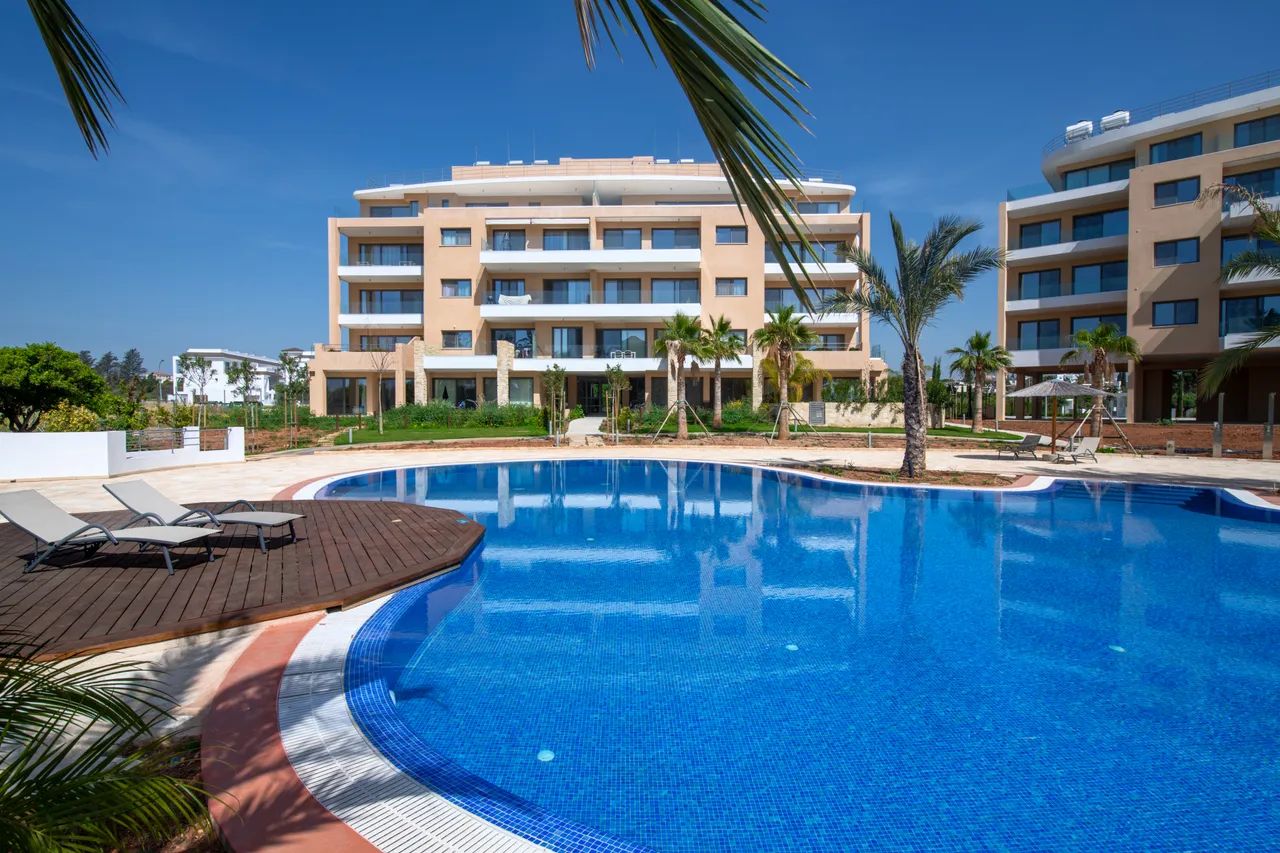 Apartment
Limassol Park
Limassol · Trachoni
 Apartment · Studio
Avalon Park
Paphos · Empa
No. The last filing day was 30 or 31 October 2020 (the statute and press reports differ), the programme closed on 1 November 2020, and Article 111A(2), the investor provision, was deleted by the 2025 amendment. Politis reports the repeal as in force from 12 December 2025, and the Commission closed its case on 11 March 2026.
Under the Ministry's criteria the minimum qualifying investment was €2,000,000. With one purchased unit of at least €500,000 plus VAT as the home, the total outlay was €2,000,000 + €150,000 of donations = €2,150,000 before VAT and fees; with a separate home it was €2,000,000 + €500,000 + €150,000 = €2,650,000. The €150,000 figure comes from law-firm summaries. No Ministry page I could read states it.
The rules set a floor of 6 months because the investor needed a residence permit for at least 6 months before naturalisation. The Ministry published no processing time. After the closure, 390 of 1,413 pending applications (27.6%) were approved by 31 July 2021, so only about a quarter of that backlog had a recorded approval nine months after the closure.
No. Case C-181/23 concerned Malta's 2020 scheme. The Court held that acquiring Union citizenship cannot result from a commercial transaction. Cyprus faced a Commission infringement procedure that began on 20 October 2020 and closed on 11 March 2026 without a referral to the Court.
Yes. Article 113 lets the Council of Ministers deprive naturalised persons of citizenship for fraud, false statements or concealment, and, within ten years of naturalisation, for listed reasons such as a serious conviction or continued breach of the programme criteria. A person deprived of citizenship acquired under Article 111A gets no refund of the investment or donation. By 4 September 2025 Cyprus Mail counted 332 revocations.
The inquiry counted 6,779 for 2007 to August 2020, and a member of parliament cited 7,329 people (3,522 investors) in December 2025. The figures cover different periods and the sources do not reconcile them further.
No. A qualifying purchase leads to Category 6.2 permanent residence, which is a residence permit. Citizenship needs naturalisation, with 12 continuous months of legal residence and 7 years in the 10 years before them, plus the other conditions of Article 111B.
No official source I read says so. Cyprus Mail reported on 2 October 2025 that a new investor scheme would need a new act of Parliament, and the Commission spokesperson said in March 2026 that such schemes breach EU law.
Sources, all read on 16 November 2026. Ministry of Interior of Cyprus: Cyprus Investment Programme text dated 13.9.2016, Cyprus Investment Programme text of 28 February 2019, Investor's Family Members text of 28 February 2019, Checklist of Investor's Application Documents, and Announcement concerning clarification for the Cyprus Investment Programme of 6 May 2019 (all read in archived copies of moi.gov.cy, because the live ministry site blocks automated access). CyLaw: consolidated Civil Registry Law 141(I)/2002 (Articles 111, 111A, 111B, 113 and the notes to Law 9(I)/2019), Greek text, amendment list ending 224(I)/2025. European Commission: press release IP/20/1925 of 20 October 2020. Court of Justice of the European Union: press release No 52/25 of 29 April 2025 on case C-181/23. Al Jazeera: The Cyprus Papers Undercover article of 12 October 2020 and the article of 16 April 2021 on the interim inquiry findings. Cyprus Mail: articles of 16 April 2021, 9 June 2021, 20 August 2021, 8 November 2021, 22 August 2022, 4 September 2025, 2 October 2025, 4 December 2025 and 11 March 2026. AP via Euronews: article of 8 June 2021 on the inquiry's final report. Politis (en.politis.com.cy): article of 11 March 2026 on the closure of the infringement case. Daily Maverick: article of 13 October 2020 on the Cabinet decision. CCLEX Global: note on the repeal of the programme, read as a secondary check. IMI Daily: articles of 14 February 2019 (donations, holding period, Finance Ministry revenue study) and on the 2020 regulations (read as secondary summaries). Not confirmed on an official page I could open and therefore marked as secondary or left open: the amounts of the two donations (€75,000 each) and their later increase to €200,000; the 5-year holding period for applications from 15 May 2019 (the Ministry text read says 3 years); the €2.5 million rule for a reused dwelling; the Official Gazette notice of the December 2025 repeal and its effective date of 12 December 2025; the final inquiry report, which I did not read in full; whether the honorary naturalisation power in Article 111A(1) remains in practice; the reason why the revocation counts of 332, 150 and 147 differ; what happened to the 1,023 pending files not approved by July 2021 and why the August 2021 article counts about 160 approvals against 390 in November 2021; and the effect of the old investor properties on resale. The dated worked example uses an assumed investor, assumed apartment prices and an assumed eight-month processing time; it illustrates the published rules and does not describe any real case. This guide is general information and not legal or immigration advice; a licensed adviser should confirm your own position. Cyprus VIP Estates assists investors in choosing new developments; legal and immigration advice comes from licensed professionals.