
Guides/Visa & residence guides
Cyprus Permanent Residency: How Long It Takes, What It Costs and Why Applications Are Refused

The Migration Department states one processing time for Cyprus permanent residency: about two months for the investor permit (Regulation 6(2), called Category 6.2), counted from the day a complete application is submitted. It states no time for Category F, for collecting the documents, for the filing appointment or for issuing the card, and the pages I read publish no approval or refusal statistics. The state fees for a couple with one child are €760 (€500 for the application, €70 for each of three registration certificates, €50 to deposit the sale contract at the Land Registry, nothing for the permit to buy); the large costs are the investment of at least €300,000 plus VAT, certificates, translations, insurance and legal help, which have no official price. A refusal comes as a letter with reasons, and the documented causes are a missing document, a home that is not a first sale from a developer, receipts below €300,000 excluding VAT, income below €50,000 plus €15,000 for a spouse and €10,000 per child, money borrowed in Cyprus, a missing criminal record certificate and a public-order or security concern. A refusal can be challenged by a recourse to the administrative court within 75 days (sources read on 12 November 2026).
How long Cyprus permanent residency takes: the times the Migration Department states
Permanent residency in Cyprus is not one procedure. A third-country national who invests at least €300,000 applies for an Immigration Permit under Regulation 6(2); a retiree with income from abroad applies under Category F; a third-country national with five years of legal residence applies for long-term resident status; and a third-country family member of an EU citizen applies for the permanent residence card MEU3. The Department states a different examination time and fee for each, and for Category F it states no examination time at all.
| Route | Fee at filing | Examination time the Department states | Validity |
|---|---|---|---|
| Investor permit, Regulation 6(2) (Category 6.2) | €500 for all persons in the application, plus €70 for each person without an Aliens Registration Certificate | Approximately two months from submission of the completed application | Unlimited right of residence; the card expires after ten years |
| Immigration Permit, Category F (secured income from abroad) | €500 for all persons in the application, plus €70 per person for the registration certificate | None stated | Unlimited right of residence; the card expires after ten years |
| Long-term resident status (five years of legal residence) | €30 | Between 6 and 12 months | Initial permit valid for five years; renewal fee €30, examination around three months |
| Permanent residence card MEU3 for third-country family members of EU citizens (five consecutive years) | €20 | Within six months if the file is complete | Card valid for ten years, renewable |
| EU, EEA and Swiss citizens: registration certificate MEU1 (a registration, with no permit) | €20 | Within one month if the file is complete | No expiry date |
Which route fits which passport, and what each permit allows, is compared in our permanent residency guide. The investor route has its own Category 6.2 explainer and Category F its own Category F guide. The rest of this guide covers time, cost and refusal for the investor permit, with Category F where the pages differ.
Cyprus permanent residency timeline for the investor permit, step by step
The steps follow the order the Department's criteria and the property rules impose. Several carry an official period; the collection of documents, the filing appointment, the biometric step and the card issue carry none.
| Step | Official time or deadline | Where it comes from |
|---|---|---|
| Permit to acquire the property (form COMM 145, for non-EU buyers) | 2 to 3 weeks; no fee | Ministry of Interior, Purchasing Property |
| Deposit of the sale contract at the Land Registry (Department of Lands and Surveys) | Within 6 months of signing, unless a court order allows a late deposit; fee €50 | Department of Lands and Surveys, contract of sale page |
| Collecting certificates, translations, apostilles, tax return or accountant's certificate, insurance, proof of payment | No official time | None stated |
| Appointment to file (Regulation 6(2) applications need one, requested by email) | No time stated | Migration Department, appointments page |
| Examination of the completed application, then decision by the Deputy Minister of Migration and International Protection | Approximately two months from submission | Criteria, section 8 |
| Approval letter, photo and fingerprints (Nicosia or the district police unit), card | No time stated | Migration Department, Immigration Permits page |
| Taking up residence if you live abroad when the permit is approved | Within one year of approval, otherwise the permit ceases to be valid | Immigration Permits page |
| Criminal record certificates after approval, for the holder and adult family members | Every three years | Clarification to the fourth revision of the criteria |
| Replacement of the card | Card expires ten years after issue; the application is accepted from three months before expiry; fee €50 | Announcement of 7 July 2025 |
What the two-month processing time covers and what it leaves out
The Department's wording is precise. The estimated examination period is approximately two months, counted from the submission date of the completed application, and it applies when all the criteria are met and there are no concerns about the applicant's criminal record, public order or public security. The file is then presented to the Deputy Minister of Migration and International Protection under an expedited procedure. Two conditions sit inside the figure: the file is complete and there are no concerns. Both are in the applicant's hands only in part.
Everything outside the examination has no stated time. The Department's pages give no period for gathering and certifying documents, for the filing appointment, for the biometric step or for producing the card, and they give no backlog figure or number of decisions. Earlier guides that quote five or six months for the investor permit cite no official page; the Department's figure is two months, and it is an estimate. The Department's recent announcements concern other services: online renewal of some permits, online payment of fees for applications filed in person (2 November 2026) and automated SMS and email notices about progress (10 November 2026). Both online services need a verified CY Login account, and the payment announcement says people who have not yet held a residence permit may not be able to create one.
A pending investor file gives no right to stay. The Department's Immigration Permits page says filing the application grants no right to enter or remain in Cyprus without a valid permit or visa, and its FAQ says the police tolerance for a pending application does not extend to immigration permit applications or long-term resident status. A family that plans to be in Cyprus during the examination needs a separate lawful basis for that stay; the options are set out in the pink slip guide.
Government fees for Cyprus permanent residency: every amount the state publishes
| Item | Amount | Source |
|---|---|---|
| Permit to acquire property for a non-EU buyer (COMM 145) | €0 | Ministry of Interior |
| Deposit of the sale contract at the Land Registry | €50 | Department of Lands and Surveys |
| Application for the investor permit or Category F (form MIP2) | €500 for all persons included in the application | Immigration Permits page |
| Aliens Registration Certificate | €70 for each person who does not already have one | Immigration Permits page |
| A separate permit for each spouse, if both want one | A separate application and its fee | Criteria, section 5.1 |
| Adding a spouse or child to an approved permit | €50 per person, plus €70 if an Aliens Registration Certificate is needed | Immigration Permits page |
| Replacement of the card after ten years | €50 (the announcement does not say whether per person or per application) | Announcement of 7 July 2025 |
| Cyprus police criminal record certificate, if you lived in Cyprus | €20 | gov.cy, Criminal Certificate Issuance |
| Apostille on a Cyprus public document | €5, paid in stamps | Ministry of Justice and Public Order |
Fees are paid at the Department's service point in cash up to €10,000, by bank card on the POS terminal or by banker's draft; personal cheques to the state were abolished from 1 January 2026, and the Department says it intends to stop accepting banker's drafts in the near future. From 2 November 2026 fees for applications filed in person can also be paid online with any CY Login account, though a first-time applicant is among those the Department expects to keep paying at the counter. For a family of four the fees at filing are €500 + 4 × €70 = €780, plus €50 to deposit the contract. The Aliens Registration Certificate and the card are explained in the residence card guide.
Mandatory costs of a permanent residency application that have no official price
The Department sets fees only for its own services. Every other cost below is a requirement of the file with a price set by the market, a foreign authority or an insurer.
- Health insurance. A certificate covering inpatient and outpatient care for the applicant and every dependant must be in the file at filing, and after approval the proof is repeated every year for any family member who is not covered by GESY. The criteria name no premium and no minimum sum insured. The choice between the state scheme and a private policy is in health insurance in Cyprus.
- Criminal record certificates. Originals for the applicant and spouse from the country of origin and from the country of residence if different, certified and officially translated. Foreign authorities set their own fees; the Cyprus police page lists €20.
- Apostilles and legalisation. Public documents from a state in the Hague Apostille Convention carry an apostille. Documents from other states go through a diplomatic chain of certification. Certain public documents issued in one EU state and used in another, among them birth, marriage and criminal record certificates, are exempt from authentication under Regulation (EU) 2016/1191; non-public documents need a certifying officer of the issuing state.
- Translations. All documents must be in Greek or English. Anything else needs an official translation by a sworn translator or by a consular authority or government department of the issuing country. The Department publishes no tariff.
- Proof of income. A tax return from the country where you declare tax residence, or certificates from an independent certified accountant, plus an affidavit on the Department's form. Accountants' fees are not published.
- Civil documents and forms. Passport copies, a curriculum vitae, marriage and birth certificates (certified and translated), the signed non-employment statement and a certified authorisation if a representative files for you. Only the revised application forms are accepted since 2 April 2026.
- Medical tests. From 1 September 2026 the Department requires blood tests for hepatitis B and C, HIV and syphilis and a chest X-ray for tuberculosis for the applicant and dependants, and the announcement names applications under Categories A to F. The Regulation 6(2) checklist I read does not list them, so ask the Department or your lawyer whether they apply before you file.
- Legal and representative costs. The application may be filed in person or through an authorised representative, though the applicant must be present for biometrics. The Department sets no tariff. For the purchase itself, our cost of buying property in Cyprus uses a legal fee of 1% plus VAT for a purchase.
- Purchase-side costs. VAT on a new home is 19%, or 5% on a main residence within the size and value limits (Cyprus property VAT explained); a home bought with VAT pays no transfer fee; stamp duty was abolished for documents signed from 1 January 2026. The Department's checklist file, created in 2023, still describes the sale contract as stamped by the Stamps Commissioner, while the Land Registry says stamping is required only if a party signed before 1 January 2026. The Department's pages do not address the change, so ask your lawyer how the Department treats a 2026 contract.
Worked example: costs and timeline of permanent residency for a couple with one child
Assumptions, all invented for the illustration. A married couple, both non-EU citizens, with one child aged 9, live abroad and hold no Cyprus residence permit. They buy one new apartment from a developer at a net price of €300,000 with 19% VAT; the 5% rate needs a main residence within size and value limits, which they are assumed not to meet. Their joint income from abroad is €88,000 a year, shown by a tax return from the country of tax residence. The contract is signed in week 0. Where no official time exists the example assumes one, marked below.
The tests. The purchase: €300,000 × 0.19 = €57,000 of VAT, so the total price is €357,000 and the net price equals the minimum, with no margin for a discount. Payment: the criteria ask for official receipts of at least €300,000 excluding VAT at filing, which for this unit is the whole net price. Income: €50,000 for the applicant + €15,000 for the spouse + €10,000 for one child = €75,000; €88,000 − €75,000 = €13,000 of reserve.
| Cost line | How it is computed | Amount |
|---|---|---|
| Permit to acquire (COMM 145) | No fee | €0 |
| Deposit of the sale contract | Land Registry fee | €50 |
| Application fee | €500 for all persons | €500 |
| Aliens Registration Certificates | 3 × €70 | €210 |
| Official fees | €0 + €50 + €500 + €210 | €760 |
| Purchase lawyer (assumption) | 1% × €300,000 = €3,000, plus 19% VAT of €570 | €3,570 |
| Translations, certification, apostilles (assumption) | Placeholder for the family's documents | €900 |
| Health insurance, first year, three persons (assumption) | Placeholder; replace with quotes | €2,100 |
| Immigration file preparation (assumption) | Placeholder; the Department sets no tariff | €1,500 |
| Assumed third-party costs | €3,570 + €900 + €2,100 + €1,500 | €8,070 |
| Costs beyond the price | €760 + €8,070 | €8,830 |
| Total outlay | €357,000 + €8,830 | €365,830 |
Cost result. The costs beyond the price are €8,830, which is 2.5% of the €357,000 price (8,830 ÷ 357,000 = 0.0247). The official fees of €760 are 0.21% of the price and 8.6% of the extras. The decisions that move the total are outside the Department's fee schedule: the VAT rate changes the price by €42,000 (19% against 5% on €300,000), and the third-party lines are placeholders to replace with real quotes.
Timeline result. Critical path in weeks: the permit to acquire takes up to 3 weeks (official) and the deposit at the Land Registry 1 more (assumed), which is week 4; document collection runs in parallel and also takes 4 weeks (assumed). The appointment wait is 2 weeks (assumed), so the file is lodged in week 6. The examination is about two months, or roughly 9 weeks (official estimate), so the decision falls in week 15. Biometrics and the card take 2 weeks (assumed), so the card is in hand in week 17, close to 4 months after signing. If the examination ran twice as long (a stress test of the example, not a Department figure), it would be 6 + 18 + 2 = 26 weeks, about 6 months. After approval the family has one year to take up residence in Cyprus.
Refusal, non-acceptance and cancellation: three different outcomes of a residency file
Not accepted. The Department's Immigration Permits page says an application that lacks the required documents is not accepted for consideration. Nothing is examined, and the two-month estimate, which runs from a completed application, has not started. Failure to give biometric data is also met with rejection of the application, according to the Department's biometrics FAQ.
Refused. A rejected applicant receives a letter stating the reasons for the rejection. For the investor permit the decision belongs to the Deputy Minister of Migration and International Protection. The Department publishes no list of refusal reasons and no refusal statistics on the pages I read, so any refusal rate quoted online has no official source. The grounds that follow are the points where the published criteria set a condition. The Aliens and Immigration Regulations, in their original 1972 text on CyLaw, also say that no person has an absolute right to the grant of an immigration permit and allow the Minister to grant a permit outside the listed categories if he considers it appropriate and the immigration is not to the detriment of the inhabitants; later amendments were not checked.
Cancelled after approval. A granted permit ceases or is cancelled if the investment is disposed of without an equivalent replacement under the same criteria, if the yearly proof of the investment (and of insurance where GESY does not apply) or the three-yearly criminal record certificates are not supplied, if residence is not taken up within one year when the holder lives abroad, if permanent residence is acquired abroad, or after an absence from Cyprus of two years. Cancelling the investor's permit cancels the permits of the spouse and children. These duties are set out in Cyprus permanent residency benefits.
Why Cyprus permanent residency applications are refused: the documented grounds
| Ground | What the official text says | Source |
|---|---|---|
| Incomplete file | An application without all required documents is not accepted; documents must be in Greek or English with official translation and certification; only the revised forms are accepted since 2 April 2026 | Immigration Permits page; announcement of 11 March 2026 |
| The investment does not qualify | A house or apartment from a development company, a first sale, worth at least €300,000 plus VAT; up to two units; the sale contract deposited at the Land Registry; a resale counts only if its contract was deposited before 7 May 2013 | Criteria 2.1 and 4.1 |
| Old criteria relied on | From 3 March 2026 all new applications are examined under the criteria in force at filing, whatever the date the sale agreement was deposited | Announcement of 3 March 2026 |
| Payment below the threshold | Official receipts of at least €300,000 excluding VAT must be in the file at filing, regardless of the delivery date | Criteria 4.1 |
| Source of funds | Funds must be shown to come from abroad, not from borrowing in Cyprus, and be paid from the applicant's, the spouse's or a sole-owned company's account to the seller's account at a Cyprus financial institution | Criteria 1.2 and 4.1; clarification to 1.2 |
| Income below the floor | At least €50,000 a year, plus €15,000 for a spouse and €10,000 per dependent minor child, from abroad, proved by a tax return or an independent accountant's certificate | Criteria 2.2; clarification to 2.2 |
| Criminal record or security concern | Clean certificates from the country of origin and the country of residence for the applicant and spouse; the applicant should pose no threat to public order or public security | Criteria 3.1 and section 8 |
| Insurance missing | A certificate covering inpatient and outpatient care for the applicant and dependants | Criteria 3.2 |
| Non-employment statement missing | Applicant and spouse confirm they do not intend to take any employment in Cyprus, with the director exception for the company invested in | Criteria 3.3 |
| Accommodation does not fit the family | If the bedrooms of the investment cannot house the dependants, another property must be named with title or contract and proof of payment, or a rental agreement | Criteria 3.5 |
| Minors with one parent | Only consent declarations signed before a consular officer of the Republic of Cyprus are accepted, stating that the parent consents to the child residing permanently in Cyprus | Announcement of 7 July 2025 |
The table lists conditions the criteria set; the Department does not say which of them it cites most often. A lawyer's pre-filing review should run through each row against the actual contract, bank records and certificates. The developer side of the purchase is worth the same scrutiny, as in how to vet a Cyprus developer.
Income, source of funds and payment tests that decide a permanent residency file
The income floor depends on the household and is computed from the criteria: a single applicant needs €50,000 a year; a couple €50,000 + €15,000 = €65,000; a couple with one child €75,000; with two children €85,000; with three children €95,000. A single parent with one child needs €60,000. The spouse's income counts towards the total. Qualifying income comes from abroad and may include salaries or wages, pensions, dividends, deposit interest and rents; for a home purchase it is proved by a tax return from the country where the applicant declares tax residence, or by certificates from an independent certified accountant under the 2023 clarification. The yearly proof of income after approval was abolished by the same clarification.
The money trail has its own rules. The investment funds must have been transferred to Cyprus from abroad from the applicant's account, or the spouse's if the spouse is on the application, or from the account of a company whose sole shareholders are the applicant or spouse and who are on the application. Evidence can be remittances, foreign card payment receipts or a bank certificate linked to the investment, and domestic borrowing disqualifies the money. The payment to the seller goes from the applicant's bank account to the seller's account at a Cyprus financial institution. A home may be bought through a company if the applicant or spouse is the sole shareholder or ultimate beneficial owner and the company is established in Cyprus or another EU or EEA state.
Two arithmetic points catch buyers. First, the threshold applies to the net price: a unit sold at €300,000 including 19% VAT has a net price of €300,000 ÷ 1.19 = €252,101, which is €47,899 short; with 19% VAT the total must be at least €357,000, and with the 5% rate €315,000. Second, receipts of €300,000 excluding VAT are needed when you file, regardless of when the building is delivered, so an off-plan payment plan with a large last instalment on handover moves the earliest filing date to the day enough has been paid. The criteria do not say how VAT paid in instalments is treated in the receipts, which makes the payment plan a question for your lawyer before you sign. Ask your bank in advance what proof of foreign origin it will issue for each transfer.
Criminal record, public order, insurance and other checks that lead to a refusal
The quality criteria are short. The applicant and spouse supply clean criminal record certificates from the country of origin and the country of residence, and, in general, should pose no threat to public order or public security in Cyprus. The Department does not list the offences or the look-back period that count, and its pages do not define a public-order or security concern. The time-schedule section links the examination to the absence of such concerns, so an unresolved one is the reason a file can fall outside the two-month estimate. Adults on the permit repeat the certificates every three years after approval.
The remaining checks are mechanical. Any change in your data during the examination, such as a new address or a changed marital status, must be reported to the Department at once. Photo and fingerprints are taken from everyone aged six or over; fingerprints are deleted from the database within 48 hours of the card being issued. Correspondence, including a rejection letter, goes to the address stated on the application, so keep it current.
What to do after a Cyprus permanent residency refusal: letter, deadlines and appeal
The Department's pages for the investor permit and Category F describe the refusal letter and nothing further: no internal review, no re-filing rule, no refund rule. The Department's pages for the EU-citizen routes (MEU1 and MEU3) do mention a hierarchical recourse within the time set by law, but no such step appears on the investor and Category F pages. What the law does provide comes from the Constitution and the general law on administrative decisions, which I read in the Greek text on CyLaw (translations are mine).
- Reasons. Law 158(I)/1999 (the Law on General Principles of Administrative Law), article 26, requires administrative acts issued by discretion to be adequately and duly reasoned, especially acts adverse to the person; article 28 says the reasoning must be clear and that general labels, a bare quotation of the legal terms or a general appeal to the public interest are not enough. Article 43 gives a person the right to be heard before an adverse act, except where a law expressly provides otherwise.
- Reply deadline. Article 29 of the Constitution gives everyone the right to a written, reasoned decision on a written request, notified at most within 30 days, and to go to court if there is no answer or the answer is unsatisfactory. Law 158(I)/1999, article 35, applies the 30 days where a decision in that time is feasible and requires written information on progress in all cases; article 36 lets a person treat silence after three months as a refusal and challenge it. Whether and how these general deadlines apply to a permit application, next to the Department's own two-month estimate, is not addressed on the Department's pages and is a question for a Cyprus lawyer.
- Court. Article 146 of the Constitution allows a recourse against a decision, act or omission of a public body on the ground that it is contrary to the Constitution or a law, or exceeds or abuses power, to anyone whose own present legitimate interest is directly affected. It must be filed within 75 days of publication or, if the act is not published, from the day it came to the person's knowledge, unless a law sets another time. The administrative courts decide at first instance and the Administrative Court of Appeal hears appeals, as the consolidated text on CyLaw stands; an older page of the EU's e-Justice portal still names the Supreme Court for appeals.
- What the court can do. The Constitution lists confirming the act, annulling it in whole or in part, or modifying it, the last for tax matters, international protection matters and other matters a law names. The e-Justice portal describes a review of legality that does not reach the merits unless the case concerns tax or asylum, with power to quash and send the matter back to the authority. I did not check whether any law lets the court modify an immigration permit decision.
A short sequence follows from this.
- Compare the reasons in the letter with the grounds table above, and write down the date the letter reached you.
- Ask a Cyprus lawyer whether the reasons meet articles 26 and 28 and whether the cause can be corrected.
- Decide between a recourse to the court and correcting the cause and filing again. The Department's pages say nothing about a waiting period before a new application or about a refund of the €500, which is charged on submission.
- Keep the stay lawful throughout, since a filing or a pending recourse gives no right to remain.
The 75-day count, as an illustration. If a refusal letter reaches you on Monday 15 March 2027, counting the next day as day 1 puts day 75 on Saturday 29 May 2027 (16 days to 31 March, 30 more to 30 April, 29 more to 29 May). I did not confirm whether a weekend or holiday extends the last day, so a lawyer would file well before it. Court proceedings have no published duration in the sources I read.
Questions about Cyprus permanent residency time, costs and refusal
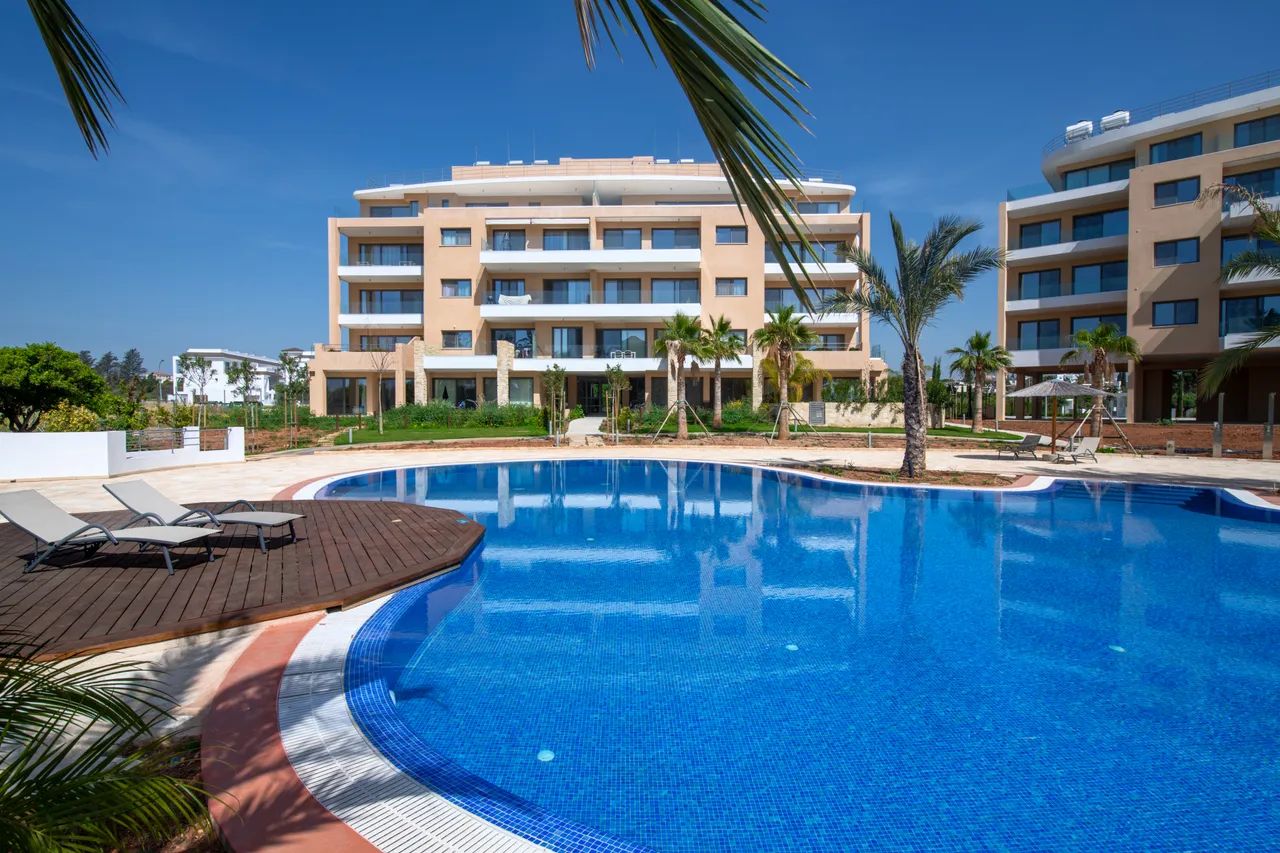
New-build projects in Limassol and Paphos to check against the investor criteria
 Apartment
Limassol Park
Limassol · Trachoni
 Apartment
Skyline Apartments
Limassol · Agios Athanasios
 Apartment · Studio
Silicon Park
Limassol · Agios Athanasios
 Apartment · Penthouse
Keys
Limassol · Panthea
 Apartment · Penthouse · Studio
Nest
Limassol · Germasogeia Village
 Apartment · Studio
Upside
Limassol · Agios Athanasios
 Apartment · Penthouse
Coast View Residence
Paphos · Geroskipou
 Apartment · Penthouse
Bronte
Paphos · Kato Paphos
For the investor permit the Department states approximately two months from submission of the completed application. It states no time for Category F, 6 to 12 months for long-term resident status and six months for the MEU3 card. In the worked example of this guide, about 4 months pass between the signed contract and the card, with only the two-month examination backed by an official figure.
€500 for the application plus 4 × €70 for the registration certificates is €780, and the Land Registry charges €50 to deposit the sale contract, so €830. The permit to acquire property costs nothing. Adding a child later costs €50 plus €70.
Not on the pages I read. The Department says a rejected applicant receives a letter with the reasons, and it publishes no list of reasons and no refusal rate.
No. The floor is €50,000 + €15,000 + 2 × €10,000 = €85,000, so €70,000 is €15,000 short. The spouse's income counts towards the total, and the income must come from abroad and be proved by a tax return or an accountant's certificate.
No. The €300,000 is the net price before VAT. A unit sold at €300,000 including 19% VAT has a net price of €252,101, which is €47,899 below the threshold; at 19% VAT the total price must be at least €357,000, and at 5% it is €315,000.
Article 146 of the Constitution sets 75 days from the day the act came to your knowledge when it is not published. For a letter reaching you on 15 March 2027, day 75 is Saturday 29 May 2027, and an extension for the weekend is not confirmed.
The Department says the letter states the reasons. Law 158(I)/1999 requires adverse discretionary decisions to be adequately reasoned and says general wording or a general appeal to the public interest is not enough.
The Department's pages do not say. They state that the €500 is charged when the application is submitted and give no refund or re-filing rule, so ask the Department or your lawyer before you pay again.
Sources, all read on 12 November 2026. Migration Department of the Republic of Cyprus (gov.cy/mip-md): Immigration Permits for Investors (criteria of the fourth revision, in force since 2 May 2023, with the clarifications, page posted 29 December 2025); Immigration Permits (categories A to F, fees, legal framework, posted 29 December 2025); the Regulation 6(2) required-documents checklist (a file dated 2023); acquisition and renewal of long-term resident status; permanent residence of third-country family members of EU citizens (MEU3); registration of EU citizens (MEU1); Document Ratification (19 December 2025); Public Service Instructions on appointments (19 December 2025); the FAQ pages on residence permits and on biometrics; and the announcements of 7 July 2025 (card renewal; parental consent), 29 January 2026 (methods of payment), 3 March 2026 (end of the transitional period), 11 March 2026 (revised forms), 25 June 2026 (medical examinations), 2 November 2026 (online payment) and 10 November 2026 (automated notifications). Ministry of Interior (gov.cy/moi): Purchasing Property. Department of Lands and Surveys: contract of sale page. Cyprus Police on gov.cy: Criminal Certificate Issuance. Ministry of Justice and Public Order: Apostille. CyLaw: the Constitution (articles 29 and 146), Law 158(I)/1999 (articles 26, 28, 35, 36 and 43) and the Aliens and Immigration Regulations of 1972 in their original text, all in Greek. European e-Justice portal: access to justice in Cyprus. Our guides on the cost of buying property, VAT and health insurance supply the purchase-side figures. Not confirmed on any official page: a processing time for Category F; the time for the filing appointment, the biometric step and the card; approval and refusal statistics; whether the medical tests apply to Regulation 6(2) files; how the Department treats an unstamped 2026 contract against its 2023 checklist; how VAT paid in instalments counts in the receipts; a refund or re-filing rule after a refusal; whether the 30-day and three-month rules apply to a permit application; and the duration of court proceedings. This guide is general information and not legal or immigration advice. Cyprus VIP Estates assists investors in choosing new developments; legal and immigration advice comes from licensed professionals.