
Guides/Visa & residence guides
Moving to Cyprus from Lebanon: Entry Visa, Residence Permits, the Lebanon-Cyprus Tax Treaty, Moving Money Out and Where Lebanese Citizens Live

A Lebanese passport holder needs a visa to enter Cyprus: Lebanon is on Part A of the visa-required list that the Cyprus government publishes, the Embassy in Beirut takes applications through VFS Global, the fee is US$100 (about €90) and only biometric passports are accepted from 1 September 2026. Living in Cyprus needs a residence permit: the pink slip (€24,000 a year of foreign income through a Cyprus bank account), Category F (€9,568 a year of secured income) or Category 6.2 (a new-build of at least €300,000 plus VAT and €50,000 of income), and for remote workers the digital nomad visa at €3,500 net a month. The Lebanon-Cyprus double tax treaty, signed on 18 February 2003 and in force since 14 April 2005, appears on both countries' official lists; it taxes a private pension only in the country where the pensioner is resident and caps the tax of the source country on dividends and interest at 5%. On money, Banque du Liban Circular 166 lets a holder of an old foreign-currency deposit draw US$600 a month from 1 December 2026, of which US$400 can leave Lebanon as an outgoing transfer, and Circular 150 makes free use of funds that arrived from abroad, outgoing transfers included, the condition of a bank exemption. The 2021 census counted 1,748 Lebanese citizens in Cyprus, 588 of them (33.6%) in Larnaca district (sources read on 13 November 2026).
Do Lebanese citizens need a visa for Cyprus? What the official visa lists say
The Cyprus government visas page on gov.cy says that holders of ordinary passports from the countries in Part B of the list of third countries whose nationals are exempt from a visa may enter the Republic without one. The list file attached to that page (Annex 1, uploaded to gov.cy in January 2026) puts Lebanon in Part A, the list of third countries whose nationals must hold a visa when crossing the external borders. A short-stay visa authorises a stay of up to 90 days within any 180-day period.
Some Lebanese citizens need no Cyprus visa for a short stay. The same page says that holders of a valid Schengen visa for two or more entries, and holders of national visas and residence permits issued by Schengen states, may enter Cyprus for up to 90 days in any 180 (Turkish and Azerbaijani citizens are excepted from that rule). The Embassy of Cyprus in Beirut adds that an agreement in force since 10 May 2008 exempts holders of diplomatic, special and service passports. A visa gives no automatic right of entry: border officers may check the purpose of the trip, and a traveller must be able to prove the money to cover the stay in Cyprus. Visas and residence permits issued by Cyprus are valid only for Cyprus until the Republic is fully integrated into the Schengen area, so a Cyprus visa gives no right to travel on within Schengen.
A visa covers a visit. Moving to live in Cyprus needs a residence permit, and for a visa applied for before a long-stay permit the page says the mission may ask for a ten-year bank guarantee for possible repatriation costs, issued in the name of the Director of the Migration Department, together with proof of employment or business and of means.
How a Lebanese citizen applies for a Cyprus visa: VFS Global, fees in US dollars and documents
The Embassy of the Republic of Cyprus in Lebanon (Yarzeh Pine Building, Baabda; the Ministry of Foreign Affairs lists the same address and gives the working hours as 07:30 to 15:00, Monday to Friday) sets out the procedure on its own visa page. The table gives its rules as read on 13 November 2026.
| Item | Rule on the Embassy of Cyprus in Lebanon visa page |
|---|---|
| Where to apply | Since 1 April 2026 through VFS Global on behalf of the Embassy; the appointment is booked through the link on the page. Passports are collected from the Visa Centre. |
| When to apply | Up to 6 months before the travel date and at least 15 calendar days before it. |
| Biometrics | Every applicant aged 12 and over appears in person at the Visa Centre. |
| Passport | From 1 September 2026 only biometric Lebanese passports are accepted for visa applications. The passport must be valid 3 months after the planned return, have 2 blank pages and have been issued within the last 10 years. A long-term Cyprus visa issued in a non-biometric passport stays valid if the traveller shows both the cancelled passport and the new biometric one. |
| Fee, payable in US dollars only | US$100 (about €90) for a single or multiple-entry visa; US$50 for children aged 6 to 12; free under 6. The gov.cy fee table also lists free visas for pupils and students who come to study. |
| Insurance | Travel medical insurance of at least €30,000 per applicant that covers repatriation, emergency care and hospital treatment. |
| Main documents | Application form in English; photo 3.5 × 4.5 cm; round-trip booking and proof of accommodation; proof of employment, business or pension (for an employee the letter, the last three payslips and registration with the CNSS, the National Social Security Fund); six months of stamped bank statements with the bank's terms on withdrawals; an extract of the family register (Ekhraj Kaid Aily) not older than six months. |
| Minors | A consent letter signed by both parents in front of a consular officer in Beirut or at the Visa Center; a minor who travels with both parents needs proof of the group booking and a school enrolment certificate. |
| Decision time | The gov.cy visas page says the decision usually takes 15 days and can take up to 45 days when the file needs a closer check. |
One more rule is specific to Lebanon. The Embassy states that holders of an Entry Permit (Form M.70, called the blue slip) issued by the Republic of Cyprus are allowed to board their flight only with the original document; photocopies, scans and emailed copies are not accepted for departure from Lebanon.
Residence permits for Lebanese citizens in Cyprus: pink slip, Category F, Category 6.2 and the digital nomad visa
A Lebanese citizen is a third-country national in Cyprus, so the permits below are the routes for someone who plans to live there. The pink slip and Category 6.2 figures are those in our guides, which read the Migration Department's checklists. The Category F figures and the digital nomad row I read on the Department's own pages (Immigration Permits, posted 29 December 2025; Digital nomads and family members, posted 31 December 2025).
| Permit | Income or investment test | Validity | Work in Cyprus |
|---|---|---|---|
| Pink slip (visitor's temporary residence permit) | Foreign remittances of at least €2,000 a month, €24,000 a year, into a Cyprus bank account in your name, plus 20% for a spouse and 15% for each child | One year, renewable | No economic activity |
| Category F (immigration permit) | Secured annual income from abroad of at least €9,568 for the applicant and €4,613 for every dependant | Unlimited; ceases after two years' absence from Cyprus | No business, trade or profession |
| Category 6.2 (permanent residence by investment) | A qualifying investment of at least €300,000, most commonly a new-build plus VAT, and secure income from abroad of at least €50,000, plus €15,000 for a spouse and €10,000 for each dependent child | Unlimited; ceases after two years' absence from Cyprus | No salaried employment |
| Digital nomad visa (temporary residence permit) | Stable net income of at least €3,500 a month after contributions and taxes; cap of 500 permits | One year, renewable for up to two further years | Only for an employer or clients located abroad; family members may not work |
The pink slip needs the Cyprus bank account first and is examined, according to the Department, usually within four months. Category F has the lowest published income floor and no stated processing time, and the Department's page says the income may include pensions, dividends and fixed-deposit interest. Category 6.2 grants permanent residence, which is separate from citizenship. For Category F and Category 6.2 the Migration Department says only that the permit ceases after an absence from Cyprus of two years.
The digital nomad page adds the practical details. The first permit is for one year and a renewal is issued for up to two years; the fee is €70 for the permit and €70 for the first registration in the Aliens' Registry; the Department states an examination time of 5 to 7 weeks; the application is filed in Nicosia within three months of arrival; and a spouse or civil-union partner and underage children need their own temporary residence permit. The page names the €3,500 as the applicant's requirement and states no uplift for family members. Our digital nomad guide covers the documents and costs.
Two other routes appear here only as pointers. A Lebanese citizen who comes to study files with proof of enrolment and means (the Embassy's list names both, and the gov.cy fee table waives the visa fee for pupils and students). Categories D and E of the Immigration Permit cover a qualified self-employed professional and a person who has been offered permanent employment in Cyprus; this guide does not cover them.
Lebanese citizens with a second EU passport register in Cyprus as EU citizens
EU, EEA and Swiss citizens do not use the permits above. The Cyprus visas page says citizens of all EU member states, and of Switzerland, Iceland, Liechtenstein and Norway, enter Cyprus with an identity card that bears a photo, and they register with the Migration Department under the MEU1 procedure that our yellow slip guide describes. A Lebanese citizen who also holds an EU passport can therefore use the EU route and the permit income tests do not apply. The census table below follows the same split: a person with a Cypriot or another EU citizenship in addition to the Lebanese one is counted in the Cypriot or EU rows, outside the Lebanese count.
Is there a tax treaty between Lebanon and Cyprus? What both official lists and the treaty text say
Both countries' finance ministries list a Lebanon-Cyprus convention. The Cyprus Ministry of Finance page “Double Tax Treaties” (posted 27 June 2024, 72 entries, read on 13 November 2026) shows entry 38, Lebanon, with the date of signature 18 February 2003, entry into force 14 April 2005 and publication in the Official Gazette of the Republic of Cyprus on 8 April 2005. The Ministry's companion page with the treaty texts (posted 25 October 2024) links a file for Lebanon labelled EL (Greek), which I could not read. On the Lebanese side, the Ministry of Finance page “Tax Conventions” (a matrix stated as of 24 December 2010) lists Cyprus as signed on 18 February 2003, ratified on 20 October 2003 by Law No. 530 (Official Gazette No. 48 of 22 October 2003) and enforced on 14 April 2005. The investment agency IDAL's table “Double Taxation Treaties” (2019 edition) shows the same three dates, and neither list shows a protocol or amendment for Cyprus.
The English text is on the Lebanese Ministry of Finance site (“Convention between the Lebanese Republic and the Republic of Cyprus for the avoidance of double taxation and the prevention of fiscal evasion with respect to taxes on income and on capital”, done in English at Beirut on 18 February 2003). It is a scanned file, so check any figure you rely on against the signed original. The articles that matter to a Lebanese family moving to Cyprus are these.
| Article | Subject | What the text says |
|---|---|---|
| 4 | Resident | A resident is a person liable to tax by reason of domicile, residence, place of management or a similar criterion, and the term excludes a person liable to tax in a state only on income from sources in that state. An individual resident in both states is resident where a permanent home is available; if a home is available in both, where the personal and economic ties are closer; then where there is a habitual abode; then of the state of which the person is a national; if still open, the two competent authorities settle it. |
| 6, 13(1), 21(1) | Immovable property | Income, gains and capital from immovable property may be taxed in the state where the property is. |
| 10 | Dividends | Taxable in the recipient's state of residence; the state of the paying company may also tax them, up to 5% of the gross amount where the recipient is the beneficial owner. |
| 11 | Interest | Taxable in the recipient's state; the source state may tax it up to 5% of the gross amount for the beneficial owner; interest owned by a government or its institutions is exempt in the source state. |
| 12 | Royalties | Taxable only in the beneficial owner's state of residence. |
| 13(4) | Other gains | Gains on property other than immovable and business property are taxable only in the seller's state of residence. |
| 14 | Employment | Taxable in the state where the work is done; taxable only in the home state if the stay is 183 days or less in any 12 months, the employer is not a resident of the work state and the pay is not borne by a permanent establishment there. |
| 17 | Pensions | Private pensions for past employment are taxable only in the state of residence; pensions paid under a state's social security legislation are taxable only in that paying state. |
| 19 | Students | Remittances from abroad for the maintenance, education or training of a student are not taxed in the host state for 7 years; pay for related work is not taxed for 2 years. |
| 22 | Relief | Lebanon credits the Cyprus tax paid, up to the Lebanese tax on that income; Cyprus credits the Lebanese tax paid, subject to Cyprus law and up to the Cyprus tax on that income. |
| 25 | Exchange of information | The tax authorities exchange the information needed to apply the treaty and the domestic laws. |
The treaty has two consequences for a mover. When both countries could claim a person as resident, Article 4 supplies the tie-breaker described in the next section. And the 5% ceilings on dividends and interest and the zero rate on royalties at source are the rates that apply to a resident of the other state, which is the position of a Lebanese family that has moved to Cyprus and still receives income from Lebanon. Cyprus rates on dividends and interest for residents are in our Cyprus tax for individuals guide.
Worked example: a pension from Lebanon taxed in Cyprus
The assumptions: a retiree is tax resident in Cyprus and, under Article 4, resident there for the treaty; the only income is a private pension from a former employer's fund in Lebanon of US$36,000 a year; the rate is the European Central Bank reference rate of EUR 1 = USD 1.1081 on 12 November 2026, so the pension is €32,488; contributions and allowances are ignored. Under Article 17 the pension is taxable only in Cyprus. Cyprus offers two ways to tax a foreign pension, set out in our tax guide: the normal 2026 bands, or an election for a flat 5% on the part above €5,000.
| Step | Normal bands | 5% election |
|---|---|---|
| Pension in euros | US$36,000 ÷ 1.1081 = €32,488 | €32,488 |
| Income tax | 0% × €22,000 + 20% × €10,000 + 25% × €488 = €2,122 | 5% × (€32,488 − €5,000) = €1,374 |
| GHS contribution at 2.65% | 2.65% × €32,488 = €861 | €861 |
| Total tax | €2,983 | €2,235 |
| Left of the pension | €29,505 | €30,253 |
On those inputs the election saves €748 a year. The treaty taxes the pension only in Cyprus; whether Lebanon applies the treaty as the text reads, and whether the person counts as a resident of Lebanon for the treaty at all, are questions for the Lebanese tax authority, as the next section shows.
Lebanese tax residency and Cyprus tax residency: which country counts a Lebanese family as resident
I could not open the Lebanese statute on an official page. PwC's Worldwide Tax Summaries for Lebanon (reviewed 1 July 2026; a firm's summary) states that, under Law No. 60 of 3 November 2016 amending Law No. 44, an individual is tax resident in Lebanon who has a place of business in Lebanon, or has a house in Lebanon permanently available to the family (the spouse and dependent children), or is present for more than 183 days in any 12-month period, with days spent in transit at Beirut airport and days spent only for medical treatment not counted. The same summary describes the tax on salaries as territorial: it is due if the recipient is resident in Lebanon, if the work is done in Lebanon, or if the funding source is in Lebanon. On that summary, a family that keeps a home in Lebanon available to it can count as resident in Lebanon even with fewer than 183 days there.
Cyprus applies its own test. You are tax resident for a calendar year if you are in Cyprus for more than 183 days in that year, or if you meet the 60-day rule (at least 60 days in Cyprus, no more than 183 days in any other single state, a business, employment or directorship in Cyprus and a permanent home there); since 1 January 2026 the 60-day rule has dropped the condition that you are tax resident in no other country. The Migration Department's digital nomad page words the 183-day consequence “provided they are not tax residents in any other country”, whereas our tax residency guide reads the Income Tax Law's 183-day test as resting on presence alone; confirm which applies with a Cyprus tax adviser.
When both countries claim a person, the treaty's Article 4 decides, in this order.
| Step | Test in Article 4(2) | Moves to the next step when |
|---|---|---|
| 1 | The state where a permanent home is available to the individual | A permanent home is available in both states |
| 2 | The state with which personal and economic relations are closer (centre of vital interests) | The centre cannot be determined, or no permanent home exists in either state |
| 3 | The state of habitual abode | There is a habitual abode in both states or in neither |
| 4 | The state of which the person is a national | The person is a national of both states or of neither; the competent authorities then settle it by agreement |
An illustration with assumed facts: a family spends 230 days of 2027 in Cyprus and 135 days in Lebanon (230 + 135 = 365), rents a home in Cyprus and keeps its Lebanese apartment available. Cyprus counts the family as resident (230 is more than 183). On the PwC summary Lebanon counts it as resident too, because the house is permanently available. Step 1 finds a permanent home in both states, so step 2 weighs where the family's personal and economic ties are closer, which the treaty does not reduce to a count of days. If step 2 cannot decide, step 3 looks at the habitual abode, where 230 days against 135 point to Cyprus. Step 4 is reached only if the habitual abode is in both states or in neither, and then Lebanese nationality makes Lebanon the state of residence. The example is a reading of the text, and a tax adviser in each country should confirm a real case.
Moving money from Lebanon to Cyprus: what the Banque du Liban circulars and Lebanese law say
The Banque du Liban (BDL) publishes its basic circulars on bdl.gov.lb; the list I opened on 13 November 2026 shows 186. The circulars on foreign-currency deposits sit under the category “Exceptional measures” and are addressed to banks. I found no statute on an official page that sets a general limit on what a person may send abroad, and the circulars regulate what banks may pay or transfer. Where nothing official was found I say so below. The table lists the texts that bear on a move.
| Text | What it says |
|---|---|
| Circular 150 (Decision 13217, 9 April 2020) | Banks are exempt from mandatory placements against funds transferred from abroad or received as foreign-currency banknotes after 9 April 2020, on condition that the owner can freely use the funds, including outgoing cross-border transfers, cash withdrawals and bank cards in Lebanon and abroad, subject to the general terms of dealing with banks and applicable laws. |
| Circular 165 (Decision 13548, 19 April 2023, definition amended 21 January 2026) | Defines Fresh Money as funds transferred from abroad or received as foreign-currency banknotes after 17 October 2019, and sets electronic settlement for it. The cut-off date differs from Circular 150 (17 October 2019 against 9 April 2020), so ask the bank which date it applies to your funds. |
| Circular 169 (Decision 13729, 1 July 2025) | Banks are asked not to repay, without the BDL's prior written approval, amounts above the ceilings in BDL texts from foreign-currency accounts constituted before 17 October 2019. |
| Circular 158 (Decision 13335, 8 June 2021), as amended by Intermediate Circular 780 of 3 November 2026 | Foreign-currency accounts held before 31 October 2019, for resident and non-resident holders. From 1 December 2026: US$1,200 a month, of which US$800 is paid in cash, by outgoing international transfer, by card or into a fresh account and US$400 by card at points of sale; annual ceiling US$14,400 (US$13,400 in the cycle ending 30 June 2027). |
| Circular 166 (Decision 13611, 2 February 2024), as amended by Intermediate Circular 781 of 3 November 2026 | Foreign-currency deposits constituted before 30 June 2023 and not covered by Circular 158. Up to US$15,900 is moved to a Special Sub-Account. From 1 December 2026: US$600 a month, of which US$400 in cash, by outgoing transfer, by card or into a fresh account and US$200 by card at points of sale; annual ceiling US$7,200 (US$6,700 in the cycle ending 30 June 2027). The holder waives banking secrecy toward the BDL and the Banking Control Commission on that account. |
| Circular 172 (Decision 13798, 21 January 2026) and Circular 3 (Decision 13769, 14 November 2025) | A bank has the customer complete a Cash Transaction Slip for cash deposits of US$10,000 or more a day; exchange institutions and other non-bank institutions apply KYC checks to cash transactions of US$1,000 or more. |
| Law No. 42 of 24 November 2015 | Anyone carrying cash or bearer instruments of more than US$15,000 into or out of Lebanon declares it in writing to Customs; Customs may search and seize, and a false or missing declaration is fined up to LBP 10 million without excluding criminal prosecution. |
| EU cash controls (European Commission) | A traveller entering or leaving the EU with €10,000 or more in cash declares it to customs. |
Four cautions apply. First, Intermediate Circulars 780 and 781 exist on the BDL site in Arabic only, and I read the Arabic texts; the English consolidated versions of Circulars 158 and 166 on the site carry a note that they do not include those amendments, and the English text of Circular 166 still shows US$500 a month and US$6,000 a year. Second, the amended decisions run to 30 June 2027 and the BDL may modify or renew them. Third, I opened no official page that states what a particular bank applies to a transfer of fresh money; Circular 150 sets the condition for free use, and each bank also applies its own checks. Fourth, the BDL's daily exchange-rate file of 12 November 2026 shows US$1 = LBP 89,500 and €1 = LBP 99,318.15, which is the rate used for Lebanese pounds in this guide.
For a permit the route of the money matters. The pink slip checklist counts foreign remittances in the applicant's own name into a Cyprus bank account, and it does not count transfers abroad or to third parties. The checklist names bank deposits abroad among the accepted sources, but it does not say whether instalments drawn under a BDL circular count as remittances, so ask your Cyprus lawyer before you plan around them. The worked example below shows how small the monthly amounts are against the income tests.
A Cyprus bank account for Lebanese citizens: enhanced checks and the documents banks ask for
Two official lists place Lebanon under scrutiny, and they ask different things of a Cyprus bank. The European Commission's list of high-risk third countries, adopted under Delegated Regulation (EU) 2016/1675 as amended (the page was last updated on 9 January 2026), names Lebanon with an entry-into-force date of 5 August 2025, and the page says banks must carefully consider business relationships and transactions that involve a listed country through the increased checks of Article 18a of Directive (EU) 2018/843. The Financial Action Task Force statement “Jurisdictions under Increased Monitoring” of 30 October 2026 also lists Lebanon; it states that the FATF does not call for enhanced due diligence on those jurisdictions, and that its standards call for a risk-based approach and do not envisage cutting off entire classes of customers. In practice a Lebanese applicant should expect questions about the source of funds.
A consumer who is legally resident in the EU has a right to a payment account with basic features under the Payment Accounts Directive; a Lebanese resident who lives outside the EU has no such claim and the bank decides under its own policy, as our bank account guide explains. The banks ask for a certified copy of the passport, proof of address no older than six months, a bank reference from your own bank, the source of income and wealth with the expected annual payments, and a tax self-certification listing every country of tax residence with its tax identification number. The Embassy's visa page asks for bank statements stamped by the bank, which is also a useful habit for a later account application: ask your Lebanese bank for stamped statements that cover the months in question and state the withdrawal terms. I found no official list of the documents a Cyprus bank accepts as proof of the source of funds for a Lebanese customer.
Healthcare and social insurance for Lebanese citizens living in Cyprus
The public scheme in Cyprus is GeSY. A non-EU citizen needs ordinary residence and a permanent residence permit or the right to equal treatment in social insurance; a pink slip alone does not open it, so a pink slip holder keeps the private cover the permit asks for, while a Category F or Category 6.2 holder can register once habitual residence is shown. An employee pays 2.65% of gross pay, at most €4,770 a year. The GeSY guide has the register steps and the copayments.
Cyprus has no social security agreement with Lebanon on the Social Insurance Services page “Bilateral Agreements” (last modified 12 November 2026), which names 14 countries (the United Kingdom, Greece, Egypt, Canada, Quebec, Australia, Austria, Slovakia, Switzerland, the Czech Republic, the Netherlands, Bulgaria, Serbia and Syria). PwC's Lebanon summary names Belgium, France, Italy and the United Kingdom as countries with which Lebanon has a totalisation agreement, and Cyprus is not among them. Contribution periods in Lebanon's National Social Security Fund therefore do not add up with Cyprus periods under an agreement. I found no official Lebanese page on how the NSSF treats a member who moves abroad, so ask the NSSF directly before you stop contributing.
Where Lebanese citizens live in Cyprus: the 2021 census by district
The Statistical Service of Cyprus (CYSTAT) counted people with their usual residence in the government-controlled areas on 1 October 2021. Its table of the population by country of citizenship, sex and district (table 1891221E, updated 9 August 2024) names Lebanon among the non-EU nationalities: 1,748 Lebanese citizens out of 923,381 residents, or 1.89 per 1,000, which is 1.6% of the 107,168 non-EU citizens and the 13th largest of the 33 non-EU nationalities the table names. Of the 1,748, 1,030 (58.9%) were men and 718 (41.1%) women.
| District | Lebanese citizens | Share of all Lebanese citizens | Lebanese citizens per 1,000 residents | District share of Cyprus population |
|---|---|---|---|---|
| Larnaca | 588 | 33.6% | 3.77 | 16.9% |
| Nicosia | 557 | 31.9% | 1.59 | 37.9% |
| Limassol | 435 | 24.9% | 1.66 | 28.4% |
| Paphos | 115 | 6.6% | 1.14 | 10.9% |
| Famagusta (government-controlled area) | 53 | 3.0% | 0.98 | 5.9% |
| Total | 1,748 | 100% | 1.89 | 100% |
The shares come from the census table and the arithmetic is mine: Larnaca holds 588 ÷ 1,748 = 33.6% of the Lebanese citizens while it holds 155,765 ÷ 923,381 = 16.9% of the population, so Lebanese citizens are 33.6 ÷ 16.9 = 2.0 times over-represented there, and Nicosia, the largest district, has 31.9% of them against 37.9% of residents. Three limits apply. The census counts usual residents on one date, so a person who spends part of the year in Cyprus is outside it. A person with Cypriot citizenship is counted among Cypriots and a person with an EU and a non-EU citizenship among EU citizens. And I found no later official district count, so the table is a 2021 picture.
Schools for Lebanese children in Cyprus: what the Ministry of Education lists approve
Public schools in Cyprus are free for legal residents and teach in Greek, as our guide to moving with school-age children explains. The Ministry of Education, Sport and Youth publishes lists of approved private schools with the language of teaching; I opened the primary and secondary lists, which carry the date 12 November 2026.
| List | Schools | Languages of teaching | By district |
|---|---|---|---|
| Approved private primary schools | 43 | 34 English, 5 Greek, 2 French, 2 Russian | Nicosia 14, Limassol 20, Larnaca 4, Famagusta 1, Paphos 4 |
| Approved private secondary schools | 40 | 29 English, 1 English and Greek, 6 Greek, 1 French and Greek, 1 French and Italian, 2 Russian | Nicosia 15, Limassol 16, Larnaca 3, Famagusta 2, Paphos 4 |
Three facts follow from the lists. None of the approved primary, secondary or pre-primary schools names Arabic as a language of teaching, so a family that wants Arabic lessons for a child has to look at supplementary classes, which I found no official page on. The French-language options are the Franco-Cypriot School in Nicosia (primary and secondary) and its Limassol branch for primary pupils. And Larnaca district, where the census found the most Lebanese citizens, has 4 approved private primary schools and 3 secondary schools, all teaching in English. Limassol has the most approved private schools (20 primary and 16 secondary), and our guide to private schools in Limassol compares them. A child under 18 is added to a permit as a dependant, with the income uplift shown in the permit table above.
Worked example: a Lebanese family of four planning a move to Cyprus
First the permit income test. The assumptions: two parents and two children aged 8 and 15; the family can remit US$40,000 a year of income from outside Lebanon into a Cyprus account in the applicant's name; the rate is the European Central Bank reference rate of EUR 1 = USD 1.1081 on 12 November 2026; Lebanese pounds are converted at the BDL rate of LBP 89,500 to the dollar on the same day. Rates move, so every dollar and pound figure is a snapshot.
| Permit | Euro requirement for the family | US dollars a year | US dollars a month | LBP million a month | Against US$40,000 a year |
|---|---|---|---|---|---|
| Pink slip | €24,000 × (1 + 0.20 + 2 × 0.15) = €36,000 | US$39,892 | US$3,324 | 297.5 | Met, US$108 above the floor |
| Category F | €9,568 + 3 × €4,613 = €23,407 | US$25,937 | US$2,161 | 193.4 | Met, 1.54 times the floor |
| Digital nomad visa | €3,500 × 12 = €42,000 net for the applicant | US$46,540 | US$3,878 | 347.1 | Short by US$6,540 a year |
| Category 6.2 | €50,000 + €15,000 + 2 × €10,000 = €85,000, and an investment of at least €300,000 plus VAT | US$94,189 | US$7,849 | 702.5 | Short by US$54,189 a year |
On those inputs the family qualifies for the pink slip and for Category F. The pink slip margin is thin: US$40,000 ÷ US$39,892 is 1.003, and at a rate of EUR 1 = USD 1.1111 (US$40,000 ÷ €36,000) the dollar income only equals the floor. The Category 6.2 investment adds €300,000 plus 19% VAT of €57,000, which is €357,000 or US$395,592 before fees. The digital nomad figure is a net income and needs an employer or clients abroad, so US$40,000 would have to be net of tax and still falls short. The result is a ranking against the published floors; an approval depends on the documents, and the Department publishes no figure above the Category F floor.
The visa comes first. Under the Embassy's fee list the family pays US$100 + US$100 for the two adults, US$100 for the 15-year-old and US$50 for the 8-year-old, which is US$350 (€316 at EUR 1 = USD 1.1081), plus travel medical insurance of at least €30,000 for each of the four applicants. The three applicants aged 12 and over, the two parents and the 15-year-old, appear in person at the Visa Centre for biometrics.
Worked example: how much of a Lebanese family's dollar deposits can reach Cyprus in twelve months
The assumptions: the two parents each hold foreign-currency deposits in accounts opened before 31 October 2019, each at a different bank, each qualifying under Circular 158 and none of them an excluded person; the amended limits apply from 1 December 2026 for twelve months; the BDL changes nothing in that time; every month's allowance is drawn in full. Each parent can draw US$1,200 a month, of which US$800 can leave Lebanon as an outgoing transfer (the other US$400 is a card payment at points of sale), and the annual ceiling of 12 × US$1,200 = US$14,400 is reached exactly.
| Route | Outgoing-transfer amount per parent a year | Two parents a year | In euros at 1.1081 | Share of the family's pink slip floor (€36,000) | Share of the family's Category F floor (€23,407) |
|---|---|---|---|---|---|
| Circular 158 (US$800 a month) | 12 × US$800 = US$9,600 | US$19,200 | €17,327 | 48.1% | 74.0% |
| Circular 166 (US$400 a month) | 12 × US$400 = US$4,800 | US$9,600 | €8,663 | 24.1% | 37.0% |
Even at the higher Circular 158 amounts the two parents move €17,327 a year, which is under half of the pink slip floor and under three-quarters of the Category F floor. Under Circular 166 the total that can be moved into the Special Sub-Account is capped at US$15,900 per account holder, and with an annual ceiling of US$7,200 it takes 15,900 ÷ 7,200 = 2.2 years to draw. A family that depends on these allowances for its income test would therefore need other income from abroad. Income earned abroad and remitted straight to the Cyprus account does not pass through these ceilings, and that remittance is what the pink slip checklist counts.
Moving to Cyprus from Lebanon: questions Lebanese citizens ask
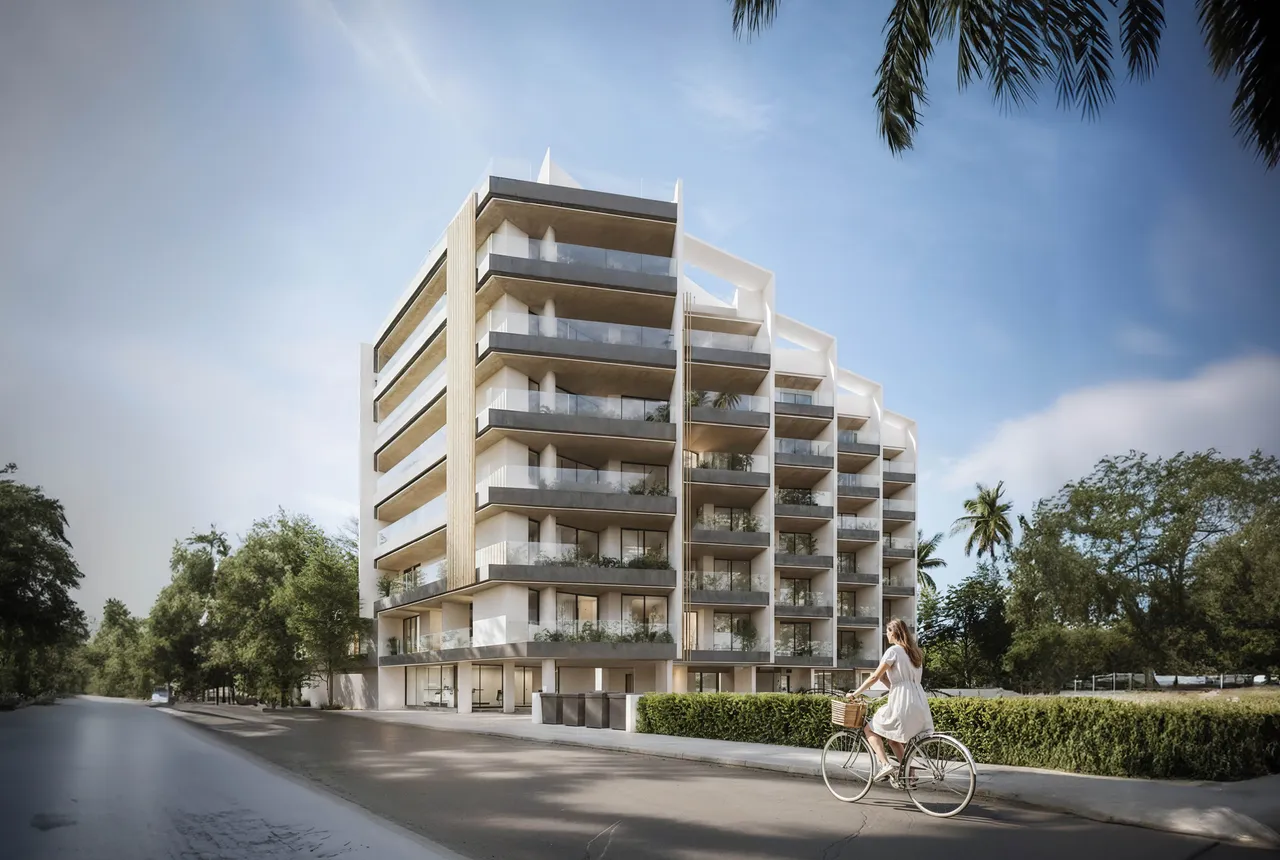
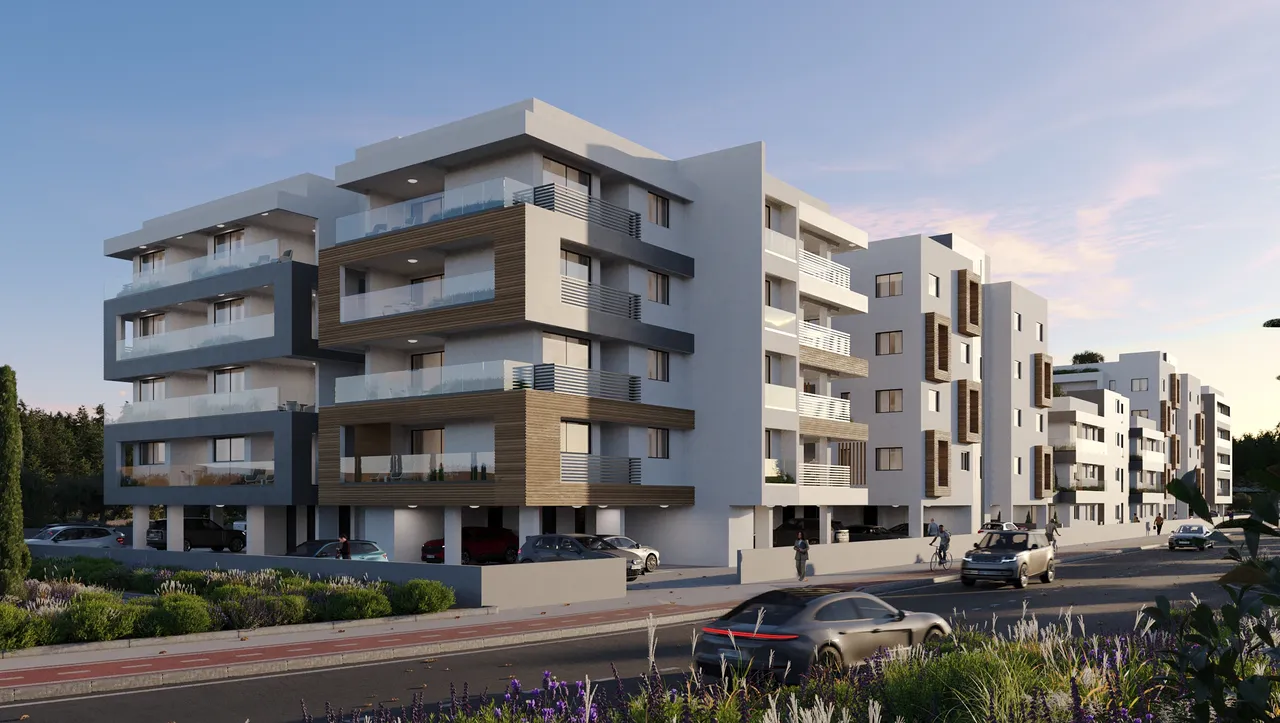
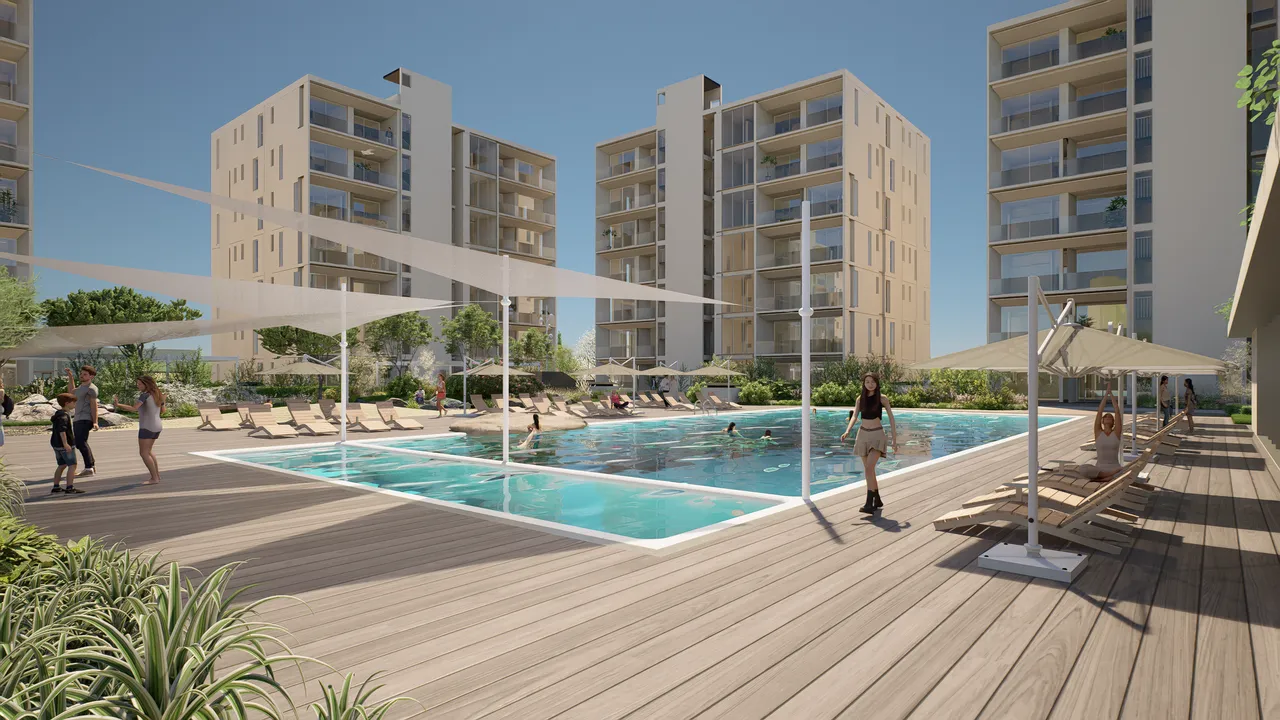
New-build apartments in Larnaca and Limassol for new residents: eight projects
 Studio · Apartment
Plus 82
Larnaca · Downtown
 Apartment
Plus 75
Larnaca · Kiti
 Apartment
Plus 57
Larnaca · Livadia
 Apartment
Carisa Melora Park
Larnaca · Livadia
 Apartment · Studio · Penthouse
Nest
Limassol · Germasogeia Village
 Apartment · Penthouse
GAIA Residences
Limassol · Potamos Germasogeias
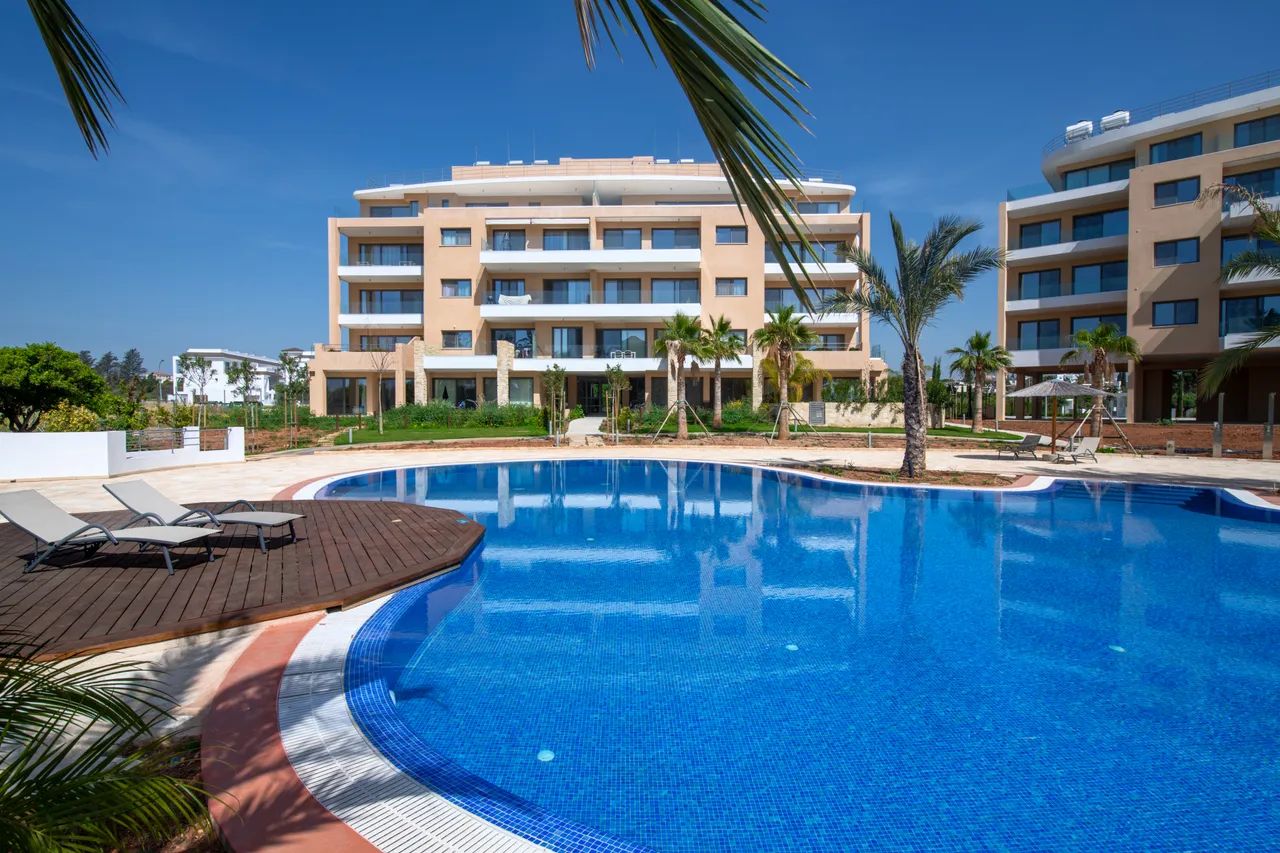 Apartment
Limassol Park
Limassol · Trachoni
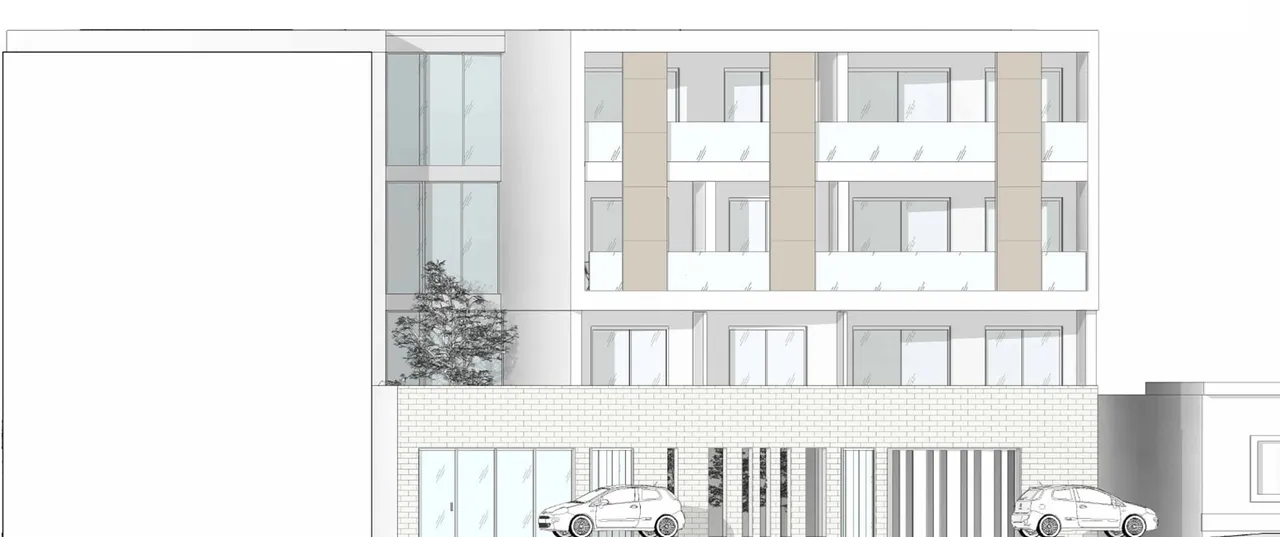 Apartment · Shop
Thalassa Residences 2
Limassol · City centre
Yes. Lebanon is in Part A of the list of countries whose nationals must hold a visa, on the Annex 1 file attached to the Cyprus government visas page. The Embassy in Beirut takes applications through VFS Global since 1 April 2026, and a valid multiple-entry Schengen visa or a Schengen national visa or residence permit allows up to 90 days in any 180 without a Cyprus visa.
US$350 in the worked example: US$100 for each of two adults, US$100 for a 15-year-old and US$50 for an 8-year-old (children aged 6 to 12 pay US$50, under 6 are free), paid in US dollars only. Each applicant also needs travel medical insurance of at least €30,000.
Category F: €9,568 + 3 × €4,613 = €23,407 a year, which is US$25,937 a year or US$2,161 a month at EUR 1 = USD 1.1081 on 12 November 2026. The pink slip asks €36,000 (US$39,892) for the same family.
Yes. The Cyprus Ministry of Finance list shows it as signed on 18 February 2003 and in force from 14 April 2005, and the Lebanese Ministry of Finance matrix lists the same convention, ratified under Law No. 530 of 2003. It caps source-state tax on dividends and interest at 5%, taxes royalties only in the state of residence and has a four-step residence tie-breaker in Article 4.
Under Article 17 only the state of residence. In the worked example a US$36,000 pension (€32,488) pays €2,983 in Cyprus on the normal bands including the GHS contribution, or €2,235 with the 5% election on the part above €5,000.
From 1 December 2026, up to US$800 a month under Circular 158 (accounts held before 31 October 2019) or US$400 a month under Circular 166 (deposits constituted before 30 June 2023), as cash, an outgoing transfer, a card or a deposit in a fresh account; the rest of the monthly allowance is a card payment at points of sale. Funds received from abroad as fresh money follow Circular 150, which requires free use including outgoing transfers.
Lebanese law requires a written declaration above US$15,000 (Law No. 42 of 2015) and EU rules require one at €10,000 or more on entering the EU, which is US$11,081 at 1.1081. A traveller with US$12,000 owes the EU declaration and no Lebanese one.
The 2021 census counted 1,748 Lebanese citizens: 588 in Larnaca district, 557 in Nicosia, 435 in Limassol, 115 in Paphos and 53 in the government-controlled part of Famagusta district. People with Cypriot or EU citizenship are counted in other groups.
Sources, all read on 13 November 2026. Cyprus government (gov.cy): Visas page and its Annex 1 list of third countries whose nationals must or need not hold a visa (file uploaded January 2026). Embassy of the Republic of Cyprus in Lebanon: Entry Visa page and home page (announcements on biometric passports, VFS Global and Form M.70); Ministry of Foreign Affairs of Cyprus: Embassies and Consulates by country, Lebanon. Migration Department of the Republic of Cyprus: Immigration Permits (posted 29 December 2025), Visitors and family members (posted 30 December 2025) and Digital nomads and family members (posted 31 December 2025); the pink slip and Category 6.2 figures come from our guides to those permits, which read the Department's checklists. Ministry of Finance of Cyprus: Double Tax Treaties (posted 27 June 2024) and Double Taxation Agreements, the treaty texts (posted 25 October 2024). Ministry of Finance of Lebanon: Tax Conventions (matrix as of 24 December 2010) and the convention text with Cyprus; IDAL: Double Taxation Treaties (2019). PwC Worldwide Tax Summaries, Lebanon: Residence, Taxes on personal income, and Foreign tax relief and tax treaties (all reviewed 1 July 2026). Banque du Liban: basic circulars 150, 158, 165, 166, 169, 172 and 3, intermediate circulars 780, 781 and 779 (the last two in Arabic), and the Daily Exchange Rates file (12 November 2026). Special Investigation Commission of Lebanon: Law No. 42 of 24 November 2015 on declaring the cross-border transportation of money. European Commission: cash controls (the rules) and the list of high-risk third countries (updated 9 January 2026). FATF: Jurisdictions under Increased Monitoring, 30 October 2026. European Central Bank: euro foreign exchange reference rates (12 November 2026). Social Insurance Services of Cyprus: Bilateral Agreements (modified 12 November 2026). Ministry of Education, Sport and Youth of Cyprus: lists of approved private primary, secondary and pre-primary schools (dated 12 November 2026). CYSTAT-DB: Census 2021, table 1891221E, population enumerated by country of citizenship, sex and district, 1 October 2021. Our own guides on the pink slip, Category F, Category 6.2, the digital nomad visa, the yellow slip, tax for individuals, tax residency, GeSY, bank accounts and private schools supply the permit figures and the Cyprus tax and health rules. Not confirmed on any official page that I could open: the Lebanese statute on tax residence (the PwC summary is used and attributed); the Cyprus Ministry's Greek-language treaty file (the English text comes from the Lebanese Ministry); how Lebanon applies the treaty or taxes people who leave; any official capital-control statute or any rule on what a given bank applies to fresh money; the English texts of Intermediate Circulars 780 and 781; whether instalments drawn under a BDL circular count as foreign remittances for a pink slip; the NSSF's treatment of members who move abroad; the amount of the pink slip bank guarantee for Lebanon; Arabic-language supplementary schooling; Category F processing time; and Lebanese citizens in Cyprus after 2021. This guide is general information and not tax, legal or immigration advice; a licensed adviser should confirm your own position. Cyprus VIP Estates assists investors in choosing new developments; legal and immigration advice comes from licensed professionals.