Guides/Life in Cyprus guides
Moving to Cyprus from New Zealand: Visa-Free Entry, Permits, Leaving NZ Tax Residency, KiwiSaver, NZ Super and the Missing Tax Treaty

A New Zealand citizen can enter Cyprus without a visa for up to 90 days as a bona fide visitor, according to the Cyprus Ministry of Foreign Affairs, and needs a permit to live there: the pink slip (€24,000 a year for one person, NZD 47,964), Category F (€9,568, NZD 19,122), Category 6.2 (a new-build of at least €300,000 plus VAT and €50,000 of income, NZD 99,925) or the digital nomad permit (€3,500 net a month, NZD 6,995). Neither Inland Revenue's list of 42 double tax agreements nor the Cyprus Ministry of Finance's list of 72 names the other country, so no treaty tie-breaker exists, and New Zealand tax residence ends only when Inland Revenue's own tests are met: no permanent place of abode in New Zealand and more than 325 days away in a 12-month period. KiwiSaver savings can be withdrawn once you have lived overseas for a year, without the government contributions; NZ Super continues only if you apply at least 6 weeks before you leave, and New Zealand has no social security agreement with Cyprus. A family that converts NZD 3,000,000 at the ECB reference rate of 17 November 2026 (EUR 1 = NZD 1.9985) holds €1,501,126, and a Category 6.2 family of four needs €85,000 of income, which is NZD 169,872. Sources were read on 18 November 2026.
Moving to Cyprus from New Zealand: 90 days visa-free, then a permit
The Cyprus Ministry of Foreign Affairs page "Categories of persons and countries whose nationals do not require a visa" (posted 9 June 2024) lists New Zealand among the countries whose nationals do not need a visa for a stay of up to 90 days, provided they are bona fide visitors. The page gives the 90 days without naming a rolling 180-day window, so ask the Migration Department how it counts repeated visits if you plan to come and go before applying. The same page exempts anyone who holds a permanent or temporary residence permit issued by the Migration Department, which is why a permit also settles entry for later trips.
Living in Cyprus is a separate matter from visiting. A New Zealander is a third-country national, so the stay beyond 90 days needs one of the permits in the next section, all issued by the Migration Department, which now sits under the Deputy Ministry of Migration and International Protection (its pages on gov.cy are headed Migration Department). New Zealand's Ministry of Foreign Affairs and Trade lists its embassy in Rome as the nearest New Zealand office on its SafeTravel page for Cyprus (updated 3 March 2026), advises New Zealanders living in Cyprus to carry comprehensive travel insurance that includes medical evacuation by air, and invites you to register your plans there.
New Zealand is 9 to 11 hours ahead of Cyprus, depending on the date. Computed from the IANA time-zone database for 2027, 09:00 in Cyprus on 15 January is 20:00 in New Zealand (11 hours), and 09:00 on 15 July is 18:00 (9 hours). A New Zealand working day of 9:00 to 17:00 falls between about 22:00 and 08:00 in Cyprus, so calls to Inland Revenue, Work and Income or a New Zealand bank are easiest in your early morning.
Which Cyprus residence permit fits a New Zealand citizen, with the income tests in NZD
The table converts each euro test at the ECB reference rate for 17 November 2026, EUR 1 = NZD 1.9985. The rate is an example; the NZD figure moves daily and the euro test is the fixed one.
| Permit | Income or capital test (euro) | Equivalent in NZD | Work in Cyprus | Validity |
|---|---|---|---|---|
| Pink slip (visitor's temporary residence permit) | €24,000 a year for one person (€2,000 a month) as remittances into a Cyprus bank account; 20% more for a spouse and 15% more for each child | NZD 47,964 for one person; NZD 57,557 for a couple (€28,800) | No economic activity | 1 year, renewable |
| Category F (secured income from abroad) | At least €9,568 a year for the applicant and €4,613 for each dependant | NZD 19,122 for the applicant; NZD 9,219 per dependant | No business, trade or profession | Ceases after two years' absence from Cyprus |
| Category 6.2 (permanent residence with a purchase) | A first-sale home of at least €300,000 plus VAT, and at least €50,000 a year of income, plus €15,000 for a spouse and €10,000 for each minor child | NZD 599,550 before VAT; NZD 99,925 of income for the applicant | No salaried employment | Ceases after two years' absence from Cyprus |
| Digital nomad permit | Net income of at least €3,500 a month after taxes and contributions, from an employer or clients outside Cyprus; 20% more for a spouse or partner and 15% more for each child (checklist). A couple with two children: €5,250 a month, NZD 10,492 | NZD 6,995 a month; NZD 83,937 a year | Remote work for foreign employers or clients only | 1 year, renewal up to two years; cap of 500 permits |
The Category F and Category 6.2 figures are from the Migration Department's pages on immigration permits and immigration permits for investors (both posted 29 December 2025). The digital nomad figures are from its page "Digital nomads and family members" (posted 31 December 2025), which gives a fee of €70 for issue or renewal, €70 for registration in the Aliens' Registry, an application within 3 months of arrival and an examination time of 5 to 7 weeks; it states the €3,500 test for the applicant; the department's accompanying-documents checklist for the permit (version of 19 March 2025) adds that the amount is increased by 20% for a spouse or partner and by 15% for each child. The pink slip figure is the one in the application checklist described in our pink slip guide; The Migration Department's supporting-documents checklist for the visitor permit states the same test: foreign remittances of €2,000 a month or €24,000 a year for one person, increased by 20% for a spouse and 15% for each child, and during the first permit a cash deposit of at least €10,000 is also accepted.
Category 6.2 is the route that ties residence to a purchase, and our Category 6.2 guide and Category F guide set out the documents and the process. A New Zealander is a non-EU buyer, so the property side carries its own permission rules, summarised in our guide to how many properties a non-EU buyer can own.
Is there a New Zealand–Cyprus tax treaty? What both official lists show
Both governments publish a list of their double tax agreements. Neither list names the other country.
| Source | What the page shows | Result for New Zealand and Cyprus |
|---|---|---|
| Inland Revenue Tax Policy, "Tax treaties" (no posting date shown) | 42 double tax agreements and protocols in force, listed from Australia to Viet Nam | No Cyprus entry; the list runs from Croatia to the Czech Republic. Signed but not in force: Belgium (2nd protocol), Iceland, United Kingdom. Under negotiation: Australia, Fiji, Germany, Hungary, Luxembourg, Netherlands, Portugal, Slovenia, South Korea. None is Cyprus |
| Inland Revenue, tax information exchange agreements (same page) | 19 TIEAs in force, from Anguilla to Vanuatu | No Cyprus entry |
| Cyprus Ministry of Finance, "Double Tax Treaties" (posted 27 June 2024) | 72 numbered entries, from Andorra to Viet Nam (Viet Nam, signed on 15 December 2025, is last in alphabetical order; the list also shows a Sweden amending protocol signed on 3 July 2026, a Hong Kong agreement signed on 12 June 2026 and a new Kyrgyz Republic agreement signed on 8 June 2026) | No New Zealand entry; the list goes from the Netherlands to Norway |
| OECD, status of the Convention on Mutual Administrative Assistance in Tax Matters (1 September 2026) | Lists both countries as parties; entry into force for New Zealand 1 March 2014 and for Cyprus 1 April 2015 | Provides for exchange of tax information and does not allocate taxing rights between the two countries |
| Cyprus Gazette No. 3586 of November 1951 (CyLaw), Order in Council No. 2515, dated 5 November 1951 | Extends to the then colony of Cyprus a United Kingdom and New Zealand agreement on double taxation of income (notification of 12 June 1951), with an arrangement between New Zealand and Cyprus set out in its schedule | The text says it continues indefinitely unless a government gives notice of termination. No current official page I read says whether it survived Cyprus's independence, and neither modern list names it |
| A commercial tax-rate website | States a treaty with withholding rates of 15%, 10% and 10%, citing "OECD MLI default" and no treaty text | Conflicts with both official lists; not relied on |
The practical result is that no current treaty tie-breaker is confirmed. If Cyprus treats you as resident under its 183-day or 60-day rule while Inland Revenue still treats you as a New Zealand resident, each country can tax your worldwide income under its own law, and no treaty article decides which country comes first. Inland Revenue says that if you pay tax on the same income in two countries you will usually be eligible for a foreign tax credit. Cyprus's relief for tax paid in a country without a treaty, section 36 of the Income Tax Law, is read in our Australia guide, which has the same no-treaty position. Ask both tax departments about the 1951 arrangement before you rely on its absence, and ask a licensed tax adviser in each country which credit applies to your income.
The absence of a treaty also sets the rate on New Zealand income paid to you in Cyprus. Inland Revenue's page on non-resident withholding tax (last updated 29 June 2021) says that passive income sent to an area with no double tax agreement is deducted at 15% for interest and royalties and 30% for dividends. For certain interest, an approved issuer levy of 2% can be paid in place of the withholding tax. If you keep a New Zealand bank account or shares, Inland Revenue asks you to update your details and note that you are a non-resident taxpayer so that the payer deducts the right amount.
New Zealand tax residency when you move to Cyprus: Inland Revenue's 183-day and 325-day tests
Inland Revenue's page "Tax residency status for individuals" (last updated 25 June 2026) sets two ways to become a New Zealand tax resident, whichever happens first: more than 183 days in New Zealand in any 12-month period, or a permanent place of abode in New Zealand. It defines a permanent place of abode as a place where you usually live in New Zealand, even if you are not there all the time, and says you need not own it and it need not be vacant while you are away. Ties it lists include how often you return, how long you stay, family and social connections, economic interests such as investments or superannuation funds in New Zealand, employment or business connections and whether you intend to return to live in New Zealand.
A resident becomes a non-resident taxpayer only if both conditions hold: no permanent place of abode in New Zealand and more than 325 days away in any 12-month period. Parts of days in New Zealand, such as the day you leave, do not count as whole days towards the 325, the days need not run consecutively, and the status is backdated to the first of the 325 days. The page also says that a person sent overseas to work for the New Zealand government stays a New Zealand tax resident, and that a certificate of New Zealand tax residency can be requested in myIR. A home you keep available in New Zealand can therefore keep you resident, and this is the question a family with a house in Auckland or Queenstown should settle first.
Inland Revenue's page "Leaving New Zealand" lists the steps: work out whether your status has changed, check double tax agreements, finalise your tax position and update social policy programmes such as Working for Families. If you make a permanent move and have earned income, you can file an individual tax return (IR3) or ask for an income tax assessment before the end of the tax year, and you must tell Inland Revenue if your plans change and you return. Three details matter for families with investments. A portfolio investment entity treats you as a non-resident at a prescribed investor rate of 28% unless you become a notified foreign investor. A settlor of a trust who becomes a non-resident taxpayer may leave the trust as a non-complying trust if nothing is done, and Inland Revenue advises a tax professional before the status changes. Residential property in New Zealand sold on or after 1 July 2024 is taxed under the bright-line test when the end date is within 2 years of the start date, unless an exclusion applies.
On the Cyprus side, the 183-day rule is unchanged and from 1 January 2026 the 60-day rule has dropped its condition that you are a tax resident of no other country (Law 244(I)/2025). Both tests, the domicile rules behind non-dom status and the Cyprus tax rates are in our guides to tax residency in Cyprus and Cyprus non-dom status.
KiwiSaver, NZ Super and Inland Revenue rules for pensions and investments after you leave
KiwiSaver. Inland Revenue's page "Getting my KiwiSaver savings when I move overseas" (last updated 28 April 2021) says that after you have lived overseas, other than in Australia, for 1 year you can take most of your savings. You can withdraw your own contributions, your employer's contributions, the $1,000 kickstart if you received it, fee subsidies and the interest earned, and you cannot take out the government contributions. You can apply to your provider to transfer the savings to an approved foreign superannuation scheme that meets section 228(e) of the KiwiSaver Act 2006, and a move to Australia has its own transfer route to an Australian scheme. You are not required to withdraw anything, and the provider handles the application.
NZ Super. Work and Income's page on living overseas (updated 24 June 2026) says that if you get NZ Super or Veteran's Pension and plan to live overseas, you cannot keep the payments once you leave unless you apply and meet the criteria, and you must call International Services at least 6 weeks before you leave. Other payments, such as the Winter Energy Payment and the Accommodation Supplement, stop while you live overseas. A partner who is included in your payment loses it when you leave. The amount depends on the country: where New Zealand has a social security agreement or special arrangement, that agreement sets it, and for a country without one you may get your NZ Super depending on the months you lived in New Zealand between ages 20 and 65. Work and Income's list of social security agreements (updated 25 August 2026) names Australia, Canada, Denmark, Ireland, Jersey, Guernsey, Greece, Malta, the Netherlands, South Korea and the United Kingdom. Cyprus is not on it, so Cyprus is a country without an agreement for this purpose, and the months-in-New-Zealand rule applies. The page on trips of more than 26 weeks gives the full-residence rates as $595.57 gross a week for a single person and $492.14 for a person with a partner.
Inland Revenue says that if you become a tax resident of another country, NZ Super may be exempt in New Zealand but taxable in the other country, and that if you remain a New Zealand tax resident you still pay New Zealand tax on it. The table below turns both rules into numbers. Pension income is one of the income sources the Migration Department lists for Category F.
| Item | Calculation | Result |
|---|---|---|
| Assumption: KiwiSaver balance | NZD 240,000, of which NZD 14,000 are government contributions | Withdrawable after 1 year overseas: NZD 240,000 − NZD 14,000 = NZD 226,000 |
| In euro at EUR 1 = NZD 1.9985 | NZD 226,000 ÷ 1.9985 | €113,085 |
| Assumption: 30 years of New Zealand residence between ages 20 and 65 | 30 × 12 = 360 months of the 540 | 360 ÷ 540 = 66.7% of the full rate |
| NZ Super per week at the single full-residence rate | 360 ÷ 540 × $595.57 | NZD 397.05 gross a week |
| NZ Super per year | NZD 397.05 × 52 | NZD 20,646 gross, which is €10,331 at the same rate |
| Comparison with Category F | €10,331 against the €9,568 test for an applicant | The pension alone is €763 above the test, with no margin for a dependant (€4,613 each) |
The NZ Super lines use the pro-rata method of the Work and Income example (months lived in New Zealand divided by 540) and the single full rate from the 26-week page. Work and Income states the exact amount when you apply and the rates change, so the table is arithmetic on stated assumptions and does not quote an entitlement.
Sending NZD to Cyprus: reporting rules, the exchange rate and proof of funds
The Reserve Bank of New Zealand's history page says that the exchange controls it administered from 1938 were lifted on capital flows in 1984, and that the exchange rate was floated in the reforms that followed. I did not find a current New Zealand page that states a cap on sending money abroad. What the official pages do state is reporting.
| Rule | New Zealand | Cyprus |
|---|---|---|
| Cash carried by a traveller | Complete a Border Cash Report for NZD 10,000 or more in cash or foreign equivalent when leaving; the online form can be used within 72 hours of travel (New Zealand Customs; the page heading says "more than" and its text says "or more") | Declare €10,000 or more in cash, bearer-negotiable instruments, gold coins of at least 90% gold or bullion of at least 99.5% gold, in writing, to the customs officer on arrival or departure (Cyprus Customs) |
| Threshold in the other currency | €10,000 is NZD 19,985 | NZD 10,000 is €5,004 |
| International bank transfer | An international funds transfer of NZD 1,000 or more where one institution is in New Zealand and one abroad is a prescribed transaction reported by the bank (NZ Police Financial Intelligence Unit) | A Cyprus bank asks for the source of funds under its own checks; see our proof of funds guide |
| Penalty stated | Not stated on the page read | Prison up to three years or a fine up to €100,000, or both |
A bank transfer is the usual way to move purchase money, and it leaves a paper trail that a Cyprus lawyer and bank can read. Our guides to transferring large funds to Cyprus and anti-money-laundering checks and proof of funds cover the mechanics and the document packs, and opening a Cyprus bank account as a foreigner covers the account the pink slip test needs. Inland Revenue's Tax Policy page describes automatic exchange of account information under the Common Reporting Standard as part of New Zealand's international tax arrangements, so declare every tax residency you hold when a bank asks.
The exchange rate is the largest variable. The ECB reference rate is the one used in this guide because it is published each working day and carries a date; your bank's rate and fees will differ, and the foreign-exchange provider or bank decides what you actually receive.
Worked example: a New Zealand family's Category 6.2 income test and purchase in NZD
Assumptions: a couple with two children under 18 sell their New Zealand home for NZD 3,000,000 (an assumption, with no New Zealand tax computed), buy a first-sale home in Cyprus at €900,000 plus 19% VAT (an assumption; the reduced 5% rate applies only within size and value caps, set out in our VAT guide), pay a legal fee of 1% plus 19% VAT and about €300 of Land Registry charges (planning figures from our cost-of-buying guide), and convert at the ECB reference rate of 17 November 2026, EUR 1 = NZD 1.9985.
| Step | Calculation | Result |
|---|---|---|
| VAT on the purchase | €900,000 × 19% | €171,000, so €1,071,000 with VAT |
| Legal fee with VAT | 1% × €900,000 = €9,000, plus 19% VAT of €1,710 | €10,710 |
| Land Registry charges | Assumption | €300 |
| Total cash cost | €1,071,000 + €10,710 + €300 | €1,082,010 |
| Total in NZD | €1,082,010 × 1.9985 | NZD 2,162,397 |
| Sale proceeds in euro | NZD 3,000,000 ÷ 1.9985 | €1,501,126 |
| Left after the purchase | €1,501,126 − €1,082,010 | €419,116, which is NZD 837,603 |
| Rate test: NZD 5% weaker (EUR 1 = NZD 2.0984) | €1,082,010 × 2.0984 | NZD 2,270,517, which is NZD 108,120 more than at 1.9985 |
| Category 6.2 income test, couple and two minor children | €50,000 + €15,000 + 2 × €10,000 | €85,000 a year, which is NZD 169,872 at 1.9985 |
| Qualifying purchase | At least €300,000 plus VAT; €900,000 is first-sale | Meets the minimum with room for the VAT and fees |
The purchase clears the Category 6.2 minimum three times over, and the income test is a separate hurdle: the €85,000 has to come from abroad, and the Migration Department says it can be shown through a tax return declaration from the country where the applicant is tax resident. On the money side, the 5% currency move changes the cost of the same home by NZD 108,120, and no step in the arithmetic hedges it. A licensed adviser decides whether the sale proceeds carry New Zealand tax, which credit relief applies in Cyprus and whether the property qualifies for the reduced VAT rate.
A first-year timetable for New Zealanders: worked example from a 10 January 2027 departure
Assumptions: the family leaves New Zealand on 10 January 2027 and lands in Cyprus the next day, keeps no permanent place of abode in New Zealand, makes one 14-day visit to New Zealand from 1 to 14 July 2027, and counts those 14 days as days outside Cyprus. Counting follows Inland Revenue's rules: the departure day is a part day in New Zealand and does not count as an absent day, so the first absent day is 11 January.
| Date (assumed) | Event | Rule or source |
|---|---|---|
| 29 November 2026 | Last day to call Work and Income's International Services if you receive NZ Super (6 weeks before 10 January) | Work and Income, living overseas |
| Before 10 January 2027 | Send Inland Revenue a message in myIR, request an income tax assessment or file an IR3, update PIE and bank details | Inland Revenue, Leaving New Zealand |
| 10 January 2027 | Last day in New Zealand (a part day) | Does not count towards the 325 days |
| 11 January 2027 | First absent day; non-resident status, if the test is met, is backdated here | Inland Revenue, Tax residency status |
| 11 April 2027 | Latest date to file a digital nomad application (3 months of arrival), if on that route | Migration Department, digital nomads |
| 1 to 14 July 2027 | Visit to New Zealand: these days count as present in New Zealand | Visit days are excluded from the absent count |
| 27 July 2027 | 184th day in Cyprus under the stated assumption, so the Cyprus 183-day test is passed | Day counting is in our tax residency guide |
| 16 December 2027 | 326th absent day, so more than 325 days are met inside the window from 11 January 2027 | 11 January 2027 to 10 January 2028 is 365 days with 351 absent |
| 10 January 2028 | One year overseas: earliest KiwiSaver withdrawal request | Inland Revenue, KiwiSaver overseas page |
The 326th absent day is computed as follows. From 11 January 2027, absent days run until the visit starts on 1 July: 21 days in January, 28 in February, 31 in March, 30 in April, 31 in May and 30 in June, which is 171. The 14 visit days are excluded. From 15 July, 155 more absent days are needed to reach 326, and 155 days after 14 July is 16 December. Inside the 12-month window ending 10 January 2028 the family is absent 365 − 14 = 351 days. The test also needs the family to have no permanent place of abode in New Zealand throughout, and Inland Revenue decides that from the ties listed in the previous section.
A first look at neighbourhoods before you commit is easiest with a planned trip, and our viewing trip checklist is built for it.
Health cover for New Zealanders in Cyprus: no reciprocal agreement, GESY and private insurance
Health New Zealand's page on reciprocal health agreements says New Zealand has such agreements with Australia and the United Kingdom, and Cyprus is not one of them. New Zealand's public health funding therefore does not follow you to Cyprus. SafeTravel advises New Zealanders living in Cyprus to hold comprehensive insurance that includes air medical evacuation. In Cyprus, access to the public GESY system depends on your registration and status, and a pink slip applicant provides a health insurance certificate with the file, as our pink slip guide sets out. Our guides to GESY and health insurance in Cyprus explain how the two systems fit together.
Schools in Cyprus for New Zealand children: the calendar gap
New Zealand's school year starts in late January or early February and ends in mid-December, while Cyprus public schools start in September. The Ministry of Education's term dates for 2027 and the Cyprus Ministry's announcement for 2026-2027 show the offset.
| Calendar | Dates |
|---|---|
| New Zealand 2027, Term 1 | Starts between Thursday 28 January and Wednesday 3 February, ends Friday 9 April |
| New Zealand 2027, Term 2 | Tuesday 27 April to Friday 2 July |
| New Zealand 2027, Term 3 | Monday 19 July to Friday 24 September |
| New Zealand 2027, Term 4 | Monday 11 October to no later than Friday 17 December |
| Cyprus public secondary schools, 2026-2027 | Lessons begin Monday 7 September 2026 |
| Cyprus public primary schools, 2026-2027 | Lessons begin Monday 14 September 2026; primary pupils attend until the Wednesday before the penultimate Friday of June; the day runs from 7:45 to 13:05 |
A New Zealand child who moves in January 2027 therefore arrives in the middle of the Cyprus school year, about four months after it began. The Department of Primary Education divides the year into two quarters, the first running from the start of classes to the end of January, so a February start coincides with the start of the second quarter. An international school sets its own calendar and entry rules. The Cyprus Ministry's announcement is dated 21 August 2026; I found no 2026-2027 end-of-year date for secondary schools. Our guides to private schools in Limassol, schools in Paphos and moving to Cyprus with school-age children compare the options.
Where New Zealanders live in Cyprus: what the 2021 census shows
The Cyprus Statistical Service (CYSTAT) 2021 census tables break population down by citizenship (table 1891221E) and by country of birth (table 1891210E), and neither lists New Zealand separately. New Zealanders fall under "Other Countries": 3,146 citizens and 4,258 people born in countries not shown individually, a group that covers many nationalities. No district count for New Zealanders exists in those tables. The closest published comparison is the English-speaking countries that are listed.
| District | Population | Born in the UK | Born in the USA | Born in Australia | Born in Canada | Four countries combined | Share of the district |
|---|---|---|---|---|---|---|---|
| Limassol (Lemesos) | 262,157 | 5,768 | 415 | 395 | 237 | 6,815 | 2.6% |
| Nicosia (Lefkosia) | 350,035 | 3,574 | 630 | 377 | 276 | 4,857 | 1.4% |
| Larnaca (Larnaka) | 155,765 | 5,819 | 320 | 282 | 86 | 6,507 | 4.2% |
| Paphos (Pafos) | 101,106 | 9,862 | 146 | 155 | 79 | 10,242 | 10.1% |
| Famagusta (Ammochostos) | 54,318 | 2,963 | 39 | 39 | 28 | 3,069 | 5.7% |
| All Cyprus | 923,381 | 27,986 | 1,550 | 1,248 | 706 | 31,490 | 3.4% |
Paphos has the highest share of people born in these four English-speaking countries, 10.1% of its population, followed by Famagusta at 5.7%, Larnaca at 4.2%, Limassol at 2.6% and Nicosia at 1.4%. In counts, Paphos leads with 10,242, and Limassol and Larnaca are close to each other at 6,815 and 6,507. The census is from 1 October 2021, so today's pattern may differ. Our guide to the best areas to live in Cyprus as an expat compares the districts, and the page of off-plan properties in Cyprus lists new developments in each of them.
Moving to Cyprus from New Zealand: questions New Zealanders ask
New-build homes in Limassol and Paphos for relocating families
 Apartment
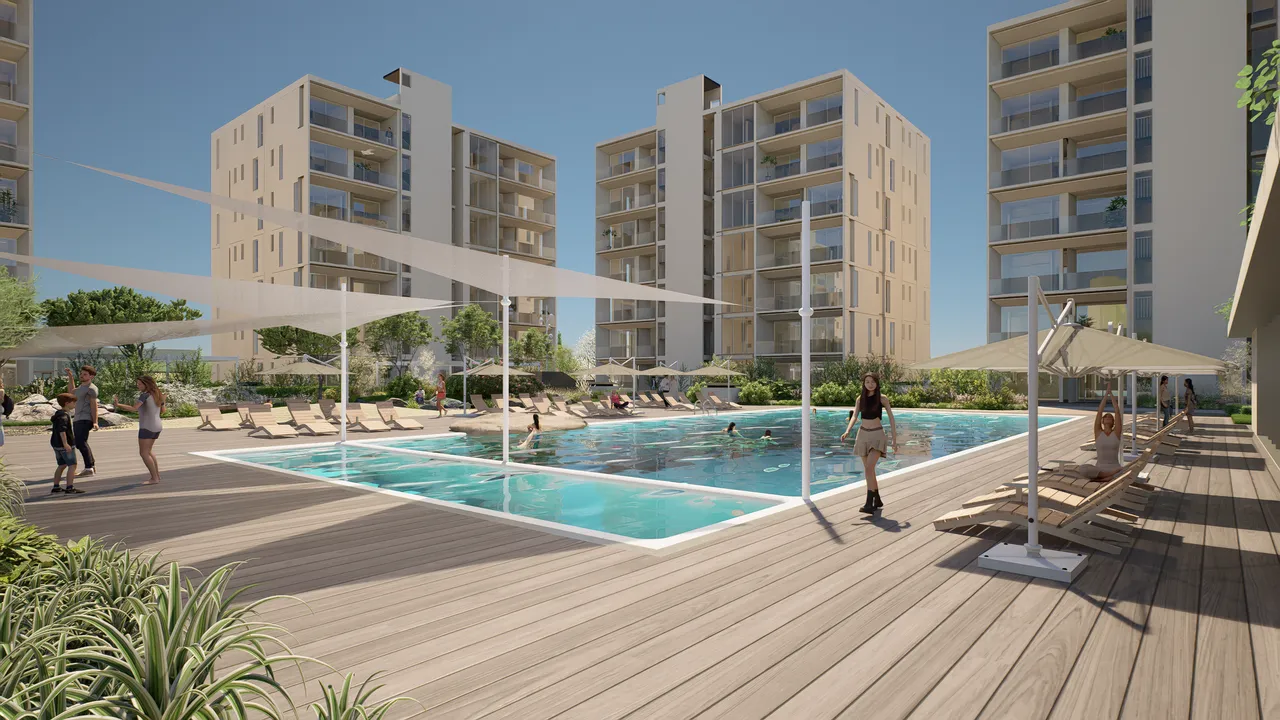
Zoia
Limassol · Polemidia
 Apartment · Penthouse
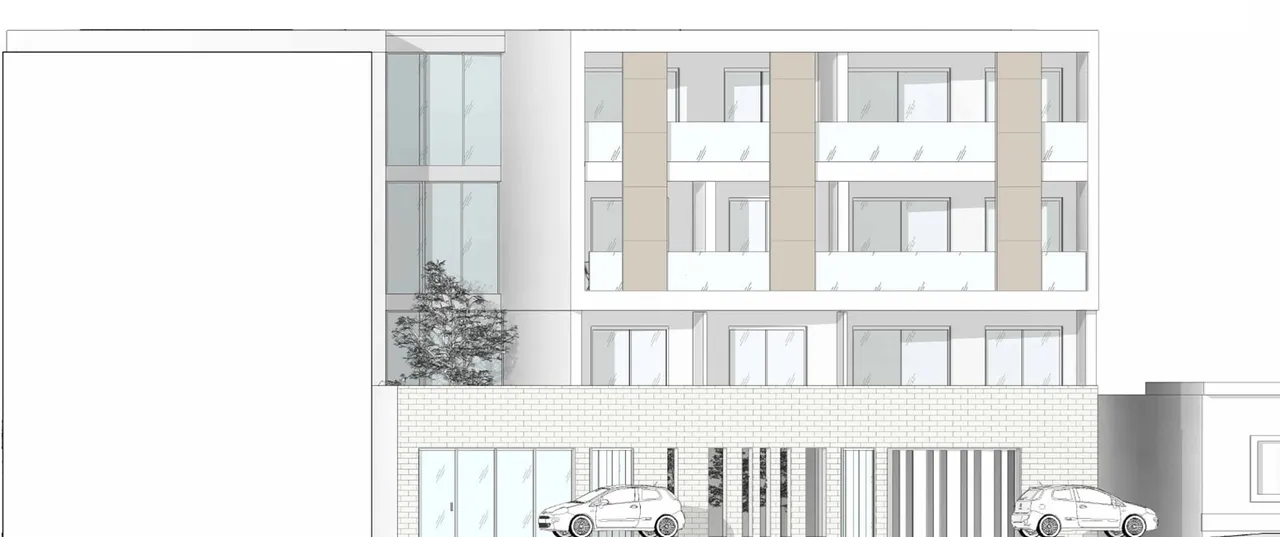
GAIA Residences
Limassol · Potamos Germasogeias
 Apartment · Shop
Thalassa Residences 2
Limassol · City centre
 Apartment · Studio
Golf Valley
Limassol · Asomatos
 Apartment · Studio
Golfside
Limassol · Asomatos
 Apartment · Studio
Eden Golf
Paphos · Geroskipou
 Apartment · Penthouse
Bronte
Paphos · Kato Paphos
 Apartment · Commercial
Bel Air Gardens
Paphos · Geroskipou
No, for a stay of up to 90 days as a bona fide visitor. The Cyprus Ministry of Foreign Affairs lists New Zealand among the visa-exempt countries (page posted 9 June 2024). Living in Cyprus needs a permit, and holders of a Migration Department permit are exempt from the visa when they travel.
Neither country's list names the other: Inland Revenue's page lists 42 agreements in force and the Cyprus Ministry of Finance's list has 72 entries. A 1951 order in the Cyprus Gazette extended a United Kingdom and New Zealand agreement to the colony of Cyprus, and no current official page I read says whether it still operates, so ask both tax departments. Both countries are parties to the OECD multilateral convention on tax information.
On the 326th absent day, which is 16 December 2027 on the assumptions in the timetable, and Inland Revenue backdates the non-resident status to 11 January 2027 if no permanent place of abode in New Zealand exists. Visit days and the departure day do not count as absent days.
After 1 year living overseas you can withdraw your contributions, employer contributions, the kickstart, fee subsidies and interest, but not the government contributions. On a balance of NZD 240,000 with NZD 14,000 of government contributions the withdrawable amount is NZD 226,000, which is €113,085 at EUR 1 = NZD 1.9985.
Only if you apply and meet the criteria, at least 6 weeks before you leave. New Zealand has no social security agreement with Cyprus, so the amount depends on months lived in New Zealand between ages 20 and 65: 30 years is 360 ÷ 540 of the $595.57 single weekly rate, which is NZD 397.05 gross a week, or NZD 20,646 a year, €10,331. A partner included in your payment loses it when you leave.
€50,000 plus €15,000 for the spouse plus 2 × €10,000 for the children, so €85,000 a year, which is NZD 169,872 at EUR 1 = NZD 1.9985. The property must be a first-sale home of at least €300,000 plus VAT.
In New Zealand yes, because the Border Cash Report threshold is NZD 10,000. In Cyprus NZD 20,000 is €10,008 at the ECB rate of 17 November 2026, which is above the €10,000 declaration threshold, and a failure to declare carries up to three years in prison or a fine up to €100,000. NZD 19,000 is €9,507 and below the Cyprus threshold, but still above the New Zealand one.
No. Health New Zealand lists reciprocal agreements with Australia and the United Kingdom only. In Cyprus you rely on GESY if you are eligible and on private insurance, and the New Zealand SafeTravel page advises insurance that includes air medical evacuation.
Sources, all read on 18 November 2026. Cyprus government (gov.cy): Ministry of Foreign Affairs, Categories of persons and countries whose nationals do not require a visa (posted 9 June 2024); Migration Department pages Immigration Permits and Immigration Permits for Investors (posted 29 December 2025) and Digital nomads and family members (posted 31 December 2025); Ministry of Finance, Double Tax Treaties (posted 27 June 2024, 72 entries); Customs and Excise Department, Cash Control; Ministry of Education, Sport and Youth, announcement of 21 August 2026 on the start of lessons 2026-2027, and the Department of Primary Education page on the start and end of the school year. CyLaw: Cyprus Gazette No. 3586 of November 1951, Order in Council No. 2515, Double Taxation Relief (Taxes on Income) (New Zealand) Order, 1951. New Zealand government: Inland Revenue, Tax residency status for individuals (updated 25 June 2026), Leaving New Zealand, Tax for non-resident taxpayers, Deduct NRWT at the right rate (updated 29 June 2021), Getting my KiwiSaver savings when I move overseas (updated 28 April 2021); Inland Revenue Tax Policy, Tax treaties; Work and Income, Living overseas if you get NZ Super or Veteran's Pension (updated 24 June 2026), Travelling overseas for more than 26 weeks and Social Security Agreements (updated 25 August 2026); Health New Zealand, Reciprocal health agreements; New Zealand Customs Service, Leaving New Zealand; NZ Police Financial Intelligence Unit, Prescribed Transactions Reporting; Reserve Bank of New Zealand, The Reserve Bank and New Zealand's economic history; Ministry of Foreign Affairs and Trade, SafeTravel Cyprus (updated 3 March 2026); Ministry of Education, School terms and holidays dates. Other: European Central Bank euro foreign exchange reference rates (17 November 2026, NZD 1.9985); OECD, Status of the Convention on Mutual Administrative Assistance in Tax Matters (1 September 2026); CYSTAT, Census of Population 2021, tables 1891221E and 1891210E. The Migration Department's Category 6.2 conditions, the Category F test and the digital nomad rules were read on its own pages; the pink slip test is read on the Migration Department's supporting-documents checklist for the visitor permit.
What conflicts or could not be confirmed. Whether the 1951 New Zealand and Cyprus arrangement still has effect is not stated on any page read, and neither modern treaty list names it; the New Zealand Ministry of Foreign Affairs and Trade treaty database could not be opened. The Cyprus Ministry's page gives 90 days without a 180-day window. New Zealand Customs' page says "more than NZ$10,000" in a heading and "NZ$10,000 or more" in its text. I found no current New Zealand page that states a limit on sending money abroad, only the reporting rules, and no official CYSTAT count of New Zealand citizens or New Zealand-born residents exists in the 2021 tables. The Migration Department's digital nomad page gives no family increments; its accompanying-documents checklist states 20% more for a spouse or partner and 15% more for each child. I did not find a 2026-2027 end-of-year date for Cyprus secondary schools. The ECB rate, the NZD 3,000,000 sale, the €900,000 price, the KiwiSaver balance, the 30 years of residence, the 10 January 2027 departure and the July visit are assumptions or dated examples. This guide is general information and not legal, tax or immigration advice; a licensed adviser should confirm your own position. Cyprus VIP Estates assists investors in choosing new developments; legal and immigration advice comes from licensed professionals.