
Guides/Buying guides
Buying Property in Cyprus from an Owner, a Developer or an Agent: Who Is Paid, What to Check and What €300,000 Costs on Each Route

A buyer in Cyprus pays the same Land Registry and legal costs on a resale whether the seller is a private owner or an agent sells the home; what differs is who bears the agent's fee. Under the Real Estate Agents Law 71(I)/2010 an agent's fee is the agreed one, 3% of the transaction value unless otherwise agreed (Article 20(2)), and the usual arrangement is that the seller pays on a resale and the developer on a new build. On a €300,000 purchase the buyer's total is €312,470 on a resale (from the owner or through an agent), €318,870 on a new build at 5% VAT and €360,870 on a new build at 19% VAT. The checks differ by route: title, charges and VAT status with an owner; permits, the mortgage on the land and the contract's guarantees with a developer; the agent's licence with an agent. On every route the step that protects the buyer is the deposit of the signed contract at the Land Registry within six months for €50, with a search certificate dated no more than five working days before signing (sources read on 12 November 2026).
Buying property in Cyprus from an owner, a developer or an agent: what each route means
The three routes describe who sits on the other side of the table. A private owner sells a resale home registered in the owner's name. A developer sells units it built, mostly as a first sale. An agent is a licensed intermediary who can represent the owner or the developer; the seller stays the same, and the agent adds a person who markets the property and is paid for the result.
| Point | Direct from the owner | From a developer | Through an agent |
|---|---|---|---|
| Who sells | The registered owner, or an attorney holding a power of attorney | The developer company | The owner or the developer, represented by the agent |
| Role of an agent | None | None for the developer's own units; an outside marketing firm needs a licence | Mediates; must be registered and hold a valid annual licence |
| Who normally pays the agent | Nobody | The developer (market practice) | The seller by the usual arrangement |
| VAT or transfer fee for the buyer | Transfer fee on a resale; VAT only if the sale comes before first occupation | VAT at 5% or 19% on a first sale, no transfer fee | Follows the property: resale or new build |
| Title deed position | Often issued on a resale, per our title deed guide | Often not yet issued for a new unit | Follows the property |
Which regime applies to the exact property comes first, because it sets the cost stack. Our new-build or resale guide weighs the property types; this guide compares the routes to them.
Who pays the agent in Cyprus: commission, the 3% default and written agency agreements
The Real Estate Agents Law of 2010 (Law 71(I)/2010), English text as amended in 2017, states in Article 20(1) that an agent's mediation is not necessary to achieve a real estate transaction. Article 20(2) entitles a licensed agent to claim and receive the agreed fee and adds that, unless otherwise agreed, the fee is 3% of the value of the transaction, due when the sale or rental agreement is concluded. The text sets no maximum and names no payer, although the 2021 commentary cited below says the seller pays by law unless otherwise agreed. Article 42(2)(b) lets the Council issue regulations on maximum or minimum commission and on who pays it where there is no written agreement; no such regulations were found in the sources read.
On the question of a written agency agreement the position is as follows. Article 27 makes an agreement with an unregistered agent, or an agent without a valid annual licence, invalid whether it is written or oral, and the sections read contain no article that makes a written agreement a condition of the commission. A 2021 Cyprus Mail commentary by Antonis Loizou says the agreement must be in writing, otherwise the law states 3%; the Law text read does not say that, so the two sources differ and the safe course is to have the fee, VAT treatment and duration in writing. A Cyprus Mail commentary by the lawyer George Coucounis of 9 March 2026 adds that a written agreement helps to regulate the relationship but does not by itself prove the right to payment: the agent must show that the agent's own mediation directly caused the sale. In the Limassol District Court case it describes, the transfer declaration filed at the Land Registry stated that no agent was involved, and the claim was dismissed.
Two further duties follow the money. The transferor names the agent, the address and the fee in the transfer declaration (Article 20(5)), and the agent deposits 0.02% of the declared amount with the Council within 30 days (Article 20(6)), which on €300,000 is €60. The licence checks, the red flags and the penalties for unlicensed practice are in how to choose and check an estate agent in Cyprus, which this guide does not repeat.
| Payment | Paid by | Paid to | On a €300,000 purchase | Basis |
|---|---|---|---|---|
| Agent commission on a resale | The seller by the usual arrangement | The licensed agent | 3% = €9,000 plus 19% VAT of €1,710 = €10,710 (assumed default) | Article 20(2); Cyprus Mail commentary, 2 August 2021 |
| Agent commission on a new build | The developer (market practice) | The agent | Agreed; inside the developer's price | Our cost guide; the Law names no payer |
| Levy on the commission | The agent | The Real Estate Agents Registration Council | 0.02% × €300,000 = €60 | Article 20(6) |
| VAT on a first sale | The buyer | The developer, who passes it to the Tax Department | €15,000 at 5% or €57,000 at 19% | VAT Law 95(I)/2000; our VAT guide |
| Transfer fee on a resale | The buyer | The Land Registry | €8,600 after the 50% reduction | DLS fees leaflet; our cost guide |
| Legal fee | The buyer | The buyer's own lawyer | €3,570 at 1% plus 19% VAT (planning figure) | Our cost guide |
| Deposit of the sale contract | The depositing party | The Land Registry | €50 | DLS contract page |
Buying property directly from the owner in Cyprus: the checks on the seller and the title
With no agent the information on the property comes from the owner's documents and your lawyer's searches. Article 21 of the Real Estate Agents Law puts the duty to inform the buyer about the physical condition, the registered rights and the legal restrictions on agents, so a direct sale has no intermediary under that duty. The checks below belong to your lawyer; choosing a property lawyer in Cyprus explains what the fee should cover.
- Who is the owner. The Department of Lands and Surveys lists as a condition for depositing a sale contract that the property is registered in the name of the vendor. A person who shows you a home that is not registered in that person's name, a close relative's (up to the second degree), a company the person directs or the name of someone whose assets the person manages under a general power of attorney, falls under Article 33(1)(c) and (d), which bars an unlicensed person from guided tours and advertising of such property. Ask for the title and the identity document and compare the names.
- All the registered owners. If the property is held in shares and not every registered owner sells, the Department requires a distribution agreement signed by all registered owners, properly certified, for the deposit of the contract.
- Mortgages, charges and deposited contracts. A search certificate shows the registered owner, the mortgages, the prohibitions and any sale contract already deposited. Where a mortgage or an earlier deposited contract is the only encumbrance and the owner is under no prohibition, Law 132(I)/2023 lets the buyer pay a fixed sum into the owner's account with the lender under a declaration known as Form A, after which the lender must confirm the payment and release the property; Form C is the buyer's written consent to deposit the contract without Form A.
- Permits and the certificate of final approval. A certificate of approval states whether the building matches its permits. A law-firm article of 1 March 2021 (A. Karitzis & Associates) describes three outcomes: a clean approval, an approval with notes that must be corrected within a set time, and a certificate of non-authorised works, which restricts the owner's right to sell or mortgage. A Legal 500 article of 22 September 2026 warns that visible or long-standing extensions are not automatically authorised and that depositing a contract does not legalise unauthorised works.
- VAT status. Since 1 September 2026 a sale before the building's first occupation carries VAT; after first occupation it falls under the exemption for immovable property. A private individual's single sale does not automatically attract VAT, and the test is whether the seller acts as a taxable person. Ask for the VAT treatment in the contract.
- Charges and condition. Municipal, sewerage and communal charges and utility accounts are settled before completion, as our lawyer guide lists. Your lawyer does not survey the building, so structural condition needs an independent surveyor.
- What you cannot claim later. A Cyprus Mail article by George Coucounis of 8 September 2025 reports that contractual rights against a developer pass to a later buyer only by assignment from the first buyer and only if the contract allows it. A resale buyer from an owner should expect no claim against the original builder.
If the owner bought off-plan and has no title yet, the sale is of a contract and the developer's contract terms decide whether it can be assigned; our off-plan deposit guide lists the clauses to look for. What a title deed is explains the title position of such units.
Buying property from a developer in Cyprus: permits, final approval, the mortgage on the land, VAT and guarantees
A developer is a company, so the first check is the company and its record on previous projects; how to vet a property developer in Cyprus covers the delivery record and the title deed test. The law does not treat the developer's own sales team as agents: Article 33(2)(a) says that advertising, promoting or offering a sale by a land and construction developer of property it produced is not the practice of the real estate agent profession. A firm that markets several developers' projects is an intermediary and needs the registration and licence.
- Permits for the whole project. Ask for the town planning permit, the building permit and the approved plans. For a completed unit, ask for the certificate of final approval, which a law-firm article of 1 March 2021 calls a prerequisite for the issue or update of a title deed on a building. For an off-plan unit the contract should bind the developer to obtain the certificate and the title deed within a defined period.
- The mortgage on the land. The plot is often mortgaged to the developer's bank. The FCDO guidance for Cyprus (last updated 27 November 2019) warns that a buyer may be liable if the developer goes bankrupt and is unlikely to get deeds until the mortgage is paid. The contract should oblige the developer to release the charge over your unit, and the Form A route of Law 132(I)/2023 described above gives a payment mechanism.
- VAT. A first sale carries 19%, or 5% on a main residence within the area and value limits, as set out in Cyprus property VAT explained. After the change of 1 September 2026 a completed unit that has not had first occupation can still carry VAT. The developer's invoices should show the rate you have been approved for.
- Guarantees. No fixed statutory guarantee covers every defect in a new property. A Legal 500 article by A. Danos & Associates of 9 September 2026 says protection comes from the sale agreement, a written warranty or other documents, that a defects liability period is contractual and may differ for finishes and for structural elements, and that a document called a guarantee may cover only some components. The Limitation of Actionable Rights Law 66(I)/2012 generally gives six years for a contract claim and three years for certain negligence claims, and contractual notice rules may require action sooner. Our off-plan guide records that Cyprus does not require bank guarantees or escrow on off-plan purchases, so they have to be negotiated.
- Handover. Inspect the finished unit against the contracted specification before the last instalment; snagging a new build in Cyprus gives the checklist.
Buying property through an agent in Cyprus: what the agent must tell you and what the agent cannot verify
An agent adds three things to either of the other routes. The agent is regulated: under Article 21 an agent, acting for the seller or for the buyer, must inform the intended purchaser about the physical condition of the property, the rights in rem charged on it and any restriction imposed by legislation, a court or an authority, and Article 20(4) requires written disclosure of any interest the agent or a relative has in the property. The agent can start the paperwork: the Department of Lands and Surveys accepts a contract for deposit from a registered agent who mediated the transaction if the agent submits the agent declaration or another authorised representative document. And the agent is a second person to check: the licence, the agency agreement and whom the agent represents.
The agent does not verify the title for you. A Legal 500 article of 22 September 2026 states that an estate agent's listing does not establish the legal position, and our lawyer guide places the title search, the permits and the contract review with your own lawyer. The agent's fee in the usual arrangement is the seller's, so ask in writing before viewing whether any fee is payable by you; a buyer-side fee needs its own signed agreement, and the estate agent guide linked above shows what such a fee adds.
Cyprus property checks by route: owner, developer and agent side by side
| Check | Direct from the owner | From a developer | Through an agent |
|---|---|---|---|
| Seller's right to sell | Title in the owner's name; every co-owner signs or the share arrangement is certified | Developer company registered; land registered in its name; permits for the project | Same as the underlying owner or developer; the agent holds a mandate and no title |
| Search certificate | Seller must attach one dated within 5 working days of signing | Same rule | Same rule; the agent does not replace it |
| Mortgage or charge | Search certificate; Form A or Form C if the mortgage is the only encumbrance | Mortgage on the plot is common; contract must oblige release for your unit | Agent must disclose registered rights (Article 21); your lawyer confirms |
| Permits and final approval | Ask for permits; certificate of approval for a building without its own title | Project permits; final approval needed before individual titles issue | Agent must disclose restrictions; your lawyer confirms |
| VAT status | Resale transfer fee unless sold before first occupation; ask for the treatment in writing | 5% or 19% VAT; no transfer fee | Follows the property |
| Defects cover | None against the original builder unless the contract was assigned | Whatever the contract and any written warranty say | Whatever the seller's contract says |
| Fee to the buyer | None | None for the developer's own team; the Law names no payer for outside agents | None by the usual arrangement; buyer pays only under a signed agreement |
The search certificate rule for an owner, developer or agent sale in Cyprus: five working days and the fines
For contracts concluded after 12 December 2023 the vendor must include a Land Registry search certificate as an integral part of the contract, and the Department of Lands and Surveys states that it should be dated within five working days of the contract. This is the amending Law 132(I)/2023 to the Sale of Immovable Property (Specific Performance) Law 81(I)/2011. It applies to a private owner, a developer and a sale through an agent alike, and a new certificate is needed if signing is postponed beyond the window. A Cyprus Mail article by the lawyer George Coucounis, 9 November 2026, reports that the Department's fines apply after a transitional compliance period that ran from 16 February to 16 May 2026, and gives the seller's fines by sale price.
| Sale price | Seller's fine for a missing or out-of-window certificate |
|---|---|
| Up to €50,000 | €500 |
| €50,001 to €200,000 | €1,500 |
| €200,001 to €500,000 | €4,000 |
| Above €500,000 | €10,000 |
On a €300,000 sale the fine is €4,000 and it can apply even if the property has no mortgage. The fine falls on the seller; the buyer gains a current picture of the encumbrances at the moment of signing, which a certificate dated three months earlier does not give.
How a sale contract is stamped and deposited at the Land Registry in Cyprus
Depositing the signed contract at the District Lands Office where the property is located brings it under the Specific Performance Law 81(I)/2011, which protects the buyer if the seller fails to perform. Any of the contracting parties may deposit it, and so may the buyer's lawyer or a registered agent who mediated, with the agent declaration. The Department's page sets the process out; the steps follow its order.
- Make the contract written, naming the parties and describing the property in enough detail, stating the price and signed by all parties. The property must be registered in the vendor's name.
- Attach the search certificate dated within five working days of the contract.
- Prepare the application on form Δ.Ε.314 for a sale, the contract with original signatures, the cadastral plan signed by the parties, the floor plan if the property is a unit, the distribution agreement if co-owners do not all sell, declaration Δ.Ε.307 if a party is a company, a copy of the ID, passport or residence card of the applicant, and Form A or Form C where a mortgage or an earlier contract is the only encumbrance. A contract in a language other than Greek or English needs a translation by a sworn translator under Law 45(I)/2019.
- Check the stamping rule. Stamping is required only if at least one party signed before 1 January 2026. Stamp duty was repealed for documents signed from that date by Law 239(I)/2025 according to our cost guide, which lists the former scale: 0% on the first €5,000, 0.15% from €5,001 to €170,000 and 0.20% above. On €300,000 that scale gives 0.0015 × €165,000 = €247.50 plus 0.002 × €130,000 = €260, a total of €507.50, payable only for a contract signed by one party in 2025 or earlier.
- Submit within six months of signing, unless a court order allows a late deposit, and pay the €50 deposit fee.
A Legal 500 article of 22 September 2026 describes the effect: the deposit creates a statutory encumbrance with priority from the date of deposit, and a clause that purports to prohibit the deposit is void. The same article states what it does not do: it does not transfer ownership, release a mortgage, legalise unauthorised works or guarantee a court order or a date for the title deed.
If the seller then fails to perform, the buyer who obtains a court order for execution of the contract applies to the Director of the Department. The Department's page asks for the application form, the court order (valid for one year for deposit), receipts for municipal, sewerage and water board payments, the Tax Department's Form N313 certificate and identification, with fees of €10 for acceptance, €5 for each title deed and valuation fees.
A worked timeline, assuming signing on Monday 1 March 2027 and no public holiday in between: the search certificate must be dated no earlier than Monday 22 February 2027, which is five working days before signing, and the contract must be deposited by Wednesday 1 September 2027. The deposit fee is €50 and the stamping step is skipped, as no party signed before 1 January 2026.
Worked example: the buyer's total cost on a €300,000 purchase from an owner, a developer or an agent in Cyprus
Scenario: the buyer is an individual buying a home priced at €300,000, in cash, with no mortgage. Assumptions: on a resale the price is all-in and no VAT is charged; on a new build €300,000 is the price before VAT, and one column assumes the buyer qualifies for 5% VAT as a main residence within the area and value limits while the other assumes 19%; the transfer fee scale of 3%, 5% and 8% with the 50% reduction recorded in the DLS leaflet and applied in our cost guide is in force; the buyer's lawyer charges 1% plus 19% VAT; Land Registry charges are about €300; stamp duty is nil for a contract signed in 2027; the seller's agent is paid 3% plus 19% VAT by the seller; the developer pays any agent from its own margin.
| Item | Resale direct from the owner | Resale through the seller's agent | New build, 5% VAT | New build, 19% VAT |
|---|---|---|---|---|
| Purchase price | €300,000 | €300,000 | €300,000 | €300,000 |
| Agent fee paid by the buyer | €0 | €0 | €0 | €0 |
| VAT | €0 | €0 | €15,000 | €57,000 |
| Transfer fee | €8,600 | €8,600 | €0 | €0 |
| Legal fee, 1% plus VAT | €3,570 | €3,570 | €3,570 | €3,570 |
| Land Registry charges (assumption) | €300 | €300 | €300 | €300 |
| Buyer's total | €312,470 | €312,470 | €318,870 | €360,870 |
| Extra over the price | 4.2% | 4.2% | 6.3% | 20.3% |
| Agent fee paid by someone else | None | Seller: €10,710 | Developer, inside its price | Developer, inside its price |
The arithmetic. Transfer fee on €300,000: 1.5% × €85,000 = €1,275, 2.5% × €85,000 = €2,125 and 4% × €130,000 = €5,200, which is €8,600. Legal fee: 1% × €300,000 = €3,000 plus 19% × €3,000 = €570, which is €3,570. Resale: €300,000 + €8,600 + €3,570 + €300 = €312,470. New build at 5%: VAT 5% × €300,000 = €15,000, so €300,000 + €15,000 + €3,570 + €300 = €318,870. At 19%: VAT is €57,000, so the total is €360,870. A resale through an agent costs the buyer the same €312,470 as a resale from the owner, because the €9,000 commission and €1,710 VAT come out of the seller's proceeds: the seller receives €300,000 − €10,710 = €289,290 before other costs. The gap between the cheapest and the dearest route is €360,870 − €312,470 = €48,400, and VAT status explains nearly all of it. The table compares costs; a new build and a resale at the same price are different homes.
What buying directly from the owner can save in Cyprus and what it cannot
The only cost an owner-direct purchase can remove is the agent's fee, and that fee is the seller's. It can reach the buyer only if the seller lowers the price. In the example the seller who sells through an agent at €300,000 keeps €289,290. A seller who sells directly at €289,290 keeps the same amount, and the buyer's total then falls to a new level: transfer fee 1.5% × €85,000 + 2.5% × €85,000 + 4% × €119,290 = €1,275 + €2,125 + €4,771.60 = €8,171.60; legal fee 1% × €289,290 = €2,892.90 plus 19% VAT of €549.65, which is €3,442.55; Land Registry charges €300. The total is €289,290 + €8,171.60 + €3,442.55 + €300 = €301,204.15, which is €11,265.85 or 3.6% below €312,470. If the seller passes on half of the saved fee, so the price is €294,645, the total is €306,837, a saving of about €5,633.
This is a scenario: no source read says that owners pass the commission on, and an owner who sells directly may ask for the full market price. What the buyer gives up is the agent's duty under Article 21 and a second person who checks documents. The buyer's lawyer fee is the same 1% plus VAT on any route, so the legal checks cost the same whichever route is chosen, and the saving, if any, comes only from the price.
What stays the same on every Cyprus route: your own lawyer, the permit for non-EU buyers and the transfer
Three steps do not depend on whether the seller is an owner, a developer or an agent. First, your own lawyer, who is independent of the seller and carries out the title search, the permit checks and the contract review; the FCDO guidance of 2019 also recommends independent legal advice because lawyers acting for both vendors or builders are not independent. Second, non-EU buyers, which since Brexit includes British buyers, need Council of Ministers permission under the Acquisition of Immovable Property (Aliens) Law, Cap. 109, as set out in our guide to how to buy property in Cyprus; the permit is filed after signing and the guide records that EU buyers skip it. Third, the transfer at the Land Registry follows the deposit of the contract: fees are always paid by the transferee, and the Director may set the market value on which the fee is charged if the declared price does not represent it, according to the DLS fees leaflet.
For budget planning beyond the transaction costs, see the cost of buying property in Cyprus.
Questions about buying from an owner, a developer or an agent in Cyprus
New-build projects from developers in Limassol, Paphos and Larnaca: eight to compare
 Apartment
Zoia
Limassol · Polemidia
 Apartment
Limassol Park
Limassol · Trachoni
 Apartment · Penthouse · Studio
Nest
Limassol · Germasogeia Village
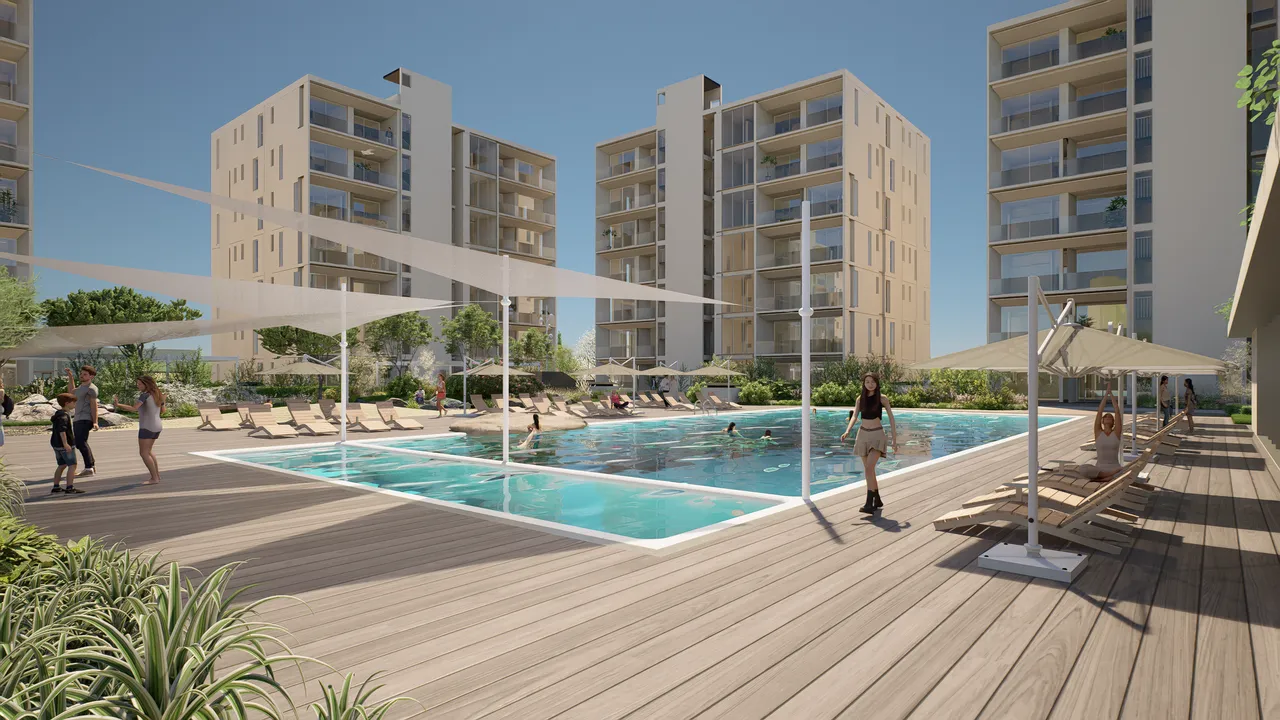 Apartment · Penthouse
GAIA Residences
Limassol · Potamos Germasogeias
 Apartment · Studio
Avalon Park
Paphos · Empa
 Apartment · Commercial
Bel Air Gardens
Paphos · Geroskipou
 Apartment · Penthouse
Coast View Residence
Paphos · Geroskipou
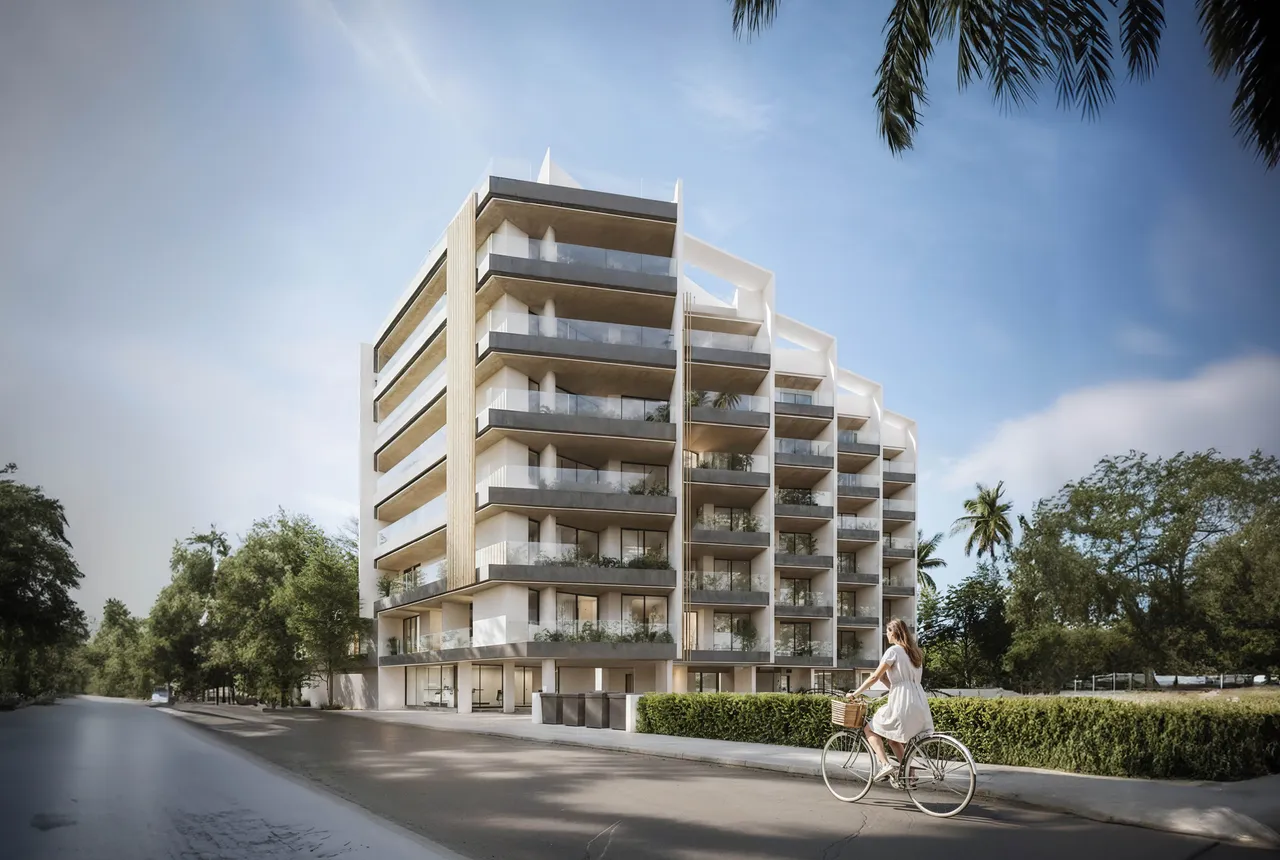 Studio · Apartment
Plus 82
Larnaca · Downtown
Yes. Article 20(1) of the Real Estate Agents Law says an agent's mediation is not necessary to achieve a real estate transaction. You still need your own lawyer to search the title, a search certificate dated within five working days of signing, and the deposit of the contract at the Land Registry within six months.
If the agreement says nothing else, 3% of the transaction value under Article 20(2), which is €9,000, or €10,710 with 19% VAT. By the usual arrangement the seller pays it, so the buyer's own costs stay at €12,470 on top of the price.
No. Article 33(2)(a) says that offering a sale by a land and construction developer of property it produced is not the practice of the real estate agent profession. An outside firm that markets projects for several developers needs the registration and annual licence.
No fixed statutory guarantee covers every defect. Protection comes from the sale agreement and any written warranty, and a defects liability period is contractual. Contract claims generally have a six-year limitation period under Law 66(I)/2012, and certain negligence claims three years.
Within six months of signing, unless a court order allows a late deposit, at the District Lands Office where the property is located; the fee is €50. For a contract signed on 1 March 2027 the last day is 1 September 2027.
Not if no party signed before 1 January 2026. For a contract signed by at least one party before that date the Department of Lands and Surveys requires stamping for the deposit, and on €300,000 the former scale gives €507.50.
The Director of the Department of Lands and Surveys can fine the seller. For a sale between €200,001 and €500,000 the fine reported by Cyprus Mail on 9 November 2026 is €4,000, and the maximum seller fine is €10,000.
It depends on first occupation. Since 1 September 2026 a sale before first occupation carries VAT, and first use means systematic use for at least 18 months. A building that has had first occupation falls under the exemption, and the resale transfer fee applies; ask your lawyer to confirm the treatment in writing.
Sources, all read on 12 November 2026. Real Estate Agents Law of 2010 (Law 71(I)/2010), English text as amended in 2017, published by the Business in Cyprus portal of the Republic of Cyprus (Articles 20, 21, 27, 33 and 42). Department of Lands and Surveys, Republic of Cyprus: page on the contract of sale, consideration and exchange (deposit of the sale contract, six months, search certificate, documents, stamping, €50 fee, Forms A and C); page on application for specific performance of a sale contract; Rights and Fees leaflet (transfer fee scale, 50% reduction, no fee where VAT was paid, fees paid by the transferee; the leaflet is dated 2022 in its web address, so the reduction is also taken from our cost guide). Cyprus Mail: Antonis Loizou, Know the lay of the land, 2 August 2021; George Coucounis, When does a real estate agent get a commission, 9 March 2026; George Coucounis, Liability for hidden defects in a building, 8 September 2025; George Coucounis on fines for property sale violations, 9 November 2026. Legal 500 (law-firm articles): Real estate transactions in Cyprus, frequently asked questions, 22 September 2026; Defective construction in Cyprus, A. Danos & Associates, 9 September 2026; The importance of the certificate of approval, A. Karitzis & Associates, 1 March 2021; Conveyancing in Cyprus, Michael Chambers & Co, 9 June 2026 (this article lists the former stamp duty scale, while the Department's page and the 22 September 2026 article state that stamping applies only to documents signed before 1 January 2026). KPMG Cyprus: amendments to Schedules 5 and 8 of the VAT Law effective 1 September 2026; Michael Kyprianou Law Firm: the end of the five-year rule, 26 August 2026. FCDO guidance, Cyprus: buying property, last updated 27 November 2019. Our guides on the cost of buying property, Cyprus property VAT, choosing a property lawyer, vetting a developer, off-plan deposit protection and how to buy property in Cyprus for the cost stack, the guarantee position and the permit rule. Not confirmed: no regulations under Article 42(2)(b) on who pays commission were found; no source states that owners pass an avoided commission on; the amendments to the Real Estate Agents Law after 2017 were not checked in the text; the claim in our off-plan guide that a late deposit attracts a higher transfer fee was not found on the Department pages read. This guide is general information and not legal or tax advice; a licensed lawyer should confirm your own position. Cyprus VIP Estates assists investors in choosing new developments; legal and immigration advice comes from licensed professionals.