Cyprus Insights/Locations & Area Guides
Tombs of the Kings, Paphos: A Buyer's Guide to This Coastal District

Tombs of the Kings, Paphos: Location and Character of This Coastal District
Tombs of the Kings is a residential district on the western edge of Paphos, on Cyprus' south-west coast, named after the rock-cut necropolis that has stood on this stretch of coastline since antiquity. It sits roughly 2 kilometres north of Kato Paphos harbour and the town's old quarter, along a belt of limestone coastline that has become one of the most searched residential addresses in Paphos among people researching property online — the keyword "tombs of the kings paphos" alone draws close to 3,000 searches a month from UK-based buyers, a volume no other single Paphos district matches.
The district is not one street or a single gated estate. It is a loosely bounded coastal neighbourhood stretching inland from the archaeological park, taking in established villas, newer low-rise apartment blocks, a scattering of hotels and tavernas, and the UNESCO site itself at its seaward edge. The Elysium, one of Paphos' well-known five-star beach hotels, sits inside the same pocket of coast, and several of the newer residential schemes describe their position with reference to it, a useful landmark for anyone trying to place the district on a map for the first time.
That UNESCO site functions as a permanent, protected green belt along the coast. A neighbouring plot cannot quietly build over it, so the outlook from a west-facing balcony here is unusually secure by Cyprus coastal standards, where a sea view can otherwise disappear behind the next approved development.
The UNESCO Rock-Cut Necropolis: History and the "Kings" Myth
The tombs are carved directly into solid limestone bedrock, several of them sunk below ground level and arranged around open courtyards ringed by Doric columns — a domestic layout borrowed from the houses of the living, unlike the freestanding monumental tombs found elsewhere in the ancient world. The oldest chambers date to around the 4th century BC, and the necropolis stayed in continuous use as a burial ground for roughly six centuries, into the 3rd century AD.
Despite the name, no Cypriot king is buried here. The tombs belonged to Paphian aristocrats and senior officials of the Hellenistic and Roman periods — wealthy families and administrators tied to the Ptolemaic rulers who governed Cyprus from Egypt at the time, not monarchs. "Tombs of the Kings" is a comparatively modern label, applied once the scale of the largest chambers became obvious and it was assumed that only royalty could have commissioned something so grand.
The site joined the UNESCO World Heritage list in 1980, together with Nea Paphos and the Sanctuary of Aphrodite at Kouklia, in recognition of the town's wider archaeological significance. It covers about 32 hectares of exposed limestone terrain and opens daily to visitors — 08:30 to 19:30 in the summer half of the year, 08:30 to 17:00 in winter, for a small entrance fee, with free admission for under-18s and a discount for groups of ten or more. A full visit takes about ninety minutes. For residents, the appeal runs deeper than a one-off tourist stop: it functions as permanent, protected open coastline on the doorstep, a genuine daily amenity that a family can walk through repeatedly over the years, not just a landmark to photograph once.
How Far to the Beach, Paphos Town and the Airport
| Landmark | Approx. distance |
|---|---|
| Beach and the coastal park | under 1 km |
| Kato Paphos harbour and old town | 2–3 km |
| Paphos town centre | 3–4 km |
| Paphos General Hospital | 1–3 km |
| Paphos International Airport | 16–17 km (about 19 minutes by car) |
Those figures are drawn from independently synced address data on several developments in the district and corroborate each other closely; the airport distance also matches published route-planning estimates for the address. In practice, the area functions well without a car for beach access and daily essentials, while a short drive covers the harbour, the wider restaurant scene and the airport for arrivals and departures. One address in the district sits about 450 metres from Venus Beach by its own recorded coordinates, roughly a five-to-ten-minute walk — a concrete figure worth checking against, since marketing copy for this stretch of coast tends to say simply "within walking distance" without stating an actual number.
Daily Life and Amenities in the District
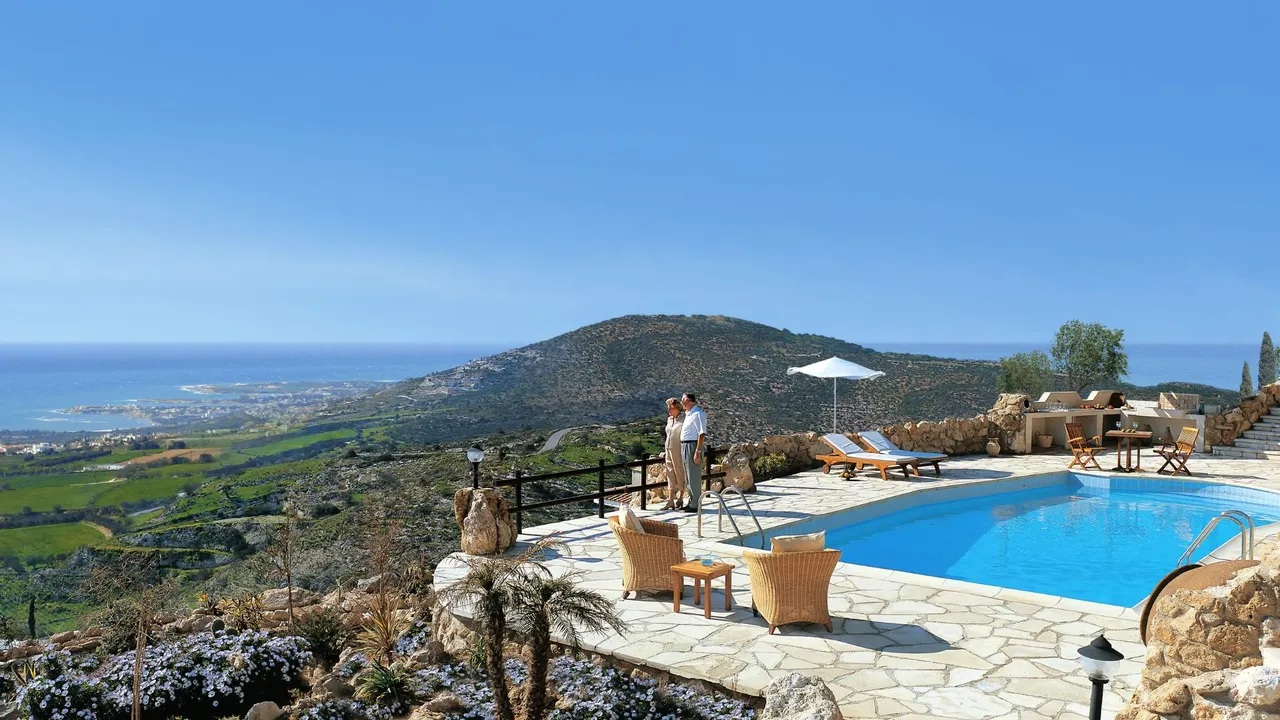
Away from the necropolis itself, the district has settled into a quiet, established residential character. The bars and souvenir shops cluster closer to Kato Paphos harbour; here, limestone cliffs drop to clear water along a protected coastal park, and cycling paths and maintained promenades connect the shoreline to the residential streets above it. Evenings tend to run at an unhurried pace: a table at a beachfront restaurant as the sun goes down, then a short drive into the harbour and old town for a wider choice of dining or nightlife when residents want it.
Villas and low-rise apartment buildings dominate the housing stock here, generally two to five storeys — well short of the high-rise towers found elsewhere on the coast — which keeps density lower than in the newer developments further along toward Kato Paphos. Sea views are common from upper floors even on inland plots, given the terrain's gentle rise away from the water.
The pipeline of new building reaches back further than the six current schemes below. One developer active here today, AGG, completed an earlier apartment building called Kalamos in 2024, in the same pocket of the district close to Venus Beach, before starting on the larger Kalamos Duo project that followed it — a small, concrete example of this specific address attracting repeat development over several consecutive years.
- The beach and the protected coastal park, reachable on foot from most addresses
- A choice of tavernas and beachfront restaurants along the coast road
- Everyday shops and supermarkets within a few minutes' drive
- Paphos General Hospital within a short drive
- A golf course within about 5–7 km
- Kato Paphos harbour and old town, with a much wider restaurant and nightlife scene, a short drive away
Property Prices Here: Who Buys and What They Pay
Property portals covering this district list a genuinely wide mix — houses and villas, apartments, building plots and a handful of commercial units — reflecting decades of piecemeal development by many separate small and mid-sized builders. Mid-range new-build pricing along this belt of the Paphos coast, taking in Tombs of the Kings together with the neighbouring Peyia and Geroskipou areas, runs at roughly €2,800 per square metre, and short-term letting demand along this stretch of coastline is consistently among the strongest in Paphos during the April-to-October season, which shapes the investment case for a share of the buyers here.
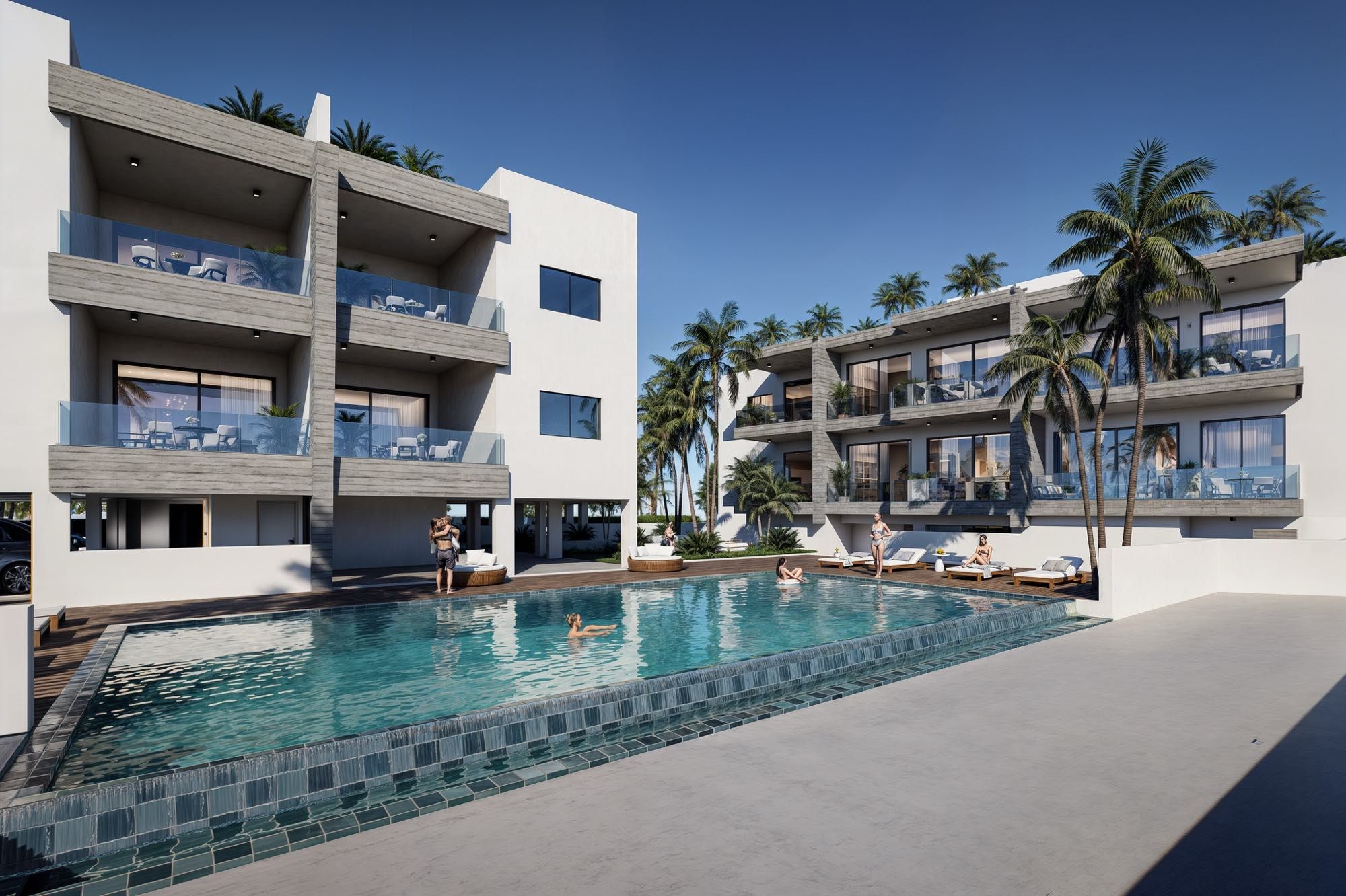
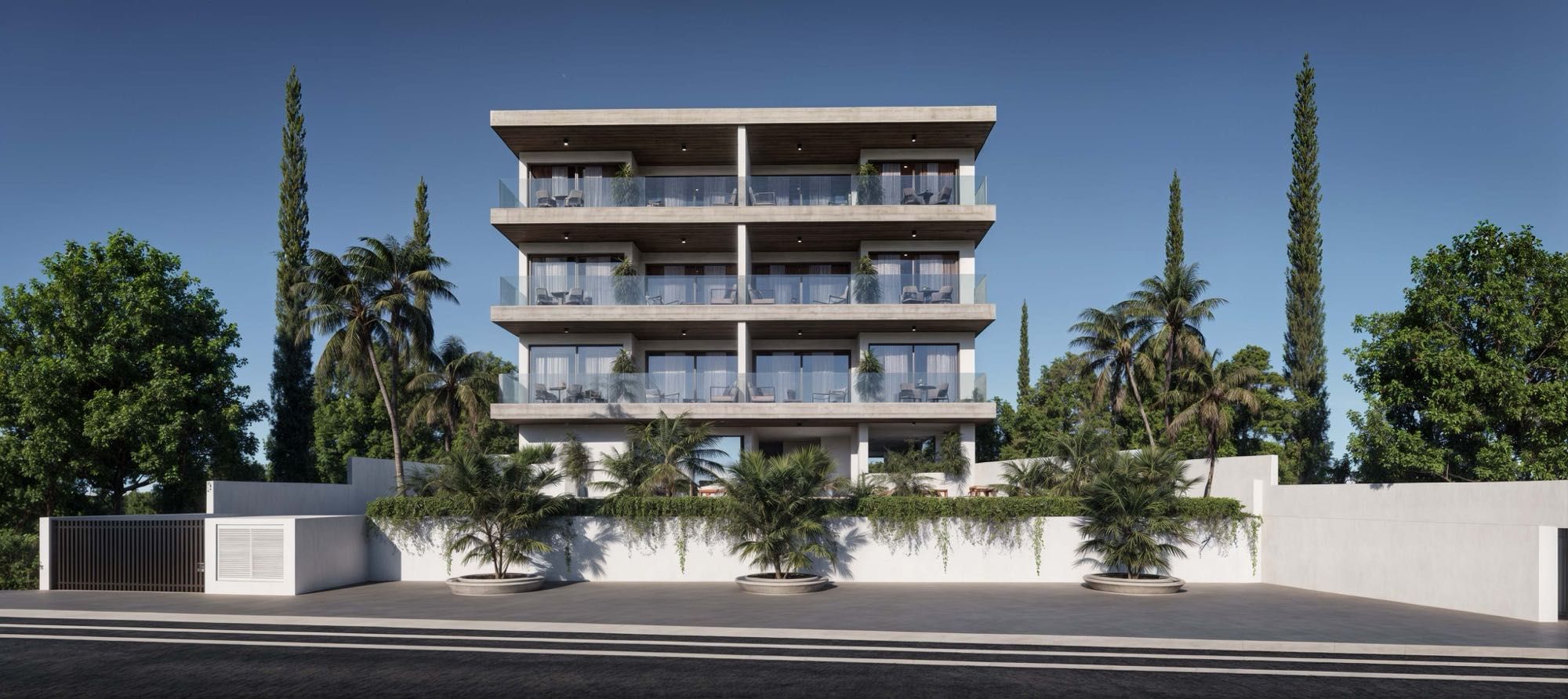
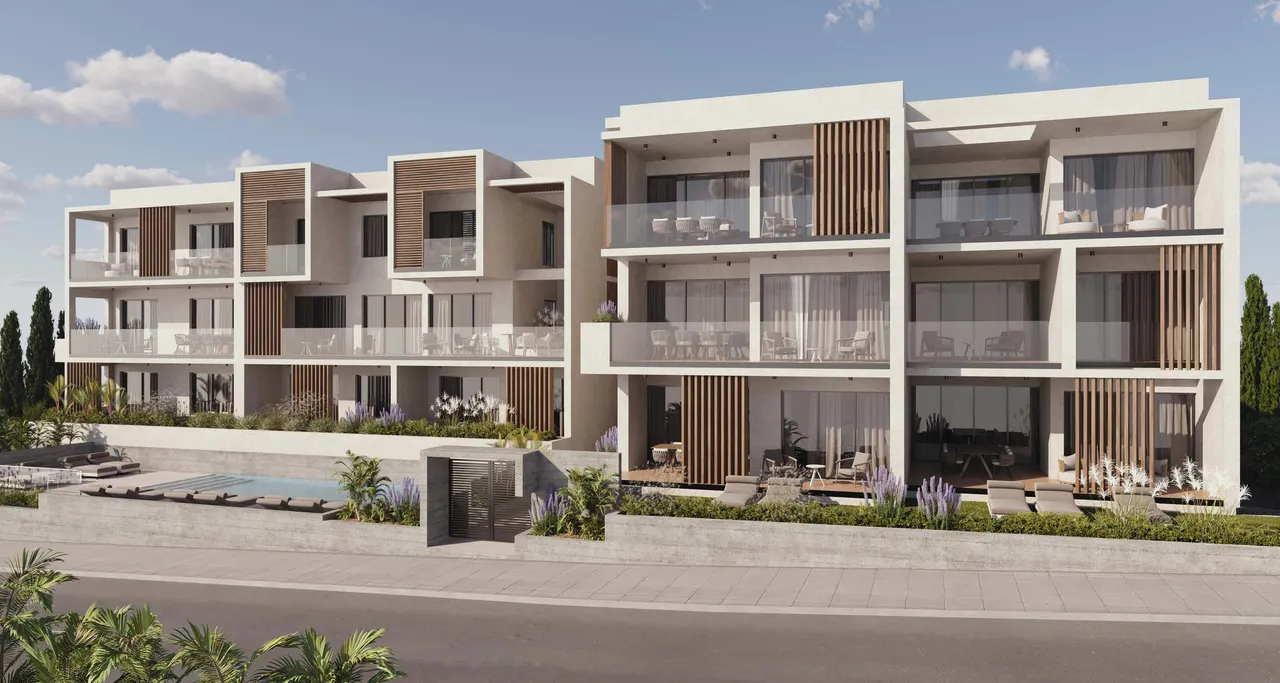
Six current developments in and immediately around the district — built by three separate developers — give a concrete sense of the range on offer today.
| Development | Developer | Property type | Price from | Status |
|---|---|---|---|---|
| La Mer | AGG | One- and two-bedroom apartments | €355,000 | Under construction, units available |
| Kalamos Duo | AGG | Apartments and townhouses | €295,000 | Under construction, units available |
| Dolce | AGG | Apartments and townhouses | €580,000 | Under construction, completing September 2026 |
| Vasileon Signature Residences | AGG | Studio to three-bedroom penthouse | €325,000 | Upcoming project, completing Q2 2030 |
| Eden Bay | BBF | Studio to four-bedroom apartments and penthouses | €330,000 | Off-plan, completing Q3 2028 |
| The King Residences | Island Blue | Apartments | €311,000 | Available now, units in stock |
Between them, these six schemes span a compact studio at the entry end of the market to a top-floor penthouse above €2.3 million, and range from a project with units ready to move into now (The King Residences) to one still at the off-plan stage with a 2030 completion (Vasileon Signature Residences). That three separate developers — AGG, BBF and Island Blue — are all building or selling within the same small district at the same time is a stronger signal of sustained demand than any single company's pipeline on its own. Smaller schemes have gone up in the district over the decades too — Leptos Estates' Kings Court and Kings Gardens, and Olias Homes' Triangle House and Alder Park, among them — though none of the four remains actively marketed on this site today; that pattern of repeat building by several different developers, not just one, is itself a further sign of long-running demand for this specific address.
These six developments — La Mer, Kalamos Duo, Dolce, Vasileon Signature Residences, Eden Bay and The King Residences — each have a dedicated project page with full pricing, floor plans and availability.
Who This District Suits: Buyer Profiles
The district tends to draw buyers who want genuine history and a sea view within the same daily routine: retirees and downsizers looking for a quiet, walkable coastal base; lifestyle buyers who value the protected necropolis as permanently open land next door, never a future building site; and investors weighing the area's strong seasonal letting demand against Paphos-wide alternatives. Families are represented too, particularly in the larger apartment and townhouse layouts, though the district's character leans more toward couples and older buyers than toward a school-run community.
Buyers who want a livelier, walk-everywhere holiday atmosphere, with bars, souvenir shops and crowds on tap outside the front door, are usually better served closer to Kato Paphos harbour itself; the calmer streets here trade that for a short drive to reach that wider choice of nightlife. For anyone comparing Paphos districts by name recognition alone, Tombs of the Kings carries a specific, verifiable identity: a real UNESCO World Heritage site, a settled residential character built up over decades, and a live pipeline of new construction that shows no sign of slowing.