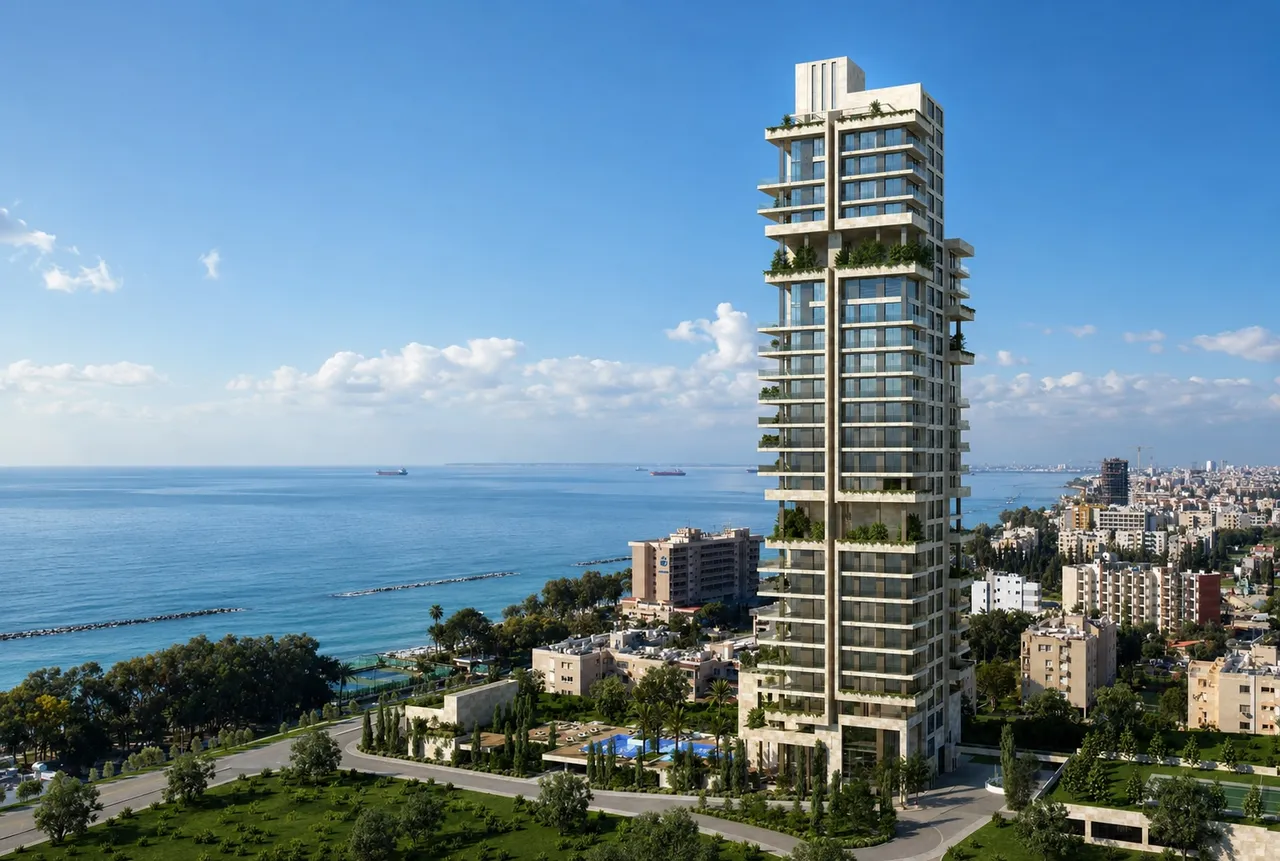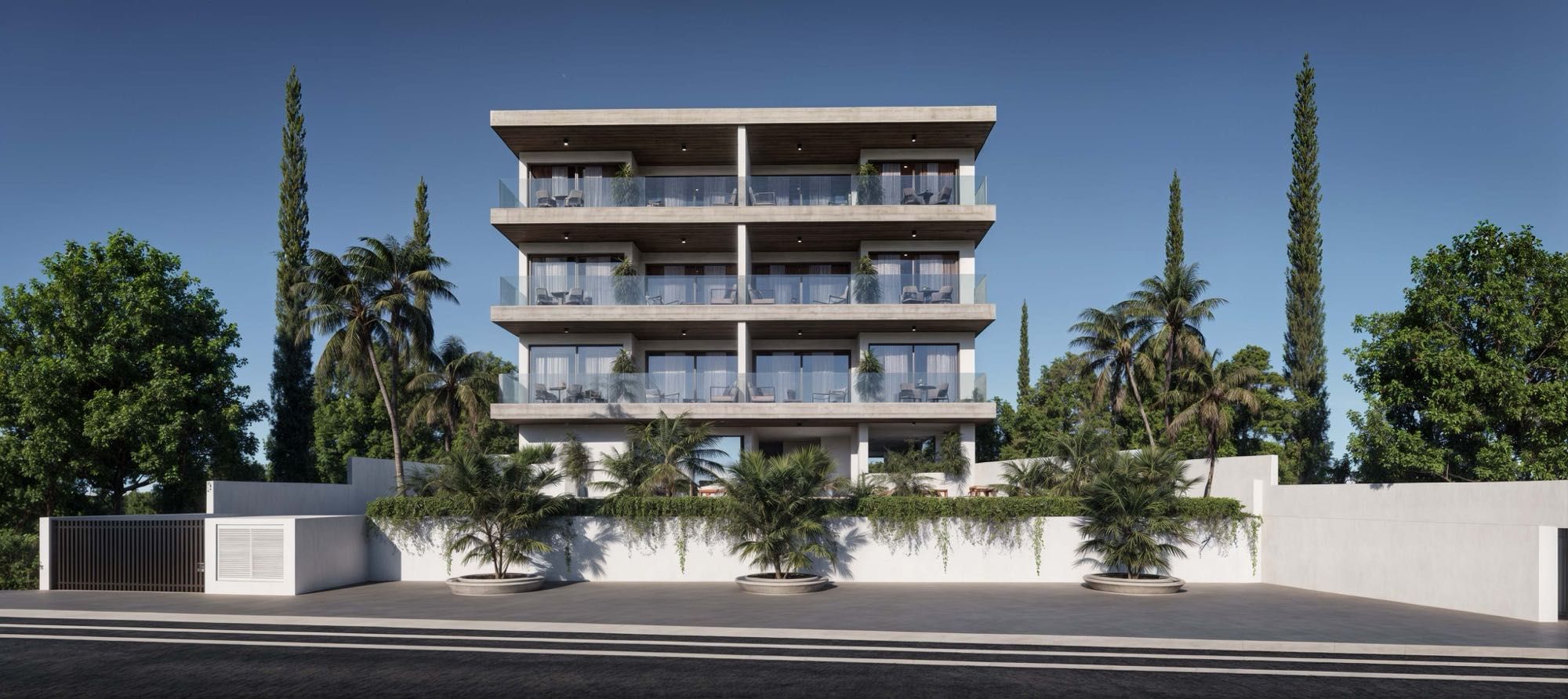

Cyprus Insights/Investment & Market Trends
UAE vs Cyprus: Which Property Market Offers Greater Stability in 2026?

Why Some Investors Are Reassessing Gulf Real Estate — and Looking Toward Europe
Recent geopolitical tensions in the Gulf region have prompted global investors to re-evaluate risk exposure in Middle Eastern real estate markets. Missile and drone activity affecting multiple countries in the region has raised a difficult but necessary question:
How does geopolitical instability impact luxury property markets — and where can capital find greater structural stability?
While the United Arab Emirates has long positioned itself as a secure financial hub, recent events have demonstrated that regional escalation can affect multiple neighboring states simultaneously.
Interestingly, despite its geographic proximity to the Eastern Mediterranean and Middle East, Cyprus has not been targeted nor affected by military escalation — and there are structural reasons why.
This article provides a balanced, investment-focused analysis.
What Happened — and Why Investors Are Paying Attention
Recent regional escalation led to missile and drone activity impacting:
- UAE
- Bahrain
- Qatar
- Kuwait
- Parts of Saudi Arabia
Infrastructure, airspace, and financial districts were temporarily disrupted. While defense systems intercepted many projectiles, the psychological impact on markets was immediate.
For global investors, the issue is not short-term headlines — it is risk modeling.
When geopolitical tension spreads across multiple neighboring states simultaneously, it changes how institutional and private investors assess:
- Sovereign risk
- Insurance exposure
- Asset liquidity
- Long-term capital preservation
Luxury property markets are particularly sensitive because they are often driven by international buyers.
How Geopolitical Risk Affects Real Estate Markets
Real estate is considered a “hard asset,” but it is not immune to macro instability.
When regional tensions escalate, several mechanisms activate:
| Impact Area | What Typically Happens |
|---|---|
| Insurance Costs | Premiums increase for commercial & high-value assets |
| Capital Flow | Investors diversify into lower-risk jurisdictions |
| Currency Volatility | Pegged currencies face speculative pressure |
| Liquidity | International buyers temporarily pause purchases |
| Risk Premium | Buyers demand stronger yields |
This does not mean markets collapse.
But it does mean capital becomes more selective.
Historically, during periods of regional tension (Lebanon 2020, Israel 2023, Ukraine 2022), high-net-worth individuals accelerated diversification into:
- EU jurisdictions
- Switzerland
- Southern Europe
- Mediterranean island markets
The core principle is simple:
When regional risk rises, capital moves toward legal stability.
Why Cyprus Was Not Affected — And Why That Matters
Despite its geographic proximity to the Middle East, Cyprus has not experienced:
- Missile activity
- Airspace disruptions
- Military targeting
- Civil defense activation
- This is not coincidence.
Structural Reasons:
- EU Member State. Cyprus is part of the European Union. Any attack would constitute aggression against the EU.
- Different Geopolitical Positioning. Cyprus does not participate in Gulf military alliances and is not positioned as a forward operational state in regional conflicts.
- Legal & Political Alignment with Europe. Its security architecture is integrated within broader European diplomatic frameworks.
- Economic Identity. Cyprus is structured primarily as a tourism, services, and financial hub within the EU — not a military actor.
- No Direct Involvement in Escalation Dynamics. Unlike Gulf states hosting active regional military operations, Cyprus is not embedded in those operational networks.
From a strategic risk standpoint, this significantly lowers its exposure to retaliatory targeting scenarios.
It would be speculative to claim that any country is “risk-free.” However, geopolitical modeling clearly distinguishes between:
- States directly embedded in active regional conflicts
- States geographically nearby but politically neutral and institutionally protected
Cyprus falls into the second category.
Gulf vs EU Real Estate: Structural Risk Comparison
Below is a simplified investor-oriented comparison:
| Factor | Gulf Real Estate | Cyprus (EU) |
|---|---|---|
| Currency | USD-pegged | Euro (ECB governed) |
| Legal Framework | Federal/Emirate law | EU law + British common law influence |
| Military Exposure | Regional proximity + active alliance positioning | No direct involvement in active regional conflict |
| Investor Rights | Strong but jurisdiction-specific | EU property rights protection |
| Market Sensitivity | High exposure to regional headlines | Correlated with EU economic cycles |
The key takeaway:
Cyprus risk profile is tied to European macroeconomics, not Gulf security dynamics.
That distinction matters to institutional capital.
Does This Mean Dubai Is Unsafe?
No serious investor operates in binary thinking.
Dubai remains:
- A major financial center
- Highly developed infrastructure hub
- Attractive tax environment
However, recent events demonstrate that:
- Even highly developed states are not insulated from regional escalation
- Proximity to active conflict zones carries strategic modeling implications
For some investors, the question is not “Dubai or Cyprus.” It is “Should part of my portfolio be in a lower-exposure EU jurisdiction?”
Diversification is not a criticism. It is a strategy.
Why European Mediterranean Markets Are Attracting Attention
Investors increasingly look for:
- EU regulatory protection
- Currency stability (EUR)
- Predictable taxation
- Transparent property registration systems
- Access to European banking
Cyprus offers:
- English-speaking legal infrastructure
- Strong ties to UK and Israel markets
- Tax efficiency for property owners
- High rental demand in Limassol and Paphos
- Permanent residency pathways for non-EU buyers
It combines lifestyle and capital preservation characteristics.
Capital Preservation vs Yield Maximization
In times of regional tension, investors shift mindset.
From:
Maximum ROI
To:
Risk-adjusted stability
This is when:
- EU coastal property
- Mediterranean lifestyle markets
- Politically stable jurisdictions
become attractive.
Not because they promise explosive gains — but because they reduce tail-risk exposure.
Frequently Asked Questions
Dubai remains a major international market. However, recent regional tensions have introduced short-term uncertainty and prompted some investors to reassess geopolitical exposure in Gulf markets.
No. Cyprus has not experienced missile activity, airspace disruption, or direct involvement in the escalation.
Cyprus is an EU member state and is not embedded in the regional alliance structures directly involved in the escalation. It does not host active military operations connected to the conflict dynamics that triggered retaliatory actions elsewhere.
Yes. Regional instability can temporarily affect investor sentiment, transaction volume, insurance pricing, and capital flows. Long-term impact depends on duration and escalation level.
“Safer” depends on risk model.
Cyprus has lower exposure to Gulf security dynamics and operates under EU legal protection. Dubai offers strong infrastructure but is geographically and strategically closer to active regional flashpoints.
Yes. Non-EU nationals can purchase property in Cyprus, subject to standard approval procedures. Many investors from the UK, Israel, and Europe already own property there.
Yes. Cyprus provides residency pathways linked to qualifying real estate investments, subject to current legal frameworks.
Cyprus maintains economic relations with both Europe and the Middle East. However, its political and legal structure is aligned with the European Union, which differentiates its risk exposure from Gulf states.
Investment decisions should be based on diversification strategy, risk tolerance, and portfolio structure. Many investors choose to balance Gulf exposure with EU-based assets rather than replace one with another.
Final Thoughts
The recent escalation across multiple Gulf states has reminded global investors of a fundamental truth:
Geography matters. Legal jurisdiction matters. Political alignment matters.
While no market is entirely immune to global uncertainty, the structural differences between Gulf and EU property markets are becoming increasingly relevant in 2026.
For investors seeking:
- European legal protection
- Currency stability
- Lower geopolitical exposure
- Mediterranean lifestyle assets
Cyprus stands out as a strategically positioned alternative.
If you would like to explore carefully selected EU-based property opportunities in Cyprus, our team can provide confidential investment guidance tailored to your portfolio structure.
This analysis is based on publicly available information and reflects general market observations. It does not constitute financial advice.